
Reader warning: the report below includes many extremely upsetting descriptions relating to animals.
Graphic new evidence of conditions inside parts of the European chicken industry has this week raised fresh questions about animal health and welfare standards on factory farms, as well as highlighted the risks of disease spreading from farms into the food chain.
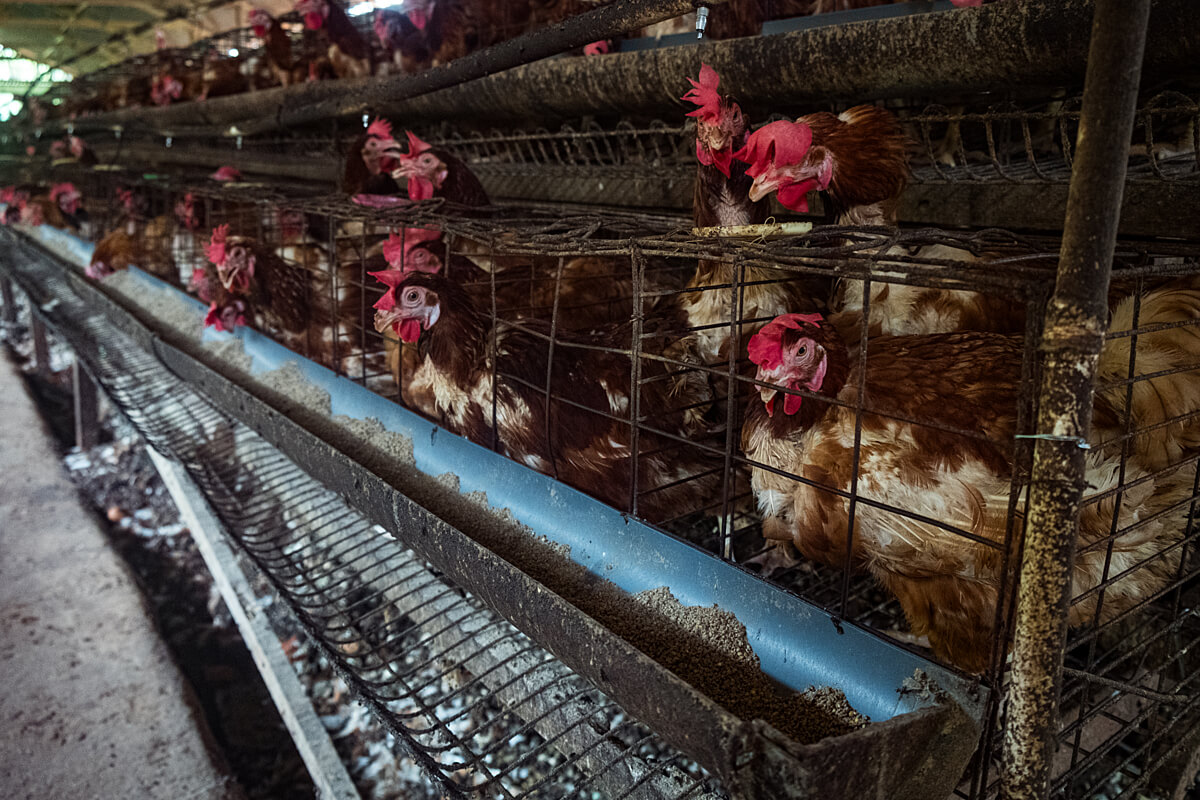
Undercover pictures show what campaigners say is now the “norm” for billions of farmed birds across Europe, showing “dead chickens left to decompose among the living,” injured birds “barely able to stand” and others “forced to live in overcrowded conditions where the risk of disease runs high.”
Two separate investigations, carried out in Spain and Hungary, have revealed what opponents claim is a “systemic status quo” for billions of poultry reared for meat across the European Union (EU) yet remains entirely legal because of substandard regulations.
The findings come as the EU grapples with long-awaited revisions to its animal welfare rules and the expected roll out of a continent-wide strategy aiming to ensure the “competitiveness, resilience and environmental sustainability” of the region’s livestock sector.
As the AGtivist has reported before, Europe has witnessed an astonishing increase in factory farms in recent years, with figures published last year revealing there were now at least 22,263 industrial-scale chicken and pig farms operating across the EU, between them housing more than 516 million animals at any one time.
Opponents say these numbers highlight how Europe is currently heading “entirely in the wrong direction”, and published the new evidence this week as part of a salvo of activity aiming to draw attention to what they say is an “unethical” and “unsustainable” pattern of intensification.
Systemic suffering
In Spain, investigations into five farms across the Cataluña and Castilla-La Mancha regions highlight what the campaigners say were some of the worst excesses of factory-production, including birds “selectively bred to grow fast and forced to live in overcrowded conditions […] suffering heat stress, deformities and skin lesions.” In Hungary, evidence collected from three farms revealed similarly disturbing conditions, with pictures documenting “dead chickens, including baby chickens left to decompose on the floor, as well as birds with severe injuries including broken legs and burned skin.”
The Spanish investigations were conducted by the pressure groups Anima Naturalis and Animal Welfare Observatory (AWO).
“What consumers perceive as a low price on the [supermarket] shelf is, in reality, the result of a system of maximum biological stress,” Aïda Gascón, Director of Anima Naturalis, said. “This is not a system failure; it is the system functioning according to its own efficiency parameters: maximum cost optimisation at the expense of agonising and systemic animal suffering.”
In Hungary, campaign outfit Una Terra released the evidence: “We received footage from anonymous investigators documenting conditions inside Hungarian caged egg-layer hen facilities and broiler chicken farms. What these images reveal is simply horrific industrial standards, not a few isolated failures. The industrial system allows severe legal and “normalised” animal suffering,” Anna Zabezsinszkij, Program Director of Una Terra Foundation, said.
“These fast-growing ‘Franken chickens’ are bred to grow so quickly that many can barely stand or walk by the end of their short lives. This evidence must drive stronger corporate responsibility, national reforms, and ambitious EU-level animal welfare legislation […]. We must do better for animals,” she added.
The groups claim that, in Spain, 80% of chickens raised for meat are kept in intensive farms. That’s around 810 million animals, they said. In Hungary meanwhile, 99% of all chickens are fast-growing breeds, the groups said, with 170 million birds slaughtered each year.
Fast-growing chickens are generally bred to reach slaughter weight in as little as 42 days, the campaigners stated, a rate that “exceeds” the bird’s normal physical capacity. The groups called on the EU to implement a ban on fast-growing breeds, limit stocking densities, and transform farming systems to respect the physical and emotional needs of these birds.
“Responsibility cannot rest solely with consumers; the industry itself must raise the standard. It must decide whether to lead the sector’s modernization or continue defending a model based on the biological precariousness of the animal,” José Luis Murillo, General Director of the Animal Welfare Observatory, said.
Of course, exposés such as this week’s are nothing new. Countless investigations have sought to highlight similar welfare issues, including in the UK, where factory-chicken production has surged in recent decades, at least partly in response to the ever-insatiable demand for cheap chicken.
Disease risks
Less focus has generally been placed on the disease risks that can accompany substandard poultry production methods, and the implications for human health. Those behind this week’s findings did attempt to highlight this worrying aspect, stating that the evidence demonstrated husbandry standards that posed “a serious threat to public health.”
They said the documented conditions “create environments where diseases can spread easily, including those that can be transmitted to humans. Keeping birds in systems that inherently generate high disease pressure drives the excessive use of antibiotics, and contributes to the growing global threat of antibiotic resistance.”
We don’t need to take their word for it. Earlier this year a joint report from two EU agencies, the European Food Safety Authority (EFSA) and the European Centre for Disease Prevention and Control (ECDC), starkly highlighted how antibiotic resistance in common foodborne bacteria – often transmitted into the food chain via infected poultry – continued to be a public health concern across the continent.
Campylobacter and salmonella bacteria are both commonly found in the guts of livestock and poultry, and once they becomes established on farms, can spread through the supply chain – including during animal transport, and at the slaughtering and processing phases in abattoirs – and go on to infect meat that’s then sold to consumers.
Overcrowded and unsanitary conditions on poultry farms can exacerbate the spread of such diseases, leading to birds becoming externally contaminated with their own waste, before being further spread as they are caught and crated before being trucked to slaughter. To compensate for poor animal health conditions, antibiotics have traditionally been deployed on many farms, with this use (and overuse) ultimately leading to the emergence of resistant disease strains.
The EU report found that a high proportion of campylobacter and salmonella from both humans and livestock continued to show resistance to ciprofloxacin, an important antibiotic often used to treat severe infections in humans. (This particular drug is part of a class of antibiotics that has previously been extensively used in chicken production.)
While resistance in salmonella from food-producing animals had been consistently high, the report noted, resistance in human salmonella infections had increased in recent years. The trend was described as “concerning” – as resistance to ciprofloxacin limits the effectiveness of available treatment options for patients becoming seriously ill from foodborne infections.
The agencies said: “In campylobacter, resistance is now so widespread in Europe that ciprofloxacin is no longer recommended for the treatment of human infections. To safeguard its continued effectiveness in human medicine, restrictions have been placed on its use in animals.”
Piotr Kramarz, the Chief Scientist at ECDC, said: “Antimicrobial resistance in common foodborne bacteria such as salmonella and campylobacter highlights the close links between human, animal and food systems. Protecting the effectiveness of antimicrobials requires coordinated action through a strong ‘One Health’ approach – because antimicrobial resistance affects us all.”
Indeed, as the future direction of livestock production across Europe is debated in the coming weeks – and the policies that will dictate the way in which farm animals are raised for years to come take shape – those responsible for making these crucial decisions would do well to listen to both the campaigners and their own scientists. Let’s hope they do.
All imagery from We Animals.
The AGtivist is an investigative journalist specialising in food and agriculture issues who’s been covering this beat for 20+ years. The new AGtivist column at Wicked Leeks will shine a light on the key issues around intensive farming, Big Ag, Big Food, food safety, and the environmental impacts of intensive agribusiness.








0 Comments