
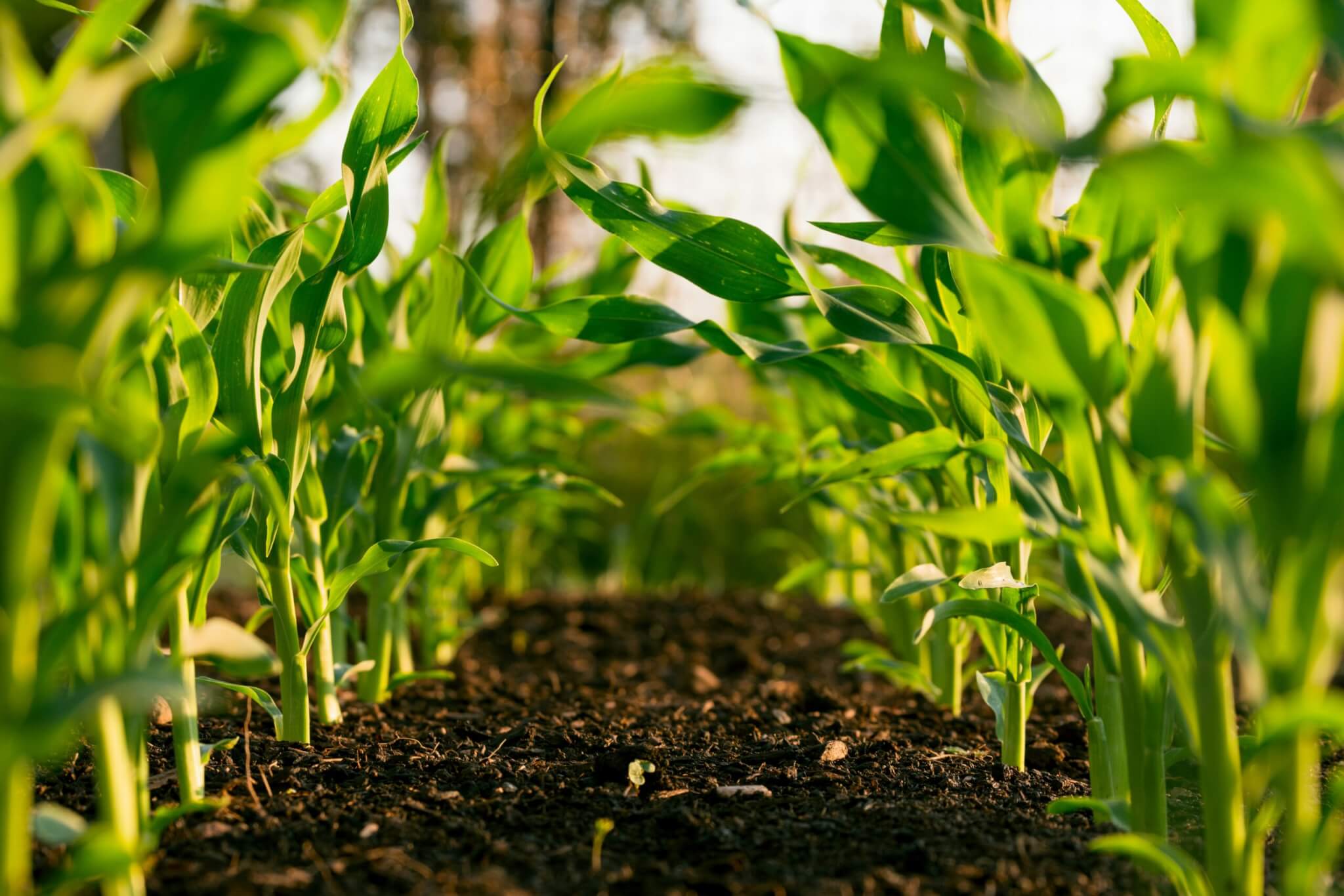
Like humans, crops also need good nutrition; a healthy diet and environment boosts our wellbeing. The same is true for plants, which, like humans, thrive on natural, organic and sustainable products rather than synthetic or processed ones. So it is no wonder that there is heightened interest in so-called biostimulants.
Biostimulants are deployed to improve crop health, nutrient uptake and yield, as well as provide resilience to stress such as heat or drought. They specifically stimulate plant processes. Many are derived from microbes including fungi and bacteria; others are extracted from non-microbial sources including seaweed and plants. Then there are inert compounds such as silica or selenium.
There are hundreds of biostimulants from humic acids to compost extracts, brewed plant teas to chitosan derived from crustacean shells. Now there is a greater understanding of which specific compounds regulate the various metabolic processes in plants, with more targeted uses and better integration into crop production cycles.
Unlike the use of synthetic fertilisers and pesticides, which aim to directly feed the crop or kill pests, biostimulants are focused on boosting a plant’s own biological functions so it can fight disease more easily or make better use of available soil nutrients. Biostimulants respect the nitrogen cycle as a living, biological process, not a chemical one. They also involve taking a holistic approach to the soil and plant ecosystems.
In an era when more farmers are looking to reduce their chemical inputs, slash costs, and farm more sustainably, there is a greater interest in biostimulants. The fact that there was a oversubscribed session on this topic at the Oxford Real Farming Conference last month demonstrates that there’s more interest in how they can be deployed on UK farms.
“In the right situation they work really well. It is all about getting the soil functioning and recycling properly,” explained Tim Parton at the ORFC. He is a regenerative farmer from South Staffordshire who has been using biostimulants for many years.
Intensive, industrialised agriculture has long had an addiction to product-focused applications. Most farmers understand that time honoured formula, where a certain area of crop demands a certain volume of nitrogen fertiliser or fungicide. Yet this dump-and-replenish calculus impoverishes soils. Using biostimulants takes a completely different approach.
“The way I’m thinking about it is like a human gut biome. If you’ve got a good gut you’ve got a good immune system. The soil is similar, it’s about keeping your soil healthy. This is then going to be reflected in your plant’s health,” stated Peni Ediker, who runs a smallholding in Wales called Swn y Coed. Here they’ve been using biostimulants for a decade.
A possible no-brainer
So, if biostimulants are the so-called magic derived from muck, then why aren’t they being adopted by whole swathes of farmers countrywide? This was a topic raised by food campaigner Hugh Fearnley-Whittingstall at the ORFC, who thought it was a no-brainer.
The challenge is that there is no one-size-fits-all approach to using biostimulants, unlike the vast majority of synthetic products that non-organic farmers use. Growers firstly need a deep understanding of their soil, its health, and how this interacts with different plants. This can be on a field by field, crop by crop basis – each situation is unique and requires a tailored approach.
“In an intensive farming system everybody treats everything the same. When you start looking at more regenerative systems you suddenly realise every farm is an individual unit, where the components of soil fertility are different,” says Mike Harrington, managing director of Edaphos, a biological solutions firm.
He adds: “You can’t just have a biological product and apply it. It is not going to work. Biology can be fickle, because it needs the right environment – it needs the right food sources and all sorts of components. We need to start with a soils-up approach. It’s about creating a scientific, soil health-based system of farming.”
Also, the kind of complexity in soils and plant health that you might see across a multi-thousand acre arable farm is difficult to comprehend. It’s easier for these farmers to use big machinery and deploy a uniform, highly intensive approach across the whole farm in order to be profitable.
“Knowledge gives farmers the power to change. We can’t push people to change, they have to get there with their own ability. We just need more time to talk to farmers and share fantastic stories about biostimulants. It is the way forwards and it is not impossible,” points out Harrington.
Hijacked by big ag
The issue is that many biostimulants are increasingly being produced and sold by the globalised agrochemical companies who have now gotten in on the act. They are keen to ‘productise’ biostimulants. If farmers have a specific problem they can then apply a certain chemical. Yet, the codification of biostimulants by industrial ag forms could degrade their complex and subtle use.
“You end up where the product becomes the system, and if we’re not careful the product becomes part of an intensive farming system. It therefore becomes a standardised procedure. We don’t want to get to a stage where we are just applying products and where they bypass a poor systems approach,” states Harrington.
He adds: “The chemical industry could also create restrictions for a system that doesn’t require it.”
That’s because in the UK, biostimulants are not regulated, in a similar vein to fertilisers. As long as the manufacturer does not claim any direct effects, say for pest control or plant growth they can be commercialised.
However, there is likely to be a push by globalised agrochemical companies to make enticing claims on the biostimulants they sell in order to make bigger profits – if such claims are made this will then require greater regulation.
The good thing about biostimulants is that many growers are brewing them in vats on their farms in order to save money and tailor make microbial solutions for their crops, bypassing the big ag companies.
In South Korea there is a whole movement focused on ultra-low-cost organic farming that utilises biostimulants called JADAM. This is inspiring growers around the world to get up close and personal with their own soil and systems, and create their own resourceful and impactful biostimulants that are tailored to their specific needs.
“Biology is cheap and it offers so much to growers. It is through biology that the magic starts to happen,” concludes Tim Parton.



0 Comments