

It’s no secret that getting started in farming can be a challenge. It’s difficult to find access to appropriate and accessible training, start-up costs can be high, wages low, and routes to market often involve complicated logistics. Land availability remains high on the barriers list too – 44.2% of respondents to a recent Landworkers’ Alliance survey said that the lack of availability of land was one of their main barriers to entry.
With 70% of British land owned by just 1% of the population and rocketing land prices over the last 20 years, (arable land is estimated to have increased in value by 298% between 2002 and 2022), the ageing farmer population means family farms are often divided and sold off to neighbouring landowners. Tenancies can be very competitive, agreements are often restrictive in what the tenant can do, and long term tenancies hard to come by, contributing to the number of tenant farmers reducing by 25% in the last 20 years.
However, there are landowners who are willing to sell or rent land, either as part of a long-term succession plan, or to support people to get started or expand their business. But how do the seekers find these supportive owners? And how do the landowners find the right tenants for their opportunity?
The answer, unsurprisingly, is a matching service that can act as an intermediary between the two parties. It’s an idea that’s been around for a while, with the Young Agrarians in Canada, Terre de Liens in France and an assortment of services across the USA. The format of these schemes varies, from a basic bulletin board system that leaves participants to make and manage contact, through to more facilitated programmes that manually match people and support them through the process of an agreement.
Landmatching arrived in the UK in 2016 with the launch of the Venture programme in Wales in 2015. Land providers advertise opportunities on the Farming Connect website, a recruitment process is carried out and matches receive specialist business planning, facilitation, and legal advice. In the last two years alone, 120 land providers and 400 seekers have applied to the programme, with 16 new joint ventures established.
Einir Haf Davies oversees the Start to Farm programme. “It’s crucial to thoroughly assess the potential of a specific piece of land from the outset and ensure both parties understand and appreciate each other’s expectations,” she points out.
The Scottish Land Matching Service was established in 2019 and has received around 1900 enquires since launch. The land seeker fills in a simple form on the website, which comes through to Ian Davidson or his colleague Allan; “We arrange a phone call really just to find out a bit more about them, their objectives, what they’re looking for and what experience they have,” Ian explains.
They have had far more seeker enquiries than there are land opportunities but are approaching 70 successful matches during the lifetime of the programme. Most importantly, very few of these matches have then fallen apart – a testament to the work that Ian and Allan do in the matching. “It’s about building relationships, ensuring the people going into it are very clear about their objectives, but they need to be flexible too,” Ian says.
In England, a two-year pilot which was established in England by the Fresh Start Land Enterprise Centre in 2016 did not continue due to funding challenges. A pilot programme was run in the South West of England in 2023 through the DEFRA New Entrant Support Scheme. This scheme had a lot of interest with 80 land seekers applying, and almost 30 land opportunities advertised including grazing land, local authority land, and National Trust sites, but resulted in only one successful match. Rachael Forster from Tamar Grow Local explains the challenges: “Brokering trusting relationships and developing new ventures takes time, and the right land opportunity can take time to find, so it is not a quick results programme.”
Rachael has been part of a working group that came together to launch Landmatch England in December 2025. Initially, two part-time coordinators based in Southwest and Northwest England will be working to gather applications from both seekers and owners, and then facilitate matches based on their needs. “All the land offers and landseeker requirements are completely unique so a tailored service is needed for every person who registers,” Rachael points out. The long-term aim is for the scheme to grow and for there to be an on-the-ground worker in each region; “We want to evidence a call to government for a supported service as Wales and Scotland currently have which can help reduce barriers for those looking to find or share land for new farming ventures and provide support for a more diverse sector.”
They’ve also partnered with the Pathways to Land project who alongside land matching assistance are providing a wider support package to people who may face greater barriers to accessing land, including Black people or People of Colour, or those who identify as economically disadvantaged or working class. This includes paying for participants time to attend online peer-networking and learning sessions and funded visits to relevant farms.
A common learning across a lot of the landmatching services is the need to look beyond just straight tenancy agreements, exploring avenues such as joint ventures and share farming to provide lower risk and more collaborative opportunities. This is the focus of Abunda, a recently launched holistic service. Their hope is that the expertise of the founders – a land agent, a therapist and an economist – and their focus on farm partnerships will help them create long lasting successful land opportunities.
Five years ago, Tim May was inspired to get more enterprises operating on Kingsclere Estate in Hampshire and established Pitch Up!, an annual process where businesses ranging from start-ups to established businesses apply to join the land. The process is open to a range of activities including farm businesses needing land, food processors, and agritourism enterprises that can collaborate and be part of a collaborative and circular operation, and there are now 10 host farms participating.
“One of the reasons I like the Pitch Up! model is that it is planning for succession in the future of the farm. When the next generations within our farm want to come and get involved, we’ve already been thinking about it and have a structure,” Tim explains.
It’s not been plain sailing though. Whilst they’ve had some successes – dairy cow to street food via the Roaming Smoker, organic roaming eggs from Wandering Feathers, and farm tours on electric scooters with Baboon Adventures – they’ve been surprised by the limited number of applications they’ve had from landseekers who are ready to take on the opportunity and have the business skills needed to make it a success. “I think the story, as far as I can see, is actually about the readiness for land matching as much as it is about land matching,” Tim muses; “And what it takes to be ready for that isn’t being dealt with.”
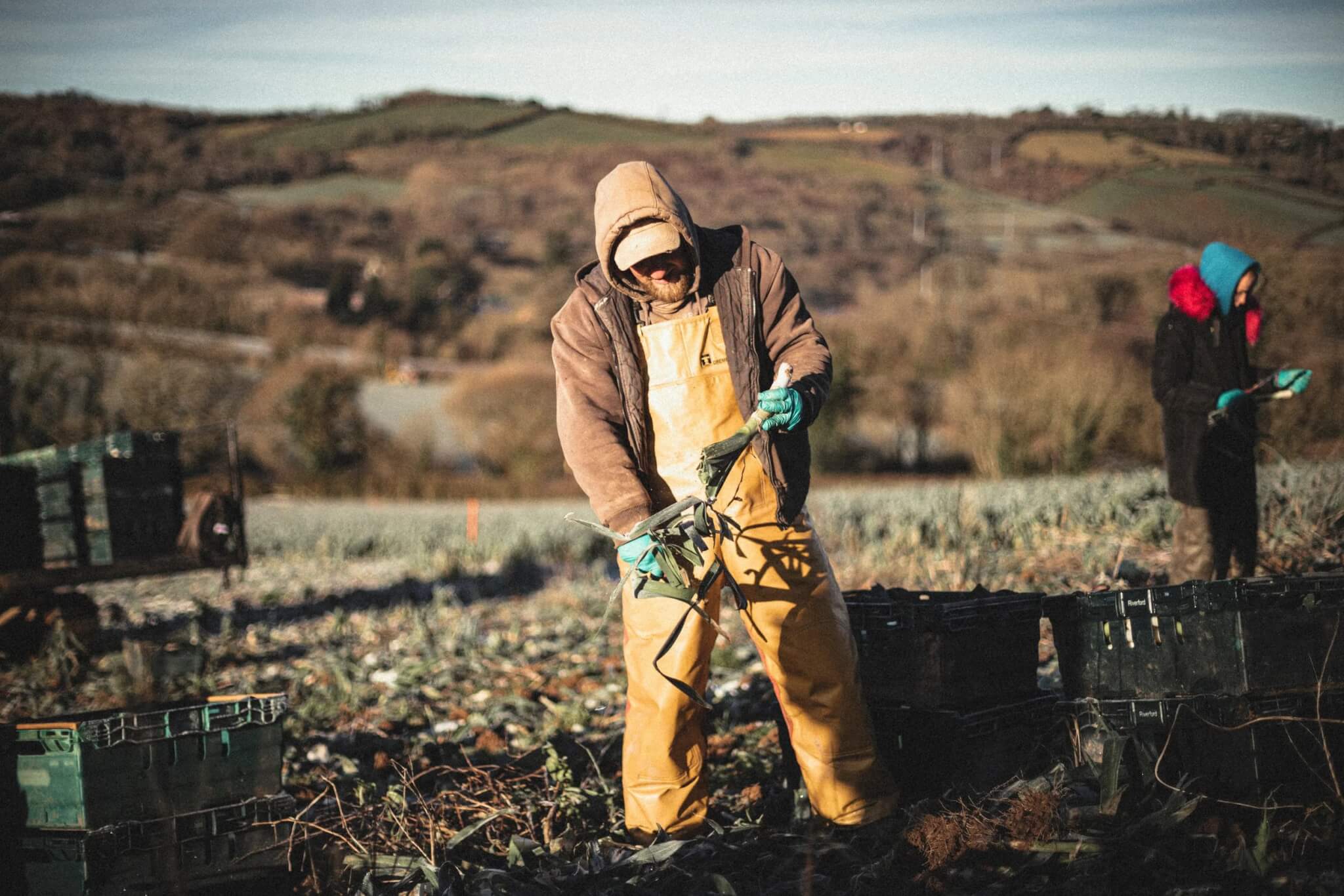
Image of Wash Farm, Riverford; taken by Emma Stoner.





0 Comments