
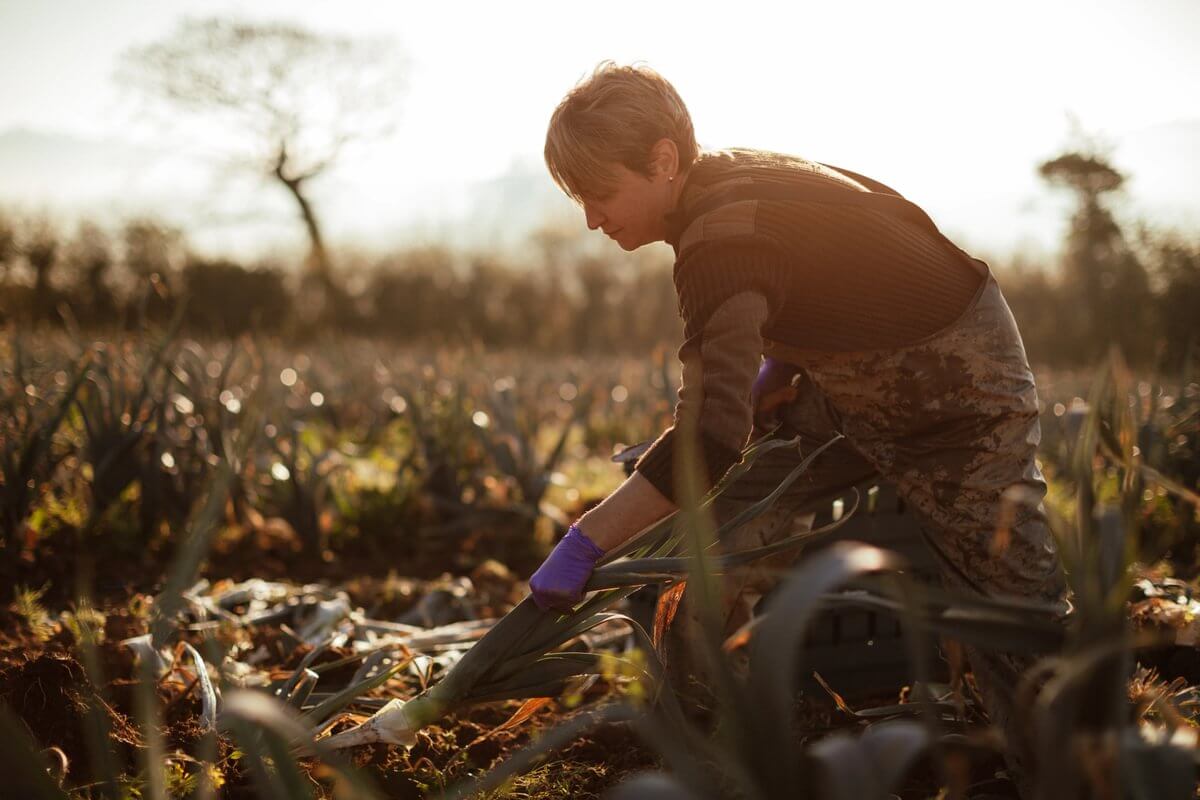
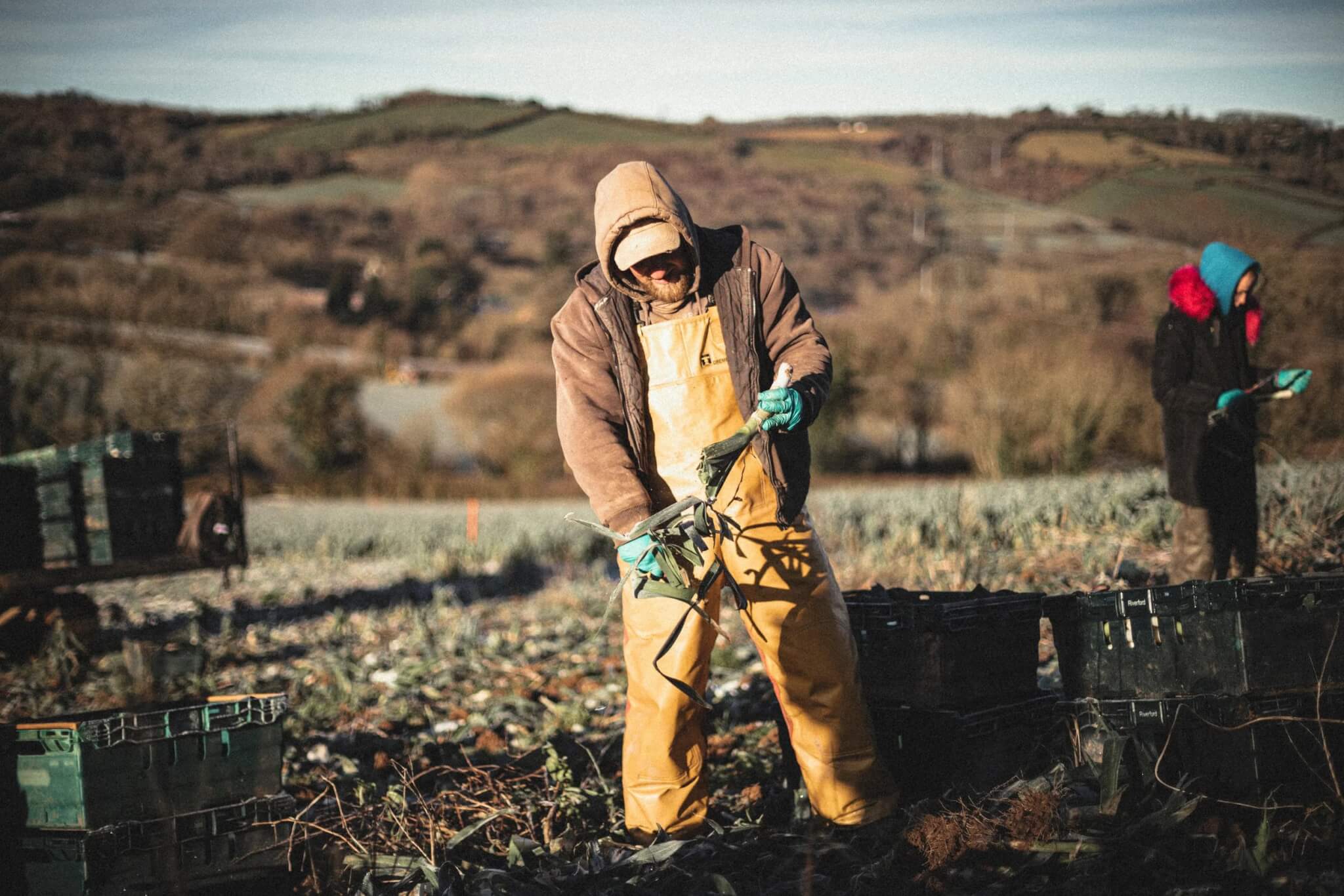
Already the evenings are drawing out, allowing us to work a little later before dusk descends and the frost returns. Two weeks of cold, dry, easterly winds with clear skies have given us hard frosts over Christmas and New Year, so we must wait until the worst of the frost melts before picking purple sprouting broccoli, cabbage, kale, and leeks before darkness forces us off the fields again.
On the higher, less fertile ground, the crop has survived with minimal damage as the cold air drains into the valley. The combination of frost pockets (where the cold air settles above the bottom hedge) plus the more luxuriant growth where the soil is deeper, has led to larger losses on lower ground where the crop is heaviest – one reason to be grateful for our slopes and modest fertility.
We have a month’s work planting, mulching, and guarding 4000 native trees on five acres of steep, north-facing ground, capable of producing little food. Weed control during the first two years is vital to avoid losses from competition and the increased vulnerability to damage from voles, deer, hares, and rabbits that results from slow establishment. Experience has taught us that, in a busy summer, hand weeding is a fantasy.
Without access to the “kill all” systemic herbicide, glyphosate, which is used for almost all non-organic, commercial tree planting, mulching is the only alternative. 150mm of wood chip is the best method but it would require 200 tonnes of the stuff, so plastic is a pragmatic solution (collected after the second season and, wherever possible, recycled). The danger is that, kept dry and protected from predators, the voles will thrive while feeding on the tree stems and roots. In our experience they seldom kill the trees but can drastically reduce the rate of establishment, making them more vulnerable to competition.
After 40 years, I reckon I’ve developed the sensibilities to be a reasonable veg grower but still have a lot to learn about trees… perhaps I should have started earlier. I can only wonder at the skills needed to run the mixed farms that were the norm when my father started out – cows, sheep, grain, chickens, apples (as well as the cider to make), hedges to lay, and trees to prune. In the drive for cheap food, our industry has been stripped of people and skills but there is no shortage of idealistic new entrants, hungry to learn. The challenge is to make enough money to train, organise, and pay them.
Image taken at Wash Farm, Riverford; picker harvests leeks by hand. Photo by Emma Stoner.
Our News from the Farm posts come from Riverford. They are the digital versions of the printed letters which go out to customers, every week via Riverford’s veg boxes. Guy Singh-Watson’s weekly newsletters connect people to the farm with refreshingly honest accounts of the trials and tribulations of producing organic food, and the occasional rant about farming, ethical and business issues he feels strongly about.




0 Comments