
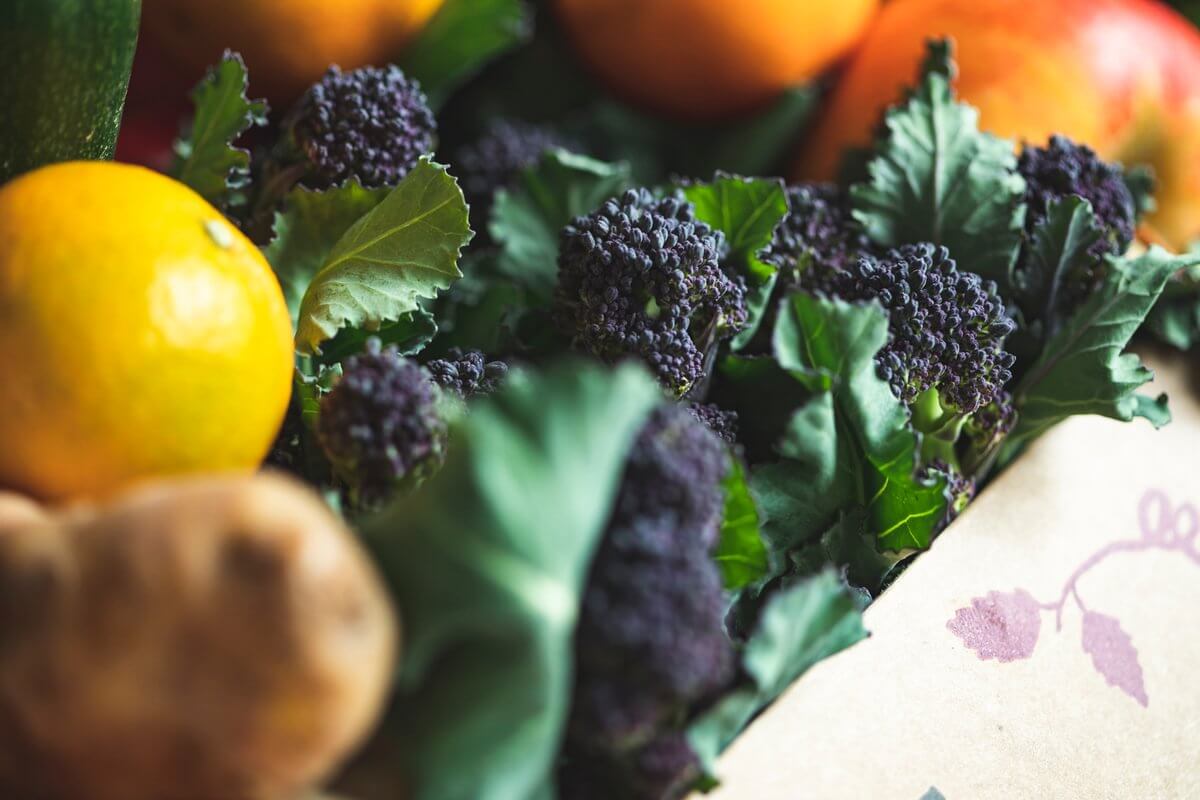
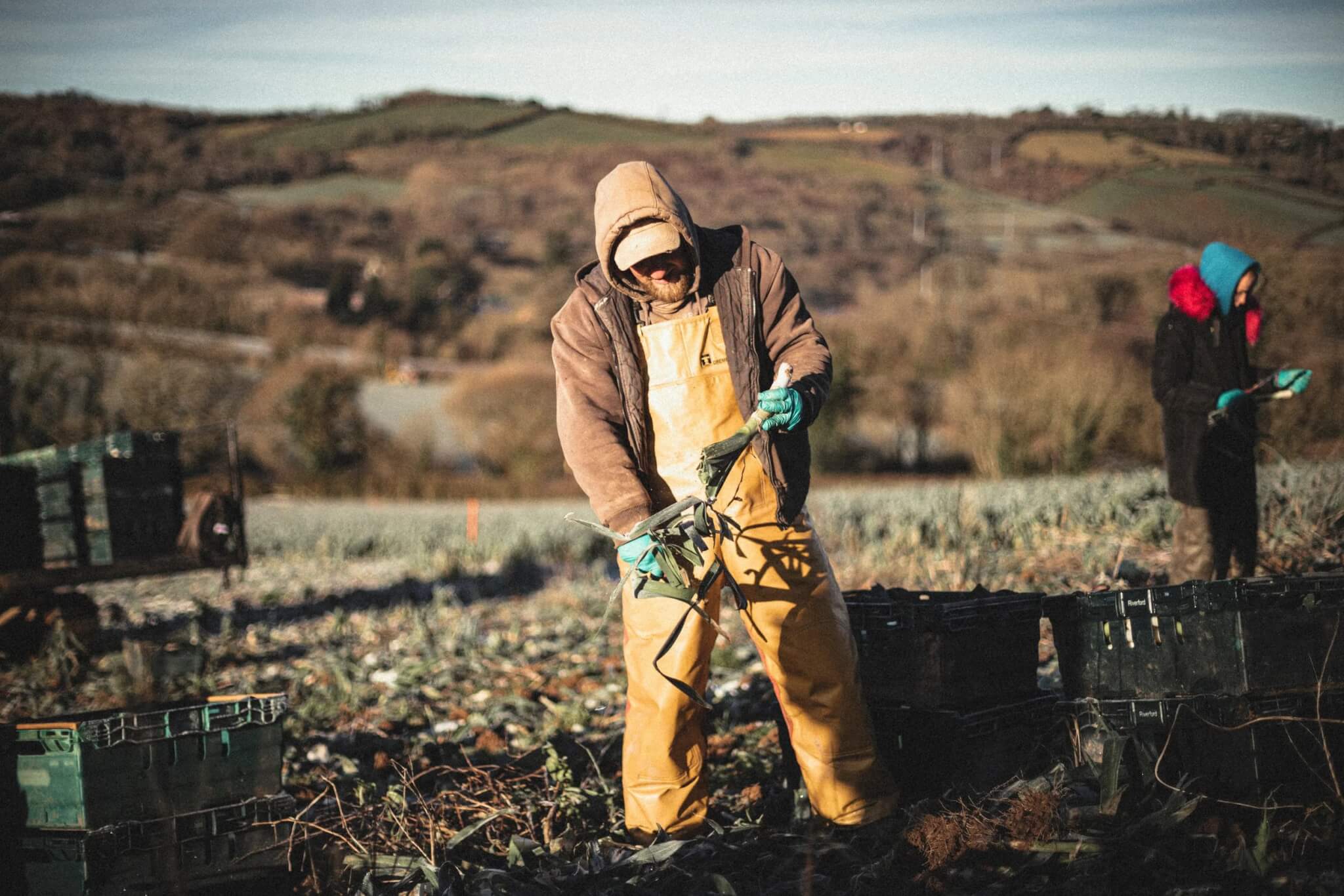
A good crop makes for happy pickers. Despite the rain, wind, and mud, beneath our waterproofs it is mostly smiles among the purple sprouting broccoli (PSB) this week. The heads are huge, uniform, and tender, allowing a good picker to harvest 40kg an hour (ordinarily, we’d barely manage 20kg). It’s been a good growing year at Riverford but our smiles owe a lot to plant breeding. Our season would once have started with an open pollinated (OP) variety of PSB called ‘Rudolph’, which is highly variable, producing small heads over a two-month period, necessitating eight or more weekly walk-throughs to harvest the heads, and later the side shoots (time-consuming and therefore costly work).
Farmers and gardeners have saved their own OP seed from naturally pollinated plants for millennia and through selection over time, created varieties suited to local tastes, soils, and climate. Hybrids, on the other hand, are a highly controlled, first generation cross of two inbred, genetically uniform strains; they benefit from hybrid vigour and uniformity but these benefits are lost in subsequent generations forcing the grower to return to the seed company each year; they are also expensive and tend to need fertiliser, irrigation, and pesticides to deliver their benefits. In developing countries, hybrids and even more so GM-crops (plus the associated agrochemicals) have created overwhelming dependence and loss of autonomy amongst many smallholder farmers.
Some growers view hybrids as a step on the slippery slope towards GM crops and dependence on global seed companies (over 60% of the world’s seeds are owned by agrochemical giants, including Bayer). But unless you’re a gardener or buying from artisan producers, over 90% of the veg you buy will be hybrids. I dream of our food being the bedrock of unity – a source of social & cultural cohesion – and am almost phobic of being described as an “artisan” producer. I just want to grow great-tasting organic veg and am still striving to make it as affordable & accessible as possible. Were we to abandon hybrids we’d have to charge substantially more.
The takeover of food by Big Ag comes with huge dangers, especially to the small farmers who produce around one third of the world’s food. But I’m prepared to live with hybrids for the happy pickers and the help they bring in making our prices more inclusive.
Our News from the Farm posts come from Riverford. They are the digital versions of the printed letters which go out to customers, every week via Riverford’s veg boxes. Guy Singh-Watson’s weekly newsletters connect people to the farm with refreshingly honest accounts of the trials and tribulations of producing organic food, and the occasional rant about farming, ethical and business issues he feels strongly about.


0 Comments