
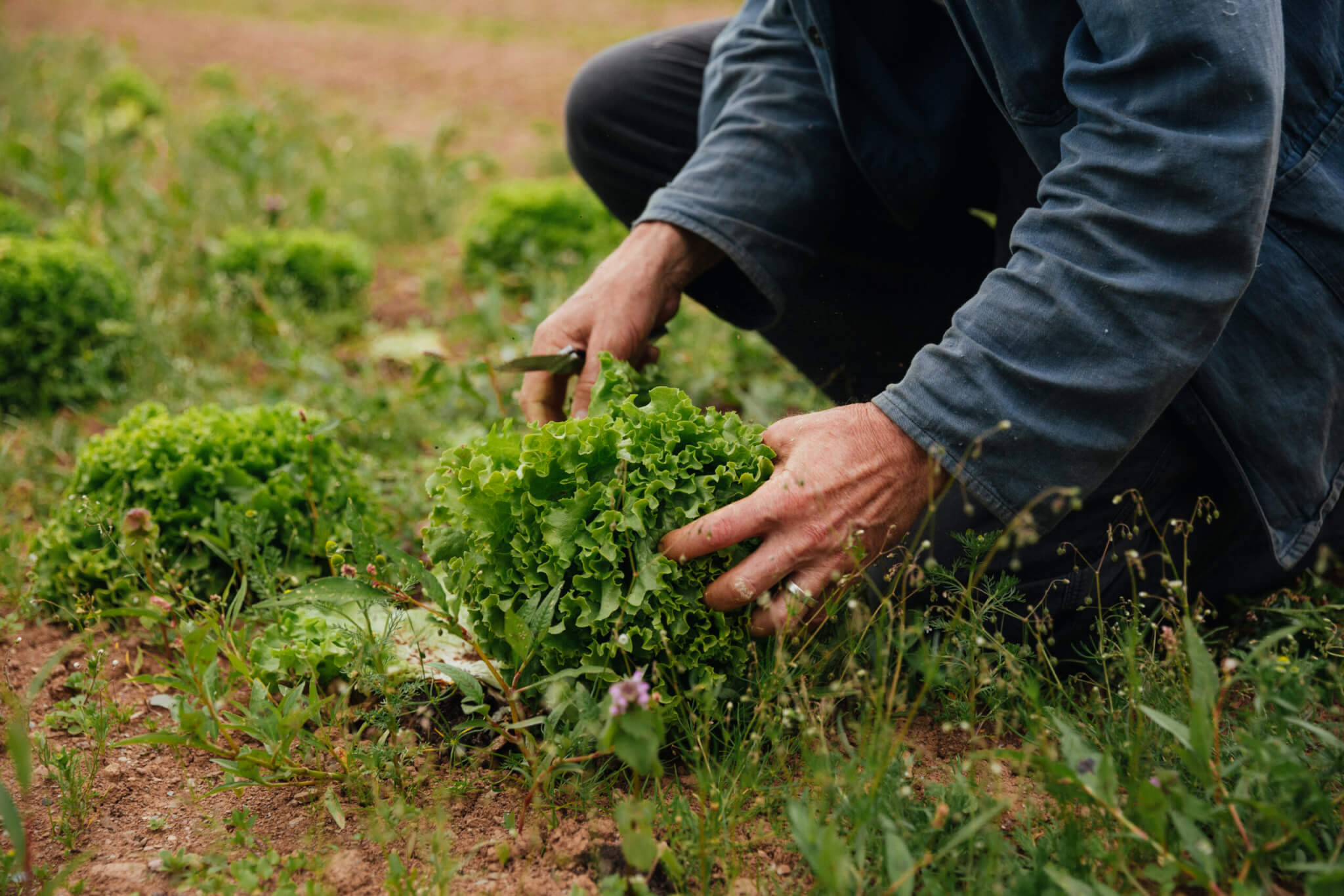
Muck is flying, birds are nesting, and the geese are honking as they lap the farm surveying potential nest sites. After a three-month deluge of double our normal rainfall, three bright and (mostly) sunny weeks have let us get on the land, catch up, and start planting. Spring-sown broad beans, carrots, and potatoes are in the ground and this week will see us start the lettuce, onions, and cabbage in earnest.
The valley air has been heavy with the stench of slurry as dairy farmers make the most of an opportunity to empty, or at least lower, their stores. Now is the ideal time to spread – as the grass starts to grow fast but the soil is still cold, restricting the availability of organic nutrients. I can only marvel at the ingenuity that allows slurry to be pumped through “fire hoses” to a tractor several kilometres away.
The tractor’s dribble bar then applies slurry direct to the soil’s surface rather than spraying it everywhere. As the “umbilical cord” serving the tractor zigzags across the field, it is possible to spread in a week what would have taken months with tankers; with less damage to the soil, less risk of pollution, and marginally less pong.
Even with these improvements, the soil biome would be happier if fed with traditional well-rotted manure, made by livestock bedded on straw through the winter. It would be happier still with well-made compost. It’s like us having sugary drinks rather than a varied, high fibre, plant-rich diet. A combination of fertiliser- dependent, short-strawed grain varieties arriving in the 1970s, the concentration of livestock into larger and larger units, plus the (in my opinion, flawed) subsidised burning of straw in power stations as biofuel, has led to a move away from straw bedding to slats, concrete, and slurry-based systems. It makes economic sense and has forced down milk prices but our soils and livestock are poorer for it.
In happier news, the first butterhead lettuce has arrived from the farm in the French Vendée (now owned by the people who work there, having bought it off me last summer). This is closely followed by little gems, radish, and pak choi. It has been a long winter but at this time of year, with the sun climbing higher each day, it feels like a privilege to be a farmer – stepping out each morning with such agency and autonomy, to do something as tangible as feeding you all.
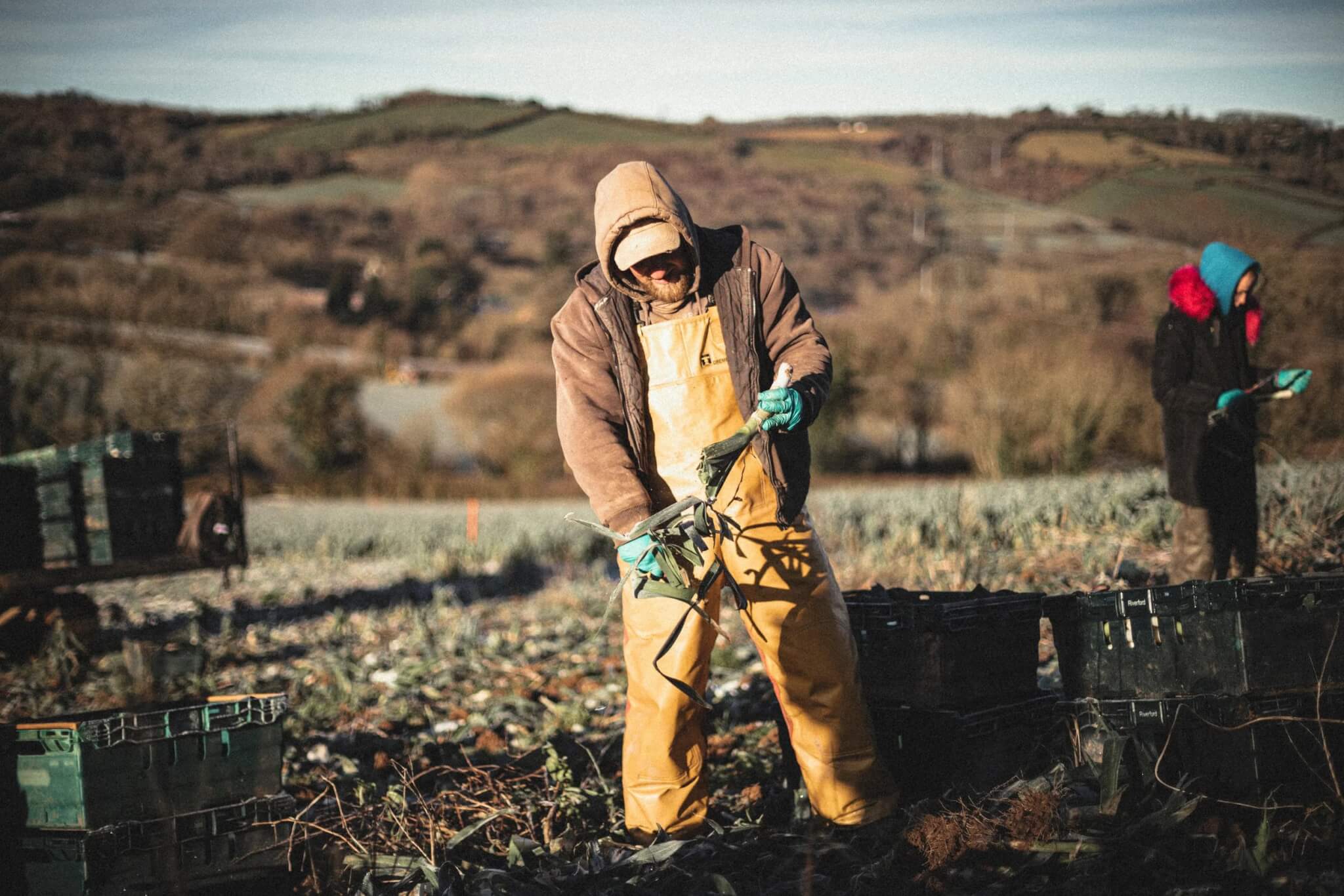
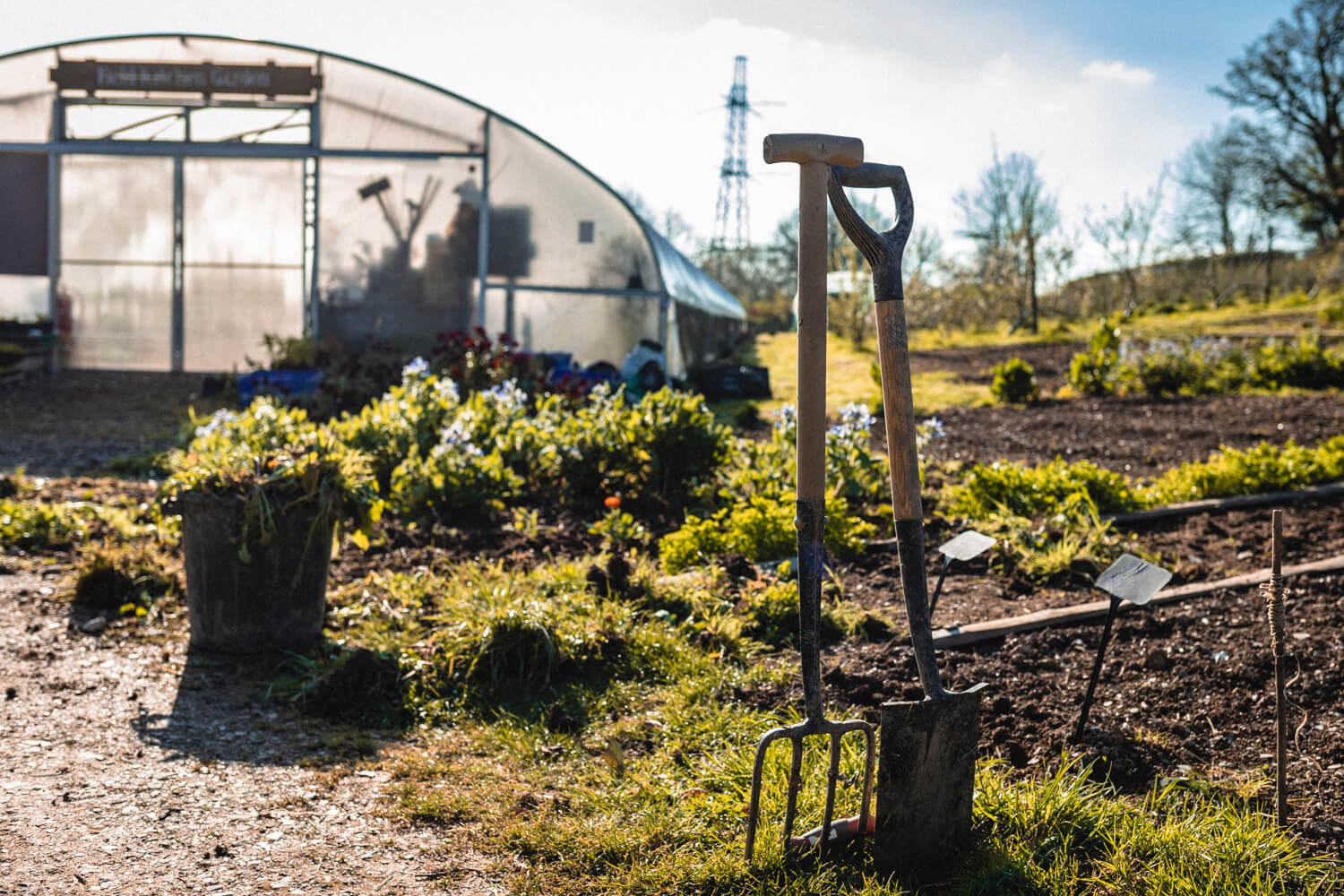
Photograph by Emma Stoner, at Riverford’s Wash Farm
Our News from the Farm posts come from Riverford. They are the digital versions of the printed letters which go out to customers, every week via Riverford’s veg boxes. Guy Singh-Watson’s weekly newsletters connect people to the farm with refreshingly honest accounts of the trials and tribulations of producing organic food, and the occasional rant about farming, ethical and business issues he feels strongly about.



0 Comments