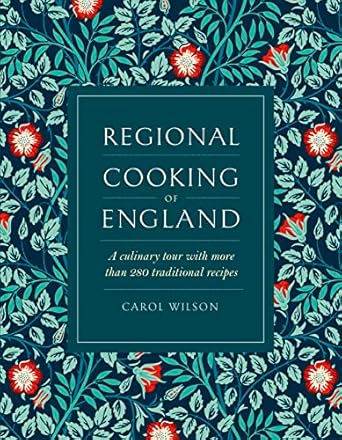
Food historian Carol Wilson journeys through England’s gastronomic heritage, charting the sociocultural changes of a nation’s dining habits, tempting us with delicious recipes from every corner of the country.
“This book is a celebration of the food and cooking of England,” writes Wilson, who takes the reader on a tastebud-tickling tour across this small island.
Recounting what we ate through the ages and why, this book tells the story of England through its diet.
Exploring the impact of its mild climate and diverse landscape, Wilson tracks the impact the “nation’s history of invasion, settlement and immigration” has had on its food.
Beginning with our hunter-gatherer past, we time-travel through history, from the Celtic, Roman, Anglo-Saxon, and Viking ages, to the medieval, Norman, Tudor, Georgian, and Victorian eras, ending up in the 20thand 21st century.
What is striking is how much our relationship with food has been shaped by politics and power disparities between rich and poor, and how colonialism and class systems can be seen in our culinary heritage.
Wilson describes how, in the 17th century, there was a shift away from subsistence farming (when we produce only the food we need for our family).
Wealthy landowners — many of whom gained land during the dissolution of the monasteries — began to “enclose their land, driving off the peasants (who lost their homes as well as their vegetable patches), to free it up for commercial farming.”
We discover the influence of imperialism, too, when those who had travelled across the globe in the age of empire brought back exotic ingredients, such as sugar and spices.
The focus of this book, however, is on exploring the history of regional food. Wilson divides the country into six unique culinary regions, whose food customs are influenced by the local environment.
The mild climate of the south-west, for example, creates lush pastureland ideal for dairy cows — and making clotted cream.
With every food fact and recipe, Wilson fascinates us, exploring festivals rooted in our pagan past and the agricultural year, such as May Day, whilst offering juicy morsels of folklore and historical titbits.
Wilson explains, too, why English cooking developed a reptation for being bland. As a reaction to the gluttony of the Georgian era and its associated health issues, the Victorians scorned “the sensory pleasure of eating,” she writes, “and the largely urban population lost touch with the quality of fresh produce.”
In the modern day, Wilson tells us, many of us are keen to eat local, seasonal foods, and the recipes in this book —which are anything but bland— may prompt us to try cooking with such high-quality ingredients.
Sharing almost 300 mouthwatering recipes, ranging from classics such as a Roast Dinner, to the more unusual, such as Bosworth Jumble (a Leicestershire biscuit recipe that fell from the pocket of Richard III’s cook at the Battle of Bosworth), this book is perfect for those with a love of cookery, good food, and culinary history.
Filled with lush photography and delightful recipes, it is a must-read for anyone who wishes to taste the deliciously diverse flavours England’s regional dishes have to offer.
Regional Cooking of England: A culinary tour with more than 280 traditional recipes(Lorenz Books, 2024), Edited by Carol Wilson. Reviewed by R. B. L. Robinson.