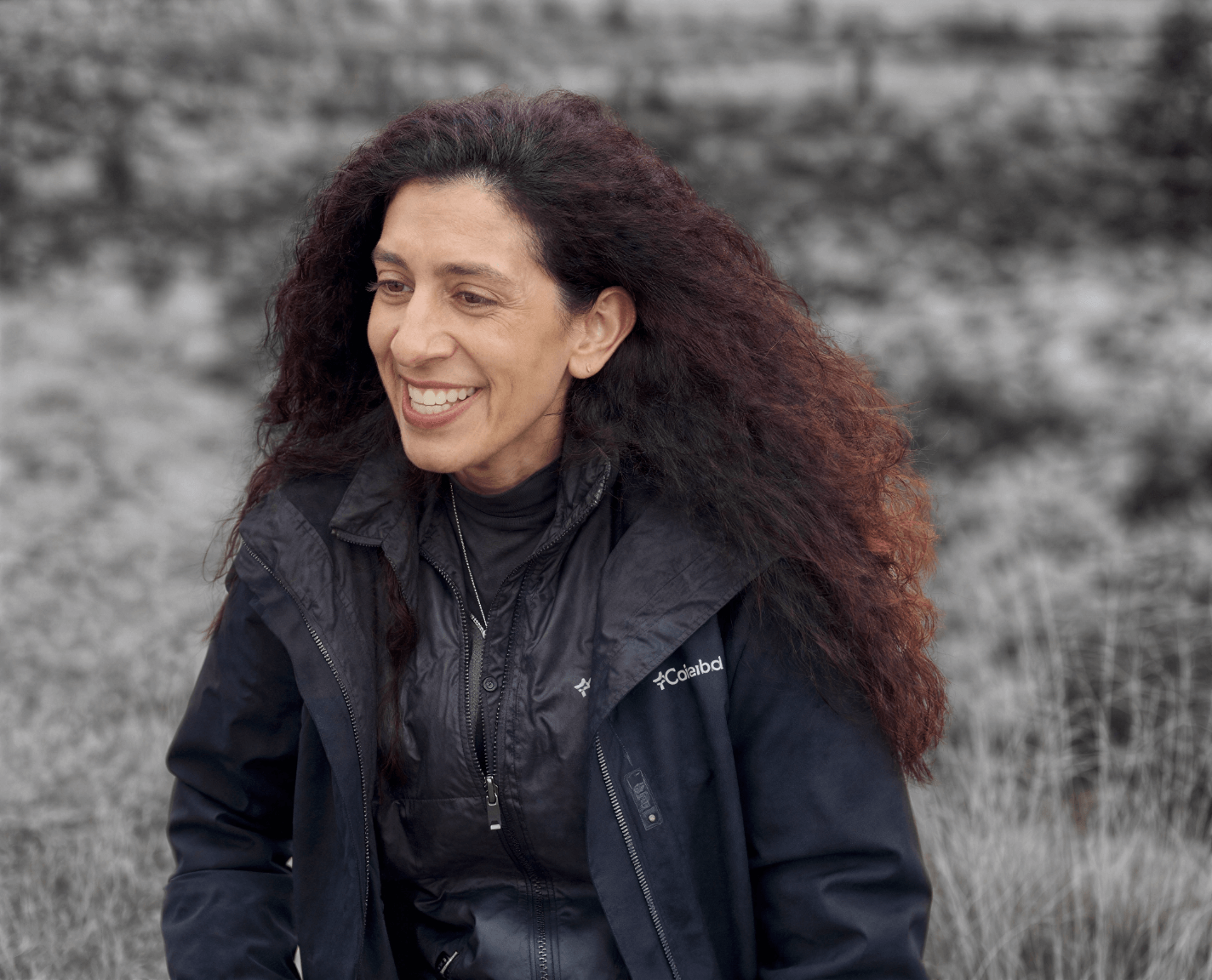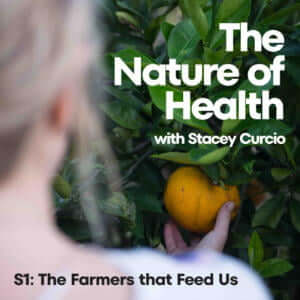
“What makes food medicinal starts at the level of the soil”, says Australian nutritionist and naturopath Stacey Curcio, whose podcast The Nature of Health digs into the relationship between farming, food, and wellbeing.
In one episode, we meet soil health expert and educator Joel Williams of Integrated Soils, who uproots the reasons why nutrient density levels in crops have seen a general decline since the Green Revolution—a mid-20th century agricultural movement that focused on growing high yield produce.
Trained in agricultural science and food policy, Williams discusses the soil-nutrition connection, explaining how the focus on breeding high yield crop varieties has led to the “dilution effect”. This means that although plants may have a greater yield, the amount of minerals available to them remains the same, leading to the nutrient concentration becoming lessened.
Another reason for the nutrient decline is down to increased levels of carbon dioxide in the atmosphere. Plants use CO₂ during photosynthesis to transform sunlight into sugar, and although they may yield more because of the elevated levels of this greenhouse gas, this does not translate to having greater nutritional value, but rather a diluted concentration. Bigger is not always better, especially if they are empty calories.
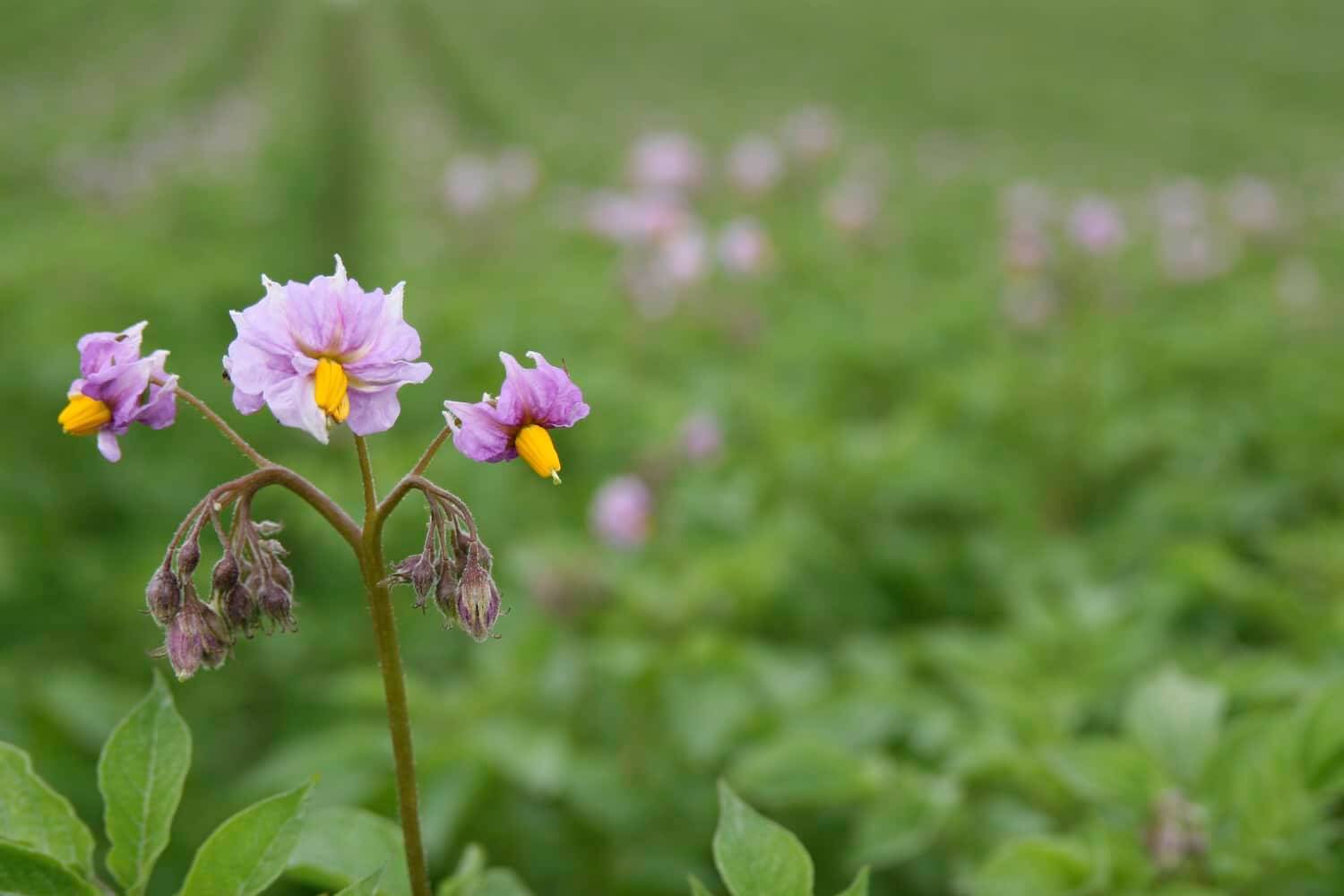
Interestingly, Williams tells us that many older plant varieties are richer in nutritional value than modern, high yield crops. What the heirloom varieties may lack in yield is made up for in a larger root system, which can draw up more minerals, giving the plant greater nutrient density.
Many of the older varieties also interrelate more effectively with the soil microbiome—the community of microbes, such as fungi and bacteria, that live in the soil. “Nutrient density is all about microbial partnership,” says Williams, who tells us that microbes are vital because they “deliver nutrients from soil to plant.”
These nutrients ultimately end up on our plate, and Curcio reminds us that the human body cannot produce minerals. They can only be obtained from what we eat, so if our food is becoming nutritionally poorer, then this will have a negative impact on our wellbeing.
Williams emphasises that all things are interconnected, and that the global community of farmers—whether regenerative or conventional—are connected by the common ground of their shared concerns, such as how to achieve more with less.
All farmers, Williams believes, would find that regenerative soil health principles, such as “minimising disturbance and keeping the soil covered,” would create the best foundations from which to grow a flourishing farming future, where the connection between healthy soil, food, and people can thrive.
There is plenty of “geeking out” in this episode, as Williams describes it, and we learn many fascinating scientific facts, plus information about the latest technological advances that let us study the microbiome and phytochemicals—or protective plant chemicals—in greater depth than ever before.
In this podcast, Curcio speaks to sustainable growers and food producers, plus those exploring the intersection between farming and soil/human health. If you are an agriculturalist, a nutritionist, or interested in the link between nourishment and wellness, The Nature of Health will provide interesting—and often scientifically-based—food for thought.
Reviewed by R.B.L. Robinson