

There are many areas of society, business and economics where the UK is a bit of a laggard and agrivoltaics is one of them. While Germany, France and Italy are ploughing ahead, growing crops alongside or beneath solar panels, the UK is not even out of the starting blocks. There are no big investments, or large-scale trials, and only a handful of research projects.
This seems strange given that many people have voiced concerns about solar farms gobbling up land for food production. Last year the Campaign to Protect Rural England touted the headline “Two-thirds of mega solar farms built on productive farmland,” saying in a report that an area the size of Greater London would need to be covered in panels to meet our solar energy targets.
However, there is an obvious solution for the ‘fuel versus land use crisis’ and that involves marrying the two. By putting solar panels on stilts or using vertical solar panels with spaces in between, you can farm effectively and also produce homegrown renewable energy. This can also increase land use efficiency up to 186 per cent.
“We’ve shown this in Norway – very little loss of yield when demonstrating agrivoltaics. The biomass of the grass grown in between solar panels was not significantly different. This is a really surprising result,” explains Dr Richard Randle-Boggis from SINTEF, a Norwegian research institute, who has also worked on agrivoltaics at the University of Sheffield.
Agrivoltaics deals with two of the UK’s biggest dilemmas right now – how to wean the country off volatile oil and gas, and become more food secure. It wasn’t long ago that President Emmanuel Macron heralded agrivoltaics as a key pillar of France’s new energy strategy.
“I started looking at this nine years ago and we still haven’t got much further with agrivoltaic research in the UK. But when you look to Europe, and in Asia and North America, there’s a lot of work being done. The research field has not only skyrocketed but there are now large megawatt scale, commercial systems in operation,” states Randle-Boggis.
He adds: “I’m shocked and disappointed that it’s not getting more attention in the UK. This is starting to change, but only a little.”
No reason to hold agrivoltaics back
A study last year found that combining solar panels with farming can meet he UK’s solar energy targets without sacrificing agricultural land. The coverage potential for such technology is so high that it could meet our electricity demand more than four times over, according to the University of Sheffield.
The research also found that areas of Cambridgeshire, Essex, Lincolnshire, and the broader East and South East of England would be good for agrivoltaics due to the availability of flat land, the extent of existing farmland, grid connectivity and the prevalence of sunny days.
“There are no geographical, climatic or technological reasons why the UK should not start developing its own brand of agrivoltaics – there is potential for small-scale and commercial applications within the UK,” stated Dr Aritra Ghosh from the University of Exeter in a recent research paper.
It is already common practice for solar farms to be erected on land that is also used for livestock farming. For instance Lightsource BP – owned by the global energy giant BP – already has over 55 solar PV parks with sheep grazing.
The fact is, solar panels do create some partial shading of crops. This can limit yields of certain crops by a small amount. But, interestingly, studies have also shown that yields can increase when certain crops are partially shaded with solar panels – Enel Green Power, which manages 1400 renewable energy plants across five continents, has found that “the area beneath solar panels creates a shaded microclimate, reducing evaporation from soil and plant transpiration. This approach allows for 20% to 30% savings in irrigation water.” This is of particular benefit in times of drought: think of the East of England in the height of summer when light levels are high, but rainfall is poor. It’s about assessing both crop and climate to ensure yields remain high.
Solar panels are also most efficient if they are kept cool. As they photosynthesise, crops produce water which evaporates, cooling the air above. Studies in the U.S. have found that elevated panels generate ten per cent more electricity than the same panel mounted on the ground.
Research before investment
So why is the UK so far behind? Dr Randle-Boggis thinks it is due to a lack of knowledge and the fact that we don’t know how these agrivoltaic systems will perform in the UK. This has created a chicken and egg situation when it comes to investment. If we don’t have the right knowledge then there are risks involved and vice versa.
“We need to have research, pilot systems and sandboxes that show that agrivoltaics really works. By their very nature, they need large amount of capital investment. We need somebody who’s willing to install an agrivoltaic solar park, even if it’s at a relatively small scale, and to test something that’s currently unknown in the British climate and in the context of UK agricultural,” he explains.
However, if the farmer is boosting their income from solar power generation then the net gain should be positive. The higher mountings for the solar panels may cost 50 per cent more, but there is not a wholescale loss of farming land, as there is with conventional solar parks. In terms of economy, farms have seen a 30 per cent boost in economic value when deploying agrivoltaics.
“The challenge is that it requires holistic thinking from two very different stakeholder groups – the energy company and the farmer. Both may have to make concessions. The capital expenditure is slightly greater for the electricity generator and the farmer may make a little less from food production. This creates a greater level of complexity,” details Randle-Boggis
“Right now, there aren’t really any incentives from the UK government to support the multifunctional use of land. It means there’s a lot of uncertainty for both developers and farmers from a policy perspective, from an economic perspective, and from a system performance perspective. Other countries are now moving ahead and they are starting to implement policies to regulate how agrivoltaics will work.”
This is because agrivoltaics has the potential for greenwashing, or in some cases “sheepwashing,” where support is given by local authorities for a project but minimal farming goes on underneath the solar panels, bar a few grazing animals, in order to get the subsidies, approvals or community buy-in.
Behind the global curve
What the UK is not benefiting from is advancements in agrivoltaics either. Research is now investigating the use of semi-transparent or wavelength-selective solar panels, which can filter sunlight to allow specific wavelengths through, that are appropriate for crops growing below.
There are also vertical bi-facial solar panels in operation now, these face east-west, and provide less shade to crops and make it easier to farm on the strips in between. They also generate electricity in the morning and afternoon, when the grid is in need of more electricity.
There are also tracking systems that shift the angle of solar panels. These can maximise electricity generation during the heat of the midday sun, but also shade crops from stressful sun glare.
“There are so few feasibility studies done in the UK with agri-voltaics. It’s ridiculous. It’s been around for years. There’s also potential to generate solar power in areas of the country where there is less wind. We need to move forward. Farmers need to engage and enjoy the spoils of the renewable revolution,” concludes Stuart Oates, a Cornish farmer and founder of Fossil Free Farm.


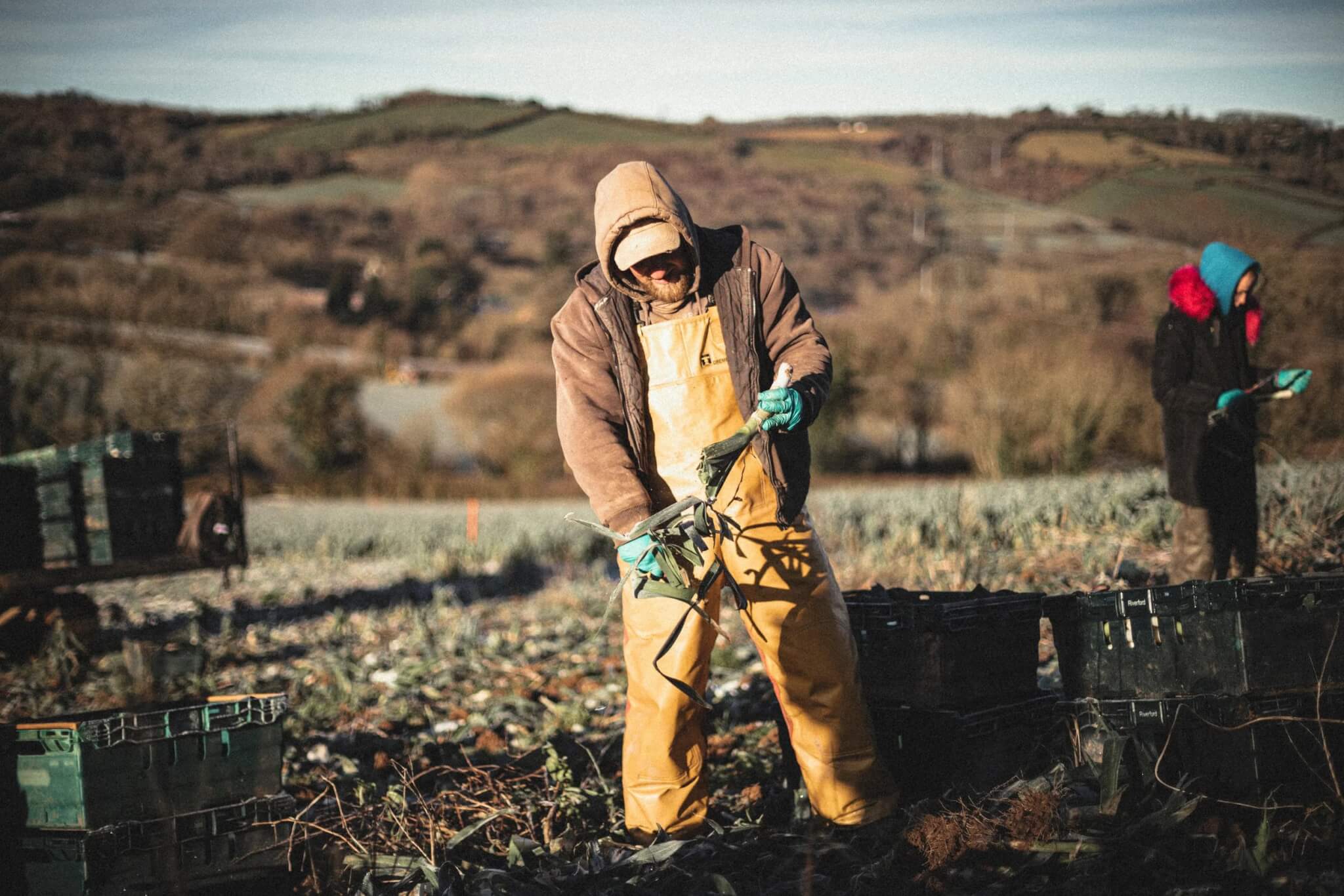
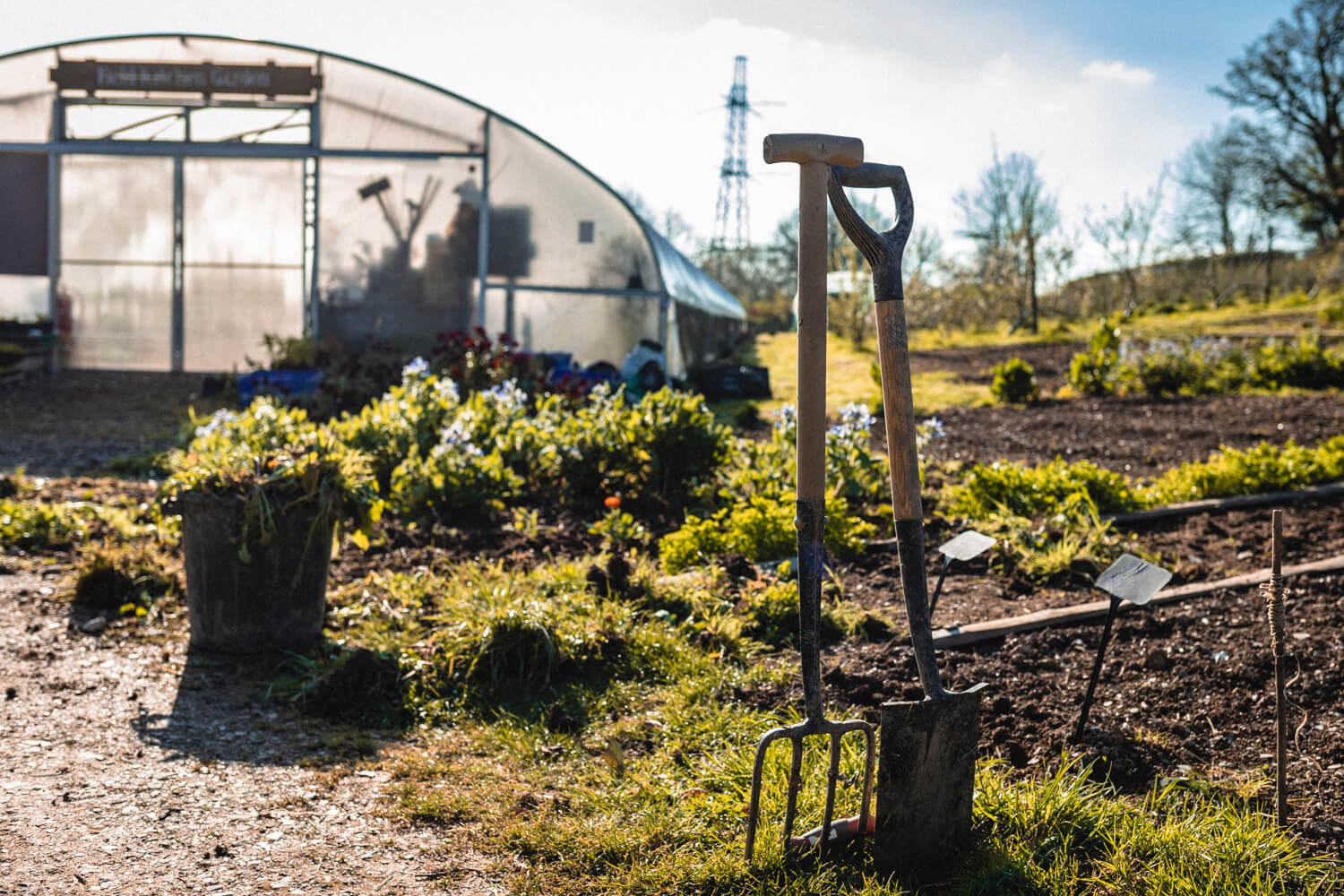
The UK may be ‘behind the global curve’ but even in Australia, which has abundant sun and a desperate need to break away from fossil fuelled farming as no fuel is refined in-country, agrovoltaics is regarded with derision and doubt. That’s even though the proven benefits for sheep and horticulture are for all to see, courtesy of some far-sighted farmers.
So, I’m not surprised that this country is so far behind.