
To be a farmer, you need to be curious. To question what’s ailing your livestock, why a crop failed, or how to fix some machinery. Historically, the chances for discussing your thoughts and observations were many: at your local weekly market, at parish and young farmers’ events, or even with fellow workers on the farm.
External factors – from global commodity prices to the weather and changing government policy – continue to buffet the sector, and with the average UK farmer working a 60-hour week, loneliness is an increasing problem.
“Once characterised by close-knit rural networks, farming communities have seen a major shift over the past 50-100 years,” explains Stephanie Berkeley, manager of the Farm Safety Foundation, which offers advice and support at yellowwellies.org.
“Mechanisation, consolidation, and declining rural populations have eroded traditional bonds, reducing the need for shared labour and weakened local institutions. Where neighbours would have gathered for harvests, the farmers of today often work in isolation, for long hours, supported by technology.”
Stephanie highlights new forms of connection, through marts (auction markets), mental health initiatives (see Mind Your Head or The Farming Community Network), and online communities.
There is huge and often untapped power in connecting with others, as four very different farms have found.
A Soil Association Land Trust Farm in Hertfordshire
In her late 70s, Sally Findlay found herself alone on her 300-acre Hertfordshire farm. At the edge of London, with developers knocking at her door, her husband, John, had passed away and there were no children to take it on. So, in 2021, she donated Woodoaks Farm to the Soil Association Land Trust to preserve it as a working farm for future generations.
“She’d grown up in the area and had seen the landscape change as hedgerows were ripped out,” says Rose Lewis, programme director at Woodoaks.
“Sally had childhood memories of going through the lanes, walking through the farms, seeing butterflies – she’s a botanist by training – and seeing that happen on her watch was quite devastating for her. The farm had become more intensive than she and her husband wanted. He felt that loss too. She wanted to try and restore what was lost and felt she couldn’t do that alone.”
In 2023 the farm went organic, with the existing tenant farmer converting (his cattle are trained to cross a bridge over the M25, which cuts across it). Twenty acres came out of the farm tenancy and now support a market gardener and flower grower.
There’s a compost club attended by weekly volunteers, a café, brewery, and a barn where local schoolchildren come to take part in activities.
When Rose needed to plant more hedges, she put out a social media post and 40 volunteers turned up. “Of those 40, probably half are still volunteering with us, helping plant, weed, mulch, and lay hedges,” says Rose. “We’ve managed to build this amazing volunteer community.”
A community-owned farm in Shropshire
Thousands of people pulled together to buy Fordhall Farm in Market Drayton in 2006, making it the first community-owned farm in England. Siblings Ben and Charlotte Hollins inherited the tenancy from their organic pioneer father, Arthur Hollins.
Aged 19 and 21 they led a campaign to save their home from development, attracting around 8,000 shareholders from all over the world who raised the £800,000 needed to buy it.
The Fordhall Community Land Initiative rents land to Ben on a 100-year tenancy, offering the family stability and a long-term opportunity to invest in the farm and its soil. (The average Farm Business Tenancy length was just over six years in 2023/24.)
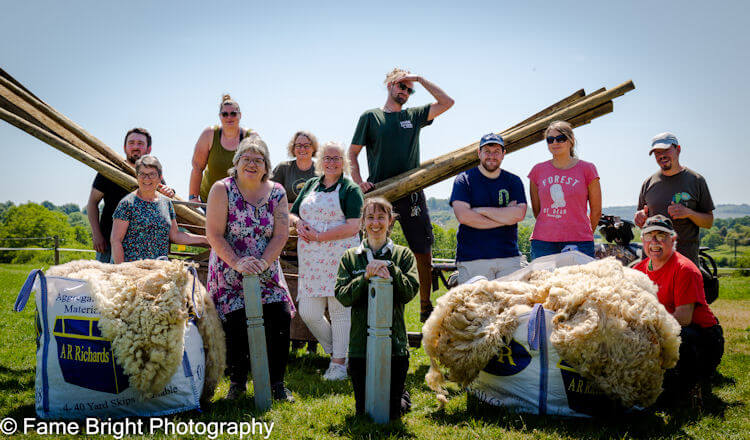
Shareholders vote on the farm’s direction, and the local community gets involved through a café, farm shop, public rights of way, events, farm tours, school visits, and volunteering days.
“At Fordhall, lots of people contributed relatively small amounts that allowed something big to happen,” explains Charlotte. “There’s a huge sense of empowerment and engagement – a feeling of purpose that people can be part of an industry and a movement they care passionately about.
“Organic farming was just about the soil, ecology, and plants or animals but an agroecological approach has to involve people as part of that mix.”
It’s already inspired others. The FCLI was recently donated West Town Farm in Devon, where the owner wanted to ensure his tenant could continue farming the land and community initiatives would continue on its acreage.
Ideas welcome at the Balcaskie Estate in Fife
Whether described as a competition or a movement, Pitch Up! is groundbreaking. Founded in 2021 by Tim May of Kingsclere Estates, it connects organic and regenerative farms with sustainable businesses needing access to land and/or space. The idea was to create circular farming communities with waste re-purposed instead of trashed.
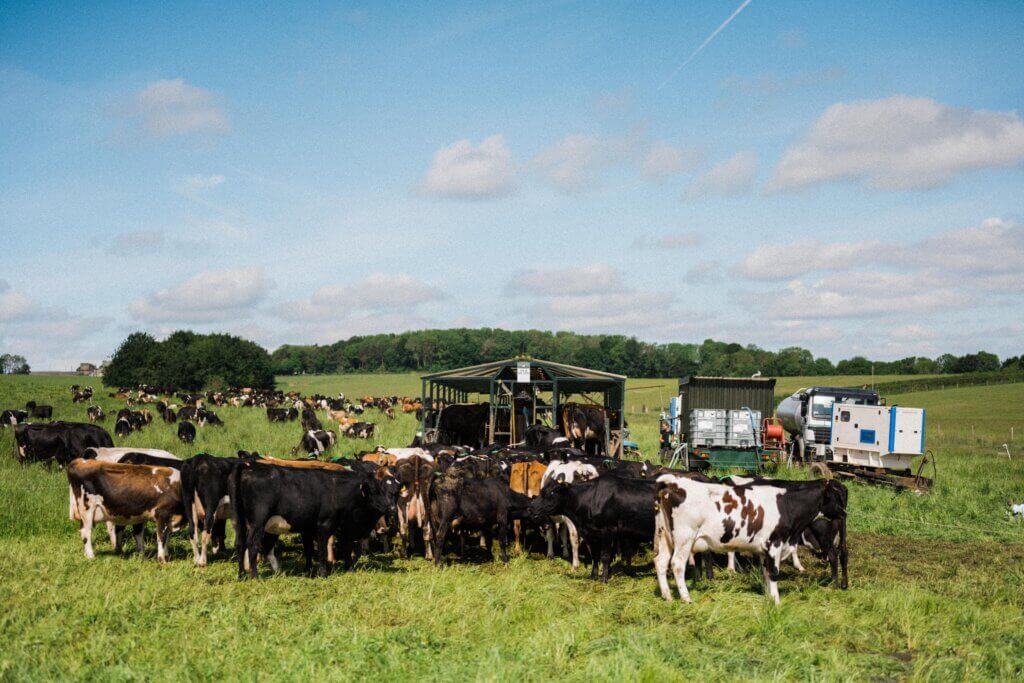
It opens for applications every November with partner farms dotted across the UK. At the 3,500-acre Balcaskie Estate in the East Neuk of Fife, they have welcomed a pastured poultry business, with hens quite literally following the cows. Vandyke Brothers Speciality Coffee is another; spent hessian coffee bags go to fellow estate residents Fife Beekeepers Association for use in their smokers.
Balcaskie now has about 40 small businesses on-site – a big change from 2008, when estate manager Sam Parsons began working there with a total team of just eight. Today, there are 140 people, employed by on-site businesses – everything from a knitter-owned local yarn shop to a catering company, sauna, market garden, and monthly farmers’ market.
People have conversations and solve problems, according to Sam, who says that community is all about making connections. He spoke on the topic at regenerative farming festival Groundswell earlier this year, where the audience raised concerns about legal agreements and farmers losing control.
“We’re doing things at a small scale where legal costs can mount up to more than the rental value, so we set up three or four different models,” he explains.
Pitch Up! describes it as gaining partners, not tenants, with each agreement shaped to be fair to both sides – whether that’s profit share, turnover rent, produce use, or longer-term regeneration goals.
A Devon estate doing things differently
In South Devon, a collection of farmers is coming together to make a positive impact from source to sea along the river Erme which flows into the channel at Mothecombe Bay, east of Plymouth. When farmers collaborate in this way they can apply for grants, for example, through the government’s Landscape Recovery Scheme to improve the environment across vast acreages.
John Mildmay-White runs the Flete Estate and is one of 16 farmers in the Erme to Yealm Farmer Cluster Group, with another 20 planned to join. “We want to get the whole catchment group together to enable actions that could have a massive impact for ecology, wildlife, and water quality,” says John.
They meet regularly, making discussions on different topics easier too, he adds.
The cluster was brought together by ecologist Robbie Phillips, who can be found giving talks at supper clubs held at Rootle, the on-site eatery & meeting space on the estate. Here, chefs Will and Olivia Norton bring together veg growers, beef and hogget farmers with diners on or near the land where it was produced.

They plan to open a cookery school with rooms on the estate for more supper clubs and other events focused on food, farming, and community.
Maybe it’s a sign of the times. And maybe the future of strong rural communities relies on new approaches that forge bigger and bolder connections across the countryside.



All sounds wonderful.