
Over many decades, vast sums of money for innovation in farming including seeds, crop applications and new technologies has come from those large enterprises and organisations that can extract value from growers and fiercely retain their intellectual property (IP), alongside their lucrative patents.
Globalised corporations, hand in glove with research institutes, have shaped the UK’s food and farming environment. This includes the views of politicians and policymakers. Today, tech-fuelled innovations such as gene-edited crops and precision breeding, new pesticides, drones or vertical farms have an oversized bearing on future discourse.
Conventional, industrialised agriculture still dominates, while innovations in agroecology, organic and regenerative farming, which can be kinder to the natural environment, struggle to secure funding. This is because they aren’t focused on extracting value from the very people they are looking to support. Saving seeds or sharing best practice among growers doesn’t make big agri-businesses money.
“If I want funding for agroecological innovation I will be drowned out by the noise from globalised corporations and that’s because we’re still deploying a Henry Ford Model T version of the food and farming system. A one-size-fits-all approach to production, where centralised IP encompasses everything from the seeds planted, to the chemicals used and the tech deployed,” explains Steven Jacobs, coordinator at the Organic Growers Alliance.
He adds: “This is immature and quite frankly irresponsible, especially when we increasingly need to grow healthy, nutritious food that is sustainably produced, boosts soil health and biodiversity, as well as be climate resilient. This is what needs a lot more investment and innovation.”
To date, a lot of research in this area is largely dependent on charitable, philanthropic or state funding, which is in short supply from the current cash-strapped government. It’s also been sliced, diced and diluted under bigger grant pots, such as those for the Farming Innovation Programme or ADOPT.
One canary in the coalmine is the Organic Research Centre, the UK’s leading research body in this field, which has always been staunchly independent. In the autumn of last year it was acquired by ADAS but “continues to operate as a standalone business”. ADAS, the UK’s leading agricultural advisory service was privatised in 1997 and is now part of the RSK Group, which is also privately owned and funded by vast tranches of globalised private equity and debt.
Public good or private gain?
A few years ago, the Food Ethics Council published a report questioning whether the UK food and farming research agenda delivers private gain, rather than public good. At the time Dan Crossley who heads up the Council said: “It suffers too often from having a narrow agenda, undue corporate influence (and) opaqueness.”
Talking to people today it appears little has changed. For instance, access to UK organic seed that’s appropriate for growing certain crops at scale is limited. It means a lot of conventional varieties are used by organic farmers under derogation, which means the rules are relaxed. However, these have been specifically bred for high fertiliser, high pesticide fed systems.
A lack of investment into agroecological innovation could be one of the reasons why the area of land under organic production has barely budged. It’s been static at just three percent of the total area of England at 503,000 hectares for over a decade.
Biodiversity loss, alongside climate change, is amongst the biggest medium-to-longterm threat to domestic food production – through depleted soils, loss of pollinators, drought and flood conditions. Global biodiversity loss, ecosystem collapse and national security: a national security assessment report; UK GOV 2025
However, the market for organic groceries has been growing at seven percent, which means demand outstrips supply. The gap is supplied by imports from overseas, rather than homegrown produce.
“If nobody invests in research and development it’s never going to grow. The question is, who’s responsible for bearing the cost? The government doesn’t think this is a priority for public money because it’s a niche market,” states Dr. Charlotte Bickler, Principal Researcher – Crop Diversity & Agronomy at the Organic Research Centre, who also works with the UK Grain Lab.
While the UK government chronically underfunds this sector this is in contrast to the European Union. The area under organic production in the EU has roughly doubled in the same decade, and now stands at over ten percent. This is due to policy support, investment in research and greater demand – the aim in Europe is an ambitious 25 percent by 2030.
Yet a very recent DEFRA report on national security states that “more investment in research is needed for regenerative agriculture…UK food production is vulnerable to ecosystem degradation and collapse… Biodiversity loss, alongside climate change, is amongst the biggest medium-to-longterm threat to domestic food production – through depleted soils, loss of pollinators, drought and flood conditions.”
“Despite these words, I don’t feel we’re getting the support we need. There’s so much more that needs to be done at a political level. Agroecological research is a small movement and our ability to influence those in power is limited. Is it better to invest in the grassroots level and drive change at a small scale, rather than lobby for wider change in order to create a better environment for larger scale investment? This is a tension that’s not been resolved,” details Bickler.
She continues: “We could have a louder, more powerful voice by organising ourselves more effectively. There’s a lot of work happening in the agroecology sector, but again it’s small scale. We need to come together as a movement to really amplify our learnings and experience and then maybe we could have a greater impact at a government policy level.”
These learnings can be powerful. For instance, population crops in organic wheat are a good example of where research and networking by growers has led to more hectares planted, driving uptake and sales right through to British bread makers. These wheat crops have a diversity of plants and traits. They are also more resilient and adaptable to climate change.
Chicken and egg situation
What may change things is the potential alignment between the UK and the EU to reduce trade friction in food next year. The aim is to create a common Sanitary and Phytosanitary area. This means the UK will adopt European food standards. This will also be true for organic produce, which means British growers will have to use organic seeds. This could spur fresh investment in the sector.
We already know that investment in organic farming innovation and research does lead to greater adoption by farmers and more acreage planted. Dr. Charlotte Bickler and her team have shown this with winter wheat here in the UK.
“We developed a participatory network of arable farmers who experimented with certain varieties in their own fields. We then compared performance across the network to understand how these varieties performed in organic systems. When farmers had access to this information, this allowed them to make better decisions on which seed to use. This led to an increased acreage of organic winter wheat, which had been declining in the UK,” explains Bickler from the Organic Research Centre.
She continues: “We are in a chicken an egg situation. There’s not enough realised demand for organic seed, so we don’t invest. But there won’t be enough demand until we invest in the research that gives farmers better information, so they can plant the best organic seed for their land, which will then deliver results. However, we do have the evidence that these innovations deliver results and public goods.”
The winter wheat project was funded by an EU grant, after DEFRA failed to fund the project (then Brexit ensured that money dried up). These challenges are not just occurring in cereals or fruit and veg, the issue extends to other UK crops, and includes conservation seed and wildflowers.
“Organic seed for environmental areas is in very limited supply, and some things are not available, it’s as simple as that. In an ideal world, we would create a beautiful marketplace where all organic growers would have access to organic-only seed. Unfortunately, it is just not the reality. We also need investment in this area and more research around grains and pulses,” states Ana Reynolds, managing director at Oakbank, a farming advisory firm.
Read more about the importance of pioneering grains & pulses, here
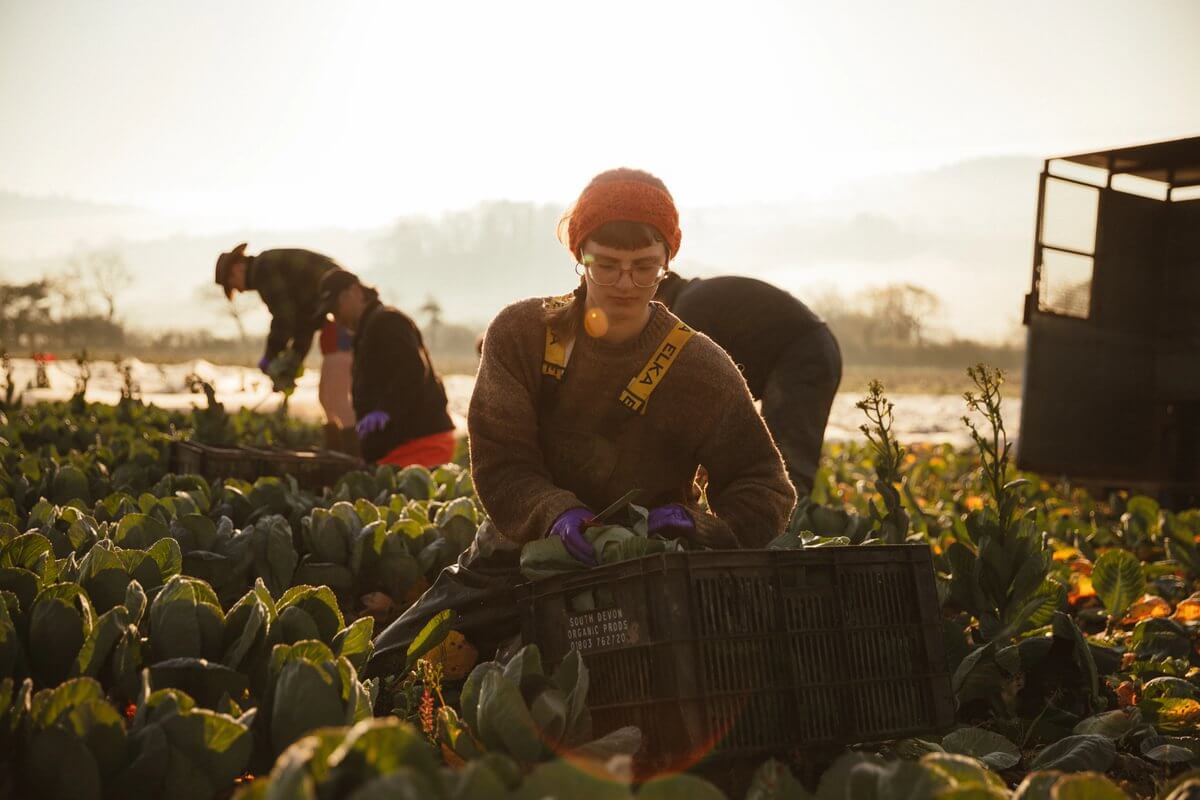
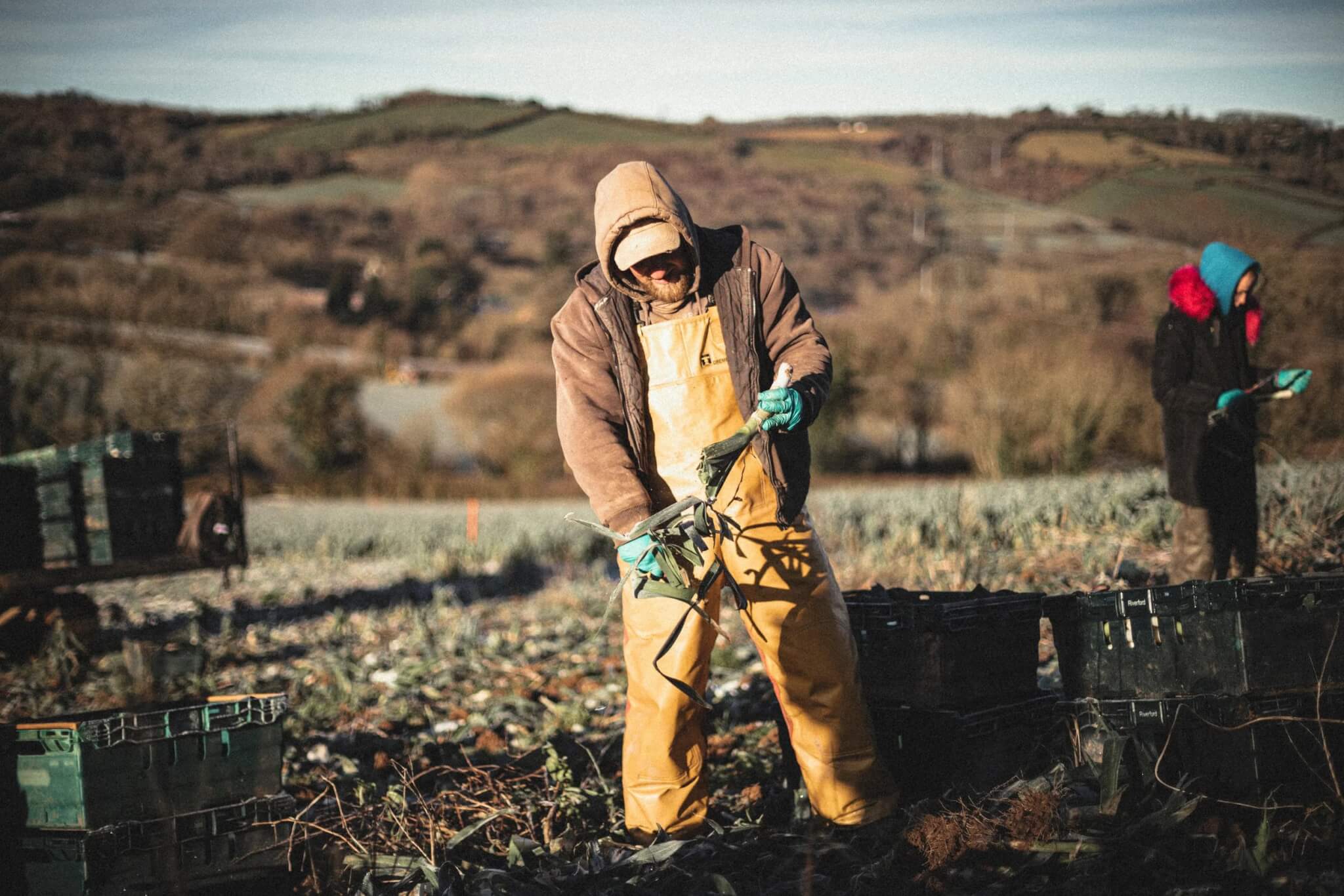
Photograph taken at Riverford’s Wash Farm, by Emma Stoner


Too simplistic, perhaps? If we had more organic farmers in my part of Essex (and elsewhere, of course!) they would be far less inclined to up sticks and offer their land up for development. It’s getting quite ridiculous in this area. Please go to the Facebook page Hockley & Neighbouring Villages GreenBelters:
https://www.facebook.com/share/g/1CKAfnLXYJ/?mibextid=wwXIfr