

Baked beans and green peas are ingrained in the national psyche. But recently we’ve fallen out of love with them. The average Brit consumes only one tablespoon a day, much lower than the 80g recommended. More than 40 per cent of people eat none at all. It’s why Josiah Meldrum wants to rekindle our relationship with beans, peas and legumes.
A full scale renaissance of home-grown pulses would be the ultimate dream for the co-founder of Hodmedod’s Wholefoods. This is what Josiah and his team have been busy trying to achieve since the founding of their company back in 2012. Inspiring us to eat more beans is at the heart of what they do.
They’ve brought us a raft of UK firsts: the first ever commercial crop of lentils, then chia seeds, as well as the first ever British chickpea harvest. They’ve even resurrected a long-dead pulse – the Carlin pea – and delivered it to our kitchen tables. If there is one person who believes in the transformational potential of these nitrogen-fixing, field crops, it’s Josiah Meldrum.
“What’s incredible about the fantastic power of pulses, is that you can easily get your head around them and therefore they can be an extraordinary lever for change. Just by asking people to eat a few more portions of pulses each week can really shift the dial. It is not a huge undertaking either and that in itself is empowering,” explains Meldrum.
British households spend just £1.68 on pulses each week and £2.90 on legumes. This represents less than 1 per cent of weekly income, according to research by the University of Reading. The typical British adult eats a paltry 15 grams a day. Since eating more beans is associated with a more sustainable diet – this is the direction of travel for those invested in a healthier plate that also benefits the planet.
“More pulses can also help with our health, they can change farming systems. They can slash carbon emissions, since they build soil organic matter. They can help reduce the need for synthetic fertilisers. They can also tackle the biodiversity crisis since farmers can then grow a greater diversity of crops. There are definitely multiple wins by eating more beans,” adds Meldrum.
More British protein crops
It all started 15 years ago as part of the Norwich Resilient Food Project. The aim was to make the East Anglian city more self-sufficient. Out of this was born Hodmedod’s in 2012, co-founded by Josiah Meldrum, Nick Saltmarsh, and William Hudson. It began by distributing seeds to local farmers with the aim of growing more British protein-focused crops such as fava beans and peas.
“A lot of food system change and non-government organisations have focused on the power of small-scale horticulture or reducing meat and dairy. But what about the foods that feed us the most, which come from arable systems? It seemed like a massive oversight and a real opportunity to start refocusing on those bigger fields that were are all around us here in Norfolk,” states Josiah Meldrum.
He continues: “Those fields can either produce animal feed, bioethanol, feedstuffs for an anaerobic digester or, more importantly, tasty ingredients that end up on our dinner plates. We want to show people what impact they can have by consuming more pulses. The potential for change is huge. We should certainly be eating more of our native legumes in this country.”
Back in 2012 there were no British farmers growing organic pulses for food, just for animal feed. Over twenty years ago, almost no one in the UK had even heard of fava beans or carlin peas. Fast forward to 2025 and a lot has changed. Today Hodmedod’s sells and produces over 100 minimally processed wholefoods, including home-grown flamingo peas, smoked quinoa, and coral lentils.
“What we need to shine a light on now is the 50 percent of cereal fields that are still producing food for livestock in sheds. The massive rise in consumption of poultry and pork in the UK is having a huge impact on our land and polluting our river systems. This is food that humans could and should be eating,” details Meldrum.
“That’s why we started with the question: how do you communicate something that is incredibly complicated, which is food system change? We managed to condense it into one really simple message – eat more pulses. Put them in the middle of people’s plates and get them back in the middle of agricultural rotations. This is relatively simple and straightforward,” he adds.
A national conversation on pulses
Meldrum and Hodmedod have certainly been instrumental in getting a national conversation going about pulses. It is therefore not surprising that there are new campaigns this year from the Food Foundation, which aims to double UK bean consumption by 2028, to Raising the Pulse at the University of Reading, which is looking at adding fava bean flour to bread.
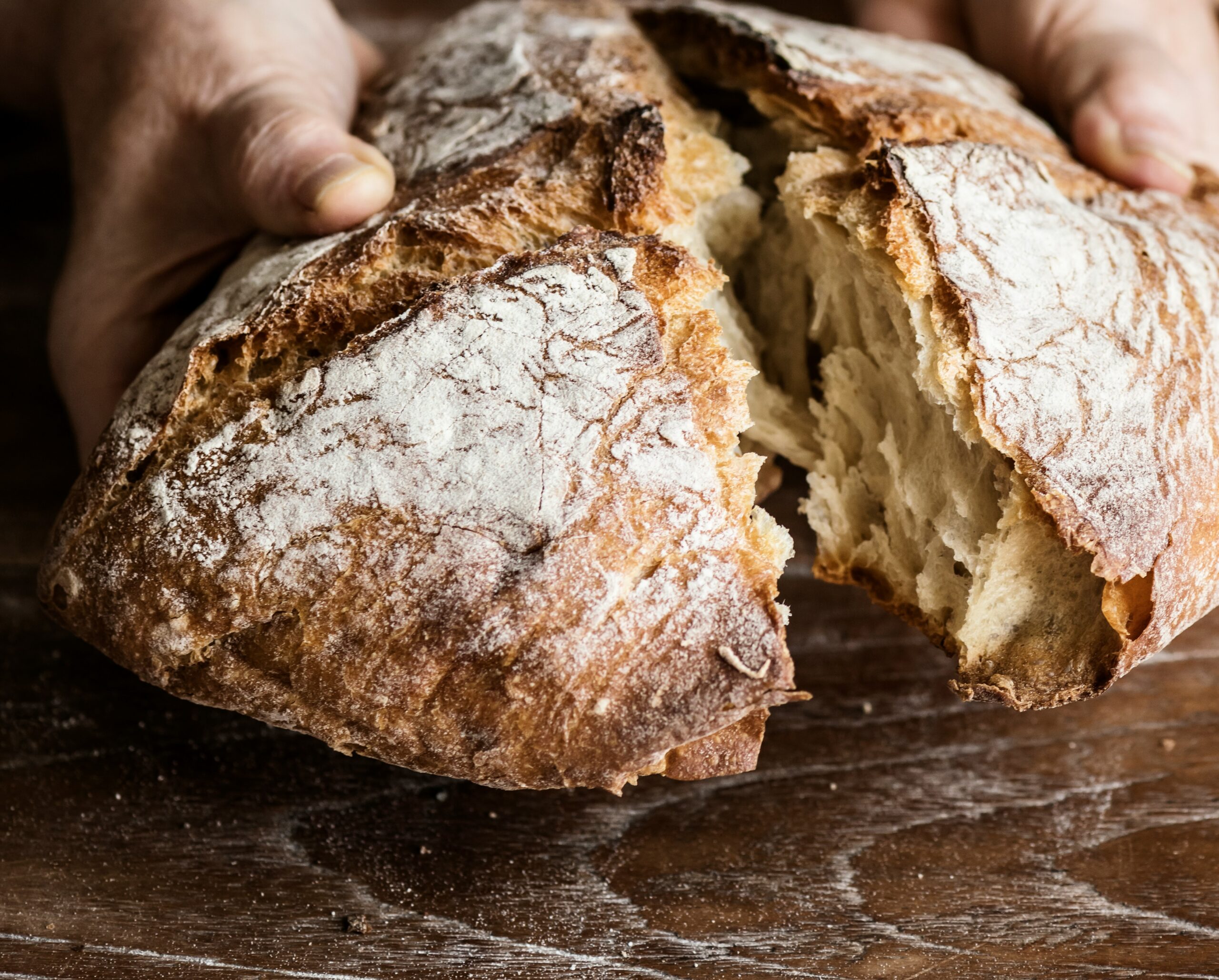
A farmer we work with in Shropshire said he used to look out across his wheat fields and think about tonnes and yield. Today Mark thinks about loaves of bread. He’s got a completely different way of looking at that crop. He now sees it as actual food. Josiah Meldrum
What’s interesting is that Josiah sees his company not just as a middle man in the supply chain, but as a true networker, connecting farmers directly to consumers, personalising the products that they sell, and bringing storytelling to the buying public in order to change the narrative around what we eat.
“The commodification of certain crops has detached farmers from consumers. They’ve focused on yield and disease resistance, or in the case of wheat, milling quality. It’s not about flavour, nutrition or taste. Those 28 tonne loads that leave the farm are anonymous. Where they end up is completely unknown. They’ve forgotten that they’re producing food for real people,” states Josiah Meldrum.
“It is important for us all to really understand where our food comes from and that it can have a transformative effect, not only on the people consuming it, but on those who grow it. A farmer we work with in Shropshire said he used to look out across his wheat fields and think about tonnes and yield. Today Mark thinks about loaves of bread. He’s got a completely different way of looking at that crop. He now sees it as actual food.”
That’s because Hodmedod puts the name of the actual farmer on the packaged food if they request it and broadcasts their grower activity on social media. Josiah believes we need to do more to connect those who produce our food, with all those who eat it. Trust and understanding is in short supply. Relationships have become way too transactional – the supermarkets have got a lot to answer for.
Josiah and Hodmedod are also promoting agroecology through a community interest company they’ve set up in the East of England called, Barleybird. The aim is to collaborate with farmers, growers, businesses, and communities to achieve systemic changes to the way food is grown, distributed, and eaten.
“We are an activist business, people need to know what a more sustainable food system actually looks like and at the moment the vast majority have got no idea,” points out Meldrum.
Rediscovering forgotten crops
Hodmedod is an old East Anglian word that refers to a hedgehog, a snail, or a curl of hair. This disregarded word could easily be applied to forgotten crops that we’ve overlooked, but now brought back into view by this company, one of these being lentils.
“We used to grow lots of lentils in the UK, then we largely forgot how to grow them in the late 19th and early 20th Century. This was due to various reasons concerning agricultural economics, globalisation, and empire. All we’ve done is rediscover how to grow and use them. There is so much potential. The same is true of long-forgotten heritage varieties,” says the co-founder of Hodmedod’s Wholefoods.
He adds: “If we can find ways of producing some of those older varieties in systems that work for modern farming, then we can grow much more nutritious, flavoursome, diverse and better crops. Plant breeding has focused on high input systems, and there isn’t very much effort looking at varieties that work with low inputs. Almost none, which means that diversity has been overlooked. Putting this back into our fields is a real opportunity for exploration and we’ve hardly scratched the surface.”

0 Comments