
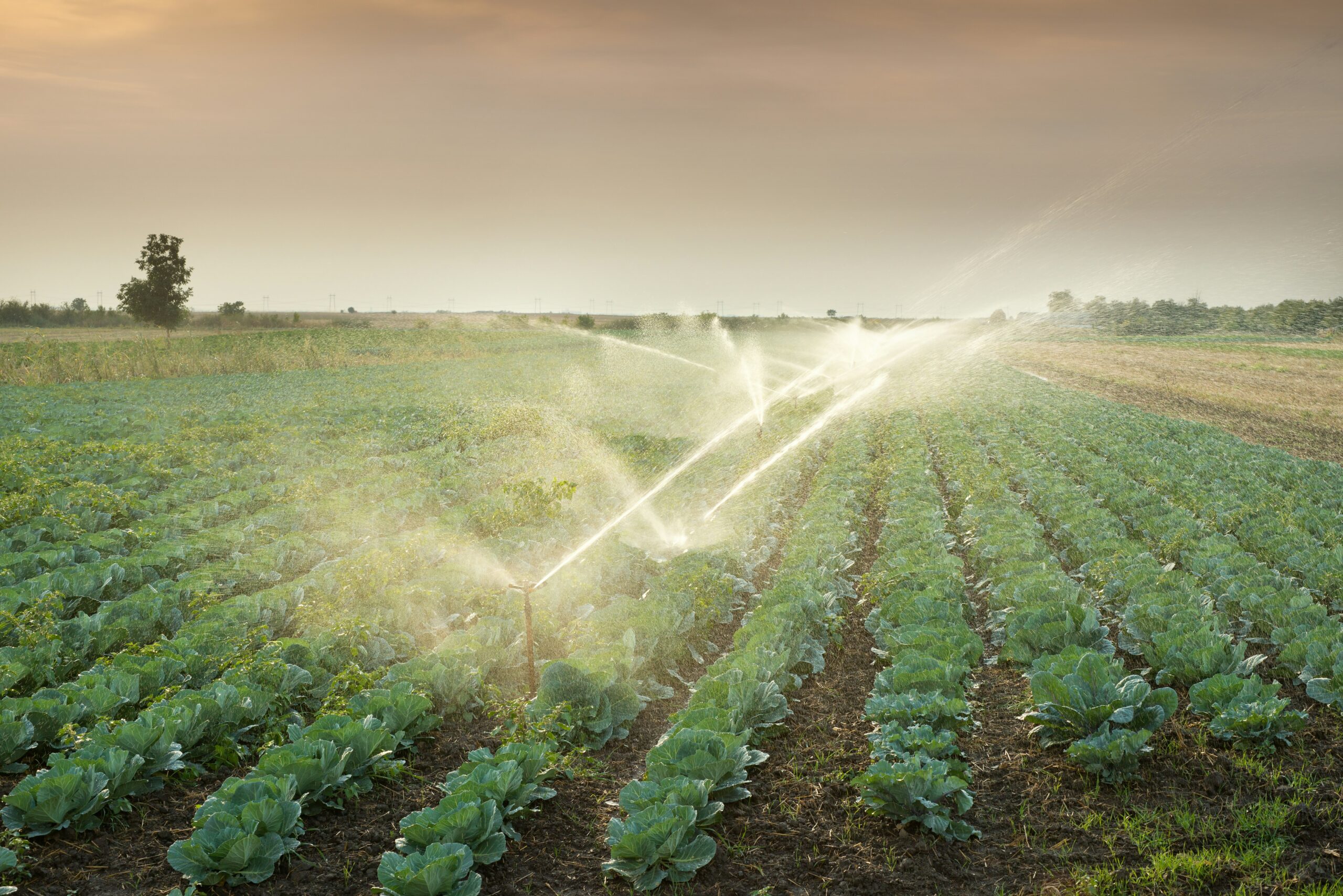
This summer is likely to have been the warmest on record. Britons experienced the driest July in 190 years, and one of the worst droughts in half a century – killing off crops and severely reducing yields. Arable farmers have lost at least £390 million; 2.5 million tonnes of grain and seeds have withered in the field; this will be one of the worst harvests since 1984.
Today, farming is one of the most exposed sectors to super-charged climate change. A third poor harvest in a row means water security is now top-of-mind for British growers. There is already less winter veg being planted and winter forage stores have been used by livestock as grass hasn’t grown. No longer a green and pleasant land, many fear for the future.
This baking summer, the east and south-east were the most exposed to drought and heat stress. These highly populated regions also demand lots of water. This led to low river flows and over 1,500 restrictions on abstraction licences. Many farmers were banned from irrigating their crops from boreholes and springs.
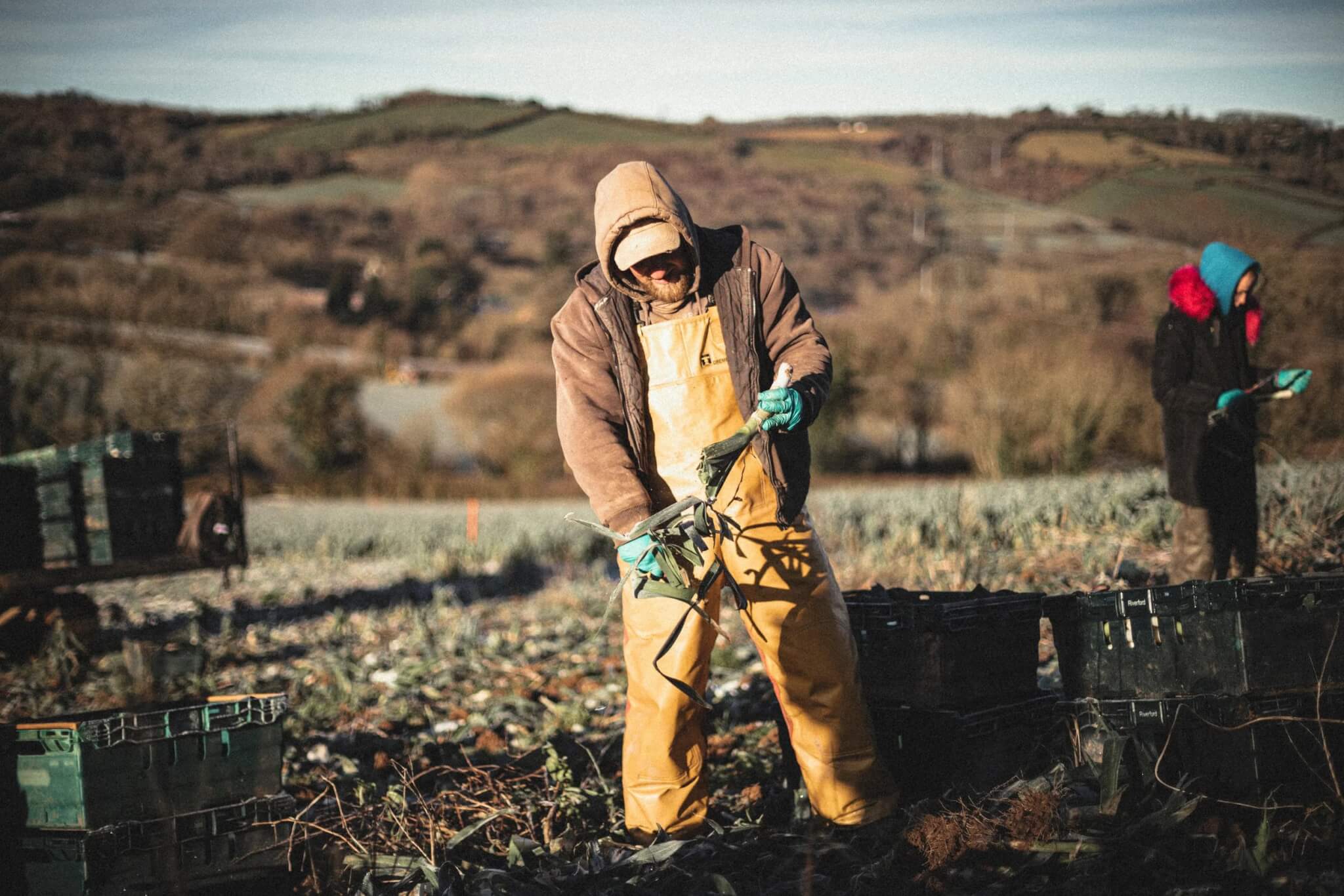
“There were onion growers that were halfway through their production cycle and they would have needed to irrigate for another six or seven weeks this summer. But then they had so-called ‘hands-off flow’ orders slapped on them and no more water could be used. This has really impacted yields and profitability,” states Alex Stephens, Crop Production Manager at Riverford Organic Farmers.
Almost all of the onion crop in the UK is grown in East Anglia, which was one of the most drought-stricken areas. It had only 2mm of rain in July. Onion yields are down 25 percent. British carrot growers are looking at even greater losses, with up to a third of the crop lost due to the parched weather, for some parsnip growers the loss is up to 60 percent.
“The driest parts of the country, where we have increasing domestic demand for water, also happen to be some of the best areas to be growing high-value fruit and vegetables. It is why there is now increasing demand to install irrigation,” explains Tim Hess, Emeritus Professor of Water and Food Systems at Cranfield University.
He adds: “But with rising competition for water from housing, industrial, and environmental sectors, it gets increasingly harder to allocate water to agriculture, particularly in times when we have a drought… farming is fairly low in the pecking order.”
The shocking statistic is that less than one percent of UK farmland is irrigated. Compare this to Spain where more than 15 percent is, India (44 percent), France (over six percent) and Germany, three percent.
It’s high time we had a rethink about on-farm reservoirs, retaining water on the land and using nature-based solutions as a sponge to soak up water during the winter deluges. This is an increasingly precious resource, since water security equals food security.
“The big trend now is towards winter storage reservoirs. This is being recognised by the UK government with the introduction of new planning regulations to make it easier for farmers to invest in water holding capacity on their land. Somebody needs to put in more money, whether it’s the government or farmers? – that’s a political question,” says Professor Hess.
Funding needed for water security
In the wake of this summer’s drought, the Department for Environment, Food & Rural Affairs (DEFRA) has offered up to £15 million through a reopened grant scheme to fund new on-farm reservoirs.
An additional £50 million will be added to the Sustainable Farming Incentive to help farmers adapt to future droughts, although this isn’t necessarily water-focused. The reality is that these funds are a drop in the ocean in terms of what is really needed.
Grants will be conditional on the many hoops that landowners still have to jump through to satisfy both local planning authorities and the Environment Agency. Farmers with poor crop yields and low farm-gate prices are not flush with cash and the grant only covers up to 40 percent of the costs.
“Right now farmers don’t have the financial capacity because profit margins are so thin. The last thing they want to do is invest in irrigation equipment or on-farm reservoirs that they may or may not use next season; the weather can be fickle – so it is a game of risk,” points out Dr Sven Batke from Edge Hill University.
The Environment Agency has also investigated the availability of more water for abstraction. This is water pumped out of the ground from aquifers. Yet in important fruit and vegetable growing areas there is little opportunity for more abstraction licences.
It is important to note that agriculture in England uses less than one per cent of all water that is abstracted. It also doesn’t help that British households are profligate water users. “We already have a domestic water supply system which is teetering on a knife edge. We also have expanding demand for domestic water, not necessarily per capita, but in the number of people. Every time we have new housing developments, there is increasing demand,” details Professor Hess.
Time to create a spongey environment
So what are the solutions? They are actually right beneath farmers’ noses.
Landowners, local and public authorities have a very long history of cooperation in the UK of developing effective land drainage when there is too much water. We need to look again at the work of the Internal Drainage Boards (IDBs) – public bodies that manage water levels in their area. There are 112 IDBs in England whose districts cover 1.2 million hectares (9.7% England’s landmass).
For decades, the UK has been relatively effective at getting water off fields when extreme winter floods hit – flooding that continues to worsen due to climate change; two years ago that the country experienced the wettest winter on record.
It now makes sense to do the opposite and coordinate the retention of more water on the land when it rains, particularly in upland and higher areas, using nature-based solutions such as rewetting peat, slowing down water courses, planting trees, and creating scrapes and shallow ponds, as well as natural wetland features that release water when it is needed in the summer.
“We should consider food production as part of the wider landscape, not just as individual farmer activities but at a watershed level, as well as consider utilising money for biodiversity net gain and environmental schemes that develop wetland areas. These can then be partly used for irrigation in the drier months,” details Dr Batke.
This involves more integrated water resource management and all parties involved working together. One example is Water Resources East, which is a not-for-profit membership organisation focused on managing water resources in a better way. Parched summers are forcing such authorities to rethink schemes that may have been dismissed as too complex, too expensive, or too disruptive in the past.
“There’s now increasing interest in groups of farmers working together, sharing reservoirs and water access. In the future farmland could become a bank for water, where farmers release it to other sectors at critical times, whether that’s for the environment, industry, or domestic use,” explains Professor Tim Hess.
He concludes: “Farmers could sell this water back to water companies. There’s now interest in building reservoirs that are bigger than what a farmer needs. It’s rather like solar power and batteries in peoples’ houses that then sell energy back to the grid.”
A more flexible water grid at a landscape level that manages flows in watersheds throughout the year, and uses nature and man-made features to do so sounds like it has potential. Implementing such schemes is another story. Future heatwaves and empty supermarket shelves are likely to focus the minds of the people, and policymakers, before long.


0 Comments