
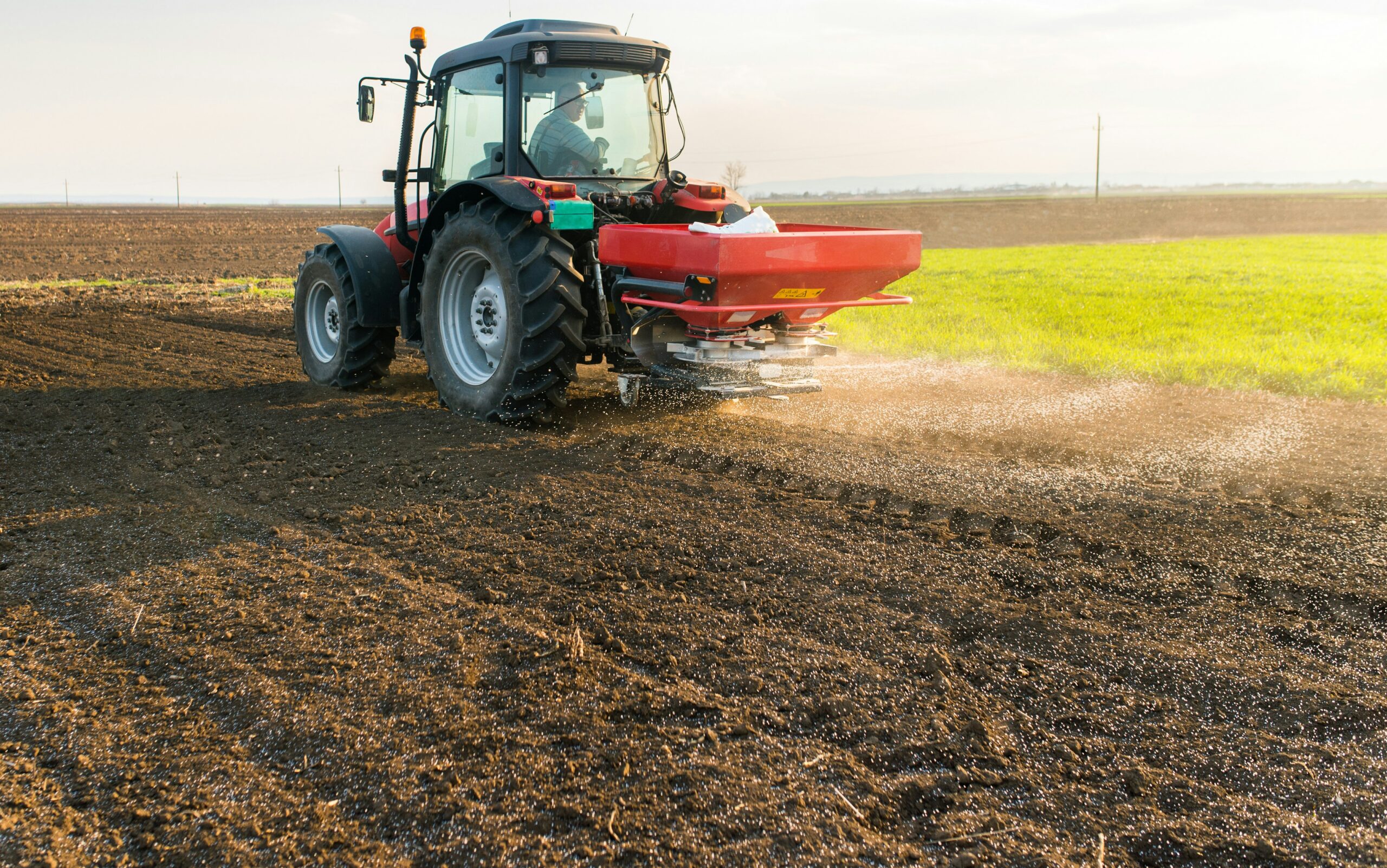
The nitrogen cycle in the natural environment is in very fine balance, where organic matter is slowly digested by microbes carefully releasing the nitrogen that crops need to thrive. Synthetic fertilisers supercharge natural processes in the soil overwhelming this balance. Their overuse also contributes to greenhouse gas emissions and run-off, polluting our rivers and waterways.
Yet British farmers continue to apply staggering amounts of synthetic nitrogen fertiliser to our soils. More than 904,000 tonnes are used across 11.5 million hectares of farmland each year, which means it is applied to nearly two thirds of the total area under cultivation in the UK, according to figures from the Agricultural Industries Confederation.
Our artificially verdant green landscape comes at a huge cost, since it is often the most expensive input for farmers. For arable, it can account for up to 12 per cent of a farmer’s total costs. It is why the UK government has just reduced import tariffs on imported fertilisers.
Following conflict and war in Southwest Asia, a tonne of nitrogen fertiliser now costs 20 per cent more than a year ago – around £488. The UK no longer produces ammonia, from which nitrogen fertilisers are made, and is wholly dependent on imports, which are manufactured using natural gas.
Right now, farmers are anxious about the rising cost of inputs after a drought-induced drop in this summer’s yields which provides greater impetus to cut back on synthetic nitrogen fertilisers. There are also supply chain bottlenecks, since the route to market has been disrupted.
“We also know that the Nutrient Use Efficiency (NUE) of fertilisers by crops is extremely low. A huge amount is flushed into the wider environment, which includes the climate warming emissions embedded in them. Yet the ‘polluter pays’ principle does not currently apply to the companies who produce these chemicals,” explains Natasha Hurley, Deputy Director of Foodrise, an environmental charity focused on transforming food and farming systems.
She adds: “It’s an industry that has essentially got away with externalising its impacts and causing huge amounts of environmental damage over the past century.”
In the UK government’s own words: ‘nitrogen pollution is a significant driver of biodiversity loss… with wide ranging negative impacts on air, land, and water quality.’
In fact, our landscapes are awash with the stuff, 99 per cent of England’s nature conservation sites are overloaded with nitrogen, while nitrous oxide from fertilisers is the third-largest contributor to climate change after methane and carbon dioxide.
At the same time, 70 per cent of nitrate pollution in the UK’s water environment starts in farmers’ fields.
New research
These concerns come at a time when new and extensive global research by the University of Reading, shows that improving the nitrogen-cycle in farmland soil could significantly reduce climate warming emissions.
Academics found that by replacing synthetic fertiliser with organic matter, including crop residues, manure and biochar (read more about biochar, here), nitrous oxide emissions could be cut by an average of 22 percent and for ammonia, by as much as 41 percent.
“Organic materials, compared to synthetic fertilisers, release nutrients much more slowly. They also allow different parts of the nitrogen cycle to keep pace with one another more effectively in a concept called ‘synchrony,’” states Professor Simon Willcock, Director of Sustainable Farming Systems and co-author of the study from the University of Reading.
The research shows that the different stages of the nitrogen cycle need to be in sync in order to be truly effective in the soil. These stages, or processes, are called mineralisation, immobilisation, nitrification and denitrification.
The application of short bursts of synthetic fertilisers can cause these processes to fall out of step. This allows certain forms of nitrogen to build up in the soil and escape into the atmosphere or water courses as nitrous oxide or ammonia, which is also a major driver of pollution.
If there’s not enough microbial activity or carbon-rich, organic matter, which microbes depend on, this is likely to make the situation worse – it is well documented that British soils are known to be depleted, while most arable soils have lost up to 60 percent of their organic carbon.
“You need to look at the whole system. Adding organic matter was beneficial in our research because it was associated with greater soil carbon and greater microbial biomass and ultimately, better soil health. If UK farmers deploy regenerative agriculture they should create a more synchronous nitrogen cycle in their soil,” details Professor Willcock.
A call for change
It is why the Sustainable Nitrogen Alliance, which is made up of the likes of the Soil Association, SUSTAIN, the Sustainable Food Trust, WWF and other organisations are calling for a planned transition away from the use of synthetic nitrogen fertilisers towards more agroecological growing.
These systems rely more heavily on nitrogen-fixing plants such as peas and beans – which we need to eat more of anyway for health and sustainability reasons – alongside better nutrient recycling on farm. Such a move would involve supporting farmers to reduce their huge dependence on nitrogen fertilisers and transition away from their use.
“All the alarm bells are ringing from a planetary health perspective. We’ve definitely gone past the safe operating space for nitrogen,” details Hurley from Foodrise, which is also calling for a ‘nitrogen pollution remediation and transition fund for agriculture.’
This pot would be funded through the ‘polluter pays principle,’ where monies would be levied on the synthetic nitrogen fertiliser industry in order to pay for farmers to change. In the UK, this sector is dominated by three companies, Yara, CF Industries and Origin Soil Nutrition. Figures show they make over £1 billion in revenue a year and £750 million in profits.
“The UK government is very concerned about the dominance of a small handful of companies in this market. Fertilisers are in effect an alternative route to market for the major petrochemical companies and these profits are not going back into the UK economy,” says the Deputy Director of Foodrise.
The cost of fertiliser is likely to hit the headlines again in January next year, when the Carbon Border Adjustment Mechanism (CBAM) comes into effect. This will be a new tax, based on the carbon emissions from the production of imported fertiliser products. The impact will be low in 2027, but will ratchet up as the years progress.
Hurley concludes: “We need to think about a future where the impacts of nitrogen pollution are brought onto companies’ balance sheets – would such legislation change the way these businesses behave and the way they market their products? We need to regulate across the board on this matter.”





0 Comments