
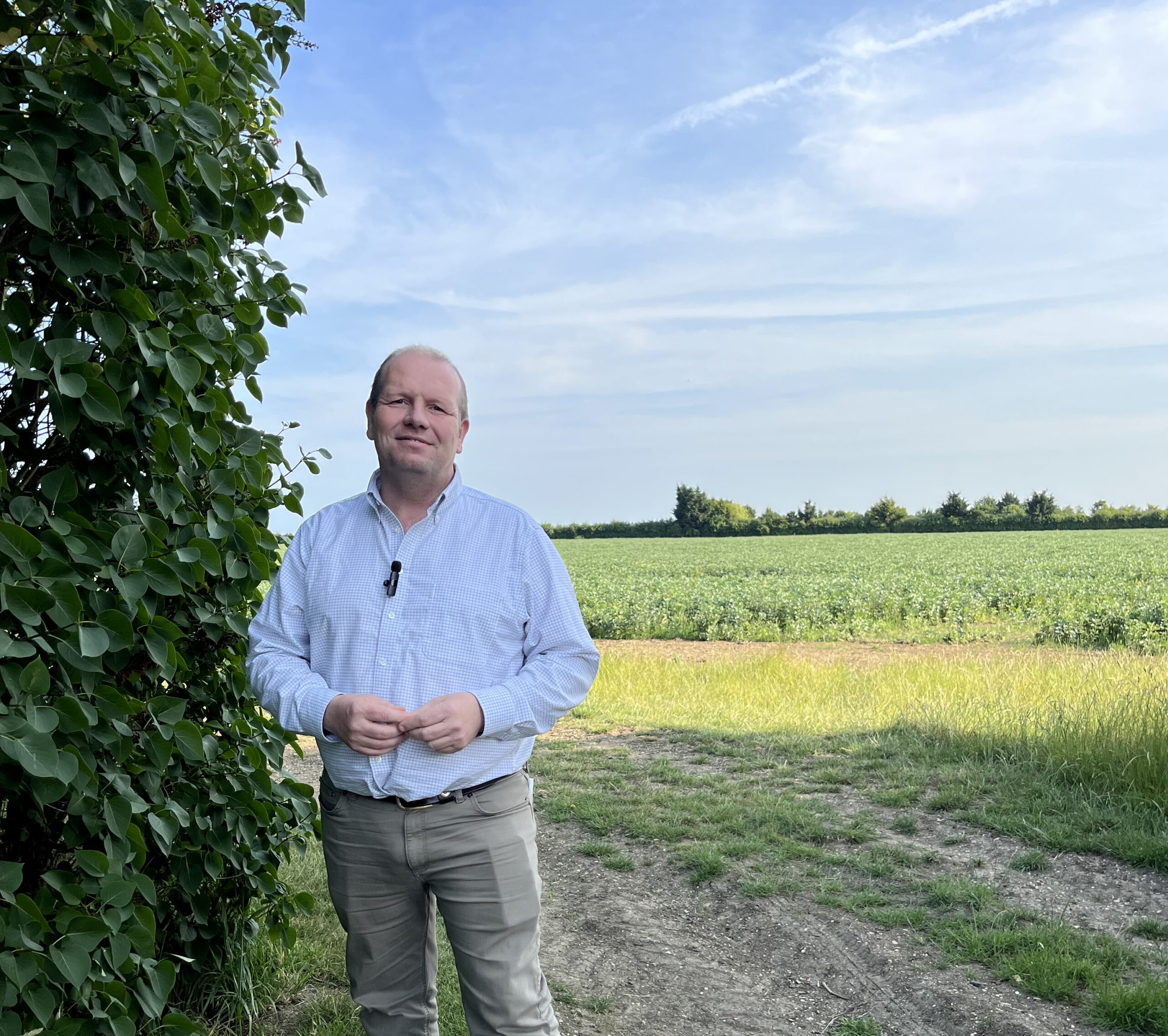
Martin Lines believes his way of farming is having a moment. A summer of record-breaking sun and drought has left its mark on the landscape, especially in South Cambridgeshire where he is an arable farmer. His crops have suffered, so has his bank balance, profits have wilted in the intense heat, the rocketing bills remain… and yet, things could have been much worse.
“We’ve had a bit more resilience in our system than some of our neighbours. We’ve also spent less on inputs and our soil has coped a bit better. This is the coolest, calmest year for the rest of our lives because this is now the reality of climate change, which is backed up by science,” explains Martin Lines, the CEO of the Nature Friendly Farming Network (NFFN).
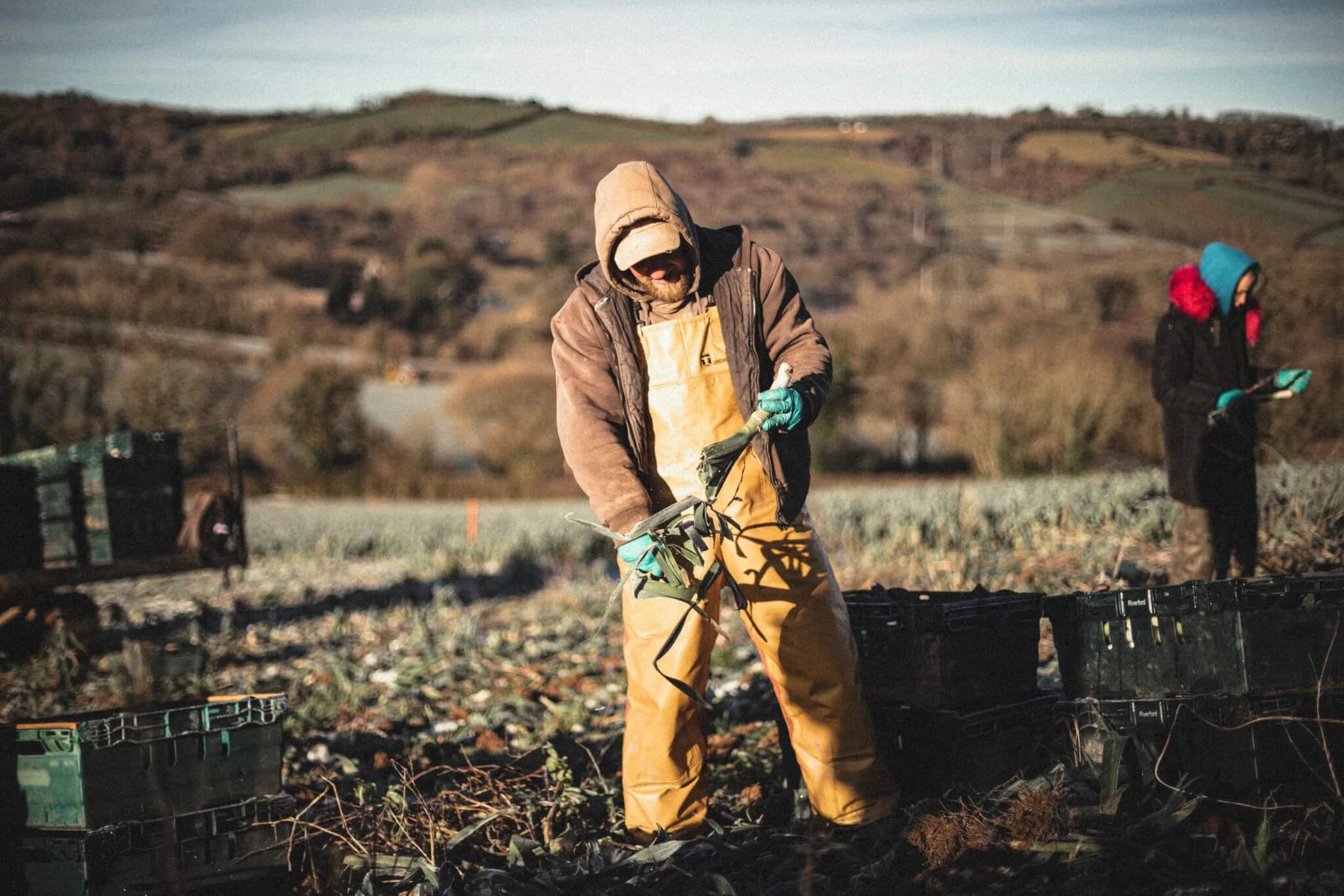
For a decade, Lines has been deploying farming methods that are more environmentally friendly – boosting soil health, deploying integrated pest management and mixed rotations, as well as encouraging ecology-rich habitats. They are now acting as a buffer in the face of weather extremes.
Nearly a decade ago, he founded NFFN, which is a farmer-led movement. The aim is to raise awareness and share knowledge, as well as advocate for stronger policies that bring together food, farming, nature and climate resilience. Keen to shift the dial across the UK, he has recently been knocking on politicians’ doors.
“I’ve been at the Labour, Tory and Lib Dem party conferences. Policymakers need to recognise all the services that farmers offer and it’s not just about food security. There is also landscape resilience, which then produces goods that the market needs including better water management, timber, fresh fruit and veg, fibre, cut flowers, access to nature and carbon sequestration,” points out the third-generation farmer.
“We need to take that collective voice into party politics and make sure that decisions made in Westminster are shaped around delivering resilience in our farms and in our landscape. We also have to remind everybody that nature underpins our food, our farming, and our economy. It is not just a nice to have.”
Rising costs spark change
The rising cost of energy, up by a quarter on a year ago, and inputs, up 35 percent, exacerbated by both conflict in the Middle East and Ukraine, means that so-called ‘agflation’ is running at close to eight percent, according to the consultancy, Andersons. While input costs are rising at double the rate of consumer prices.
The NFFN, through its Nature of Business report has shown that farmers who reduce or remove expensive inputs, including fossil fuel-derived fertilisers and imported feed, experienced an average of 16 to 36 percent uplift in commercial returns.
This demonstrates that it makes business sense to draw down on intensive farming. The report also states that such a move also reduces environmental pressures, benefits biodiversity and insulates farms from external economic and climatic shocks.
“Many farmers are now waking up to the very significant challenges of the economics of growing crops, particularly in a high input system. Many say this can’t continue and they are exposed heavily to the real cost of growing. We’ve got to build more resilience in our system, and get the customer and the politician to realise the real challenges,” details Martin Lines, who founded NFFN back in 2017.
He believes the country must invest in nature-based solutions and that farmers need to be funded for such work, whether this involves creating a spongier landscape that retains more water on the land, so that housing estates downstream don’t get flooded, or improving soil health with fewer applications of fertiliser, so that there is less pollutive run-off into rivers.
“UK farming is a net contributor to carbon emissions. We are polluting water courses and degrading air quality in many of our current farming systems. We know we need to change, but we need to create a pathway, not a cliff edge. Many farmers just need to know what society expects of them and be recognised for the changes they must make,” states Lines.
He continues: “We also need to increasingly look to the supply chain and all the products we sell, because they are now really concerned around the growing risk to their stocks and not getting the milk, wheat, barley or produce from farms. This summer brought this into stark relief.”
Martin Lines believes we need to reframe the debate, shifting the focus from UK food security to nutritional security: delivering better outcomes for the nation’s health from the food that is produced, lower costs for the NHS and increasing the nutrient density of the fruit, veg and grains, which are grown across the farming landscape.
“There’s increasing evidence that shows that the food we’re consuming is less nutrient-dense than in the past. This is because of the monocultures farmers grow and the high-input systems many are deploying,” explains Lines, who recently received the RSPB Medal for his dedication to conservation.
Food and farming needs more investment
Pat of the issue, he highlights, is the lack of money in food and farming to deliver the shift towards systems that are kinder to the environment; government pockets are only so deep. He believes we need to build from the ground up, fostering more local and regional food hubs, connecting farmers directly with consumers and local markets.
“We’ve also asked the UK government to use public procurement, sourcing from regenerative, nature-friendly farms; encouraging this space will allow farmers to plan what they grow for the future,” he states.
The Nature Friendly Farming network is involved in educating growers in how they can transition to a more nature-friendly approach. Peer-to-peer learning has been very successful in this process, allowing farmers to learn more about best practice and resilience from farmers who are walking the walk. They can also see how the economics at work.
Martin Lines also believes traditional farmers need to take themselves out of their comfort zone and echo chamber if they are to become more resilient.
“If you’re not an organic farmer, go to an organic event, see how they farm. It is good to surround yourself with different voices because that’s how I have learnt a lot of things. I’ve been to regenerative farming talks and a day’s training on biodynamics. As a farming industry, we surround ourselves with like-minded people. It’s important to hear diverse people, and challenge yourself to understand how others are farming differently, and possibly with lower costs,” states Lines.
“I would like it if farmers only received public money if they went to different workshops with different voices about how to farm. This would encourage people to broaden their horizons, learn about regenerative practices. It’s about shifting the dial, we know it is scary for many to change. It doesn’t help that the people coming down my drive or advertising to me are those wanting to sell me chemicals, pesticides, fertilisers, seed or bigger tractors. No one is heavily promoting an alternative.”
Martin encourages growers to turn their pesticide and fertiliser sprays off just on bits of a field to experiment, or to plant something different in a corner of their best field. He believes it is less about a radical evolution, but more of a gradual process. Listening to Martin Lines you realise that he’s on the frontline trying to open minds, one person at a time, towards a better way of farming.
What’s interesting is that this summer has been a real catalyst for change.
“When you hear that farmers haven’t covered half their input costs, let alone made any profit this year, everyone realises things have to evolve and they’re looking for solutions. Farmers are increasingly asking us for advice. There is now a significant shift because the economics of “business as usua”l is not working,” he concludes.
“Farmers cannot continue to produce the same commodities they thought the market wanted in the past. Equally consumers have an increasingly important role to play. They need to ask more questions about the food they eat, either from retail or hospitality. Is it local? Is it grown to a better standard? Where are those vegetables from? We need take ownership of the choices we make if we want something better,” he concludes.


0 Comments