
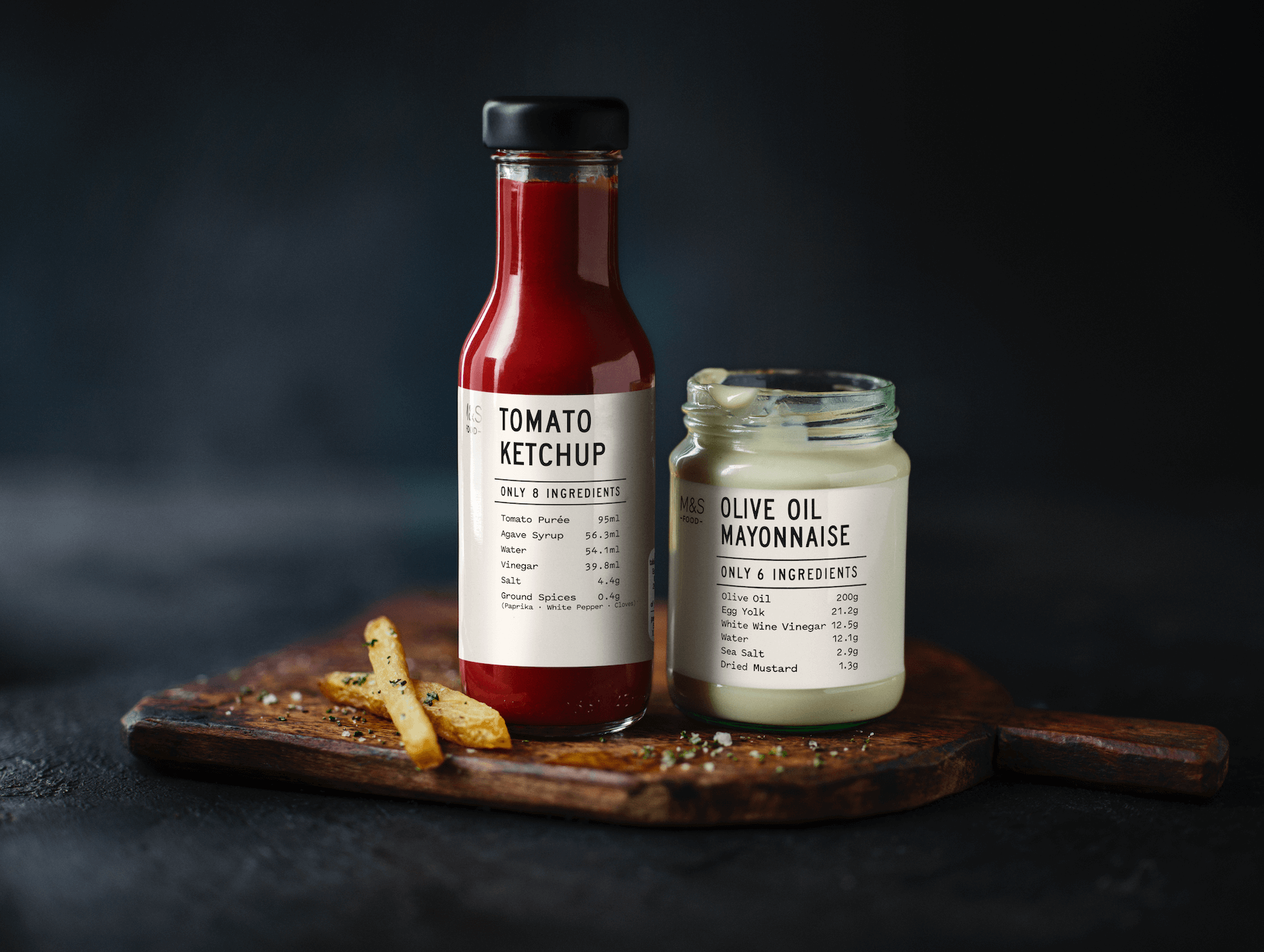
Marks and Spencer this month introduced 12 new products to its “Only X Ingredients” range. And the news has once again created quite a stir.
In March last year, the supermarket launched one-ingredient cornflakes, which stirred up the debate about simplicity versus health.
Cornflakes and other cereals are often fortified with vitamins, but this can tip them into the ultra-processed foods (UPFs) category.
Clean-label foods will be a “huge trend” in 2025 and onwards, explained one clinical nutritionist on social media at the time, who asked: “While the idea of simpler, less processed foods is appealing, is removing essential vitamins and minerals the right move?”
May the fortification be with you
In the UK, many families – particularly those on lower incomes – rely on fortified cereals for key nutrients that can be difficult to obtain from diet alone. Fortified breakfast cereals are a significant source of iron in British diets, for example.
The new additions to M&S’s range will, if nothing else, keep food processing in the headlines. But this time one of the concerns relates to food waste.
Some critics have, for example, noted the far shorter shelf-life of some of the products, which include sausages and chipolatas with ‘only 6 ingredients’ – Heritage Gold pork, water, sage, black pepper, salt, and filled into natural casings – and British beef burgers with ‘only 3 ingredients’ – beef, salt and black pepper.
Will the lack of preservatives result in more food waste as shoppers expecting them to stay fresh in the fridge for a week fail to realise that they need to be cooked and eaten soon after purchase?
The upmarket retailer’s new ketchup has ‘only 8 ingredients’ – tomato puree, water, vinegar, salt, ground spices and sweetened with agave – and there are ‘only 6 ingredients’ in the olive oil mayonnaise – olive oil, egg yolk, white wine vinegar, water, salt and mustard.
Two new yoghurts have ‘only 5 ingredients’ while the bran flakes have just three – whole grain wheat, barley malt extract and sea salt).
“Imagine making your favourite everyday food at home, with ingredients you recognise and trust,” said Kathryn Turner, M&S director of product development. “That’s exactly what we’ve done with our ‘Only Ingredients’ range. Our customers have loved it so much that we’ve extended the range and will keep building it,” she added.
M&S has certainly captured the zeitgeist with the range, as the spotlight on the levels of processing in our groceries intensifies. The debate is a confusing one, though, with definitions of UPFs a hot potato.
Trust the processed
Another brand keen to wade in is Oatly. The dairy-free brand has new cartons with ‘Trust the processed’ on the side.
“When turning oats into a tasty liquid like the one you’re holding, we use clever production processes like heat treatment and homogenization. These are also used for cow’s milk, and we guess that makes our drinks processed, which apparently can be scary for some,” Oatly explains on its new packaging.
It continues: “That’s cool, food processing has been adopted by humans for centuries to reduce nutrient loss, curb food waste and, and give people access to safe, nutritious, and more affordable food.”
The new blurb – which I spotted in December and proved to be my most popular social media post ever – is intended to quell concerns about these products being de facto unhealthy because they are processed; or perhaps ultra-processed (depending on how you would like to define it).
Reactions to the new marketing have ranged from those who feel it is classic Oatly – that is, “smug” – and only likely to confuse consumers further on UPFs, to those who called for “more brands to stand by their products”.
Gill Wilson, sustainable marketing professor, was “not sure” about the brand’s thinking here. “[…] they are kind of side-stepping the real issue people have with processed,” she explained.
Caroline Orfila Jenkins, vice president (science and technology) at Oatly and Professor of Plant Biochemistry and Nutrition at the University of Leeds, UK, told me: “When we chose to address this topic on our pack, we anticipated debate and that’s part of the intent. Current opinions around UPFs are polarising, offering simplistic yet confusing narratives about food processing which are – in my view – distracting us from tackling the integrated challenges of climate change and food injustice,” she added.
Definition dilemma
Defined under the Nova classification system, UPFs are formulations of industrial ingredients such as protein isolates, modified starches, non-nutritive sweeteners, and emulsifiers, designed for shelf stability and sensory appeal, but typically low in fibre and micronutrients and high in added sugar, salt, and saturated fat.
A simpler way to determine whether something is ultra-processed is to see if it has ingredients listed that you would not find in the average kitchen cupboard or fridge.
However, a key criticism of the Nova system has been that by classifying foods based on processing rather than nutrient content, the methodology groups products with varying nutritional profiles – such as flavoured yoghurt and sugary beverages – into the same category.
New research presented by the science nutrition company Zoe at this week’s Nutrition Society winter meeting showed UPFs “are scientifically incomplete and inconsistent, causing unnecessary confusion and potential harm for consumers”.
In the new study, ZOE scientists examined the diets of 550 people and over 13,000 brand level foods. They found that under the Nova system, almost 80% of cereals are labeled as UPFs, but grouping these foods all together “fails to acknowledge important properties of foods and the large variation between similar products. Using the ZOE processed risk food scale, 64% of cereals analysed were actually low or no risk.
Zoe explained how “[f]or years, the ‘Nova’ system has been the standard for identifying UPFs. However, this system only considers the extent and purpose of the processing, and not how it affects human health. As a result, this has led to foods like Weetabix and baked beans, which are high in fibre, being placed in the same broad ‘UPF’ category as sugar-packed confectionery like Haribo.”
Plants and processing
Plant-based milks for example rely on added ingredients to enhance the sensory elements and improve shelf life, and are also often fortified with micronutrients and oils.
According to an analysis from the UK, published in the journal Current Developments in Nutrition in June 2025, 84% of all plant-based milks are classified as ultra-processed (Nova 4), 14% as processed (Nova 3), and only 2% as minimally processed (Nova 1). Some 97% of the non-organic ‘milks’ are classified as Nova 4, compared to 30% of the organic ones.
Added ingredients in these plant-based milks included salt (92%), sugar (26%), flavours (33%), stabilisers (66%), emulsifiers (24%), and acidity regulators (77%), the team from the University of Hertfordshire found.
Big brands will certainly look to continue cashing in on the concerns about UPFs with ‘simplified ingredients lists’ for products (which often come with a premium) and silky sales messages.
Building transparency – M&S’s ingredients lists are front of pack in its ‘only ingredients’ range – and trust in the food we buy is surely a good thing. And while M&S may be the first supermarket to manage it, let’s not forget that there are many organic, independent producers (including farm brands), whole foods, and smaller food brands and retailers that have always produced high quality, minimally processed food.







0 Comments