

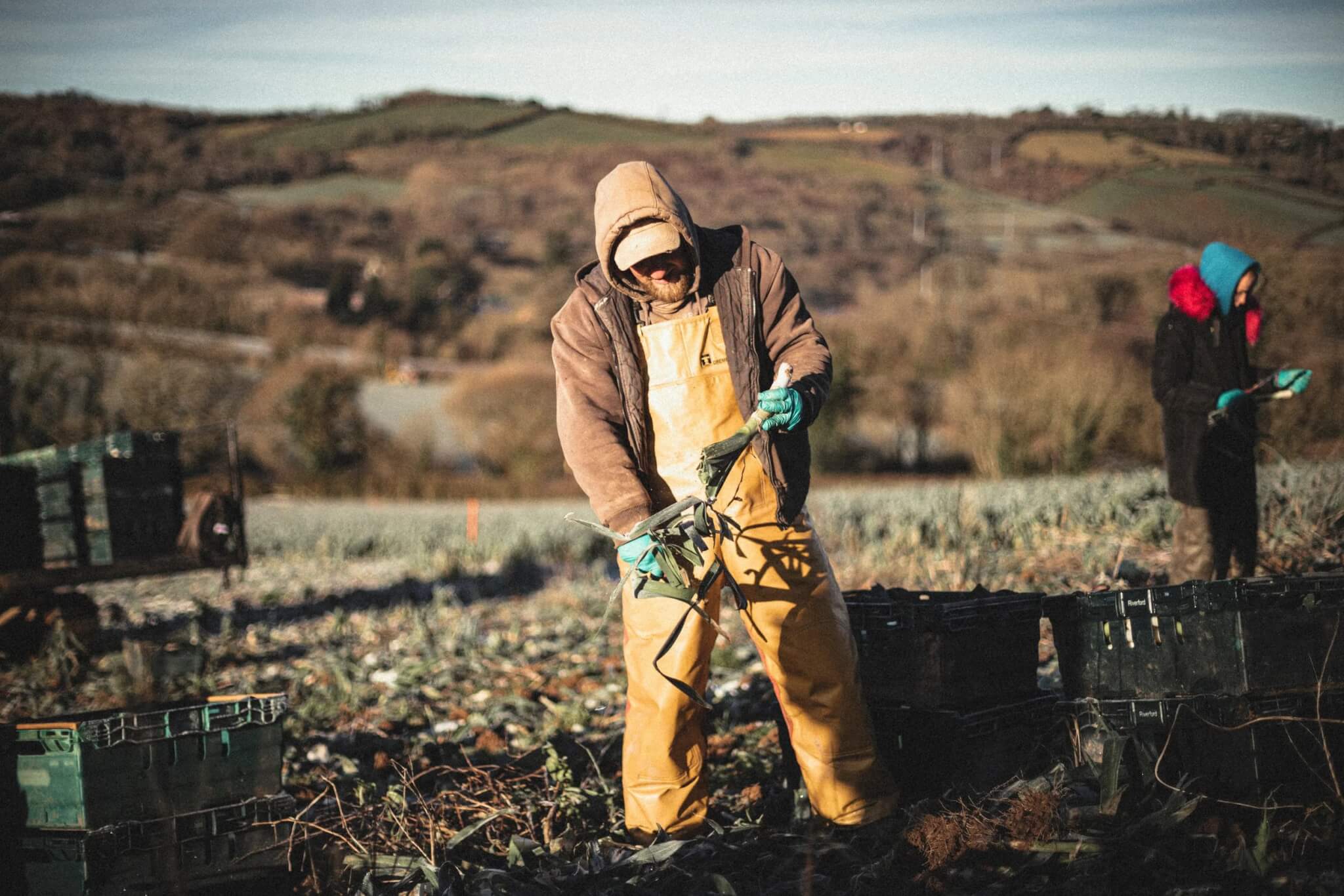
Millions of migrant workers face exploitation in Europe’s fields, harvesting the fruit and vegetables that many of us purchase. This was the stark finding of a disturbing investigation published last year by the charity, Oxfam. Their researchers found that in many European countries, workers were being paid less than the minimum wage, and that incidents “of abuse, including sexual abuse, intimidation, and violence in response to strikes, were commonplace.”
The investigation also discovered that workers’ accommodation was “frequently overcrowded, expensive, and isolated” and that some women workers had reported instances of being sexually blackmailed by accommodation supervisors. “Some workers were found to live in makeshift slums, which can lack running water, heating, and waste collection and where there is a risk of disease and fire – either accidental or arson attacks,” the researchers said.
In its report, Oxfam also revealed that accidents and injuries were “frequent occurrences”, with cases of employers failing to give adequate training and protective equipment to workers. There were instances of workers being poisoned, researchers found, and one man died after apparently not receiving any water during a full day’s work in 44-degree heat.
This month, a powerful new film building on these findings will be screened in the UK by the Landworkers’ Alliance (LWA) as a fundraiser for Justice is Not Seasonal, an collective working to bring an end to exploitation on farms. The film, simply titled The Pickers, takes viewers on a journey across southern Europe as workers harvest oranges, strawberries, olives, and blueberries.
The filmmakers behind the documentary and its associated campaign give a rare voice to some of those toiling in Europe’s fields, polytunnels, and packing stations and a much needed opportunity to life the lid on the horrifying conditions faced by those who are, by any standard, at the bottom of our modern day supply chains.
They hear from Seydou, from Mali, who harvests oranges in southern Italy. He tells them that “without us, nothing works here. Europeans should think about it, how they treat us harvesters,” before stating that “we are day labourers; we don’t get contracts. We get paid per box.”
According to the film’s producers, there are an estimated 4-500,000 migrant workers in Italian farming. The oranges in Calabria are mainly picked by migrants from African countries. Many of them have no residence papers and often work without contracts, health insurance, or minimum wage payments. Says Seydou: “Everyone has problems with residence documents. How can you work for so many years without being able to visit your family?“
Then there’s Naveed and Adil from Pakistan, picking olives in Greece. “They need us, but they won’t give us papers,” they say. “I reassure my family: no worries, it will only take a few months before I’ll get papers… It’s been going on like this for eight years.”
In the major olive growing region around Kalamata, up to 15,000 harvest workers are needed every year, according to the filmmakers. There are very few, if any, local workers available so the harvest is mainly carried out by migrants from Pakistan and Bangladesh, many of whom do not have residence papers or contracts. There is, it is claimed, a regular threat of arrest by the authorities.
There’s also Bahija from Morocco, harvesting strawberries in the Huelva region of southern Spain, a region saturated with soft fruit, much of it destined for UK supermarket shelves.
She is one of around 15,000 Moroccan women who work each year as seasonal workers under a recruitment agreement during the strawberry harvest. They come with a visa, have temporary residence permits and accommodation, but that still doesn’t protect against exploitation.
Whilst the powerful testimonies of workers who have been given a platform by the film and campaign are shocking enough, what’s equally shocking is that this scandal is commonplace and has been going on for many years. And supermarkets, farmers, wholesalers, industry bodies, and politicians are all aware of what is happening.
The AGtivist itself has investigated the exploitation and abuse of workers across many agricultural supply chains in the past two decades, including visiting southern Italy to document conditions for the seasonal workforce that serves the labour needs of the region’s horticultural sector.
Many workers, mainly migrants from Africa, were living in poorest conditions, with meagre pay and appalling housing. Some were living in vast ramshackle work camps, with no effective power or sanitation, largely at the mercy of a network of gangmasters that controlled the supply of workers to surrounding farms.
The food and drink manufacturers that were ultimately found to be procuring the commodities tied to exploitation pledged to investigate and help clean up supply chains, but, years on, the situation persists, as is so often the case. Once the news headlines subside, and interest wanes, it’s quickly business as usual.
In the UK too, a similarly grim pattern has unfolded. Following the Morecambe Bay tragedy in 2004, in which more than twenty Chinese workers drowned whilst harvesting cockles, much political and media attention was focused on the plight of migrants toiling in the UK’s agricultural and food sectors.
The deaths led to the creation of the Gangmasters Licensing Authority (GLA) – since renamed the Gangmasters and Labour Abuse Authority (GLAA) – which was tasked with more stringently regulating labour providers working across the food processing, packing agricultural, horticultural, and shellfish gathering sectors, amongst others.
In the years following its creation, high profile enforcement operations did successfully tackle some of the most egregious abuses being committed within food supply chains. But action by some agricultural companies has been less forthcoming, with regular allegations surfacing connected to labour exploitation and substandard housing.
One investigation found that Eastern European fruit pickers were being lured to the UK by apparently unscrupulous employment agencies who subsequently charged them high fees and made false promises about pay and working conditions. Once in the UK, some workers ended up on fruit farms and in packhouses, forced to pay rent and expenses for living in run-down caravan sites, often in squalid conditions.
During another investigation, a reporter was told that at one site connected to a supermarket vegetable supplier, caravans designed for four people were in practice housing up to ten workers, with some claiming they were forced to sleep on floors whilst the harvested produce was trucked off to major retailers.
Workers at the same company complained that they suffered skin conditions after picking and packing plants without gloves or any other protective gear. The reactions were blamed on pesticides and other chemicals applied during growing.
More recently, the post-Brexit Seasonal Workers Scheme – launched in 2019 to allow a limited number of workers to enter the country to harvest fruit and vegetables – came under fire after it was found that some migrant workers were subjected to “unacceptable” welfare conditions.
A government survey found that some workers in the scheme had not been given employment contracts in their native language, had not been provided with health and safety equipment, and had been subjected to unfair treatment by farm managers, including incidents of racism, discrimination, and other mistreatment, apparently on the grounds of workers’ nationality.
Some allegations go further, potentially falling into the category of modern slavery. Data released by the GLAA following a freedom of information request shows that over a three year period, spanning 2020 to 2023, the body had carried out three modern slavery investigations connected to the horticulture sector, and 111 investigations connected to agriculture more widely. These were amongst hundreds of slavery probes that took place in the period overall, covering all employment sectors.
The data relates to investigations, not convictions, so drawing firm conclusions isn’t possible. Nevertheless, the fact that these investigations were needed at all should be a cause for concern.
There is some hope amongst all this. Viewers at the forthcoming screening of The Pickers may hear about Pape, a worker from Senegal who harvests oranges in Italy. But these oranges are very different: they are fairly traded by an organisation known as SOS Rosarno which provides fair conditions for workers, including fixed contracts, the payment of the statutory wage, and decent housing. The oranges are sold to buyers in Switzerland, Italy, and Germany.
Pape told the filmmakers that if he were president “all harvest workers would get their rights.” He added that “for me, dignity means living in a house, not in a tent city.”
The AGtivist is an investigative journalist who has been reporting on food and agriculture for 20+ years. The new AGtivist column at Wicked Leeks aims to shine a light on the key issues around intensive farming, Big Ag, Big Food, food safety, and the environmental impacts of intensive agribusiness.





Yes horrendous – but is there any data on whether produce sold as organic also treats people who harvest in a similar way? Is there any evidence that it’s different – I would love to think so, but….
I’d also like to find out. I used to rely anything that was Soil Association but I suspect I was being a little naïve.
Unfortunately, there is no easy way to guarantee that such things are not happening within the supply chain. The most relevant certifications would be those that relate directly to trade and labour e.g. Fairtrade. Beyond that, every company will have its own policies, supplier charters, and working practices and the onus will be on them to do due diligence on their own supply chains; any documents relating to suppliers should be easily accessible and transparent, and most companies will have a Modern Slavery Statement, with some being far more thorough and traceable than others. Also, when you take direct questions to a company, it is reasonable to expect clear and direct responses… when a company is not forthcoming with its traceability, there is often cause for concern.