
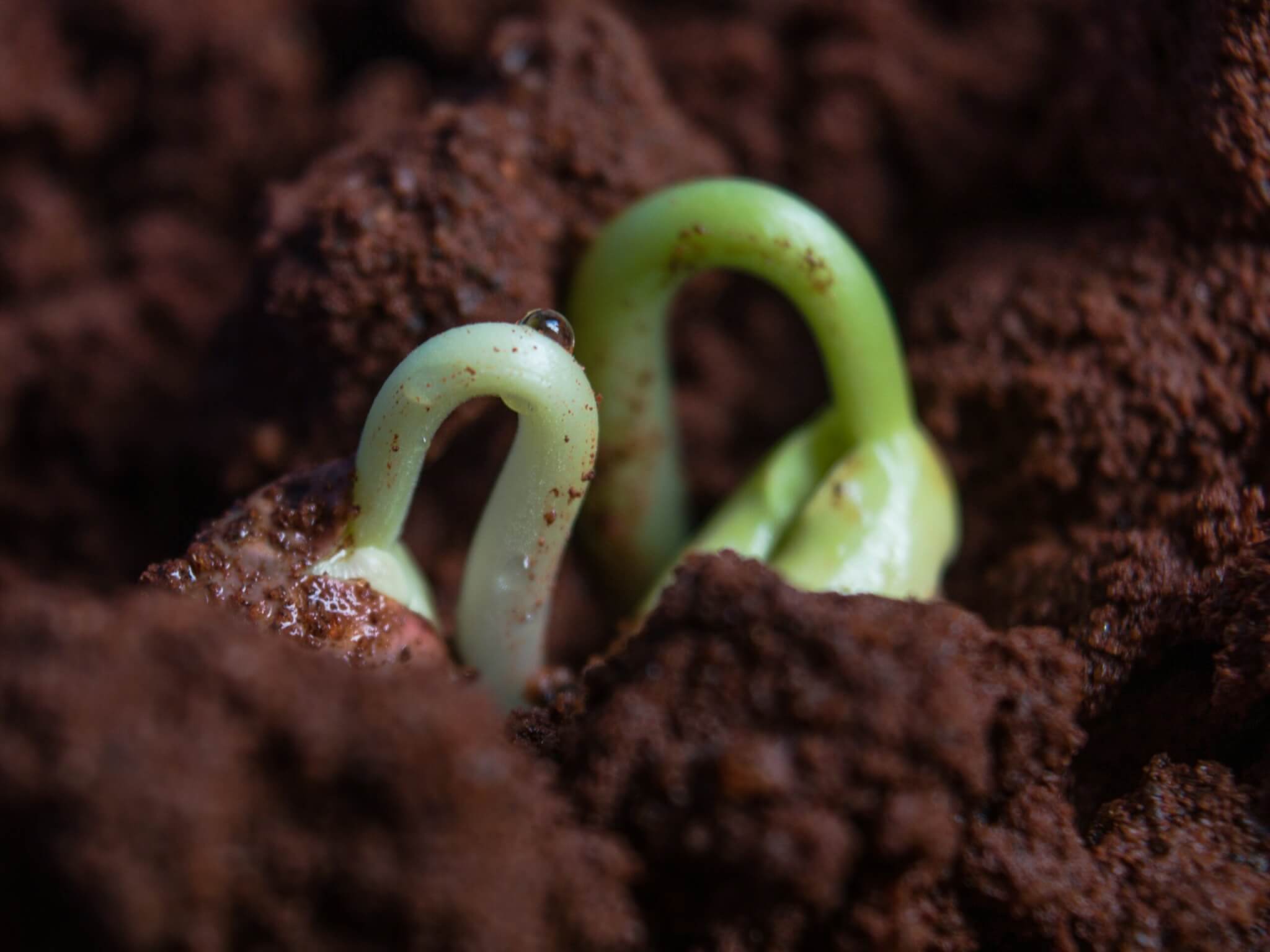
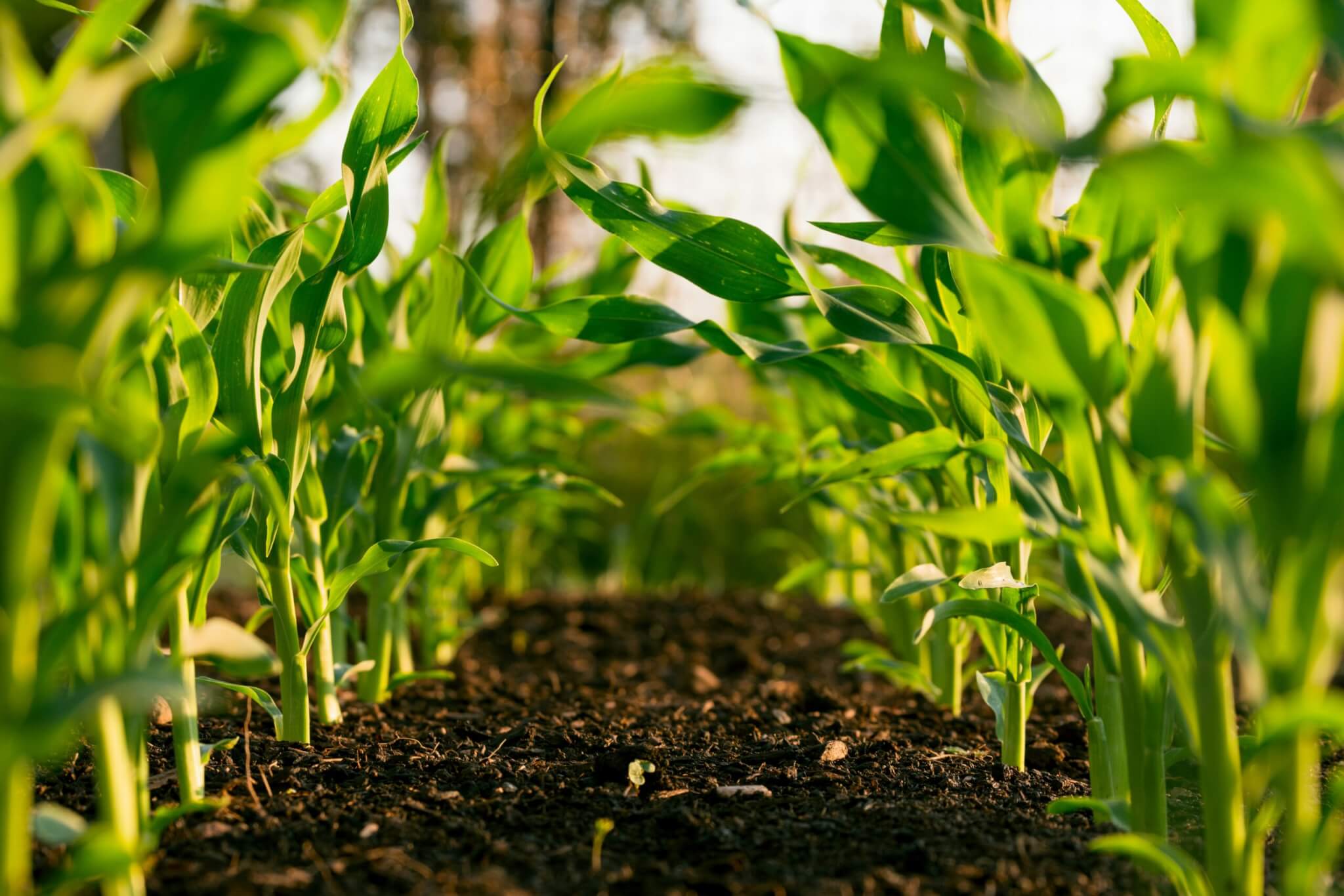
Last month, I found myself peering into two unfamiliar worlds. The more I looked, the more I loved and wanted to understand these often neglected, abused, and exploited deeps. It is no exaggeration to say that our continuing life on earth depends on learning to appreciate, understand, and care for our soils and oceans. An hour peering into a microscope with the University of Nottingham’s Emeritus Professor of Soil Ecology, Karl Ritz, had me gasping in wonder as each increase in magnification took us deeper into a labyrinth of sand and silt particles, bound by clay and organic matter, root hairs, and mycorrhizal hyphae providing the porous, moisture-holding architecture for mites, springtails, and nematodes – living their lives as oblivious to us as we are to them, yet highly interdependent.
Karl described the fragility and vulnerability of these underground networks to cultivation and compaction, industrial chemicals and fertilisers, and the starvation imposed when soil is bare and organic matter not replaced. I am far from understanding this dynamically interactive ‘whole’ ecosystem, but a little knowledge and resultant wonder gives me the motivation, sensitivity, and some tools to better protect and care for it.
Rewatching David Attenborough and Colin Butfield’s ‘Ocean’ documentary, it struck me again – how the deeper we look into the unknown abyss, the more we reveal the complexity and interrelatedness of all life. We also learn how vulnerable these worlds are to our exploitation and mismanagement, and how worthy they are of being saved – for their own wondrous sakes as much as for their depleted potential to feed us and regulate our climate (the ocean absorbs 30% of our carbon emissions). What is often portrayed as cutting-edge science and technology are often blundering acts of ignorance, inflicting immeasurable damage on the unknown in pursuit of short-term profits for distant shareholders.
What we can’t see, we can’t understand. Attenborough’s tireless awe sparks something deeply human in us all; the more we learn, the more we come to love and value these complex, crucial worlds. We’ve also seen from eco marine reserves and agroecological farms that it’s not too late – provided we act quickly and don’t go past the tipping points of no return, our oceans and soils possess remarkable capacity to recover.
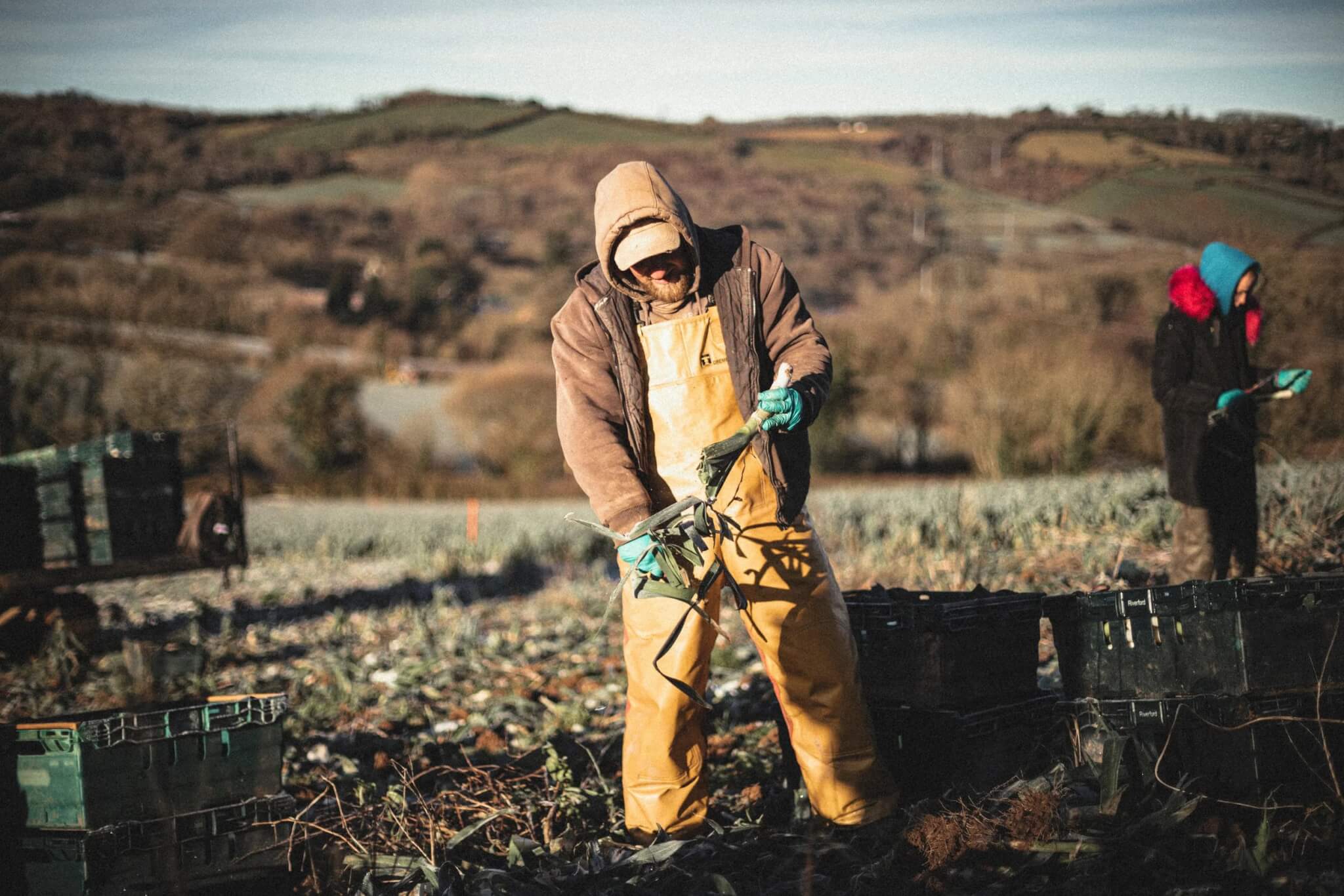
Our News from the Farm posts come from Riverford. They are the digital versions of the printed letters which go out to customers, every week via Riverford’s veg boxes. Guy Singh-Watson’s weekly newsletters connect people to the farm with refreshingly honest accounts of the trials and tribulations of producing organic food, and the occasional rant about farming, ethical and business issues he feels strongly about.



I loved reading this when it arrived with a fabulous array of fresh vegetables on Thursday. In recent years I have become much more conscious of exactly what you describe here, the “communities” that live below and around us but actually are an essential part of what we think of as “ours” too. I would love to learn more. The journey actually began many years ago though as we filed into the lab for a Biology lesson. Some older students had been tasked with dissecting earthworms and their work was on display. Obviously we younger ones had to file past and have a look! I was in total awe and have never been able to look at any organism in the garden since without reminding myself that its internal organs are probably pretty complicated, just like mine.