

It is almost eight months since several tonnes of artisan cheese made here at Holden Farm Dairy (Bwlchwernen Fawr), in Wales, were stolen. The fraud made headlines the world over. “If anyone hears anything about posh cheese going for cheap, it’s probably some wrong ’uns,” said celebrity chef Jamie Oliver in a video posted to the Instagram app. “[…] it feels like a really weird thing to nick,” he added.
It certainly is a lot of cheese – 950 clothbound wheels of it to be precise, including the Hafod Welsh Cheddar made at Patrick Holden’s 300-acre organic dairy farm. While the excitement felt by him and Neal’s Yard, which took the order, from the large sale had been palpable; the theft left a bitter taste. However, the small-scale dairy sector rallied round and Holden, as ever, used the moment to highlight the problems with our food chain and the reasons to (urgently) address them.
“Don’t we want more trusted and transparent ways to get our food from the people who produce it?” he asked the BBC in October as the news broke. “I think that is what’s disappeared in our modern food systems; we need to know more about the story behind our food … that should be our right.”
Holden has made a career out of his passion for sustainable food and farming. He was the founding chairman of British Organic Farmers in 1982 and has led the Sustainable Food Trust (SFT) since it launched in 2011 – with the aim of accelerating the transition towards more sustainable food systems, both locally and globally. Sandwiched in between was his 15 years as director of the Soil Association – growing the charity from a handful of people to a 200-strong team as UK sales of organic food increased, eventually nudging the £2 billion mark.
It was in his first year or two at the Soil Association that I first met Holden, on this very farm located on a beautiful hill between the Cambrian Mountains and the coast in Ceredigion, West Wales. The profile of him I produced for Farmers Guardian was only available as a hard copy (it was the early days of the digital transition for media companies) which I have since (sadly) misplaced.
As we sit down for coffee at the kitchen table – one of his sons dismantling the Aga in a corner – we try and recall what we discussed and debated all those years ago as we walked the farm. It proves a struggle, so instead I ask how he’d sum up the intervening decade or so?
“We have not been influential enough,” he says of the movement to mainstream a more sustainable approach to farming and food – one that works with nature rather than against, as he has put it during conferences, interviews and panels over the years (some of which I have attended).
It is a harsh appraisal. The warnings made by Holden and many others to governments past and present that the food system was creaking – and is now very much broken – have fallen on deaf ears. Climate change is now wreaking havoc, soils are unhealthy, and nature is disappearing before our eyes. Supermarkets and food manufacturers have continued to battle on price alone, growing bigger, bolder and more brutish with every passing year.
Supermarket surprise
But anyone expecting Holden to ‘go off on one’ about UK supermarkets would be sorely disappointed. As recently as last month I watched him praise Nestlé and Tesco on their work to find ways to properly fund farmers looking to adopt more regenerative practices. On the webinar run by the Sustainable Food Conference he called on the private sector to match current government subsidies to properly finance the transition in production systems that is needed for the benefit of farmers, communities, the public and the environment.
He is referring to regenerative systems. ‘Regenerative’ is currently a buzzword throughout the food chain. In fact, labels for ‘certified’ regeneratively-farmed foods are already starting to pop up in supermarkets, farm shops and restaurants. However, Holden doesn’t think people trust these logos. “If you want credibility then you need to measure [what you are doing and the difference it’s making],” he explains.
The UK Government has for example said it doesn’t intend to subsidise regenerative approaches due to “a lack of evidence […] that regenerative agriculture will support the provision of public goods”. Leaving it up to the market is risky, not least because the whole system is rocking with costs rising, climate changing, and consumers calling for sustainable, healthy and affordable food. Farmers fear investing, their confidence is low and there are few assurances that years-long transitions to regenerative farming will offer them the financial rewards. Can they trust the supermarkets to put their money where their mouths are?
“[…] we have to find a lot of money,” Holden explained in the webinar, but currently “it remains more profitable to extract social and natural capital from the planet and not pay the ‘true costs’ of the damage done … than it does to farm regeneratively”, he added.
His theory is for the private sector to match current government subsidies (through sustainable farming incentives) in order to properly finance the transition to regenerative farming. Indeed, if the likes of Holden were paid to be a carbon steward (for sequestering carbon in soils), a nature steward (for the crop biodiversity on farms) and a social steward for education and employment opportunities provided, then maybe the price of these regeneratively-farmed foods would fall.
And they don’t necessarily have to be organic. In many ways organic and regenerative production systems are aligned, but equally there are ways in which they are not. Organic has a legal and formal standard, whereas regenerative lacks one. Some regenerative farmers favour the use of glyphosate to kill off weeds, versus disturbing the soil with a plough; organic standards strictly prohibit its use.
As we walk through Holden’s field of organic, heritage black oats – on which there is a whole other tale to tell that will be fodder for me on another visit, but for now, it’s cows – he can’t resist picking out some of the weeds by hand. Which takes me back to that first visit of mine all those years ago, and him doing the very same thing. I recall his passion for this organic way of farming (and delight that Farmers Guardian was interested in the topic).
Black and white
Over time his views have evolved, though. “One of the unintended consequences of the organic movement was that it polarised the farming sector,” he explains. There was an element of the ‘right’ and ‘wrong’ way to farm but regenerative approaches draw no such black and white lines – which is both a charm and a curse. Holden, like others, is concerned that some see regenerative as tinkering around the edges – a cover crop here and a beetle boundary there. What’s needed however is the kind of transformation he has been calling for since long before I met him.
But how about the notion of less and better meat and dairy, I ask? There are many supporters of such an approach in order to curb greenhouse gas emissions (from burping cows), improve animal welfare, and reverse nature loss. Holden (and the SFT) have argued over the years as well as in recent reports that grazing livestock are a hugely important and beneficial part of the future farming mix.
The less and better message is “wrong”, he says, because it’s too negative. To scapegoat livestock in the climate debate is to miss the point, he adds, because the perception is that all meat is bad and all plants are good. “We have to have a positive message. Systems must be more extensive.” Intensive poultry systems for example are out.
Holden points to the foreword in the Trust’s latest report. In it Lord Deben, former chairman of the influential Climate Change Committee, which advises the UK Government on net-zero and sets carbon budgets to keep us on track, explains that he has “had to face up to the negative impacts of livestock on greenhouse gas emissions, including those from intensively managed poultry, pigs and cattle. However, what few seem to understand is that there is a need to differentiate between those livestock systems which are part of the problem in terms of net emissions, and those which, under the correct management, are potentially part of the solution,” he added.
My trip from the East coast of Scotland to the western corner of Wales was long, but the time I spent with Holden flew by. He offered me lunch – cheese on toast of course – which I politely declined as I set off towards home, diagonally, across the UK. I stopped for a break at Tebay Services, near Penrith, which offers a range of locally-sourced fare in its restaurant and farm shop located just off the M6. Mulling over the menu I recalled something Holden had said to me a few hours earlier: “We should eat with relish a diet that comes from sustainable farming systems.” Sound advice from a man who’s always worth listening to.
WL Meets is a recurring interview series that features discussions with influential figures in sustainable food and farming, including the Food Foundation’s Anna Taylor and World Food Prize winner Dr. Geoff Hawtin.

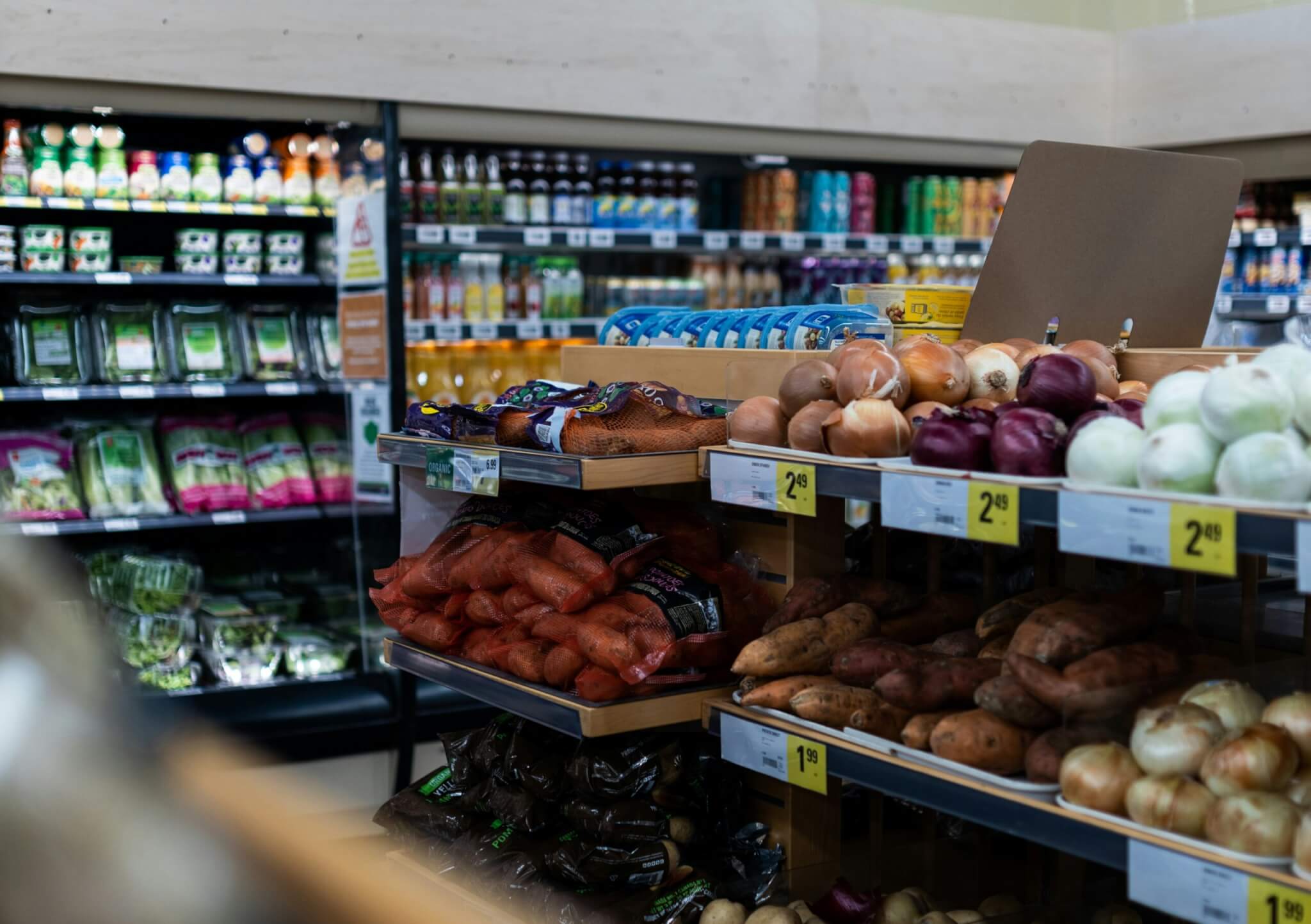

Much of what Patrick holden has done over the last 40 years is admirable. His farm used to be the largest organic carrot grower in this country, and my Farm Shop in Bristol was the largest distributor of organic carrots; those were the days before the supermarkets picked up on the niche market of selling organic veg. But as Patrick remarks in your article, “we have not been influential enough”. Supermarkets now feature a very wide and growing range of so-called sustainable products, because such “green” items are gaining popularity and a growing number of people are willing to pay more for the green image, even if they do not know much about the actual products they are buying and eating.
Patrick raises the question of consumer trust, which he acknowledges is weak when it comes to food purchasing.
“Don’t we want more transparent ways to get our food from the people who produce it?” That is a very fundamental issue: perhaps the majority of the public are more influenced by pretty pictures on the label and key greenwash words, than the actual reality of the ingredients and production systems.
For me the follow-on question is how to distinguish between a properly “green” product, and a greenwash label. ~One way is to look for the certified organic label, which Patrick and the Soil Association have done much to develop, so there are now legal standards. What started off as a certification manual 45 years ago of about 20 pages is now several volumes containing perhaps 1000 pages or more. But the supermarket response to such a legal standard is to advertise several other standards, Red Tractor, RSPCA, free range, and more; and thereby blunt the impact, and the public trust, that such labels have. With several competing labels and keywords, the customer can choose almost anything on the shelf and feel somewhat satisfied with his/her commitment to sustainability and health.
Do I have an answer to the questions Patrick raises? Yes. Emphasise food miles as a significant measurement of sustainability. Why is “local” and food miles so important? It immediately separates out producers whose business models require ever wider distribution. If you gear up your business to produce more and more of the same product, you need to sell to an ever-widening market, and what’s inherent is forever enlarging profits. Why else would a producer choose to produce more than could be sold locally? It is the dream of constantly growing profits that require ever-increasing turnover that drives producers and distributors to find ever cheaper ways of doing things.
The phrase “Small is beautiful” became popular 50 years ago when Schumacher’s book first came out. Does anybody believe in that nowadays? Do the public really want widespread mega-stores that sell everything, or would they prefer small, local artisan-led shops in every town and village? If we all vote for the mega-store, we will eventually lose the artisans. How did the public get itself into such a way of thinking? Perhaps the big players, with larger amounts of capital to spend on advertising and fancy labels, were able to tip the balance towards nationally distributed products.
Buying local and food miles seem, to me, the only way out of such a cultural acceptance of the current food industry. Unfortunately, the regenerative and organic ideas don’t really focus on distribution, and I think that is why “we have not been influential enough”.