

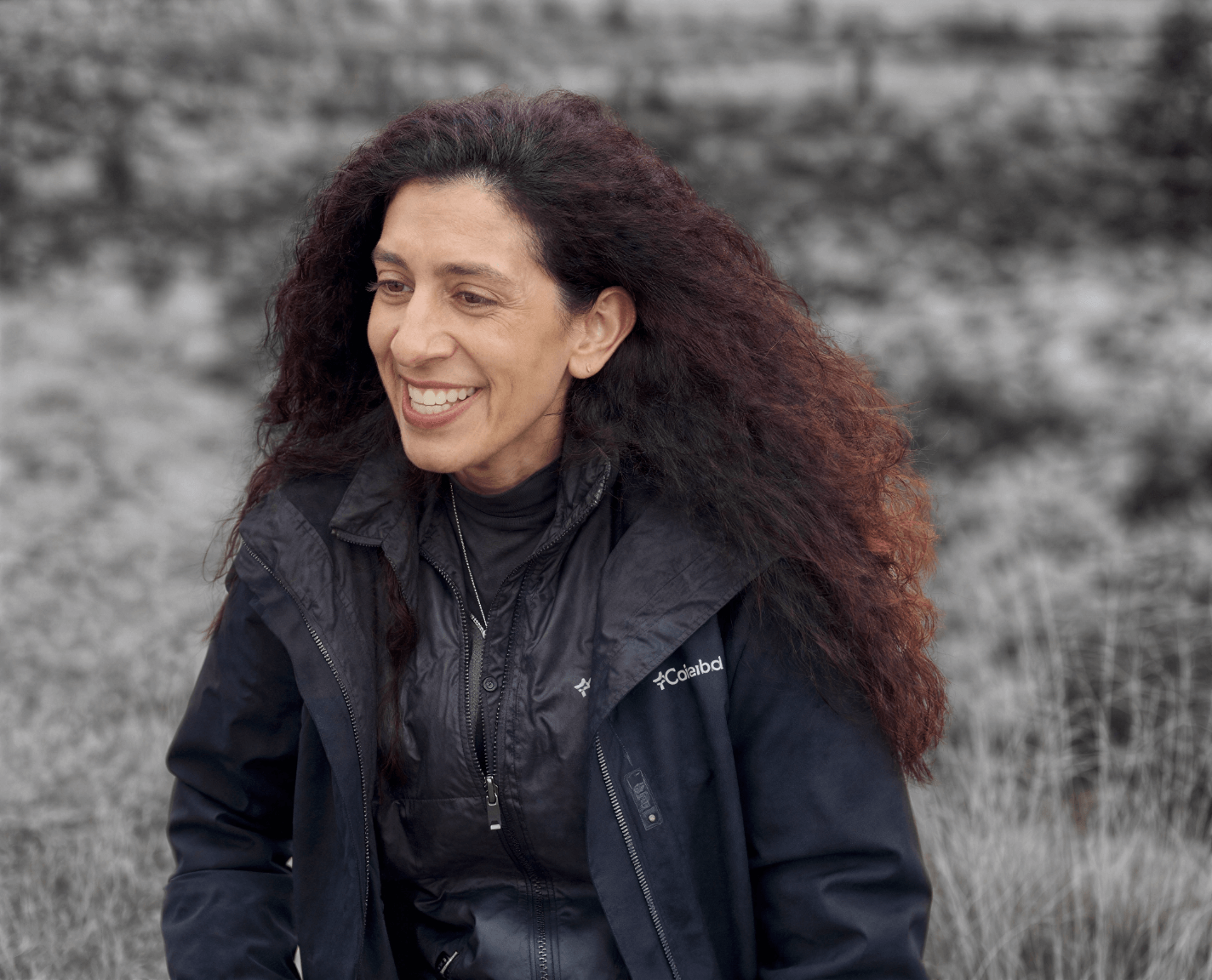
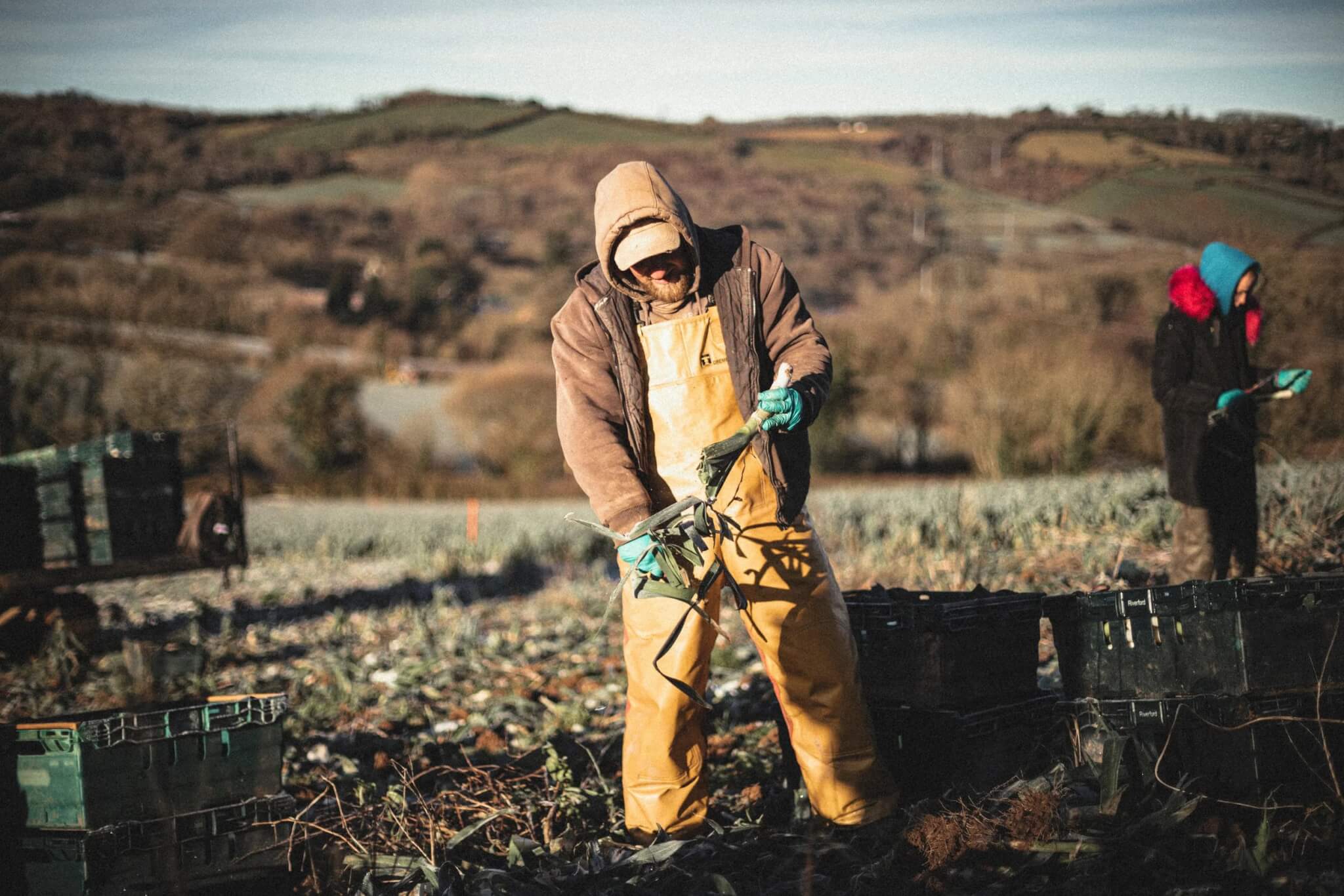
Stuart Oates is a seventh-generation farmer; his family have been at Rosuick Farm on the Lizard Peninsula since the 1700s. They went organic nearly 20 years ago, before it became popular and they’ve also had a camel trekking business. Going against the grain is in the Oates’ blood. Now they’re considering what fossil fuel-free farming might look like.
“Throughout my childhood we were always the weird family trying to do things differently. I think that’s where a lot of farmers struggle, to be the odd ones out… but not us,” smiles Stuart.
“When I started thinking about more sustainable farming and looking at the root cause of our environmental problems, as well as destructive food systems, intensive monocultures, or the way we rear animals, I found that the main problem was our dependency on fossil fuels.”
Today, it’s extremely difficult for UK farmers to ditch petroleum completely. Yes, organic farming removes synthetic fertilisers and pesticides, many of which rely on hydrocarbons for their formulation. Then there’s the fuel needed for machinery, the plastic wrap for bales, polytunnels and countless containers, removing fossil fuels from farms is no easy task.
“When I first started looking at how we could achieve this on our own farm or even at a global scale I thought it wasn’t possible. Maybe we would only be able to achieve 20 percent. But after more research and travel I now believe going fossil free can work. There are so many opportunities from nitrogen fixation in plants replacing fertilisers, to the greening of transport on and off-farm,” states Oates.
When Wicked Leeks caught up with Stuart he was busy travelling around Brazil, among other countries, on a Nuffield Farming Scholarship investigating how other nations’ farms around the world are going fossil fuel free.
“Right now, I’m looking at the biological control of pests, which is used across millions of acres here in Brazil. When that change happens, this is key to reducing massive amounts of pesticides, the vast majority of which are petroleum by-products. While in Europe they’re looking at agri-voltaic schemes, where land is used simultaneously for both solar and agriculture,” points out Oates.
He adds: “We don’t need to reinvent the wheel for farms at home in the UK, we can adopt best-of-breed solutions that have worked perfectly well elsewhere in the world. To-date there are no agri-voltaic trials in Britain.”
Energy farming
Stuart is keen to push for more farmland to be used for energy production, due to the fact that the UK has some of the highest energy prices among developed nations, while at the same time the price of power generation infrastructure is the cheapest it has ever been.
Across Britain, many farms are located close to large populations, businesses and economic zones, which desperately need power, at a time when grid connections are highly constrained and farm incomes are poor.
He thinks this offers a real opportunity for landowners. These projects could yield up to 30% return on capital investment. The average family farm focused purely on food production currently achieves just a 2 to 3% return.
“I believe, the lowest hanging fruit for farmers is energy production. Our farms can be a fantastic solution, whether it involves generating power on shed roofs, in fields, using slurry, hydro, solar or wind. If many farms start doing their bit it could be transformational and be a massive source of income. At the moment a one megawatt, on-farm battery can generate £25,000 a year and this could rise substantially over time,” says Oates.
He adds: “This is also an opportunity for farmers to reclaim the whole renewables debate and take ownership of green energy directly. For example, landowners could offer rural EV charging stations and it would not be at the expense of food production if farmers are able to integrate power generation cleverly into their system – farmers definitely need to engage on this.”
Multiple ways to change
So what are the other routes to a fossil free farming future? Stuart is a big believer in regenerative farming and integrating livestock. Using locally grown seaweed, which is abundant in the UK, as a biostimulant and source of nutrients could potentially replace artificial fertilisers, while more agroforestry can capture carbon.
At Rosuick farm, near Helston in Cornwall, tractors run on HVO fuel, which is cleaner than biodiesel. Hydro-treated vegetable oil is a fossil-free diesel alternative produced from 100% renewable waste materials such as vegetable and cooking oils and animal fats. However, the key aim is to eventually go fully electric.
Stuart is also part of an Innovative Farmers field trial, which is supported by the Soil Association. This is looking at sisal. The twine is made from the fibre of a cactus-like plant native to Mexico, but now grown globally, and is used to wrap hay bales. It is a sustainable alternative to plastic netting.
“Deploying sisal is a bit slower, it’s a bit more expensive. However, this field laboratory has catalysed a broader conversation with many more people, who are now thinking about what the alternatives could be to plastic. I’m now talking to Tama who are the largest producer of net wrap in the world. They are really engaged with this sisal project,” says Stuart.
He continues: “Tama see this as an opportunity. We’ve now sparked change. People really don’t want plastic or fossil fuel derivatives on their farm, going into their animals, or micro-plastics in the soils for hundreds of years.”
Oates is a strong advocate for more research and investment in innovation. Another area that he highlights is carbon insetting, as opposed to offsetting. Insets are where a company buys carbon credits within its supply chain.
Food retailers and processors who now have their own net-zero targets would rather purchase insets than see that credit going to another sector. If a farm is carbon negative, where they sequester more carbon than they emit, then they are able to sell their surplus credits as insets.
“The future of carbon, in my opinion, is insetting, not offsetting. If food retailers want to inset some of their carbon while they try to electrify their fleet, this makes total sense. We just have to be creative as farmers in terms of how we step up to this challenge,” concludes Oates, who has a website, Fossil Free Farm dedicated to the cause.
What Stuart has done is question many peoples’ widely held assumptions of how we farm. He believes we can do things better and reimagine how we operate in the UK. This is sparking others to think differently and look at new innovative ways we can be more sustainable.
We need more farmers like Mr Oates – walking the furrow less travelled.



Well done Stuart I am particularly interested in the agro-voltaic schemes.
re: seaweed to deploy as fertiliser. A great, traditional, plentiful material that so many edible plants appreciate. BUT all beaches are suffering from pollution; the biofilm layer just beneath shoreline sand holds all kinds of sewage traces.
Inspiring article. Learning from others and growing the options for the future success. Team GB needs more people like Stuart Oates to break free from our national “broken” mood. Together we are a great nation of scientists and innovators. Keep up the great work Stuart!
Great that you are reducing fossil fuels. Just a comment though, your strapline on https://fossilfreefarm.com/ says ‘Can global agriculture ever be truly sustainable and remove all fossil fuels?’ These are two different things: to be ‘truly sustainable’ the land use and methane production both need to be reduced too – which means avoiding the livestock too. Iain Tolhurst is a leading light on this https://www.organicresearchcentre.com/news-events/news/iain-tolhurst-awarded-mbe-for-services-to-agriculture/ , https://agricology.co.uk/farmer-profiles/iain-tolhurst-tolly/ .