
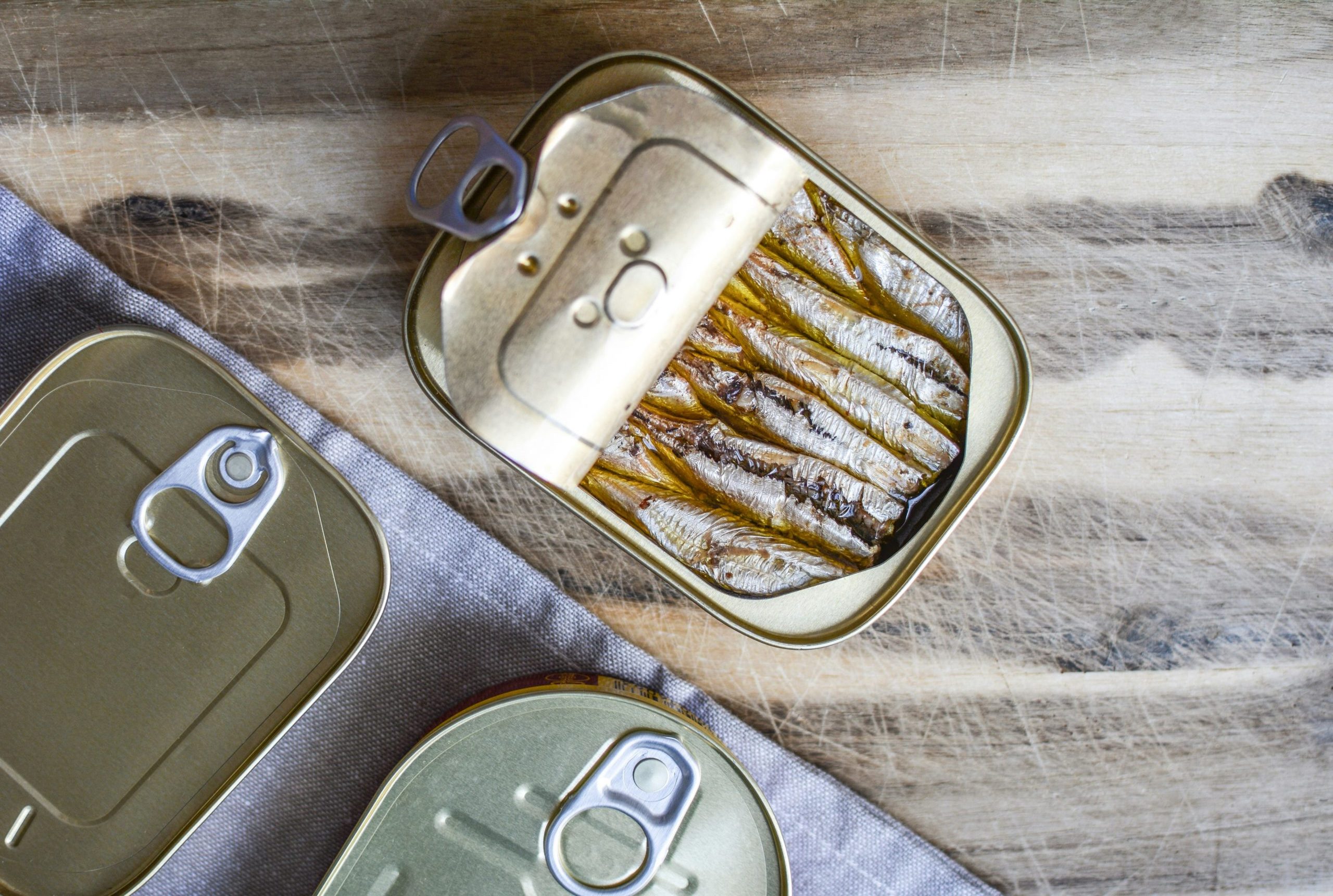
Sardines were the unofficial flavour of the summer. We’ve gone from TikTok-generated sardine-maxxing to sardine fasts said to lower blood sugar, promote rapid fat loss, and help your skin glow. We’ve even seen the arrival of the Dirty Sartini, a partnership between premium spirit brand Mermaid Gin with TV chef, Gizzi Erskine, and cocktail specialist, Joe Brayford.
In the UK, the humble pilchard has been successfully rebranded as the PGI-protected ‘Cornish Sardine,’ helping to revitalise local fleets. As Charlotte Dawe, co-founder of Dorset cannery Sea Sisters, points out, pilchards on toast were not always an appetising prospect. “My mum used to give them to me a lot,” she says, “but they weren’t cool. You wouldn’t go into school with a stinky, fishy sandwich.” Today, conversely: “I think you would be quite cool if you went to school with a can of fish.”
The shift in perception shows up in the numbers. “We’ve never, ever been able to keep up with the demand of our product,” Dawe says, with sardines accounting for 70% of Sea Sisters’ range and sales. Sustainable tinned seafood brand Fish4Ever has also seen sales skyrocket by 140% to 250% this year across multiple lines. Carlos Gutiérrez, Senior Buyer at Brindisa, echoes the momentum: “The tinned fish category is showing a positive uplift, with sardines and anchovies leading the way with a 14% growth year-to-date as consumers look for high-quality, premium products that offer convenience.”
Mitch Tonks, founder of Rockfish, has also seen a recent surge in tinned sardine sales, though he admits that “breaking the UK’s obsession with importing cod and salmon is a long game.” Rockfish has removed cod from its menus entirely, and last year hosted the South West Sardine Festival, grilling and serving over 10,000 whole fish in a single day. This is just one example of the collective activities which have, according to Seafish, seen an overall 30% increase in UK sales of overall sardines in 12 months.
“I hear the term ‘fussy Brits’ thrown around a lot in response to our country’s obsession with the Big Five,” Tonks says. “But the recent love for sardines — both fresh and tinned, but always with bones — is certainly disproving that.”
Whilst a three-day fast eating only sardines may seem extreme, the health benefits are hard to deny. As Fish4Ever’s MD and founder, Charles Redfern, puts it: “The sardine is a nutritional powerhouse.” A single tin can provide omega-3 fatty acids, around 20g of protein, calcium from its soft, edible bones, vitamin D, B12 and smaller amounts of B2, B6, vitamin E and selenium. Due to their small size, sardines also don’t raise the same mercury concerns associated with larger predatory fish, and they can fulfil the NHS recommendation for one portion of oily fish a week.
Their growing popularity has been helped by sharp marketing, too. Sea Sisters brings a multicultural lens to British tinned fish, drawing on the food cultures of London and Dawe’s own Greek heritage. Its limited-edition collaborations have included Korean kimchi, Tunisian harissa, and sardine dolmades stuffed with pistachio, dill and lemon.
Portuguese brand José Gourmet, meanwhile, builds on a conservas tradition that Portugal has managed to sustain. “Our own tradition goes back more than a hundred years, and that’s not something you can replicate quickly,” says Vasco Motta, the company’s Sales Manager. “Keeping production small and local, and treating the people who catch and can the fish as the story rather than a footnote, is what has kept the value close to the coast here.”
The brand has pushed to diversify its range — from smoked sardines to sardines in Ravigote sauce and spiced pâtés. “Innovation is part of our DNA,” Motta says. “The canning method itself is over a hundred years old, and we identified early on that it needed to evolve – that’s the main reason we built our own factory. We’re constantly looking for new recipes, some simple, some more complex, because we want to reach everyone, from children to adults, across different cultures.”
Yet behind the aesthetic appeal of tinned fish content lies a growing concern for marine ecosystems. “When trends go viral like that on social media, they can put a lot of pressure on supply,” Dawe explains, “and we’ve already seen on a global scale … the sardines in Morocco become overfished and biomass depleted.” For Dawe, working with certified bodies like the Marine Stewardship Council is crucial to ensure this doesn’t happen in the UK. It’s a contrast worth noting: while Moroccan sardine stocks have been overfished into decline, Cornwall’s fishery (MSC-certified since 2010) has seen biomass hit record highs, with catches rising every year since 2021.
To protect native stocks and support local fleets, both Sea Sisters and José Gourmet rely on small-vessel fishing under strict regional quotas. Sea Sisters focuses on domestic Cornish landings, emphasising that for local fishers, “this is your livelihood and you’ve got to protect it… it would be counterproductive to overfish.” Similarly, José Gourmet works with Portugal’s newly MSC-recertified stocks while ensuring economic sustainability onshore: “Companies like ours don’t negotiate prices down with fishers, because we believe the value needs to flow through the whole chain.”
Fish4Ever leads on total-footprint impact, using pre-approved fisheries and solar energy. Meanwhile, Rockfish prioritises traditional craft by shipping directly to Asturias for canning: “We work with them simply because the Spanish do it best. They’ve nailed the art of canning seafood for generations.”
This isn’t the only way the UK might learn from our Iberian counterparts. Gutiérrez points out that industry-leading Ortiz has been preparing and preserving tuna, anchovies and sardines since 1891, working primarily with small day boats using traditional methods and buying at a fair price. This “gives coastal fishing communities more stability than commodity pricing usually allows,” he says. “In a sense, the same qualities that make these tins desirable to a food conscious consumer: quality, story, traceability, are the qualities that translate into more sustainable income for the whole supply chain.”
Cornwall has successfully revitalised its day-boat fisheries by celebrating the Cornish Sardine, but British coastal towns can learn from Spain and Portugal’s rich conserving heritage when it comes to keeping value local and honouring coastal food culture. Spain’s family-run conserveras, Gutiérrez argues, demonstrate that value lies not simply in the catch but in local processing — preserving jobs, skills and profits while celebrating tradition through festivals and tastings, and even putting family names on the tin.
For Dawe, this is the crux of Sea Sisters’ mission. As most UK-caught fish is exported abroad, the brand exists to keep it here instead, for the sake of coastal communities, food security and local pride. “People want to be able to access their own landings,” she explains, “but they can’t.”
Still, the Cornish sardine’s rebrand has been instrumental. “Names matter more than we sometimes admit,” says Tonks. “Curiosity gets people to try something new, and including the provenance in the name always helps to conjure up evocative feelings we all inherently have.”
While tinned sardines might just be a passing trend, they reflect a deeper cultural shift toward real, nutrient-dense whole foods over artificial hacks and trendy supplements. “This feels genuinely permanent,” Tonks says. “Seafood has always delivered on that.”





0 Comments