
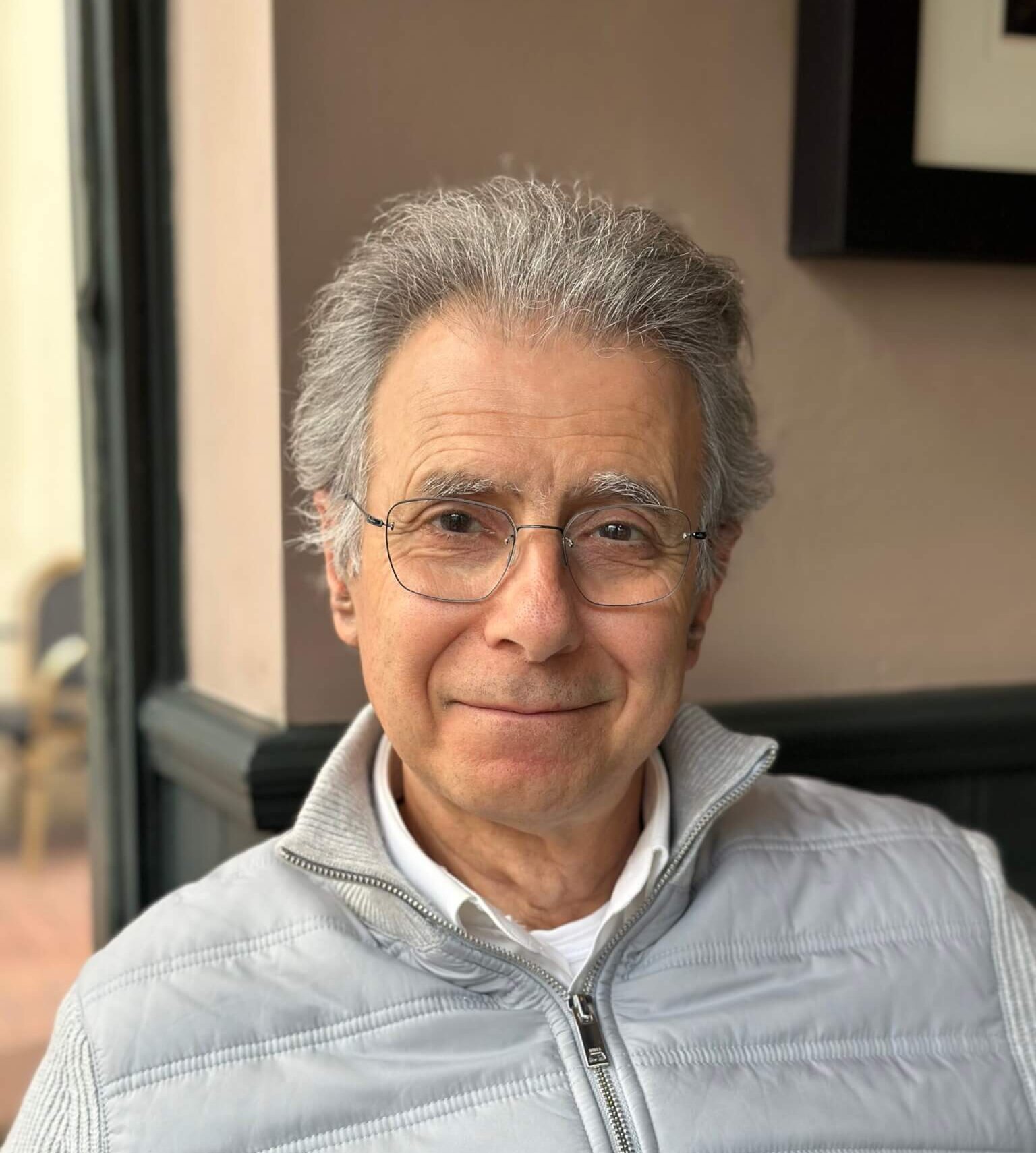
Michael Antoniou is not an alarmist. Nor is he an activist. This is a man who has dedicated his life to biological science. He bases his conclusions on the evidence he sees before him. And on glyphosate he thinks the UK government are negligent and that a ban is long overdue.
These are tough words from someone who has researched this issue for over a decade. As Professor in Molecular Genetics and Toxicology in the Department of Medical & Molecular Genetics at King’s College London, over the last 14 years, his research group has become a world leader in glyphosate toxicology, having conducted and published dozens of independent, peer-reviewed studies. Antoniou retired last year but continues to oversee research as Professor Emeritus and hasn’t stopped campaigning for better awareness, and pushing for action.
“Glyphosate-based herbicides are probably one of the most deceptively toxic pesticides ever invented, because you’re lulled into a false sense of security. They take time to act so it is difficult to make the link with cancers or other diseases (e.g. fatty liver) you might have later down the line. Then there’s a belief that it just affects weeds – it’s just not true. We need to raise public awareness on these issues,” explains Professor Michael Antoniou.
He adds: “Regulators are not fully embracing the latest science in order to enact policies that will better protect us. Therefore, we have to take matters into our own hands. Whenever I speak about this in public, people are shocked to know just how inadequate the risk assessments are for these pesticides.”
The biggest challenge relates to formulations. The world’s most popular weedkiller is never applied on its own, but as a chemical cocktail. So-called adjuvants are added so glyphosate becomes effective. These improve the herbicide’s “stickiness” and allow crops and weeds to absorb glyphosate.
“It’s negligent of the UK government and the European Union to only set exposure limits based on studies of glyphosate alone. They have never required long-term toxicity studies on commercial formulations, which every person and every plant in the field is actually exposed to,” explains Professor Antoniou.
He adds: “Yet the evidence shows that these cocktails are much more toxic than glyphosate alone. The number of studies that demonstrate this are in the hundreds now. Let’s not forget the co-formulants are highly toxic in their own right and they can be carcinogenic as well.”
A cocktail of commercial ambiguity
There are potentially 150 adjuvants available in the UK, yet they are presumed to be inert by regulatory authorities and often ignored in public safety evaluations. The composition of already mixed glyphosate products is legally classified as confidential commercial information. It means labels in farm stores or garden centres don’t have to declare what growers or consumers are actually buying.
“We’re still in the dark as to what the majority of these are because the agrochemical firms hide behind confidentiality clauses. They don’t have to disclose any details,” points out Professor Antoniou.
One research study shows that commercial formulations – such as the world’s “favourite” weedkiller, Roundup – can be up to 1,000 times more toxic than glyphosate alone. The most comprehensive, multi-national carcinogenicity study published last year and led by the Ramazzini Institute in Italy, found that rats developed multiple types of cancers when exposed to glyphosate levels deemed safe under UK and EU law.
“This is still a very hot topic of research. Since the start of 2025, almost a thousand scientific papers have been published on the impacts of glyphosate on human health and the environment. There are over 6,000 studies now published on the herbicide’s effects on health and the environment. What we’re seeing is an increasing weight of evidence that links this particular herbicide to reproductive problems, including birth defects and developmental disorders, as well as cancers,” states Professor Antoniou.
This growing body of research reinforces the verdict of the International Agency for Research on Cancer, which is part of the World Health Organisation and the United Nations, which declared glyphosate “probably carcinogenic” over a decade ago.
Since then, its use in the UK has ballooned, with a 914% increase in the volume used. It is now applied to more than two million hectares of farmland across the UK. Glyphosate is currently approved for use until mid-December this year, with the Health and Safety Executive (HSE) already extending its authorisation until then.
“The question is: how much time and attention are regulators giving to this groundswell of evidence? Regulatory agencies set irrelevant eligibility criteria for a study to be included as part of any chemical risk assessment, which is ridiculous. They tend to use criteria set by industry and dismiss well-executed independent studies, including research by my own group at King’s College London, which showed very damning evidence on glyphosate toxicity,” explains Antoniou.
He adds: “Industry doesn’t want to stop selling it because it’s making huge sums of money. The government is making a lot of tax revenue. The use of pesticides and chemicals is utterly embedded within our political and economic system of food production. It means that the industry strongly influences regulators in setting rules for assessing their chemicals for market approval – that’s what is so shocking. Regulators also appear far keener to protect the agrochemical industry than public health.”
An issue with pre-harvest desiccants
There is now particular concern over glyphosate being used as a pre-harvest desiccant. This is where the weedkiller is used to intentionally kill and “dry” crops out for earlier harvest.
Surveys in the U.S. have shown that this is the primary cause of glyphosate residues in foods, which are commonly found in oats, barley, wheat, and beans. And there is very good reason to expect the same to be true in the UK.
28% of bread tested by the Pesticide Action Network UK were found to contain traces of glyphosate; harvest happens very soon after spraying, hence the high residue levels.
“Our research shows widescale population exposure to glyphosate, as well as pyrethroid and organophosphate insecticides. We know they are getting into the food supply. In fact, the more non-organic fruits and vegetables people eat, the higher the pesticide levels in their urine. Unless people are on strict organic diets, they are exposed to a worrying cocktail of pesticides on a daily basis. However, no regulatory agency anywhere in the world has assessed the toxicity of these pesticide cocktails in humans. This is negligent,” stresses Professor Antoniou.
He points out: “Regulators don’t pay attention to what we call real-world exposures. Laboratory studies have yet to show what is a safe level of long-term glyphosate exposure. So we can’t set an acceptable daily intake. However, I would say it is a hundred or a thousand times below what it is today. We need to ban the use of glyphosate for pre-harvest desiccation. It is not necessary, it’s just a farming convenience. No one did this two decades ago.”
There’s now going to be a public consultation launched by the HSE and the government to review glyphosate use before December this year. Professor Michael Antoniou believes that people need a better understanding of how glyphosate works for us to truly understand its effects.
The herbicide inhibits the shikimate biochemical pathway. This is a crucial metabolic route that plants use to synthesise essential amino acids, when blocked the plant dies. However, this pathway is also present in certain bacteria and fungi, including those present in our gut microbiome. Glyphosate, and more so commercial Roundup formulations, can also elicit an oxidative stress response, which is associated with cancer.
“We know that glyphosate negatively impacts the gut microbiome because my research group have shown this. But it’s also got to have a negative effect on the soil microbiome as well. It also persists in the environment. Those that are involved with so-called regenerative agriculture or no-till systems that use glyphosate to clear weeds and cover crops must consider this,” the professor explains.
He concludes: “There are alternatives such as acetic and pelargonic acid. These are less environmentally damaging and less toxic. A complete ban would have a huge impact on the economics of the agrochemical and the agricultural sector. So we need policies in place that will encourage farmers to move away from chemical-based agriculture to agroecology – we just need the political will to change.”
Over 60k people have now signed the petition, calling on the UK Government to ban the use of glyphosate as a pre-harvest desiccant. Help us get to 70k signatures by signing the petition, here.


0 Comments