
Resilience emerged as a watchword for the food industry last year as the impacts of climate change hit companies, large and small, harder and where it really hurts. “The cocoa industry has reached [a] crisis point,” reported Foodnavigator.com in November, as extreme weather and disease continued to wreak havoc on the world’s key growing regions and prices remained eye-wateringly high. Consumers might not have noticed then, basked in joy as they prepared stockings and boxes of Cadbury’s Roses for Christmas, but food prices have become a pinch-point throughout the supply chain.
A few months on and, as Easter approaches, there is little escaping the headlines about food. War in the Middle East has pumped up oil prices and slowed much of the globe’s fertiliser flow to a trickle. The fragilities of the system, exposed increasingly by climate change and nature loss – while remaining reliant on fuel and chemical inputs and set up to supply anything all of the time and at any cost – are once again in the spotlight.
There is shock but it may well be a slow burn. While petrol prices changed almost overnight, fertiliser shocks do not register with the same immediacy as oil shocks, explained Nima Shokri and Salome Shokri-Kuehni, academics at the United Nations University, in an article for The Conversation this month. “Crop yields reveal themselves months later. Yet […] may prove more destabilising,” they added.
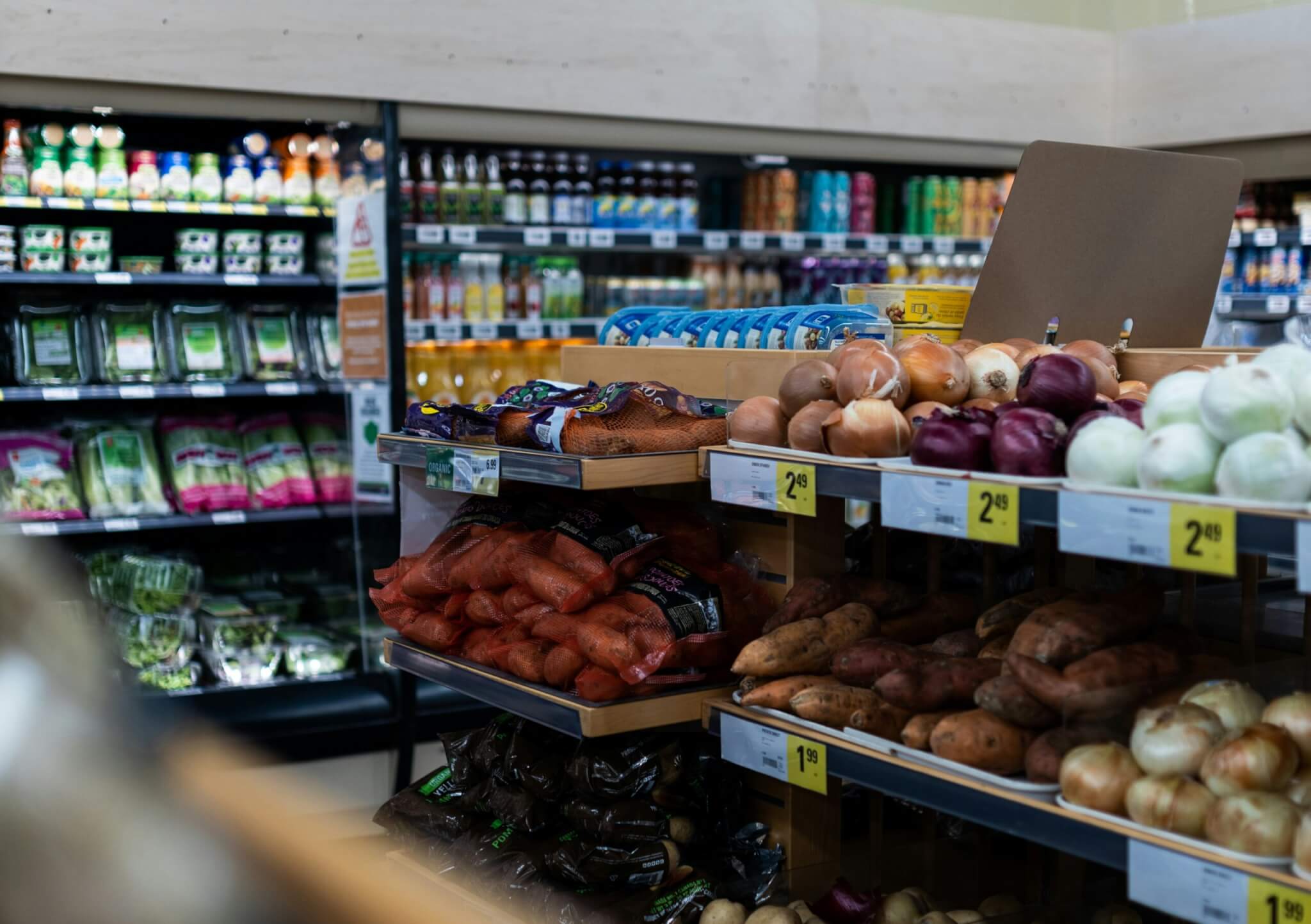
Indeed, there are already concerns that companies may well start profiteering, as they have done so throughout the cost of living crisis. Analysis by The Food Foundation in 2024, for example, showed that “despite the volatility of the last few years, supermarket profits have, for the most part, remained stable”. Pay for executives has remained high, while dividends to shareholders have also remained nice and fat. And all the while, food insecurity rises and confidence across the farming community leaks away.
Speaking to BBC Radio 4 this week, Tom Bradshaw, President of the National Farmers Union warned of price rises on the back of this war, much like there were when Russia invaded Ukraine. Bradshaw said the pressures “span the whole food supply chain” and were something the “government needs to take very seriously”. The effect of the conflict on food production “will turn the world supply upside down, and it will have a dramatic impact”.
Maybe it will. Equally, perhaps it should.
Now, not for one second am I suggesting we need eye-wateringly high food prices, more reliance on food banks and more children going to school hungry. Rather, my point is that this is where we are heading unless we turn food production on its head: to regenerative production systems, less reliant on chemical inputs, with a nature-friendly approach – and food that is nutritious rather than ultra-processed and, in too many cases, pernicious.
Desperation and desire
In January, for two days, I sat through a Sustainable Foods conference listening to all the big agri-food corporations talk about their plans for regenerative beef, wheat, sugar and milk; their desire to put our health at the front and centre of their growth plans; the challenges they faced in reducing their greenhouse gas emissions. Some I believed. Some, not so much (my report for the organisers, trying to keep my glass half full, will be available shortly).
What I am sure of, though, is that the desperation for transformational change is nowhere near as great as the desire to maintain profits (often at the expense of their many negative externalities – pollution, obesity, deforestation, and so on). And that means continued (and heavy) reliance on both fossil fuels and fertilisers and pesticides.
Read the headlines and food security fears, plus how these are linked to failures to source enough fertiliser, are being stoked – but largely by those with a lot of skin in the game. Sven Tore Holsether, the boss of Yara, the Norwegian fertiliser giant, has been talking to the Guardian, warning of diminishing yields and poorer nations suffering most as richer countries buy up supplies. As others have noted, this is true (half the world gets food “because of fertiliser, according to Holsether, when he spoke to FT in 2023 about ‘green fertilisers’).
But the take-home, whether intended or not, is that synthetic fertilisers are a proxy for food security; or to put it more bluntly: without these chemical inputs we are screwed.
There was a similar narrative from the IGD (Institute of Grocery Distribution) this week as it presented an update on forecasts for food inflation.
“Our baseline forecast, issued in November 2025, suggested that food and drink inflation would average 3.3–4.3% over the year, with around 3.8% most likely,” explained chief economist James Walton. “This reflected a food system already under pressure from rising labour costs, regulatory change, and limited scope for businesses to absorb further shocks. The conflict adds to these pressures, increasing risks around food inflation in 2026,” he added.
Walton explained how food inflation could rise as high as 8% this summer, which is more than double the current food inflation rate. Newspapers lapped the bad news up.
The food and drink inflation impact from the current conflict is expected to be less severe than that following the outbreak of war in Ukraine, said Walton. However, many UK households are now in a weaker financial position than they were in 2022, meaning the welfare impact of further food price rises could be greater, particularly for lower income and vulnerable households, he added.
Walton, as others have done, did not waste this opportunity to hammer home how hard it is for food businesses to respond to the shock of the new conflict. Going forward, he said, “the most sustainable route to moderating food inflation is not cost absorption, but improving productivity, resilience, and availability. This includes investment in domestic production, supply-chain efficiency and policy approaches that avoid adding unnecessary cost and uncertainty to a food system already operating on extremely thin margins.”
In other words: do not rock the boat with any red tape – including that designed to protect nature and the environment, and perhaps even our health. The problem is that this is not a longterm view. Neither is it sustainable. But those who attempt to oppose this viewpoint rarely get a look-in, as the mainstream press, and much of the food and drink industry press, search for more scare stories about food costs, bare supermarket shelves, and fields of failing crops?
“It’s an entire echo chamber around the impossibility of escaping fertilisers in Europe,” explained Raj Patel, in an interview this week with Table, an academic platform focused on feeding more constructive and science-based dialogue on sustainable food systems. Patel cited how India, following the Ukraine war and fertiliser shortages, invested heavily in its Atmanirbhar strategy (meaning self-reliance in Hindi) and has developed policy to quickly shift away from synthetic fertilisers. “If you thought that Europe might have learned its lesson from the Russian gas shock two years ago, it hasn’t,” he added.
Indeed, the story we are being sold is that food and fertiliser companies are fighting for their lives, and they, as well as farmers, need help to overcome another short-term shock to their supplies. At that January food conference, the NFU’s Bradshaw warned of the “victimisation” of fertilisers as regenerative approaches to ‘traditional’ (modern) farming gain traction. Such concerns have now snowballed as they gain air and the warnings become more stark. The notion that using fewer fertilisers and building more resilient systems is not cutting through.
Patel, who is a food system expert at the Lyndon B. Johnson School of Public Affairs, University of Texas, US, is one of those who has just about managed to buck that trend. This month he posted a fertiliser import vulnerability map on his website, showing the chokepoints and seasonal vulnerability of different countries to import shocks. What the map does not show, he noted, is that “agroecological food systems are resilient to exactly these kinds of geopolitical shocks”.
Indeed, the Fuel to Fork report published by IPES Food in May last year showed how food systems are “hooked” on fossil fuels, which run through fertilisers and pesticides as well as ultra-processed foods, long-haul cold chains, and plastic packaging. Food systems now consume 40% of all petrochemicals and 15% of fossil fuels globally, the report noted.
“[…] we need to take these warning signs seriously,” Jim Mellon, investor and Chief Executive of Agronomics, a VC firm focused on supporting solutions to strengthen the global food system, told me for one report I produced on the current crisis. The choice in 2026 is “clear”, he added: “Treat food shocks as a new normal, or use them as the catalyst to build a cleaner, smarter future for our food.”
Time will tell if the Middle East conflict forces us to invest in the longterm, sustainable transformation of our farms and the foods we produce and sell, or provides ammunition for further intensification in the name of ‘food security’.


1 Comments