
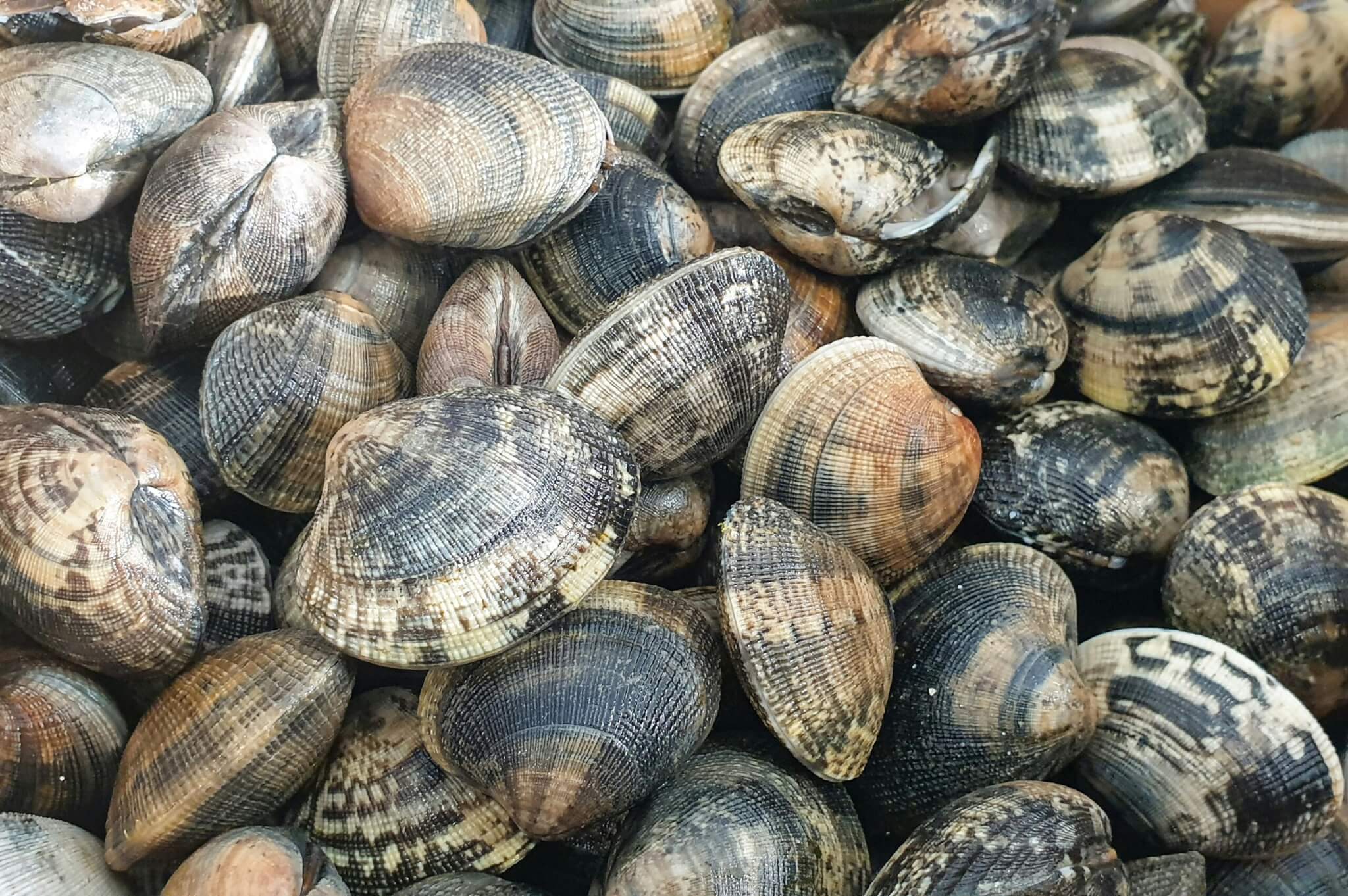
Illegal shellfish harvesting continues to blight some coastal areas around the UK, putting consumers at risk of eating contaminated seafood, the AGtivist has learnt. The illicit trade in cockles, clams and oysters, which sees gangs of unlicensed pickers descend on beaches and estuaries at low tide to gather the molluscs, can result in shellfish riddled with E.coli, norovirus and other foodborne illnesses finding their way into the food chain.
Along the South Coast of England, there are a number of well-known, problem hotspots, including areas around the mouth of the Adur river in Sussex, which flows into the sea at Shoreham-by-Sea. Earlier this year, a number of local people apparently raised the alarm after witnessing suspected illegal cockle harvesting over several consecutive days. There were reports of up to a dozen people – both men and women, armed with rubber gloves, bags, buckets and shovels – systematically combing the area for shellfish, before carting the loads off to a waiting vehicle. We don’t know where these consignments ended up, but the fear is that some found their way, via traders and middlemen, to markets, restaurants or other outlets.
Shellfish gathered legally are subject to purification treatments and testing under official food safety controls, and it is therefore an offence to remove molluscs from unlicensed sources for commercial supply or sale, owing to the health risks.
These risks were underscored in early 2026 after water tests of the Adur river by environmental health officers near to where illegal harvesting had taken place revealed high levels of E.coli contamination. This was likely linked, say sources, to human sewage or agricultural waste entering the river somewhere upstream (the heavy rainfall in the period is thought to have exacerbated the problem).
It’s an issue that’s frequently been reported before in this area; in 2022, news reports highlighted cockle harvesting taking place just after a sewage release at a nearby beach, raising disease fears. Fisheries officials and police have issued warnings about the legalities of shellfish harvesting, and carried out patrols of known poaching areas in an effort to deter the practice.
Along the coast at Chichester Harbour, the problem was previously found to be so acute that the authorities launched a major crackdown on illegal shellfish gangs. Operation Pearl, which involved the local council, police, the Food Standards Agency (FSA), fisheries bodies and the Gangmasters and Labour Abuse Authority (GLAA), involved covert investigations and attempted to unpick how illegally harvested shellfish was reaching food businesses and consumers, and ultimately led to consignments of potentially hazardous shellfish being seized. Those involved in the operation warned that it was a “growing problem” across the UK, and reiterated that the “black market” could have serious consequences for public health.
Media reports had previously revealed how highly organised gangs cashing in on the lucrative trade (thought to be worth millions) were often linked to wider criminality and exploitation. The problem prominently came to light after 23 Chinese cockle pickers drowned in the Morecambe Bay tragedy in 2004 – an event that prompted the creation of the-then Gangmasters Licensing Authority, now the GLAA.
Research found that the murky trade was resulting in increasing quantities of shellfish ending up for sale to the public directly at fish markets – or even via the internet – or to processors and wholesalers in turn selling to restaurants, pubs and catering outfits.
In some areas, including Poole Harbour in Dorset (where the problem persists), attempts to clamp down on the gangs involved led to fisheries officers being threatened, buildings being damaged and patrol boats sabotaged, with some areas – described as “conflict zones” – becoming off limits without substantial police protection. In others, including regions in the North of England, some shellfish harvesters recruited by gangmasters were found to have been subjected to exploitative working practices, low pay, substandard transport and accommodation. Some migrant workers reported abusive treatment and threats if they spoke up.
Wider pattern of illegal fishing
Whilst the persistence of illegality connected to parts of the shellfish sector is concerning enough, what’s more alarming is that the problem appears to be part of a much more widespread, yet little reported, pattern of illegal fishing taking place around swathes of the UK’s coast. Such law breaking, say industry insiders, threatens fish stocks, undermines legitimate seafood businesses and, in some cases, risks wider ecological impacts in often-vulnerable marine areas.
Under the current regulatory system, a network of ten regional Inshore Fisheries and Conservation Associations (IFCAs) are responsible for managing and protecting England’s inshore waters (classified as being up to six nautical miles (about 11 km) out to sea, after which another agency, the Marine Management Organisation, has jurisdiction; other parts of the UK have separate arrangements). The IFCA’s work includes enforcing the complex patchwork of regulations and bylaws that govern fishing activities at sea and onshore, often involving the use of dedicated patrol vessels as well as land-based inspections.
Previously unpublished data passed to the AGtivist highlights thousands of incidents of illegal fishing and other regulatory breaches documented by IFCA teams in recent years. The records cover rule-breaking detected by six of the regional IFCAs responsible for coastlines across the North West and North East, as well as southern areas, and Northumberland, Essex and Kent, Sussex and Devon specifically. The material was released following a series of freedom of information requests. (Authorities in the other regions didn’t provide records).
The data reveals nearly 3000 incidents reported between 2019 and 2025, and includes everything from individual permit breaches by those engaged in recreational fishing to serious maritime infractions committed by commercial fishing boats. Species involved include clams, cockles and oysters, as well as lobsters, crabs, whelks, bass and sea bream, amongst others.
Amongst infractions identified were dredging and trawling in protected zones, fishing in prohibited or restricted areas, the catching of undersized fish, the use of illegal nets, exceeding catch limits on volumes of fish allowed to be caught, and instances of AIS (automatic identification systems) – designed to transmit a vessels’ identity, location and course – being switched off.
There were also incidents involving incursions by foreign-owned fishing vessels into protected marine areas, the transhipment of fish consignments from one vessel to another (sometimes used to disguise or ‘launder’ illegally caught fish), offences relating to shark finning, fishing crews having insufficient or incorrect paperwork, as well as fisheries officials being obstructed or assaulted whilst carrying out inspections.
Whilst many of the violations were dealt with by oral advice or advisory letters, some involved formal written warnings being issued, financial penalties and, in some serious cases, legal action.
Destructive practices
During the period in question, high profile cases brought by IFCAs included the prosecution of fishermen illegally using electrical currents to catch razor clams in waters off the Cornish Coast. Officials described the group as a “significant criminal enterprise”. So-called “electro-fishing” involves the use of electricity generators connected via cables to metal electrodes towed behind a boat to deliver an electrical current to the seabed. This can cause razor clams to react by moving out of their seabed homes. Divers following the vessel are subsequently able to gather the fish by hand in large numbers. The method is more efficient than gathering by hand alone and can substantially and rapidly deplete clam stocks.
Another case resulted from scallops being illegally dredged in Liverpool bay. The process sees fishing vessels drag a metal-frame along the seabed and flip the fish into attached mesh “bags”. Whilst highly efficient, the method can damage seabed habitats and lead to large volumes of “bycatch” non target species being caught. Investigators from north western IFCA found that scallops captured in this – way within a protected area had been landed in north Wales, resulting in fishermen being charged.
According to prosecutors, sea bed habitats in the region are home to numerous ecologically important species including molluscs, sponges and star fish which support the bird species within the area. Protected birds were likely to have been in the area at the time of the offences, the case found, and it was estimated that the seabed could take up to two years to recover.
And it’s not just in England. Earlier this year, in Northern Ireland, a coalition of enforcement agencies, angling federations and conservation groups launched operation ‘silver fin’ in a bid to combat the problem in both inland waterways and coastal areas. The move follows a similar initiative in Scotland designed to target fish crime, including fishing for salmon or sea trout without permission, using illegal methods such as poisons, explosives or other tools to kill fish, as well as setting nets or traps in breach of regulations.
Whilst sources stress the majority of those engaged in fishing, whether commercial enterprises or recreational, do comply with the rules, they claim that in some cases persistent offenders have turned certain coastal areas into the “wild west”. More awareness, they say, might just spur more scrutiny and thus greater resources being made available to tackle the problem. Let’s hope so.
The AGtivist is an investigative journalist who has been reporting on food and agriculture for 20+ years. The new AGtivist column at Wicked Leeks aims to shine a light on the key issues around intensive farming, Big Ag, Big Food, food safety, and the environmental impacts of intensive agribusiness.








0 Comments