
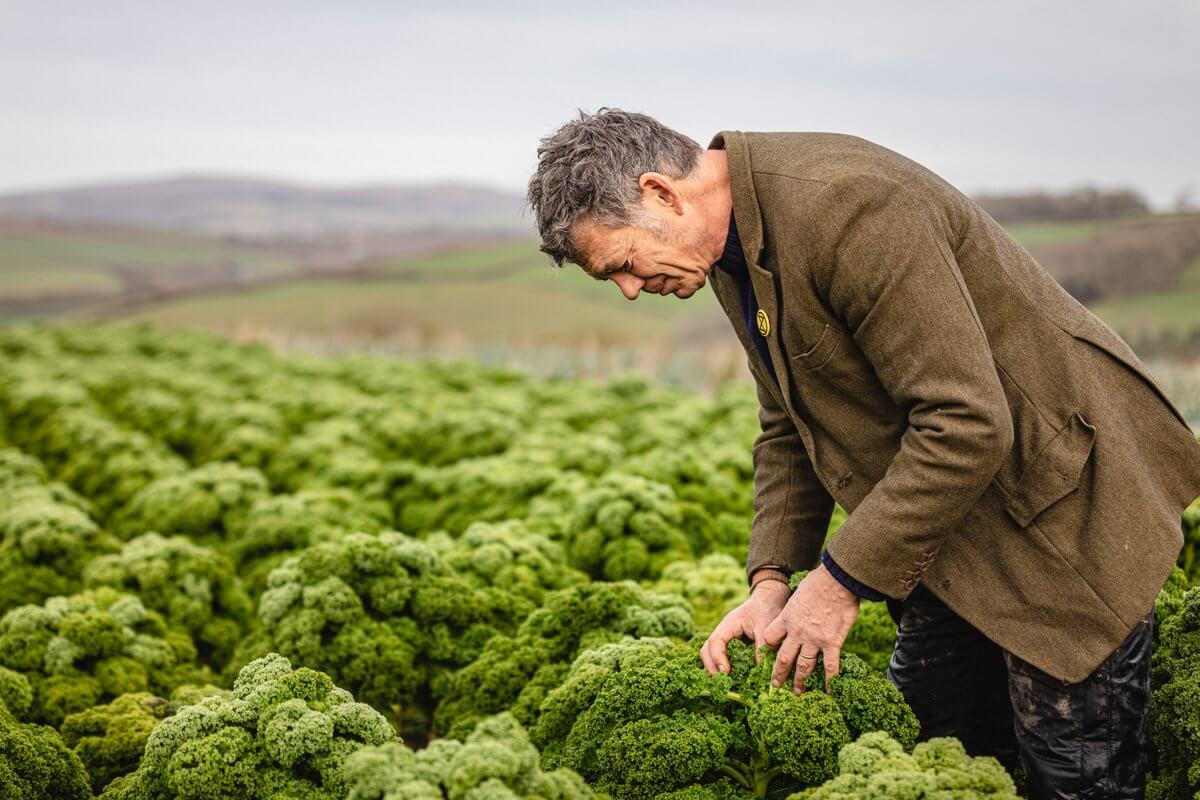
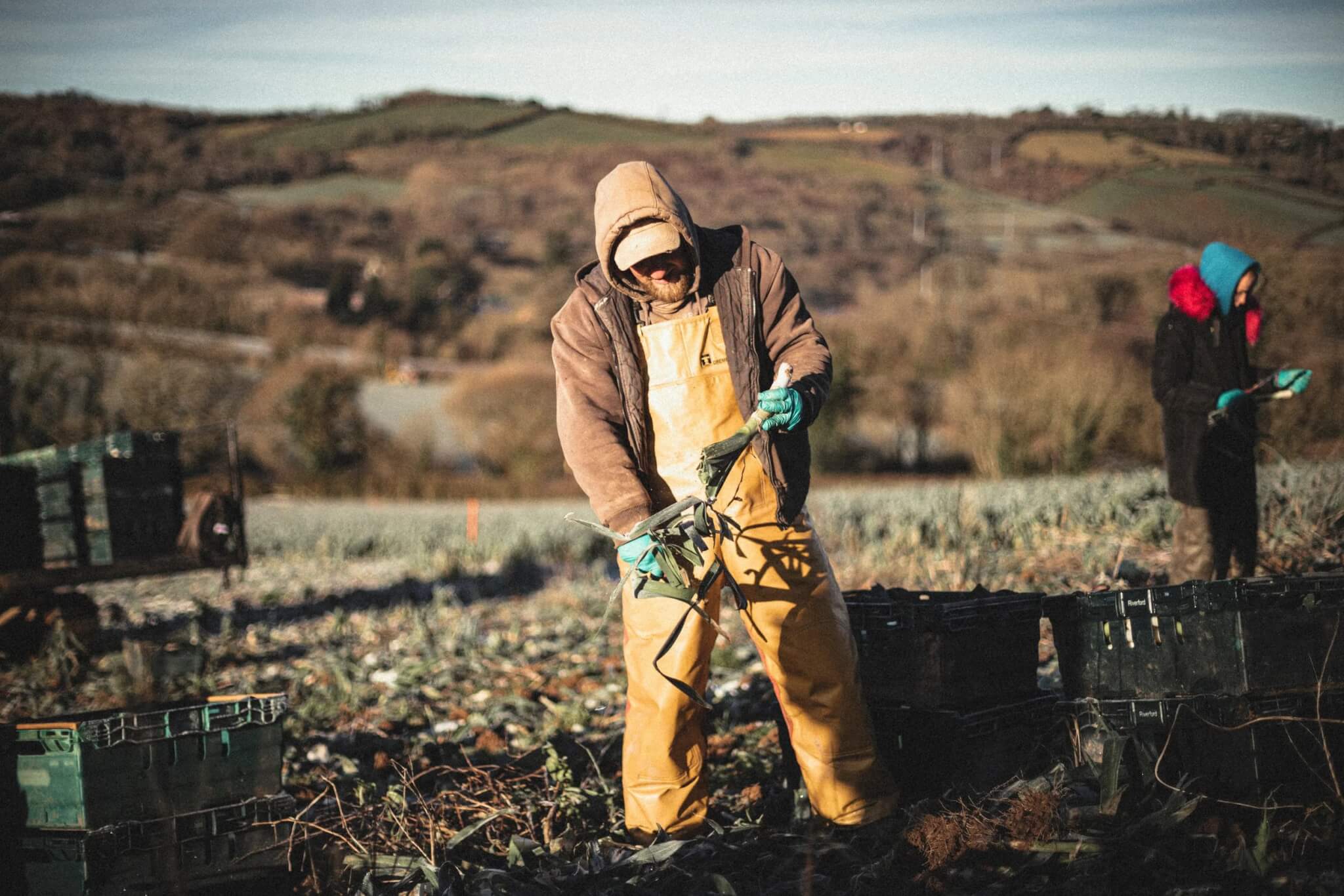
Returning to Devon from the parched East makes me glad that my father took on a farm here, however topographically and meteorologically challenging. In the words of my dairy-farming brother, Oliver: “There’s not much farming that can’t be done better, east of Haldon Hill” (the ridge you cross, west of Exeter, when entering the true South West). Over my 40-year growing career, almost all larger scale commercial horticulture has folded, apart from us and our suppliers. But this year, we’ve had the luck of just enough rain to keep our crops going, and enough sun and wind to keep them pest, weed, and disease free. It’s been the best of years for growing veg on our small, steep, and stony fields. Pickers are happy harvesting good crops, and there is even a little in the bank.
After two challenging years in our verdant county, farmers who were talking about early retirement are now discussing investment again. Computer and camera-guided weeding equipment is top of the list. The irrigation reservoirs are low and look less appealing for swimming, but with days already drawing
in and dews getting heavier, it looks like we will scrape through to the rains we normally get in late August. We plan to build more reservoirs, but frustratingly the administrative burden of getting the required licences looks set to cost more than the construction itself. It could be time to consider moving from the overhead sprinklers, rain guns, and booms that are the norm for veg in the UK, towards the much more efficient, but expensive (in labour and capital) leaky hoses which drip irrigate, and are more commonly used as you get closer to the tropics.
We have finished planting winter cauliflower, broccoli, leeks, and cabbage, with new roots reaching out quickly into warm soil that, with careful management, has enough moisture to get them down into the more plentiful supply below. Some extreme heat two or three weeks ago caused some peas and winter squash to abort their flowers or fruit. For squash, the remaining fruit look likely to be too large to go in your boxes. Perhaps there will be time for a second set…
There. Don’t say farmers are always miserable. When it rained last week, an ordinarily down-to-earth picker turned to me in the field, rain running down his mud-smeared face and describing it as ‘liquid gold’ said, “We are blessed”.
Our News from the Farm posts come from Riverford. They are the digital versions of the printed letters which go out to customers, every week via Riverford’s veg boxes. Guy Singh-Watson’s weekly newsletters connect people to the farm with refreshingly honest accounts of the trials and tribulations of producing organic food, and the occasional rant about farming, ethical and business issues he feels strongly about.



If only the rest of the population who are not food growers, including the BBC weather announcers would stop calling hot, dry days invariably “good” and warm, wet days invariably “bad” it might help us farmers and gardners feel better understood and appreciated – how about “The weather today will be perfect for all those of you who are waiting for some local strawberries / beans / broccoli ” or “The hot dry spell is set to continue wich may mean there will be fewer local squashes available this year” instead of the usual references to holiday plans. In my very, very small market garden I have been using drip hoses for several years now and although they are a bit of a pain to put down in the spring and work out how to plant around them, the benefits are so enormous – saving water, delivering it exactly where needed – on my virtually pure sand soil they are brilliant. Greetings from northern Poland to you Guy and to Riverford – you never cease to inspire me – thank you.
Back in the day down here in Hampshire the local farmers used to employ out of work students and sixth formers to go ‘Roguing’ in order to weed the fields. The Rogues got a small wage, and were out in the fresh air and got fit doing it. Surely this would be cheaper than the cost of computer operated weeding equipment which would take years to recoup the outlay.