
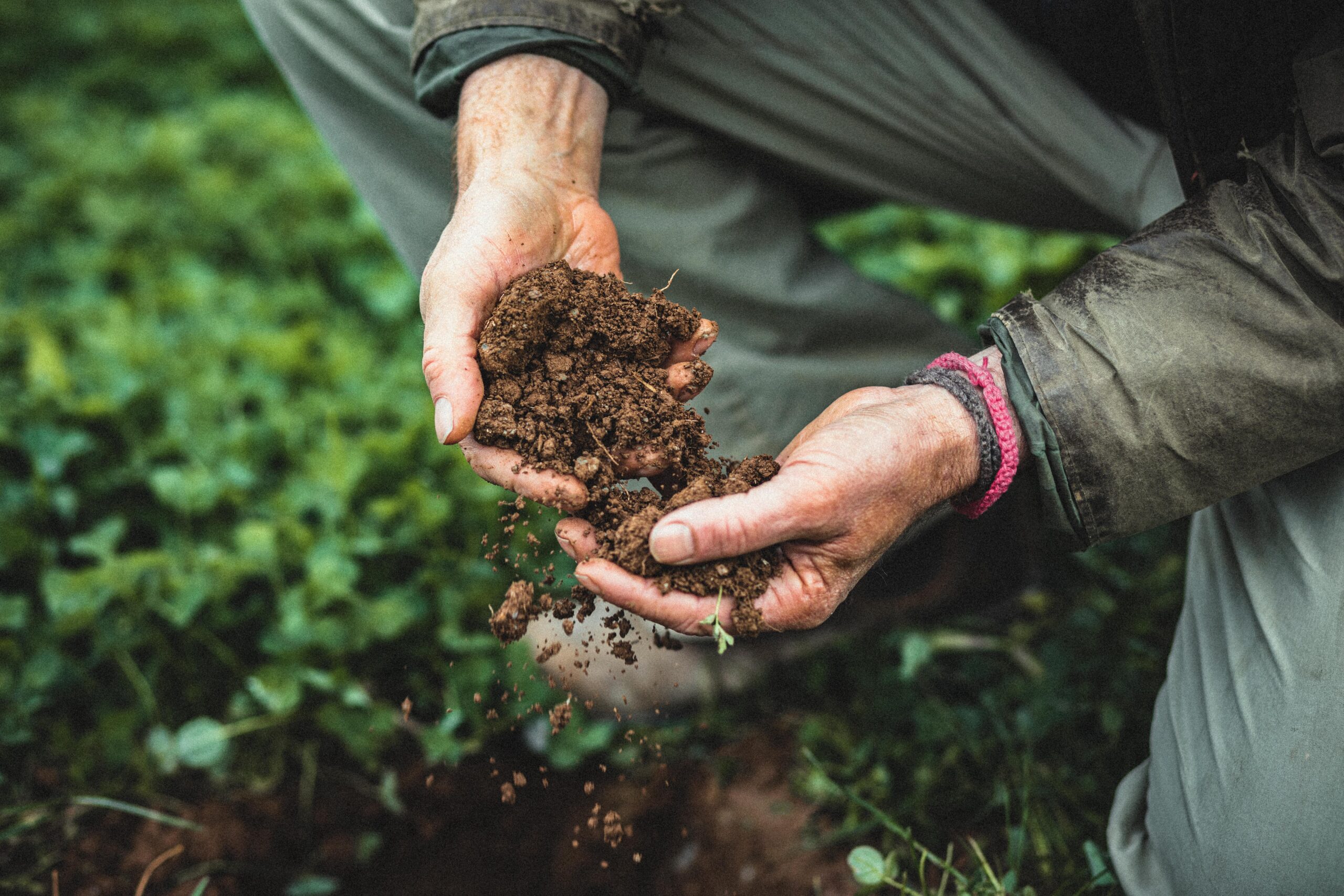
September and October have been near perfect for most farmers. Our 110mm of rain was well below the two-month average for our farm and has barely reached 100mm depth. So, following an extreme drought, it is perhaps surprising to see grass and veg growing with such luxuriance. Our neighbours have cut their maize for silage, most potatoes are in store and carrot harvest is well under way – all done in good conditions with the heavy machinery causing minimum soil damage. Next year’s crops of wheat and barley have been sown in perfect conditions, grass seeds are up and our green manures will soon achieve the ground cover to hold
soil and nutrients when the rain does arrive.
The soil is still bone dry at depth and it will take a lot of rain to replenish the deep reserves and aquifers that steadily feed our wells, springs and rivers. But plants, especially relatively weak-rooting vegetables, absorb most of their nutrients from the top 100mm. Here, we have just enough moisture. Heavier dews, shorter days, higher humidity and a lower sun all combine to drastically reduce the rate of moisture loss, allowing plants to keep their stomata (leaf lung entrances) open, so CO2 absorption, photosynthesis and growth are at a maximum.
With just enough moisture and the heat of the summer still held in the soil, bacteria, fungi, microfauna, worms and invertebrates are recycling organic matter at their highest rate, releasing soluble nutrients the plants can absorb. Because we add more organic matter and don’t suppress life in our soils with pesticides and chemical fertilisers, this autumn flush of nutrients and growth is often more marked on organic farms. This year, it’s even more so. Mostly that is good, allowing crops to make up for growth lost for lack of water in July and August. However, the growth this year is soooo luxurious, there is a danger of it being soft and prone to pest and disease, particularly if then challenged by frost or prolonged rain. We are also seeing some varieties confused by the stop-start year; some cauliflowers are just growing leaf and huge frames, when we would expect them to be producing a head, and others are heading early. Few farmers will be complaining but many of us would happily settle for a steady and dull average, over extremes of desperation and luxuriance.
Our News from the Farm posts come from Riverford. They are the digital versions of the printed letters which go out to customers, every week via Riverford’s veg boxes. Guy Singh-Watson’s weekly newsletters connect people to the farm with refreshingly honest accounts of the trials and tribulations of producing organic food, and the occasional rant about farming, ethical, and business issues he feels strongly about.



0 Comments