
15 years ago, as I researched employee ownership, I found myself at the top of a glass-and-steel office tower, giddily looking down at the gleaming Thames and over the City. Much as I tried to absorb the governance details from Graeme Nuttall, a corporate lawyer, all I could think of was how many leeks I’d have to sell to pay the bill.
Last month I found myself back in the same office with Graeme and 12 fellow founders who had all taken their businesses into employee ownership (EO). In 2011 there were around 250 EO businesses in the UK – today there are more than 2,900, employing over half a million people. The purpose of the meeting was to capture our “founders’ wisdom” and use it to encourage others to follow the same path. How, for example, can the maverick energy of most founders be maintained in a mature and cooperative business with collaborative decision-making?
In a room where the “suits” were in the majority, I initially thought that mine would be the most challenging voice, but as we told our stories and explained our choices, the conversation grew bolder – moving from valuation, price-to-earnings ratio, and capital gains tax to the more fundamental reasons we had all chosen EO: ultimately, that even a passing brush with the naked greed of some prospective venture capitalists or private equity buyers provoked visceral repulsion in all of us.
Prior to our exits, we had all devoted the best part of our lives to building businesses that we believed in and were proud of – they were part of us, part of our families, and part of the lives of the colleagues who had built them with us. If we were lucky (as I feel I have been), our businesses might even have played an important part in our customers’ and suppliers’ lives too. As the conversation moved from money to emotion, it revealed the underlying truth: that we are essentially wonderfully complex, social, and emotionally driven beings. All 12 of us were happy, fulfilled, and often still engaged with the businesses we built from the ground up, or otherwise committing our lives and wealth to philanthropy. Graeme now works pro bono, devoting his life to promoting EO internationally.
If our planet and civilisation are to have any chance of survival, we must challenge the folly of personal greed and embrace our collective need to share and build resilient businesses and communities together.
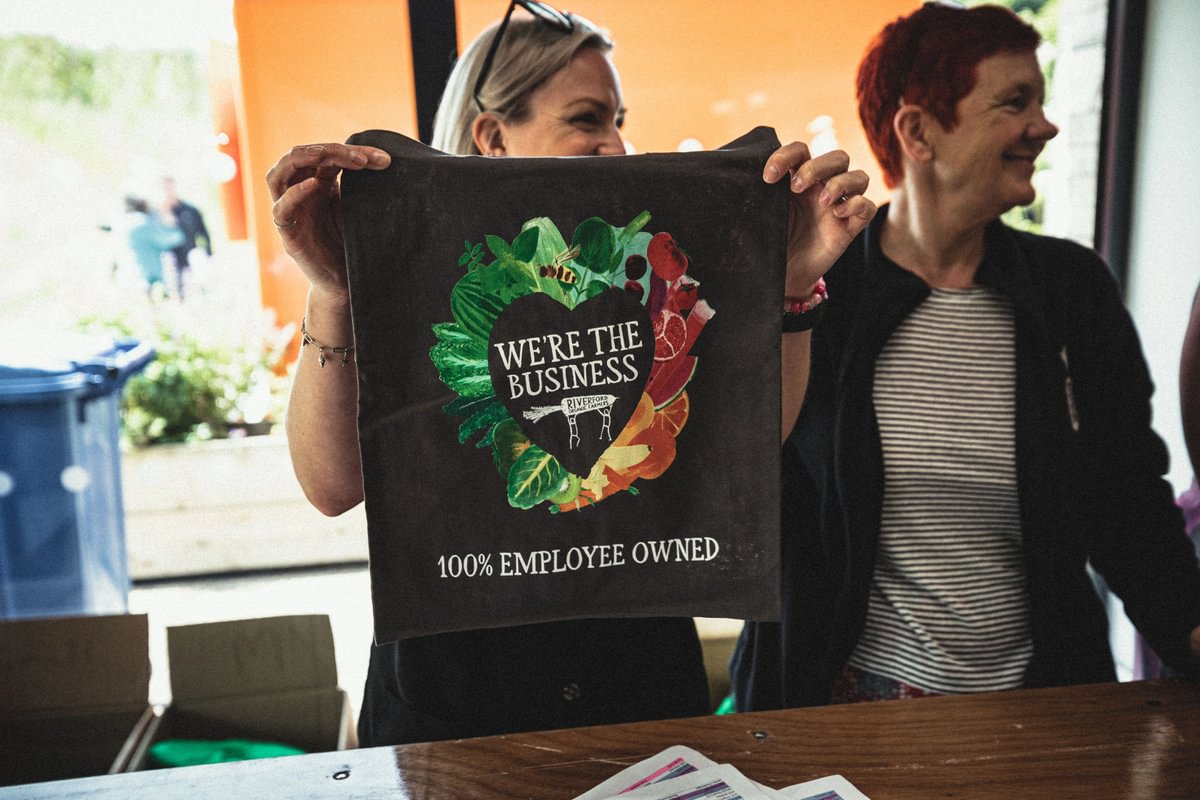
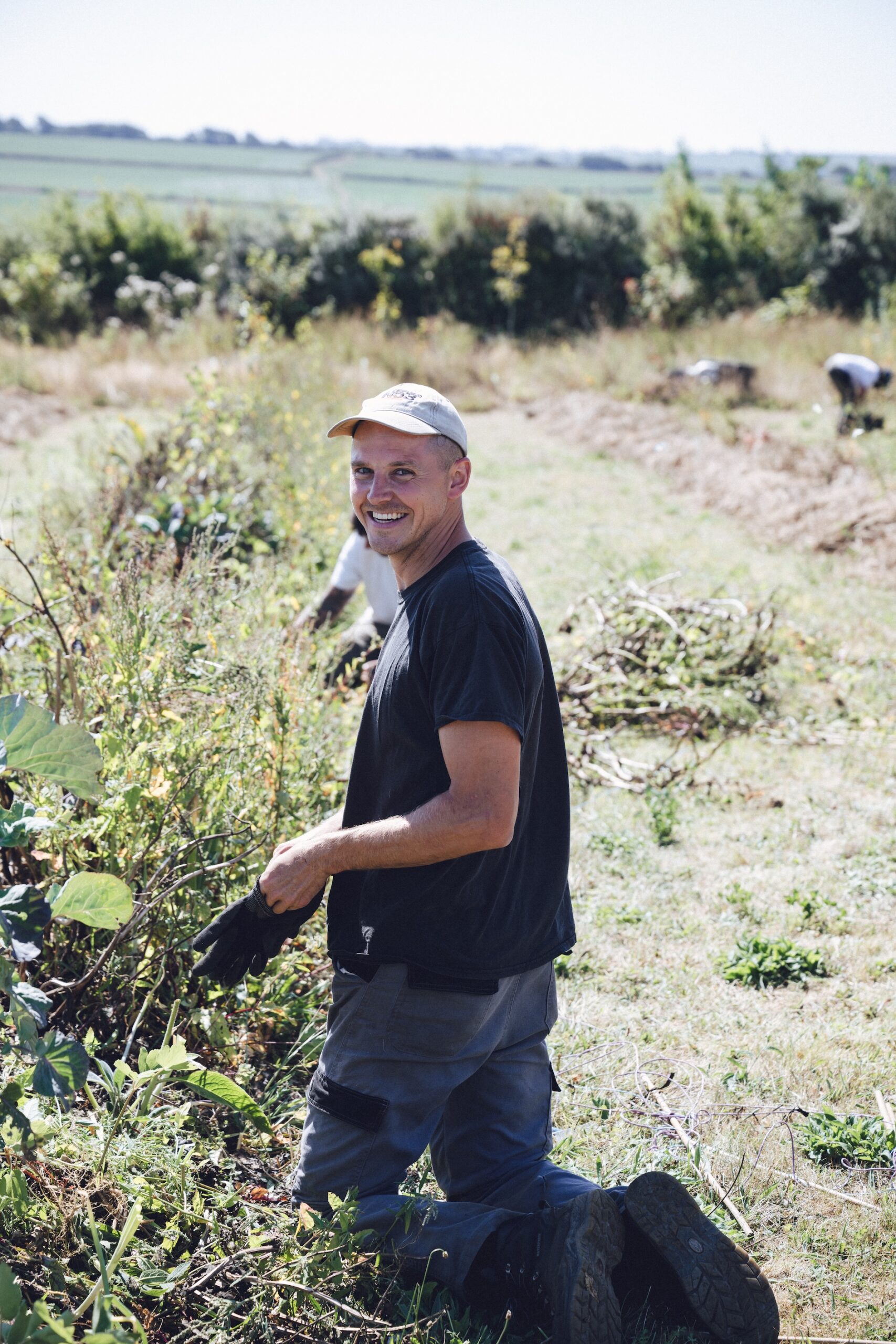
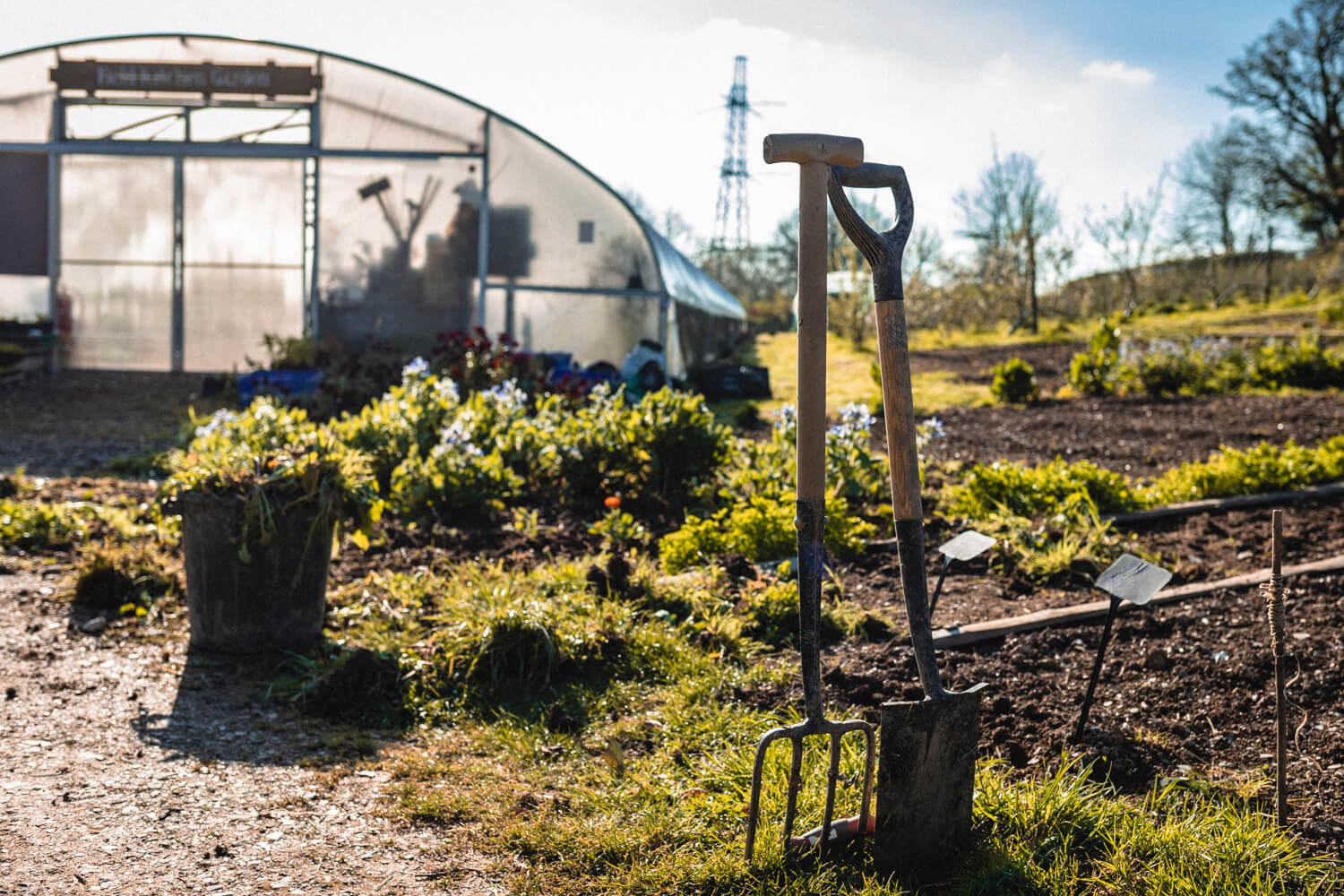
Photograph taken at Wash Farm on the day that Riverford became 100% employee owned, in 2023.
Learn more about Graeme’s work and Employee Ownership here.
Our News from the Farm posts come from Riverford. They are the digital versions of the printed letters which go out to customers, every week via Riverford’s veg boxes. Guy Singh-Watson’s weekly newsletters connect people to the farm with refreshingly honest accounts of the trials and tribulations of producing organic food, and the occasional rant about farming, ethical, and business issues he feels strongly about.



0 Comments