
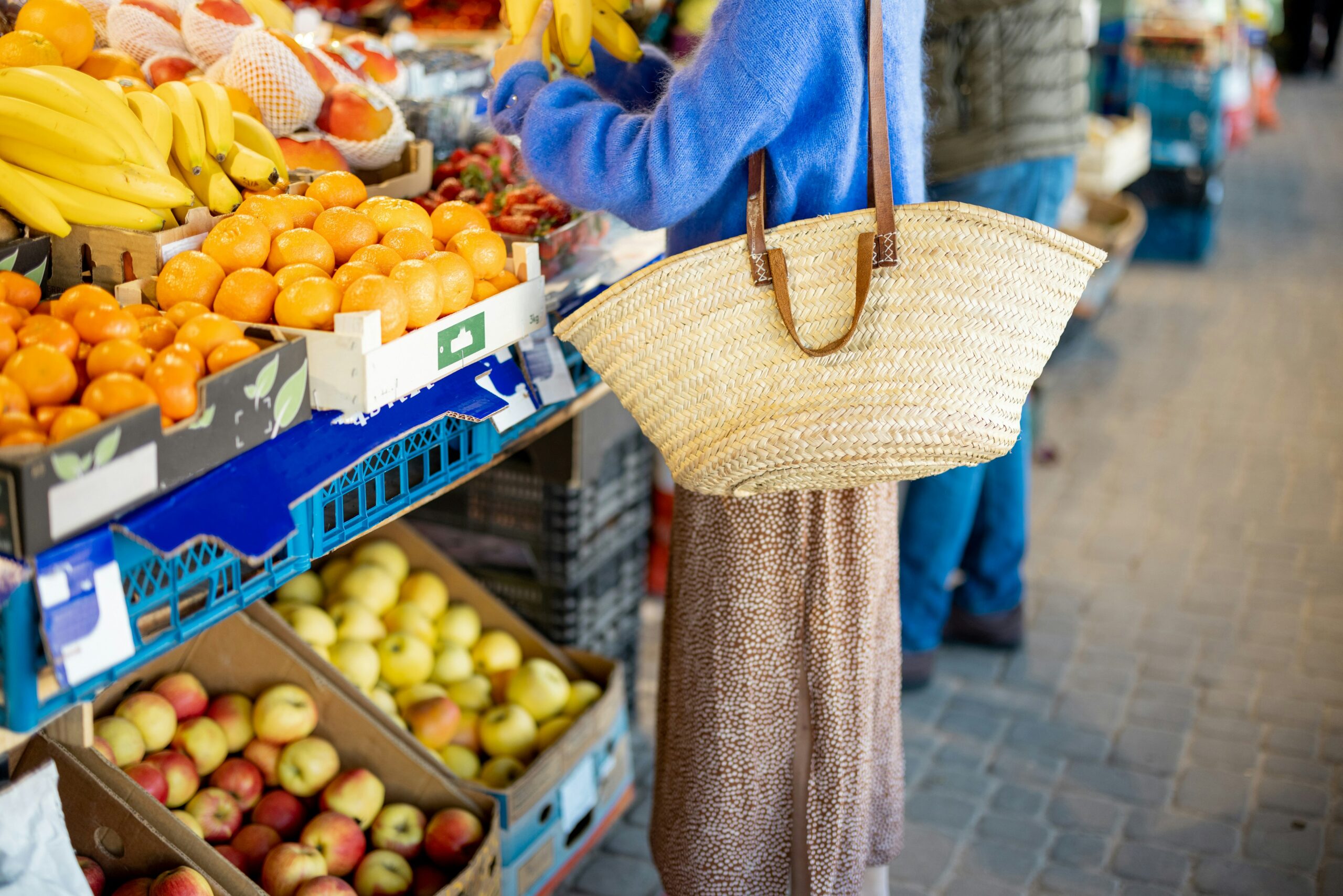
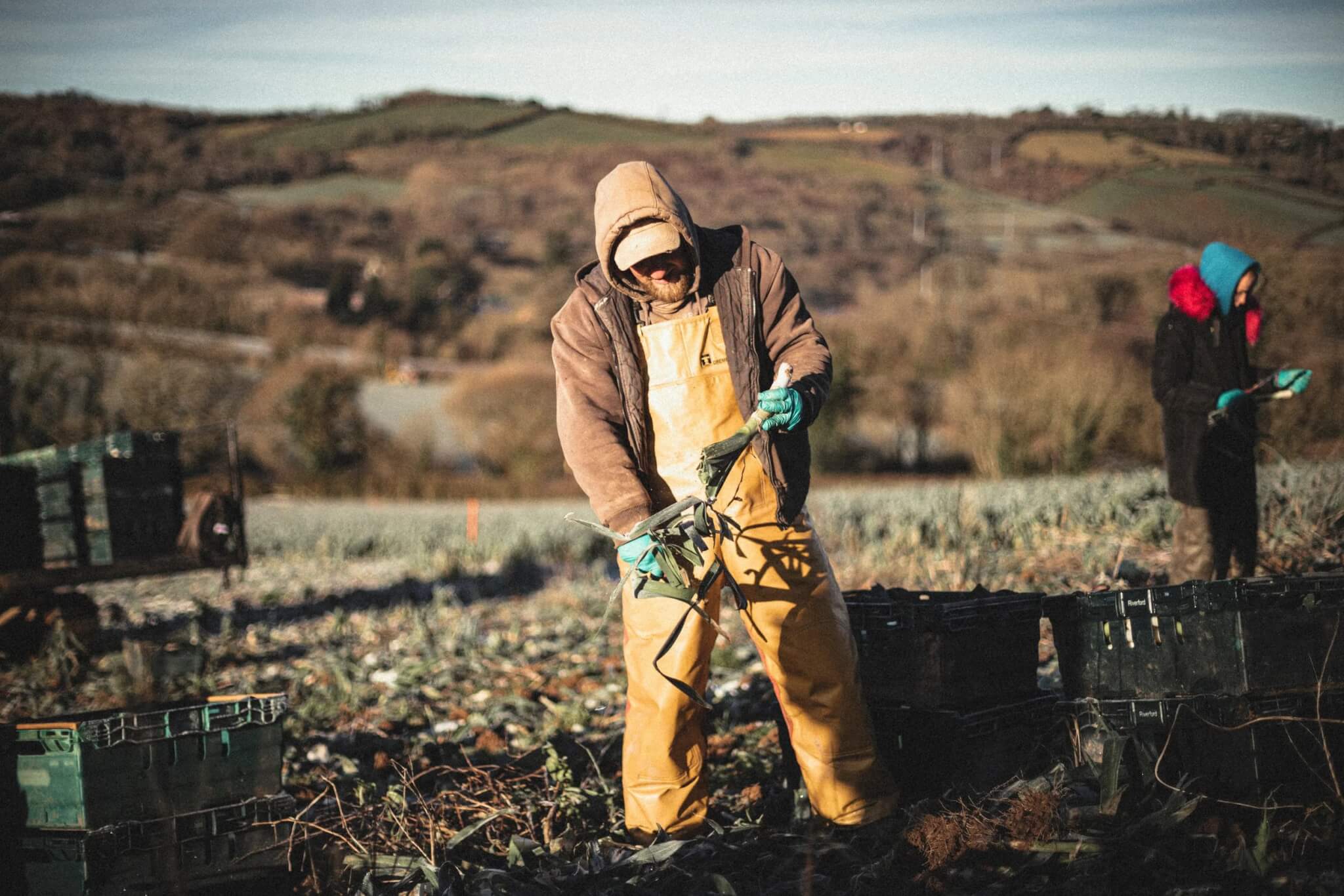
A weekly voucher, redeemable only at organic fruit and veg outlets, may not sound like a game-changer for the UK, but experts agree that it could be a catalyst for something bigger: where families are encouraged to purchase and eat more seasonal and nutritious produce, purchased direct from growers, who are subsequently provided with reliable income and steady demand, while planting food that benefits the community.
That’s why one scheme launched in Cardiff is garnering a lot of interest. The state-funded pilot focused on low-income households, giving them £11 credit a week. The only stipulation was that they had to spend it at two farmers markets, and with three organic growers. Members of the scheme could also track their spending on an online platform.
“This was born out of demand from local, diverse communities from lower income neighbourhoods that wanted to eat organic produce, as well as climate and nature friendly food. That’s because people polled in the pilot who grew up oversees or lived once outside the UK, said that fruit and veg from British supermarkets did not taste of anything,” explains Pearl Costello, Head of Food Sense Wales.
Hence Planet Card,was born, focusing on ‘food good for the planet.’ Such has been the success of the scheme that 120 households spent £19,000 with local growers. An additional £1,000 of citizens’ own money was also spent at Cardiff Farmers Markets. The project was supported by the Welsh government and SUSTAIN, the alliance for better food and farming.
Multiple benefits
This voucher scheme has demonstrated multiple benefits – encouraging people to shop locally, buy seasonal produce, and make new connections with local growers of agroecological produce.
Wicked Leeks has reported on a similar project implemented by the Alexander Rose Charity at local markets in London, where vouchers boosted people’s five a day intake; there is now growing momentum to scale such schemes up.
“A voucher scheme offers so much promise because it gives people choice in terms of how they use the money, but at the same time it opens up the pathway to buying more organic and agroecological fruit and veg,” states Hannah Gibbs, Programme Manager at SUSTAIN.
She adds: “The beauty of Planet Card is that it was co-designed by communities, growers and traders along the supply chain. We need to boost local, fruit and veg grown in a better way. For farmers, a voucher scheme like this is a direct shot in the arm for their sales, directly supporting the growth of their business. This is an exciting prospect.”
There are calls from many organisations, including the Food Foundation, Green Alliance and the Soil Association, among others, to expand UK domestic fruit and veg supply in order for the UK to be less reliant on overseas production; we presently import 44 percent of our veg and 86 percent of our fruit.
Even replacing half the imports with homegrown produce would only rewind the clock back to the year 2000, in terms of import levels, according to research by the Green Alliance, yet such a move would inject £1.9 billion into the UK economy.
Shifting the dial
The government recently launched its Organic Action Plan for England to grow the domestic market for organic food, with the aim of expanding the land under cultivation from 3.4 to 10 percent by 2036. Yet it is scant on details in terms of boosting consumer demand beyond marketing and awareness campaigns. This is where voucher schemes connecting consumers direct with local growers could shift the dial.
“In the case of Planet Card, the uptake was so high and the consistency of purchasing was so prevalent, with so many people visiting the markets on such a regular basis, for me this provides evidence that there’s real value in introducing this kind of intervention. It also keeps money circulating within the local economy,” explains Gibbs.
Economic modelling by the Organic Research Centre and the University of Portsmouth showed that for every £1 of public money invested in climate and nature friendly food, combined with £1.10 from shoppers, nearly £9 in social value is generated – including benefits for health, stronger communities and local economic growth, as well as environmental benefits.
What’s interesting about voucher schemes such as Planet Card is that they are a simple solution that directly stimulates demand from agroecological growers. It also shifts peoples’ behaviour to shop for their produce in a different way, and slowly draw consumption habits away from global supply chains and dominating supermarket chains. In that way it ticks a lot of the boxes for food systems change in the UK, alongside changes to public procurement.
In Wales they are also taking a multi-pronged approach alongside their work in the public sector with the Welsh Veg in Schools programme. This is a pioneering initiative aimed at supplying locally grown, organic vegetables for use in primary school meals across the nation.
The Planet Card voucher scheme is now being considered Wales-wide, with thoughts on how it could encompass the three million or so people across the nation. Such a scheme was a recommendation of the Future Generations Commissioner for Wales as a way of improving access to local, healthy and sustainable food.
Its delivery is likely to be varied, involving independent greengrocers, other retail settings and introducing new farmers’ markets in “food desert” neighbourhoods.
“The potential demand signal to farmers and growers would be significant if it was at scale. It is important to start with the demand and then work backwards. But we then need to fulfil that demand as well,” states Lucinda Jones, Food Cardiff Co-ordinator.
“It would be amazing if a much wider group of people could access such a scheme and be part of it. However there are questions over how much investment would be needed and could this be done on a more universal scale? In an ideal world it would be incredible if we could scale this up,” concludes Costello.
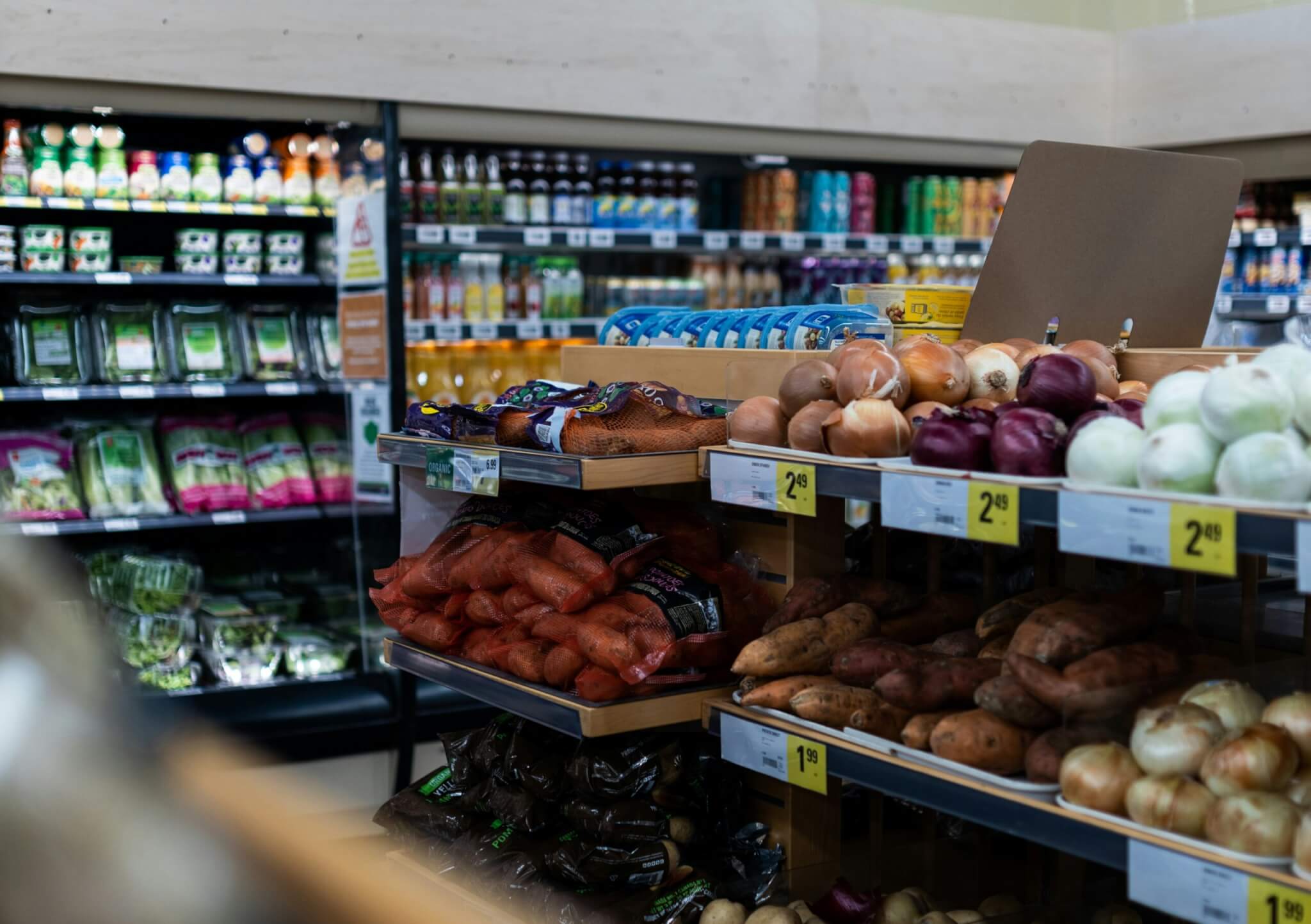
Another key consideration highlighted by the Planet Card pilot is that households that adopted it were proud to support such a project because it showed their connection to local growers and care for the planet. It’s heartening to think that something as simple as supporting local people to shop with and support their local growers can have such far-reaching impacts – but in a broken food system, dominated by just six retailers, that relies on international imports, this joined-up approach to food is not just a shot in the arm for the economy and environment, but a boost to local community spirit too.



0 Comments