
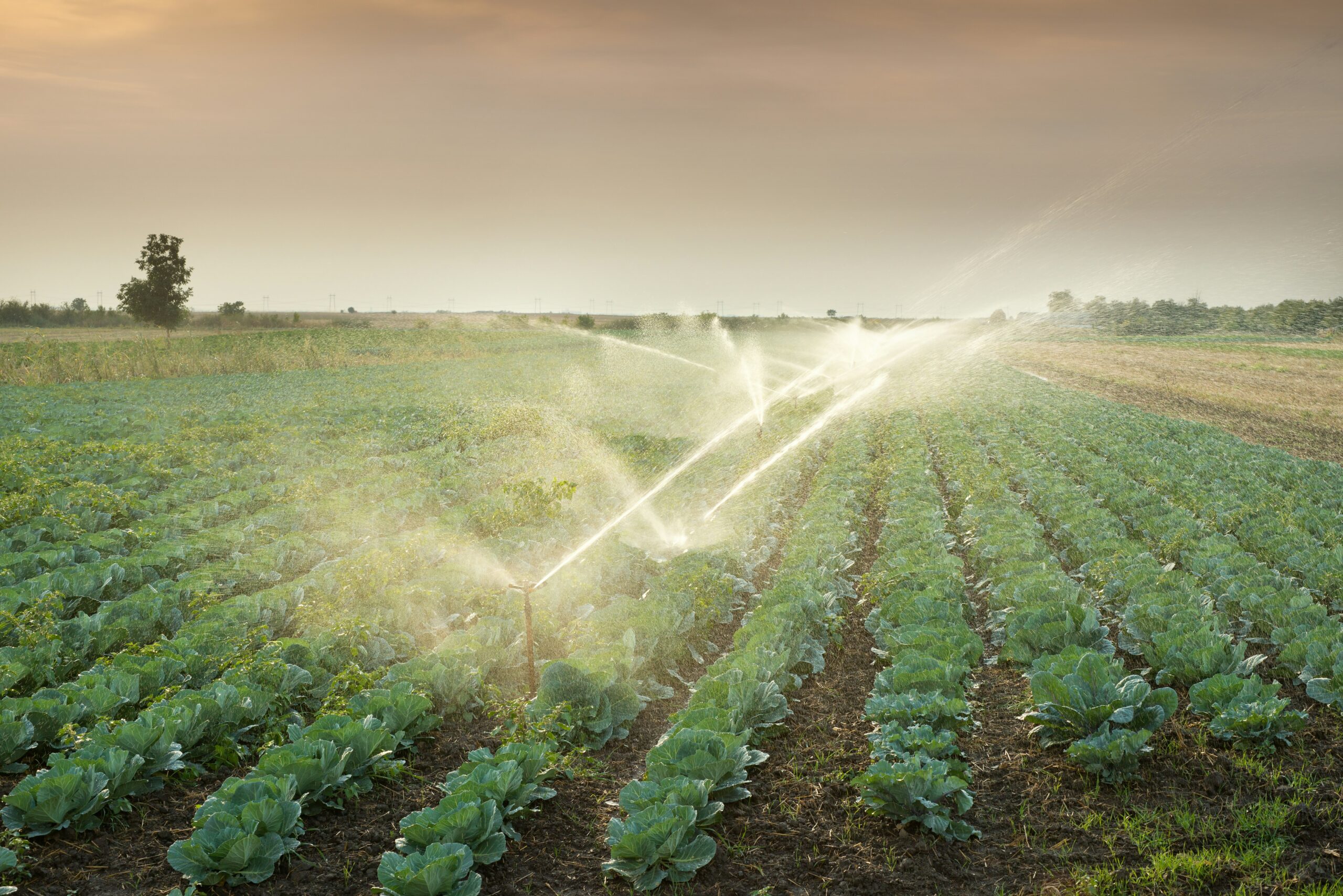
If parched fields full of withering, shallow-rooted, annual crops are the enduring picture of the countryside this summer, so are the verdant, resilient hedgerows that enclosed these very same fields. Answers to the climate crisis and poor yields are right in front of growers’ eyes: deep-rooted perennials – which could help us build resilience in the years ahead.
Most people are familiar with apples and rhubarb, hazelnuts and asparagus. But perhaps not with the likes of Nine-star broccoli or Daubenton’s kale. Yet with all of these perennials, growers only need to plant them once before harvesting them over multiple seasons. Hearteningly, there is now renewed interest in what they offer, including perennial grains.
Many have long, extensive root systems; some are slow-growing. They are more hardy than the puny, often dwarf, fast-growing annual crops that are commonly planted. Farmers don’t have to plough each season, or extensively apply fertiliser and pesticides. This means they offer an antidote to both the climate and cost of farming crisis.
With today’s eye-watering energy, fuel and input costs could perennials finally be having their moment in the sun? Wicked Leeks explored their prospects seven years ago, yet over this period perennials have failed to receive wide-scale funding, extensive field trials or be adopted extensively by growers across the country.
“Perennials have so much potential, but they still do not seem to be catching on at a commercial scale,” explains Harriet Bell, Regenerative Farming Lead at Riverford Organic Farmers, which has been working with perennial kale. A lack of awareness, access to seeds, to plants, and to know-how, as well as greater upfront costs compared to annuals, are just some of the reasons why perennials have not taken off.
Yet at the home-level and in market gardens, as well as on allotments, perennials are increasingly being embraced. Small scale growers now realise the benefits of perennials from improving soil health and nutrient retention, no-till and providing year-round ground cover, which stops soil runoff, as well as promoting biodiversity. They also sequester carbon. Growing perennials is very much aligned to the principles of regenerative agriculture.
Yet many commercial businesses, research institutes and universities are more interested in gene-edited crops and new breeding techniques – where intellectual property can be extracted and commercialised – than investing in growing perennials.
Similarly, there are no demonstration plots that could help farmers adopt perennial crops and that’s because they are often open pollinated and are a shared, common resource; the bottom line: there is very little money to be made in their development.
Time the government steps up
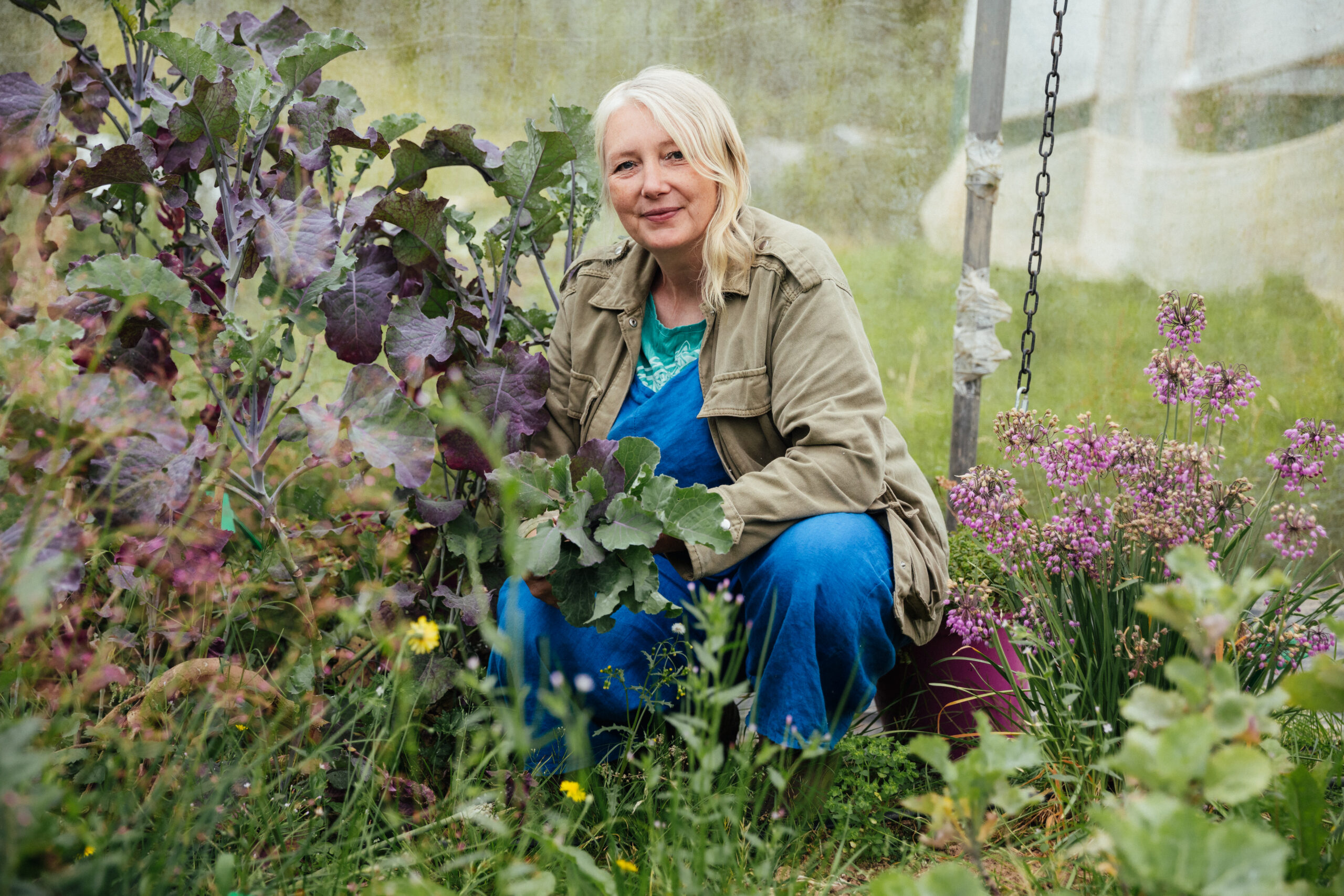
“The government now needs to take perennials more seriously if they are really truly concerned about food security and farming resilience. I don’t think they’re even on DEFRA’s radar. A lot of the research into this is completely unfunded or in my case self-funded,” explains Mandy Barber, founder of Incredible Vegetables, a business focused on growing perennial plants and seeds.
She adds: “We need more research and grants. It is not a matter of if we should adopt perennials, but when. We should have started investing in them 30 years ago. It’s so pressing now with what is going on. If the message hasn’t got across this year, then there’s 40 degree summers coming for many more years to come that will sharpen peoples’ minds. We need swift change now.”
Some perennial plants have also been associated, sometimes wrongly, with lower yields. However, during the summer perennial crops have thrived and continued to crop with multiple pickings despite the intense and prolonged drought.
Farmers who planted Miscanthus or elephant grass, which is used for animal bedding, or Sainfoin, a livestock forage, have continued to see green fields and harvests despite the lack of rain, while grass for silage has been scarce. During the summer, Barber has not watered any of her perennial plots, yet reaped their rewards.
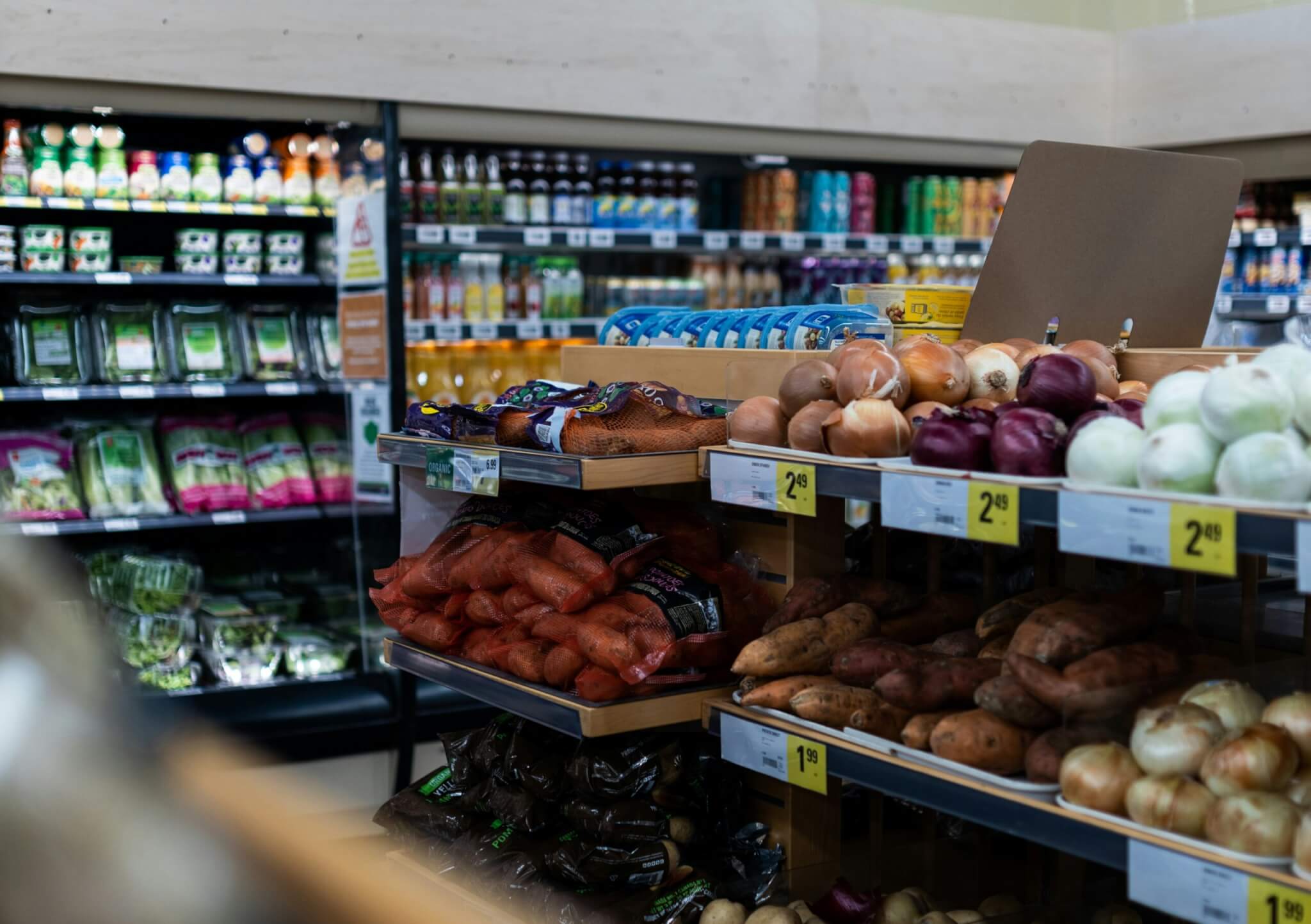
“Take bladder campion. It’s bunched up and sold as a vegetable in Italy. You never see it on the supermarket shelves here in the UK or perennial wall rocket, but both are very drought tolerant. You just keep cutting it back and harvesting another load of leaves. Three years later you’re still picking from the same plants, yet they’ve not seen a drop of water all summer,” she explains.
With drought in parts of the US there is now much greater interest among farmers to plant Kernza, a perennial grain developed by the Land Institute in Kansas. Yet there is a long-way to go – Kernza was only planted on 1,400 hectares last year, compared to over 15 million hectares of wheat that is planted each year in the United States.
In Europe and in the UK’s Lincolnshire they’ve also been looking at growing silphium, a perennial crop that lasts for more than 15 years, as an alternative to growing maize for biogas, while there’s a growing movement towards perennial rice in the sub-tropical Yunnan Province of China. Slowly, and in many small pockets across the world, perennials are gaining momentum.
Building awareness through eateries
Pull through from the food scene could help. Imagine plates of perennials from good king henry to purple tree collard, or keeper kale to sorrel, building awareness one diner at a time and a growing awareness around what a more sustainable plate of food could look like.
“I would love to harness the buying power of chefs to push perennial foods in a big way and to showcase to growers that there is actual demand. For instance, we’ve spent the last few years developing perennial salads. What they do is that they add so much more diversity and resilience to our diet,” explains Jack Feeny founder of Tomorrow’s Kitchen, an organisation focused on more sustainable cheffing.
He adds: “You can also grow and harvest throughout the whole year as there’s no hunger gap with perennials. Today, we still consume the same 20 or 30 annuals in our diet. But when you tap into perennials, there’s potentially 7,000 edible crops that grow in temperate climates.”
Looking to the future, both Barber and Feeny believe farmers need to start diversifying what they grow and mix things up a bit, moving away from monocultures to polycultures and giving a little more space to perennials, especially across those farm areas that are underutilised and where annuals don’t thrive, such as sloping, marshy or shady areas.
“The idea of replacing a monoculture of annuals with a monoculture of perennials isn’t really what we have in mind. It’s more about creating communities or polycultures of plants. For instance, there are those plants that protect the soil or shade more delicate plants from being dried out from the sun, all of which requires more creative thinking,” details Barber.
The issue is that British farming is more geared towards the production and harvesting of annuals, which requires certain bed sizes and uniform plant sizes, as well as specific machinery and knowledgeable growing and picking teams. If perennials are to be adopted at scale, new approaches will be needed.
This is where investment is essential; there is currently no availability of perennial plant seed to buy in bulk; and there are very few publicly invested demonstration plots of perennials to help farmers understand how they can be grown at a commercial scale or big nurseries that propagate and take cuttings of perennials to enable a much bigger supply.
“The best way to inspire action is for people and the farming community to see it working on the ground. I would love to see ten farms around the country commit to planting 20 percent of their area with perennials that could then inspire other growers,” states Mandy Barber, who has been working on perennials for 16 years.
She concludes: “It is not just about food production – perennials also bring so much to nature and wildlife. The thing about perennials is that you’re leaving things alone. The only way you can help nature is to stop interfering in everything.”
Maybe it’s time to align some Sustainable Farm Incentives (SFI) and Environmental Land Management Payments (ELMs) to perennials?
Image of Mandy Barber, founder, Incredible Vegetables; taken by Emma Stoner for issue 01 of Veg&Table magazine, summer 2024.


0 Comments