
When Knepp Estate won its Green Michelin Star in February 2026, Chef-Director Ned Burrell was surprised not to receive an official plaque. Knepp, a rewilded estate in West Sussex, had opened its restaurant just three years earlier, with menus often built around the longhorn cattle, Tamworth pigs, and two breeds of deer roaming the estate. “I got in contact with them just a month after they gave us the award and said, What’s going on?” he explains. “And that’s when they said they were changing the accreditation, but they couldn’t say why. That is the only correspondence I’ve had with Michelin.”
In June 2026, Michelin scrapped the Green Star altogether, leaving new recipients with mixed feelings. “It’s bittersweet,” Burrell says. “The impact has been a largely positive one for us but also for the industry as a whole. It’s certainly put sustainability at the forefront of our industry in a way that it hasn’t been before.”
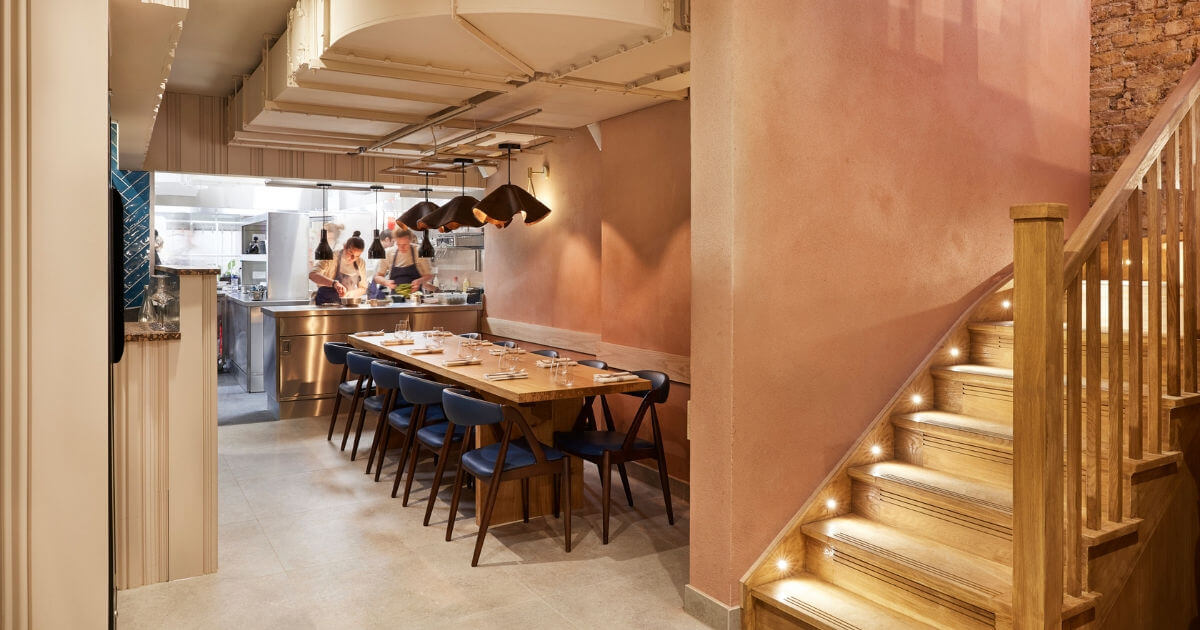
For Chantelle Nicholson, who won the Green Star with Apricity in 2023, it’s a significant loss. Tucked away on Duke Street in Mayfair, Apricity – which means the warmth of winter sun – is built around a zero-waste, veg-forward philosophy. “I feel it’s a real affirmation,” she says. Beyond customers, the Star helped with staff recruitment, supplier relationships, and broader industry signalling.
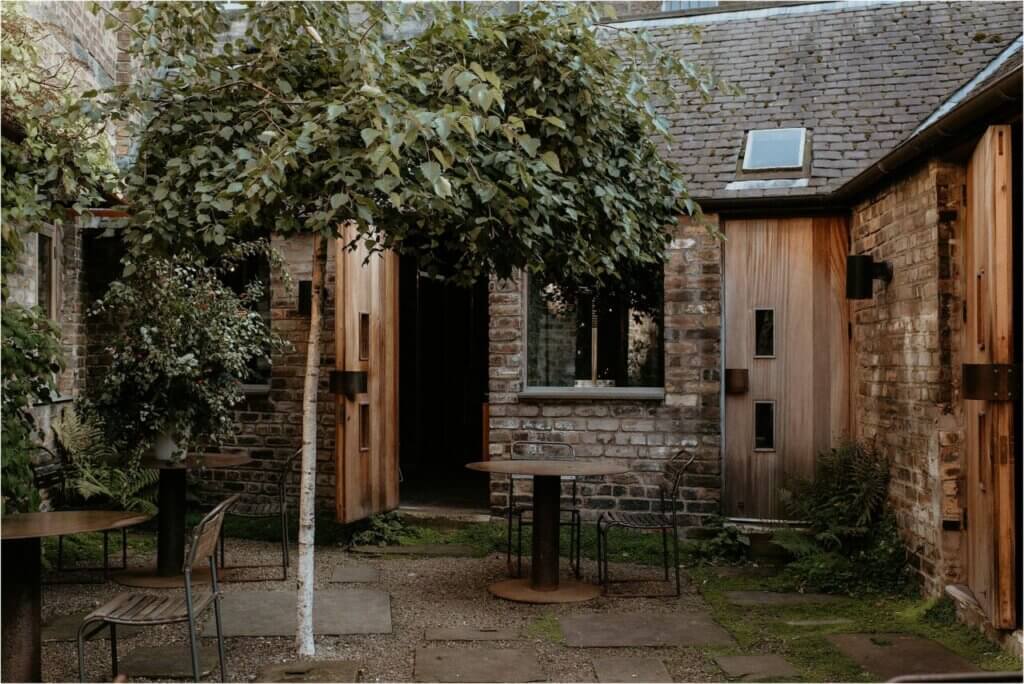
“As much as anything, it was an award for the team,” says Jo Radford, Co-Owner at Timberyard, a rustic warehouse conversion in Edinburgh that serves only wild meat: deer, game birds, hare and rabbit, alongside Scottish shellfish, a weekly-changing menu, and the extensive ferments and preserves made on site. Timberyard added the Green Star to its Michelin star in February. “In an industry which has been stripped of really talented staff from Brexit and COVID, that’s been really vital.”
For Burrell, the Star put sustainability on an equal footing. “Having it be called a star did put it into consumers’ minds and other chefs’ minds – it was being put on the same pedestal. And I think that was a really important part of it.” He adds: “I’ve been asked three or four times by restaurants or chefs, what do you need to do to get one? There was appetite for it, there was drive towards it.”
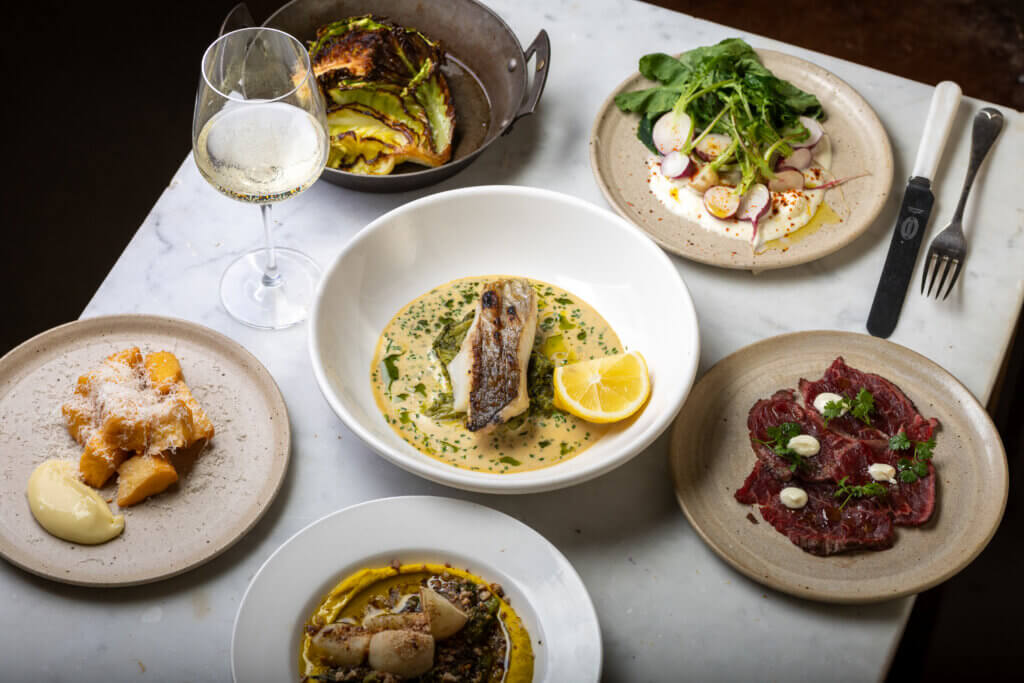
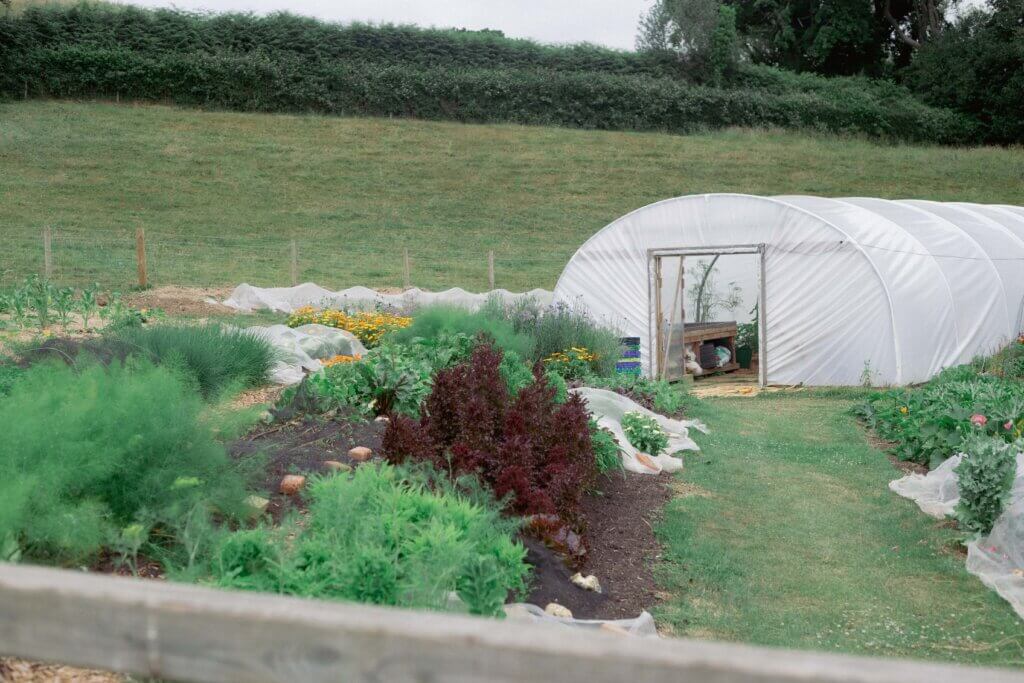
Hugo Guest, Co-Owner of Glebe House – a 15-acre smallholding in a former Georgian vicarage above Southleigh in Devon, where Hugo grew up – attests to its broader effects. Bread is baked daily, butter churned in-house, pigs reared on the property, and the menu follows whatever the kitchen garden offers that week. “What’s the incentive then for restaurants to act sustainably? For us, that’s just the way we work and we care about it, Green Star or no Green Star. But if it has a material impact on trade, then restaurants might be incentivised to act more sustainably in order to get it.”
None of them doubt its fundamental problems. For Nicholson, the application process was telling: all Michelin required was a single paragraph. Radford agrees there was little rigour; unless inspectors are checking fridges, scrutinising waste, and verifying suppliers, he says, “it’s a very difficult thing to qualify.” Guest acknowledges it came down largely to communication. “We just were a little bit more articulate about how we operate. It was basically just communicating what we do better.”
By contrast, the Sustainable Restaurant Association, which has also certified Knepp, required Burrell to open his books entirely. “So when I said I was buying from a dayboat fisher that lives 15 miles away, they could see I was buying from a dayboat fisher that lives 15 miles away. There’s a paper trail, there’s proof.” Without that standard, greenwashing flourishes unchecked, with restaurants claiming local provenance while serving halibut, turbot, and caviar, with “no legal impetus or certification that stops that sort of greenwashing.”
In fact, Nicholson thinks the Star’s retirement may be partly down to this. A 2020 EU consumer study found that over half of green claims examined were vague, misleading, or unfounded, prompting legislation requiring any environmental claim to be backed by clear, verifiable, third-party evidence. Calling something “green” without auditable proof is now legally precarious territory. “I think even the word ‘green’ is subject to that stringency,” she says. Burrell agrees, suggesting incognito inspections and an inability to verify information means “the space for greenwashing is so large that it’s all just unfounded and unproven.” Sourcing, water treatment, gas, and electricity all need proper scrutiny. “Without any of that evidence, you can’t really back up an accreditation like the Green Star.”
Nicholson feels the Sustainable Restaurant Association could be a model for whatever comes next: rigorous, evidence-based, requiring restaurants to open their books. “It would be a coming together of two well-regarded organisations.” The consensus is that any replacement must be data-driven, not marketing-driven. “My understanding is that they’re moving towards a more editorial approach, which could have a lot of pros,” says Radford. “I just hope it has the same impact for the people who are really championing this approach to hospitality.”
There is a broader danger that sustainability is becoming a luxury rather than a necessity. “It’s so much harder now than it was even four years ago,” Nicholson explains. “Costs have exponentially increased. When those decisions come up and you’ve got investors breathing down your neck and you’re just trying to keep the business afloat, you’re going to take the option that’s easiest.” The garlic she sources from a UK regenerative farm costs £21 a kilo; the same product from abroad is £8. “It feels like everyone’s firefighting at the moment rather than having the headspace and financial ability to think about the bigger picture,” Radford adds, while Burrell is bleaker still: “I think there’s less and less people who can afford to care. And that includes customers and restaurants. I think restaurants are increasingly seeing sustainability as a nice-to-have. And consumers likewise, as both pockets are being pinched.”
This is all while our food system contributes 30% of total carbon emissions and agriculture remains the biggest driver of biodiversity loss. “The hospitality industry is actually in a really interesting position of power, because it’s where both produce and the marketplace meet,” Burrell says. For Guest, sustainability is not just ethical but financially savvy: “For us, sustainability is actually a really efficient – and economically efficient – way to cook. It would actually be materially more expensive for us to cook less sustainably.”
The Green Star, however imperfect, was a catalyst. Its loss, at a moment when the industry is already under strain, risks real damage. “Michelin is a very recognisable and well-respected organisation, and there isn’t really anything else that is in the same way. For them to have taken away something that a lot of restaurants were really proud of and worked really hard for… yeah, it just makes me sad,” says Nicholson. Radford is more sanguine, noting that little changes in terms of what Green-starred restaurants are trying to do, and that being one of just 37 recipients in the UK remains something exceptional. “The acknowledgement and achievement is always there, even if we’re not able to advertise it.”
Main image: Apricity, London.



0 Comments