
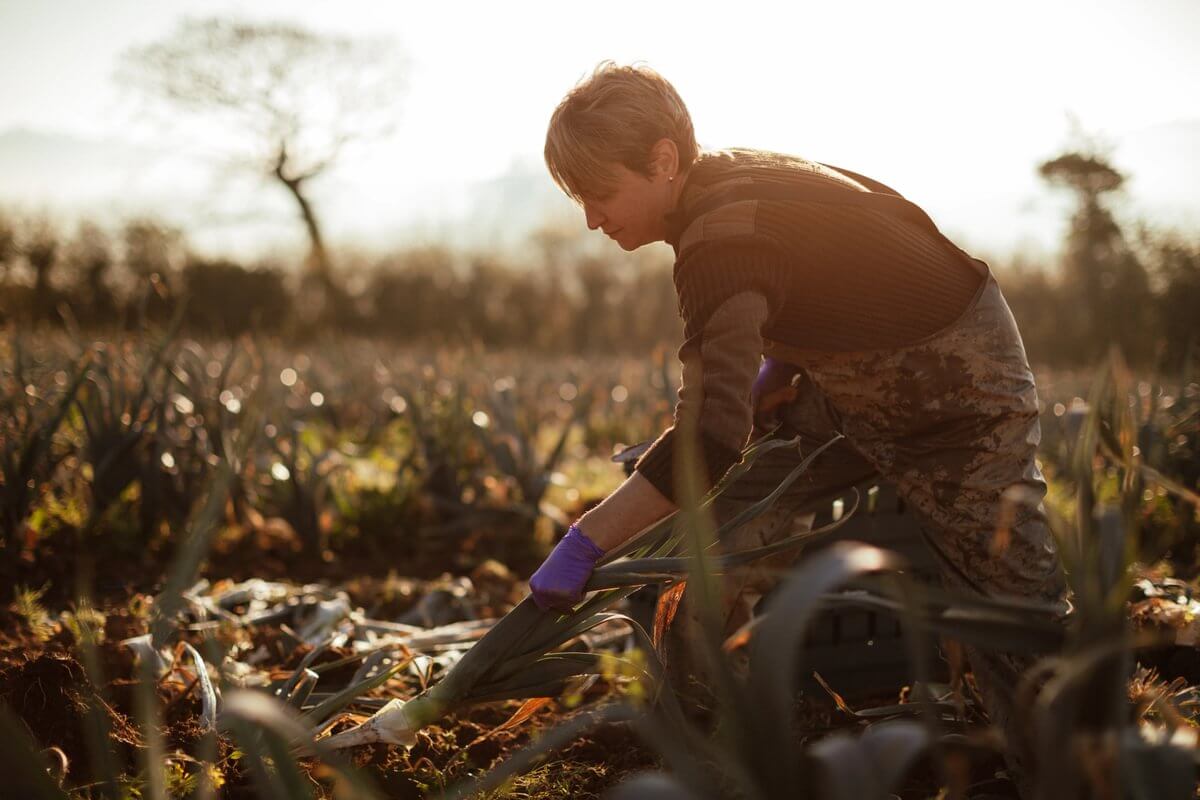
Trying to make a living from small-scale veg production today isn’t easy. There are many barriers, including access to land, and most growers struggle financially. Farm gate prices are low, inputs costs are high, yet if the UK is to deliver more healthy, nutritious produce in an agroecological way, something needs to change.
At a time of ‘public money for public goods’ in farming, could a basic income for growers help the horticulture sector? Could it also boost national food security, improve public health, reduce emissions, as well as resolve labour shortages? A tall order perhaps, yet a growing number of people think it has potential.
“We must move away from the vast importation of produce, which is not climate resilient. We must now rapidly expand domestic production. A patchwork of small-scale growers across the UK, paid a basic income could plug the gap and supercharge the transition we need,” explains vegetable grower Jo Poulton and campaign lead for Basic Income for Farmers.
She continues: “We know basic income isn’t a silver bullet, but it can certainly help build local food hubs. If we don’t do something to wean ourselves off global imports, we will see a greater number of UK growers exit the sector, which will cost us a lot more in the long-run.”
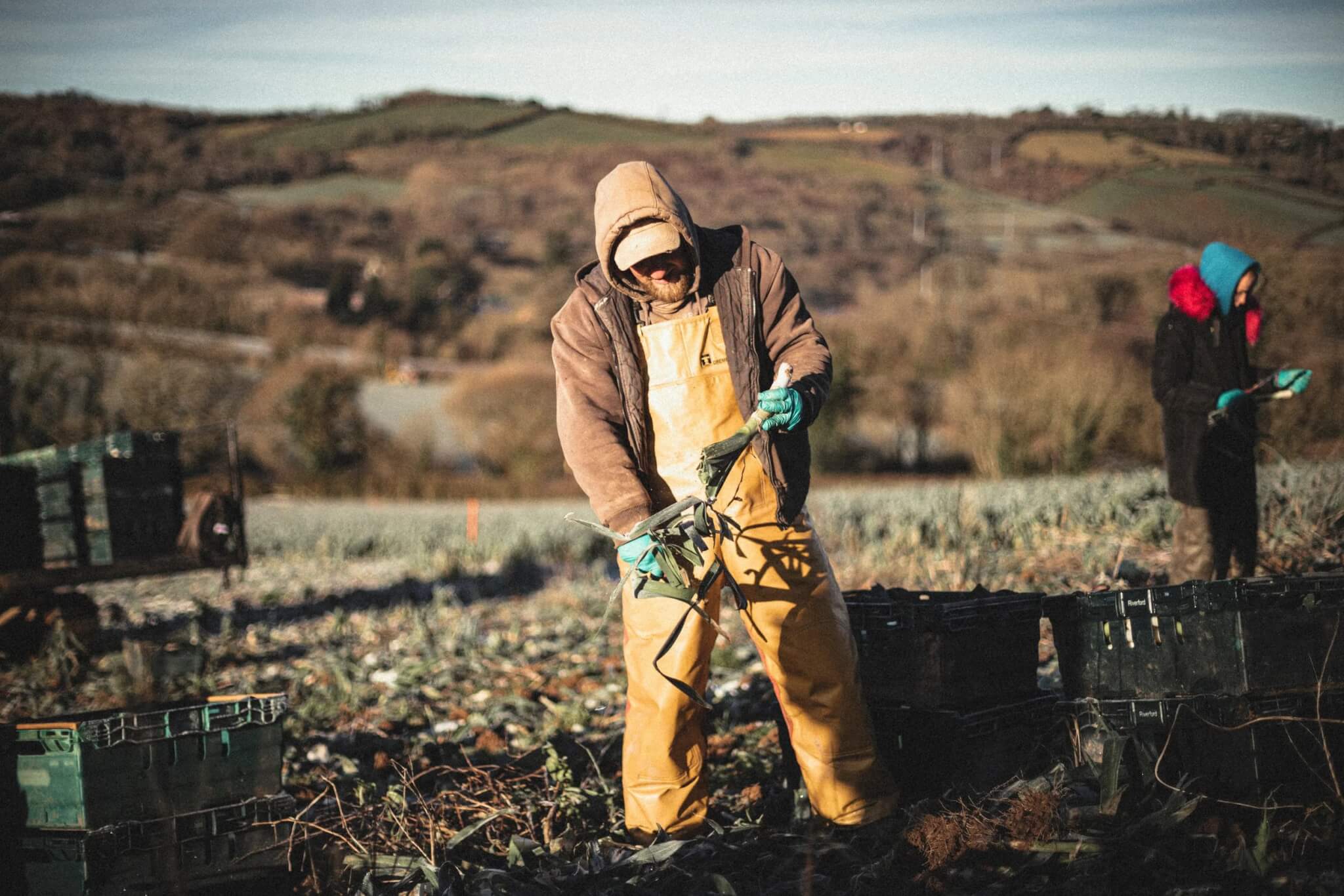
Take Tom O’Connor who runs Green Man Growing in South Devon, a regenerative market garden supplying local veg boxes. The business of growing is so tough that he’s had to take on other work in order to provide cashflow, as well as feed, clothe, and house himself.
“I’ve been growing for the past six years. It’s bloody hard work, but very rewarding, just not financially. Growing produce feels like a wave breaking against the rocks. It is so stressful to make ends meet. A basic income would certainly help small-scale growers like me to be a little more secure in this precarious form of employment,” explains O’Connor.
Gap in government support
One anonymous grower told Wicked Leeks that they earn the equivalent of just £6 an hour. So how would a basic income work? A guaranteed income of around £1,400 a month – or, £1,000 after tax – would be paid to those working the land and selling commercially. Individuals who produce food, flowers and fibre would be eligible. The aim would be to improve financial security and wellbeing in this sector, make growing a more viable livelihood, and promote nature friendly farming.
Roger Ahern, a small-scale veg grower in southeast Ireland, was one of the first farmers globally to receive a basic income of 1,400 euros a month to supply 40 families with local veg. The Green Party is also proposing a basic income for farmers to the tune of £1,000 a month. ”By backing those who grow our food, we can build a more resilient, secure and sustainable food system for everyone,” states the political party.
A basic income for farmers in the UK has been fleshed out in a report entitled “Sowing the Seeds of Stability,” produced by research organisation, Autonomy.
“There is a massive gap in government support for a certain type of farming, which is hyper-local, small-scale, agroecological fruit and veg growing. Yet this is really the only true root to real food security. It can be deeply sustainable and incredibly useful, socially. Yet people who are doing this at the moment are making pennies,” points out Cleo Goodman, one of the authors of the report.
She adds: “Many don’t have good routes to market, these small-scale farms do all the work themselves, from growing to marketing and sales. There’s a lot of pressure and a lot of burnout. It often takes a lot of personal sacrifice and entrepreneurialism. If we filled that gap with a basic income the benefits would be legion.”
Sparking food systems change
While some people may balk at targeted government subsidies, these already occur in farming. But ELMS (Environmental Land Management Scheme) and the Sustainable Farming Incentive have all been area-based payments, where landowners with more acreage can unlock access to and benefit from larger payments. A basic income for farmers, on the other hand, would focus on supporting individual growers.
“This is about personal support rather than a business income support policy. It is very distinct from the way things are done right now. This is about resourcing food system change and trusting the wisdom of people to help with this change,” states Goodman.
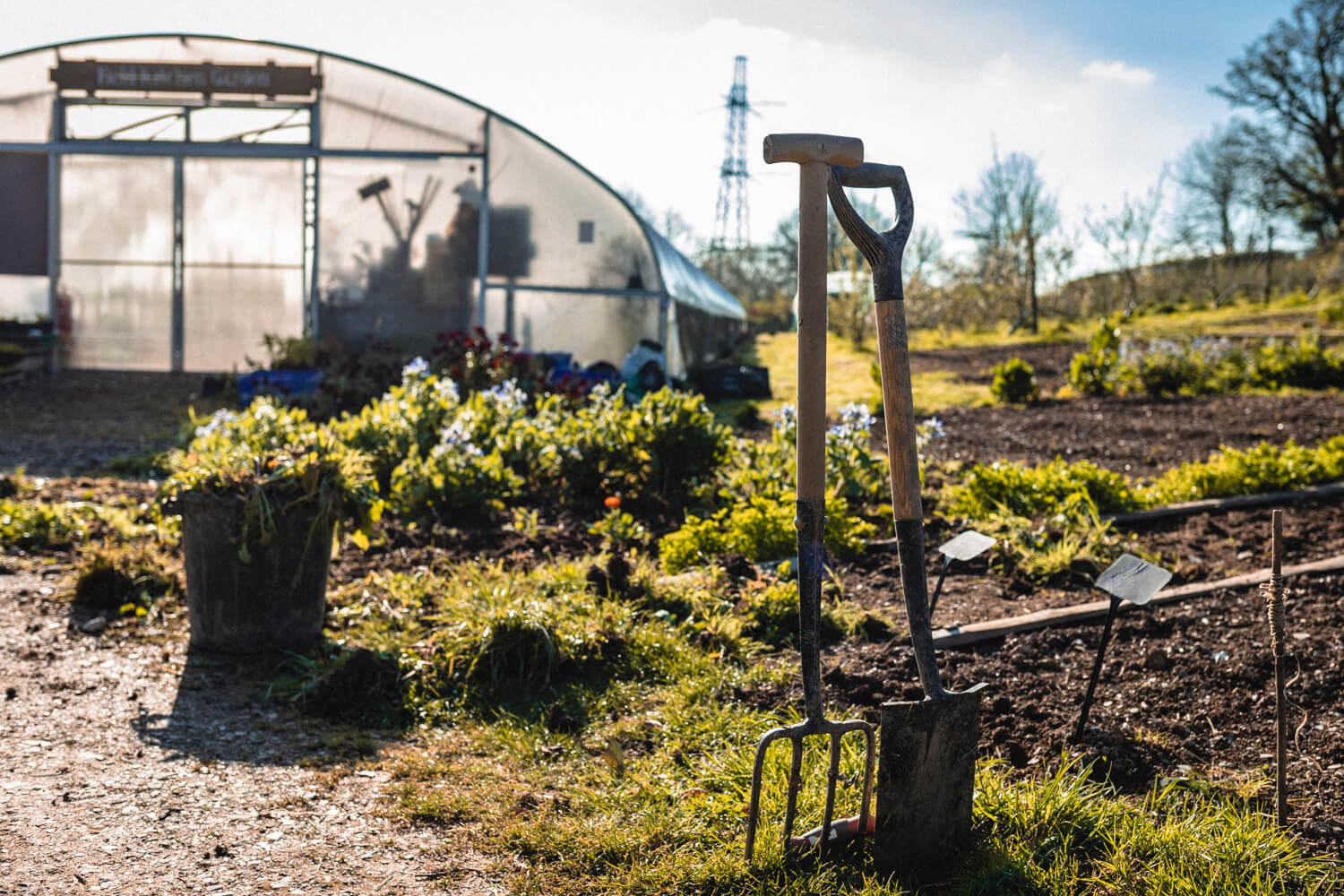
There is now a potential project in development in East Oxfordshire, called Grow More Growers where farmers could be given a start-up grant and a basic income. There is also a proposal for the UK’s first large scale pilot in South Devon, where there is a high density of agroecological growers.
The latter project, which will be evidence-based, is looking for funding so that it can offer 25 to 100 local food producers unconditional monthly payments. Tom O’Conner, among others, was consulted on the project. “We were asked what difference a basic income would make. Nobody said they would rest on their laurels, take a holiday, or anything like that. Everybody was thinking about how they could strengthen their business and commercial networks, as well as make it more workable and resilient, or employ somebody part-time to up production,” states O’Connor.
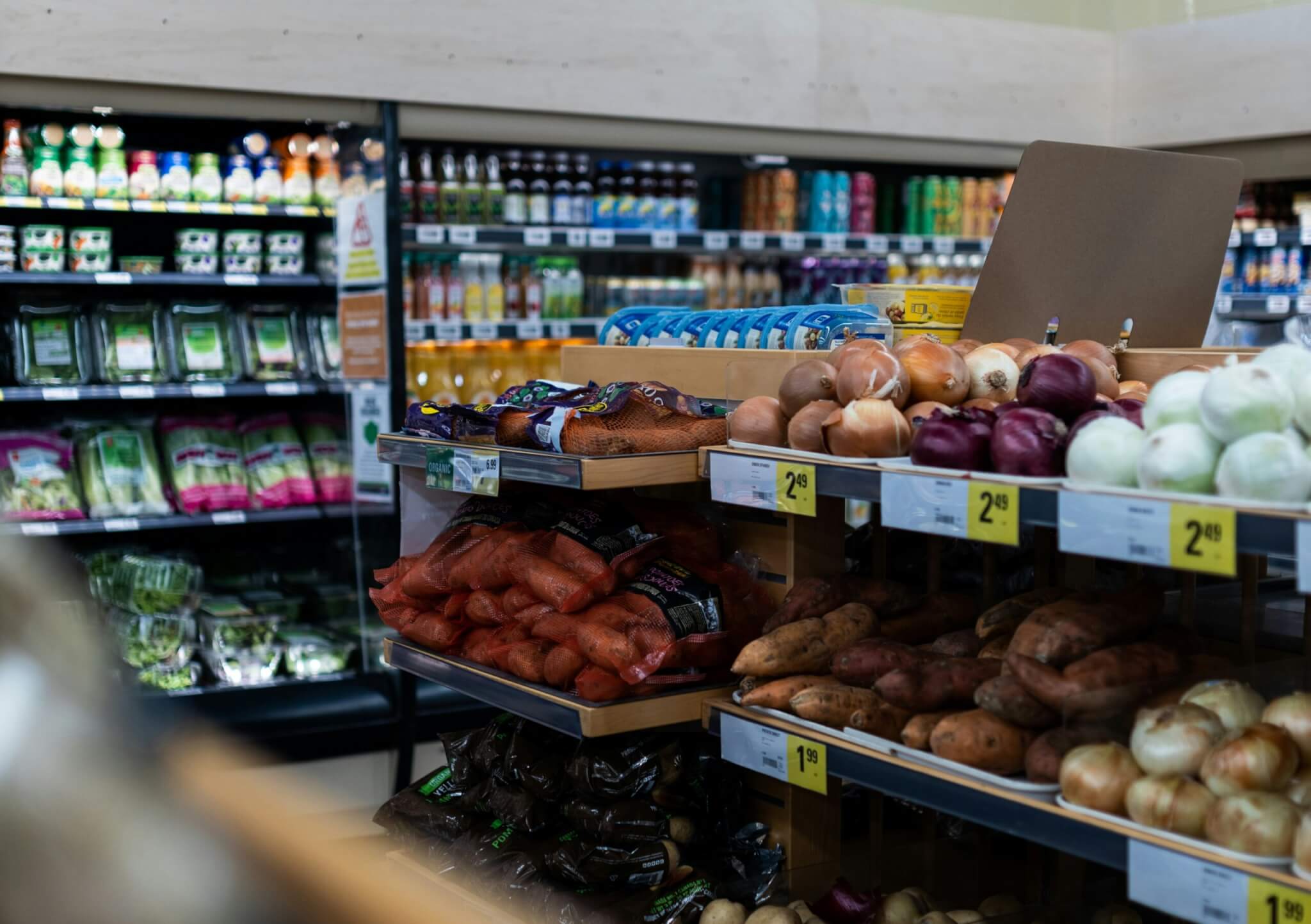
In recent years there have been calls by the Soil Association and others to double the land used for horticulture, since we import over 80% of our fruit and nearly half of all our vegetables. This will be a tall order unless there is sustained support and the necessary policy shifts to bring about change.
The UK government also wants more younger entrants into farming. Then there is the question of greater diversity and inclusion among growers. “At the moment it’s only the truly, super-privileged who can get into fruit and veg growing, because you have to have either capital, inherited money, or land. Yet there are so many people that want to do this but can’t. If we had a scheme that unlocked this potential, we would see thousands of people join the agroecological sector, especially from diverse backgrounds,” points out Poulton.
Looking for funds elsewhere
Goodman points out that another issue is that the British public is generally uncomfortable with offering unconditional financial support to people.
“However, unconditional money can lead to the stuff that we want to see, which is more healthy, locally grown fruit and veg. The issue is that many growers don’t often stay long-term or succeed in this sector. There is also a short window for new entrant growers to make it work, because of financial pressures,” explains Cleo.
She continues: “A basic income could help strengthen clusters of small growers and give them space to better connect to the communities they sell to. They could also plan for the long-term and be confident that they would continue delivering more produce at the local level.”
Those involved in this campaign are looking for start up capital from beyond the public purse including charitable foundations, philanthropy, community wealth funds, utility companies or local authorities where growing agroecological produce could feed into public procurement contracts, improving soils and the environment, or helping to make rivers cleaner.
“There’s so much enthusiasm amongst individual growers and small groups to do something about food systems change, yet they are the least supported of all. This needs to change,” stresses Tom O’Connor.
There is certainly a greater thirst for local food resilience, production and consumption, but whether there is government appetite for a universal basic income for farmers remains to be seen. What could spark change is when supermarket shelves are bare, as they were several years ago due to climate stresses in southern Europe and supply chain disruptions during the pandemic.
“Ultimately the global market won’t save us from more extreme weather. We need a system that works outside of the market to ensure that local food producers are able to keep producing, especially when we need them the most. We won’t be able to import our way out of future climate crises,” concludes Poulton.
Photograph by Emma Stoner


Realistically I cannot see it happening when there are so many demands for government funding.
It will take empty shelves to wake people up to our need to produce more locally and seasonally. it is already being suggested peas will be in short supply due to the poor Spring , people just expect food to be there, it may well not be!.
As someone who farmed in an earlier life and loves trying to be self sufficient in vegetables I know how difficult it is to grow organically with climate, changes planting failures, plants bolting, pests and diseases, it is all uphill.
We need to educate the consumer into what goes into growing food, whatever people think of Clarkson’s farm it has made an impact on many people who think farming is all big tractors and 4 x 4 ‘s and realise it is not.
It is recognised that working outdoors and growing things is good for mental health. we have a mental health crisis with so many young NEET’s, we have a shortage of labour on the land for fruit picking and so many jobs where labour is short. How do you get the two to meet? It needs a Land Corps of young people who WANT to work, they can paid what they would get as benefits with a top up ( perhaps a modest contribution from the grower ? ) yes the logistics of transport etc are there but problems are there to be overcome and schemes would need to target youngsters in the locality of work availability.
pie in the sky? perhaps but you have to start somewhere!
You say ‘unconditional’ but it can’t be.
A ‘universal basic income’ is paid to everyone so there are no conditions (other than being a human; although some might not qualify – naming no names).
A ‘basic income to farmers’ requires the recipient to be a ‘farmer’.
What qualifies as ‘farmer’. Clearly not running a mass chicken shed.
So ‘horticulturalist’?
What’s one of them? What land do they have access to? What do they plant? How do they look after it? What inputs can they use? How do they market and sell?
Or do you base it on references for the person from a trusted source (not the NFU)?
Having read ‘6″ of soil’ I can see that wonderful small-scale growers exist and it would be great to see them supported.
But put taxpayers’ money on the table and will it go to the rightful recipients? How long before the Daily Mail, Reform etc. start complaining about it – saying they are just welfare recipients?
The ideal is for consumers to see sense. But the cynic in me thinks they are too busy downloading that awful Chat-thingy for free. If only a fraction of the zillions that will be wasted on AI had been paid to good farmers …