
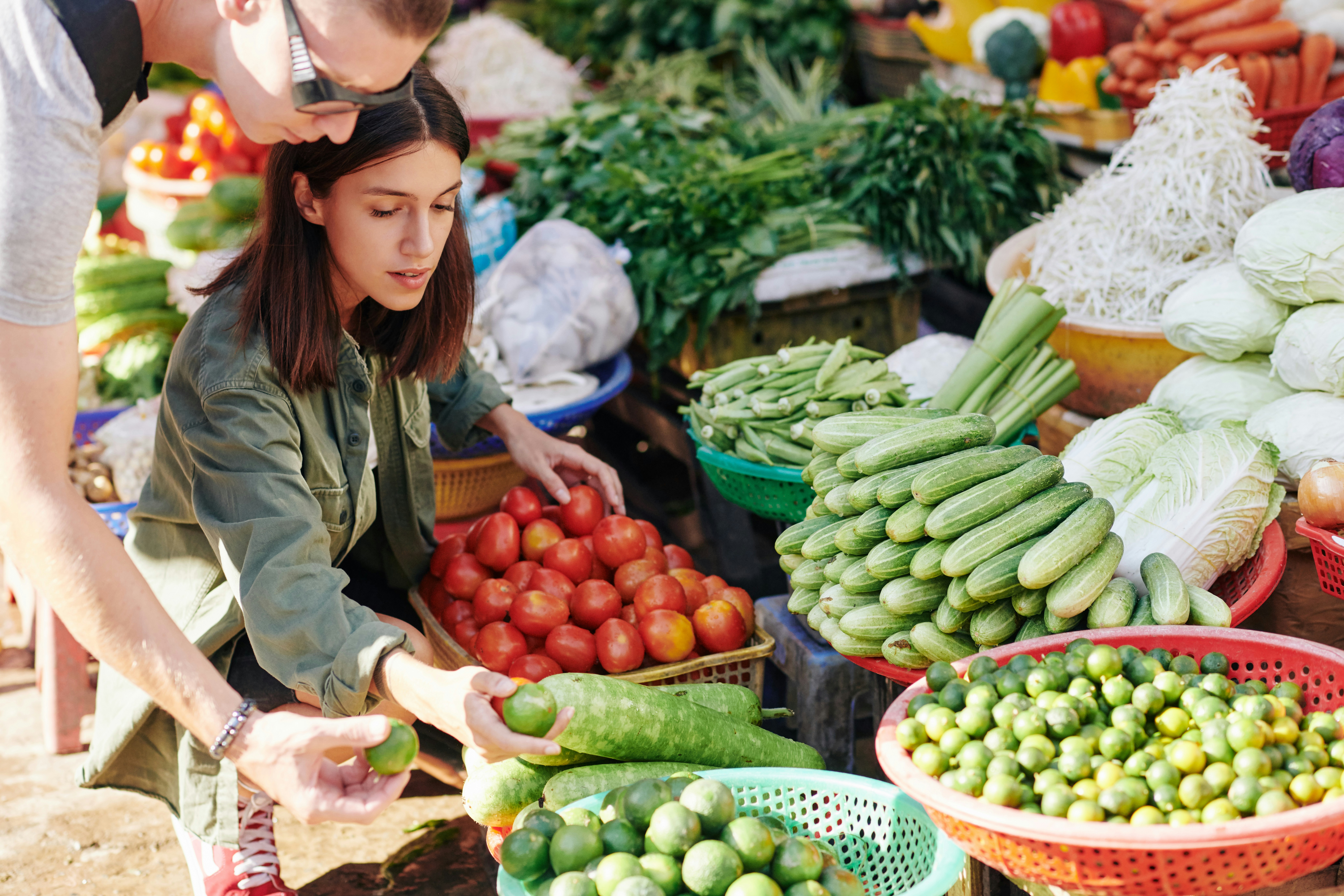
Have you ever wondered where we used to shop before supermarkets came along?
Of course we would have had the village stores, greengrocers, butchers, bakeries, and local shops, but there’s another place that most of us would have bought the bulk of our groceries.
Markets.
Many people talk about markets when they go abroad – to countries where the market is still at the very epicentre of daily life – selling everything from a goat, a portable charger, or a tracksuit, all along a single street or square.
Most established towns in England began with a market followed by a place of worship and there are UK markets dating back to the 11th and 12th centuries. Markets led the way to shops, but remained the cheaper and therefore more popular option for hundreds of years – right up until the 1800s when some Victorian “markets remained important, but they were also sometimes seen as a problem, as they were noisy and smelly and tended to obstruct the traffic” writes Dr Annie Gray, for English Heritage.
Nonetheless markets lived on side-by-side with high street shops and a few developing chain stores, but the real nail in the coffin began in the 1970s and 80s with – as many Wicked Leeks readers will remember – the advent of out-of-town shopping developments and car-based shopping.
Then in the 1990s, rapid supermarket expansion hit, and markets, along with high streets, declined with them.
The 2000s saw e-commerce rise, and we began to buy online and hardly venture into our towns – leading to “ghost” and “clone” towns where you’ll find empty high streets or just chain stores.
Markets Today
Today there are still over 1,150 UK markets, including the traditional and the new, the niche and the artisan – and the government has finally started to invest in them as an essential route to high street revival.
They are an important place for small businesses to start-up, for farmers and other retailers to sell direct, a way to socialise, and to bring people back to high streets. Duane Carruthers, Market Reeve for 900-year-old Tavistock Pannier Market in Devon, says “People don’t always associate markets with professional businesses. They think it’s old school and that it’s Bob selling his old slippers – but it’s a lot more professional than that.
“I did see a comment on Facebook saying ‘I wish there was a start-up hub where businesses could start’ and I was sort of like urgh… markets?”
You pay £22 a day for a two-table pitch at Tavistock Market, which is far cheaper than any shop rent, and it’s open every Tuesday to Saturday 9am-4pm.

It is owned and run by the council, which is the case for 82% of UK markets, and has maintained the same tradition of certain products on certain days – such as crafts on a Wednesday and a farmers’ market on a Friday.
They were crowned the best large indoor market in 2025 by the National Association of British Market Authorities (NABMA), and Carruthers puts this down to balancing “traditional values” with “modernising”. “These days it’s not all about the hard sell, it’s about experience.”
A world away in London, take a walk down Ridley Road market in Dalston, Hackney – another long-standing market that offers a completely different experience. As you turn down Ridley Road, you’re hit with vibrant music, the strong smell of fish, meat and spices, and the colourful sight of vendors selling street food, wigs, yams and yuccas side by side.
All week, Ridley Road has a strong trader and customer core of Londoners with African, Caribbean, and South Asian roots; sporting an impressive community of sellers and buyers who’ve been coming to buy their goods here for decades.
“You can come down here and get a variety of stuff for just £10,” said Shirley, a regular market-goer of 24 years with her brightly coloured shopping trolley in hand, as she told me how the market fondly reminds her of Jamaica, where she was born.

These sentiments were shared by many regular customers, who came seeking bargains, many a chin-wag and an array of choice that they simply couldn’t find in supermarkets and shops.
And for many Ridley Road market regulars I spoke to, like Shirley, it was this same comforting feel of their home countries that drew them to their local market.
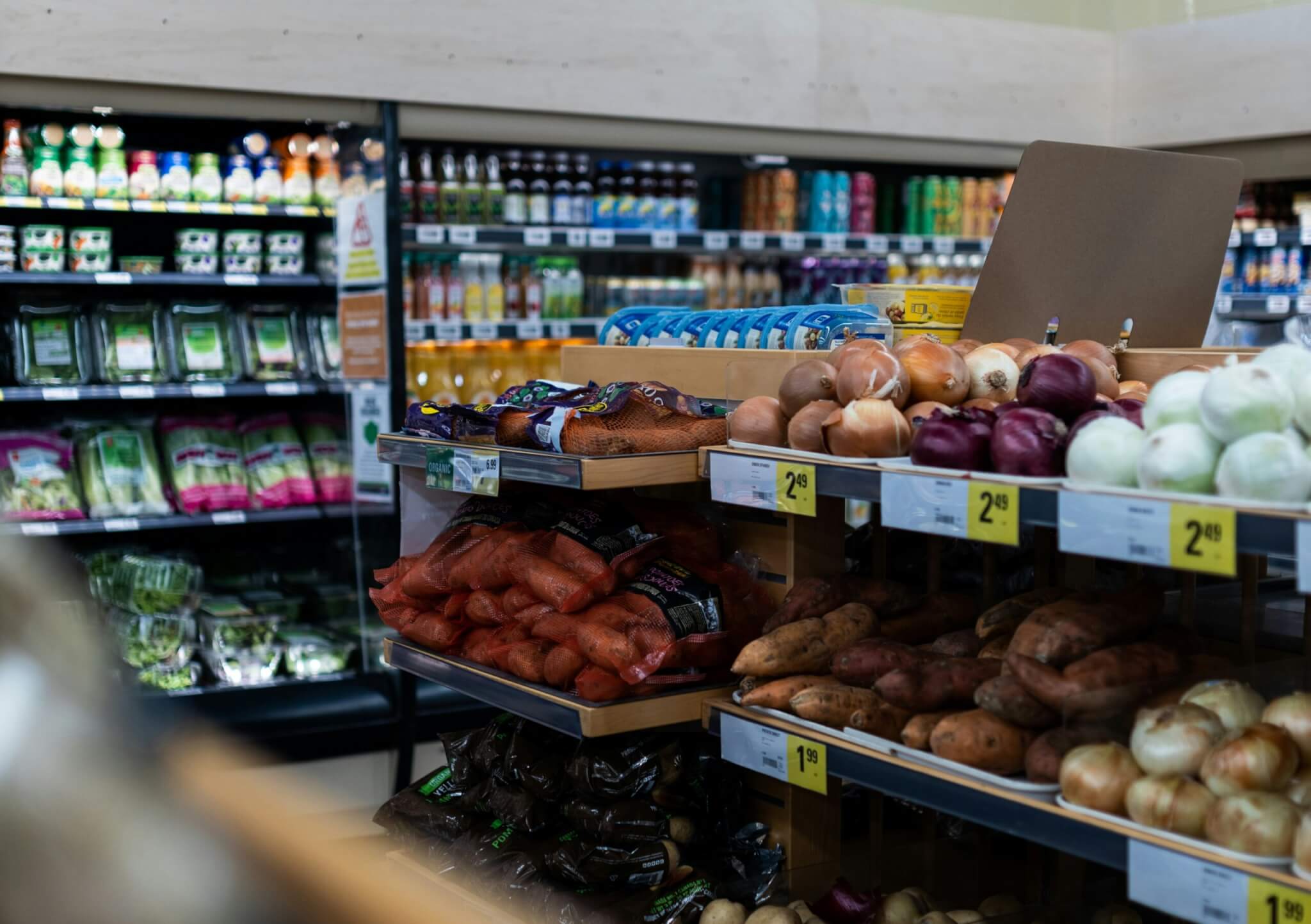
This idea of turning markets into a regular place for people to shop – which is commonplace in countries without the same retail stranglehold as the UK, where 96% of all groceries are bough from just six supermarkets – is being championed back down in Devon.

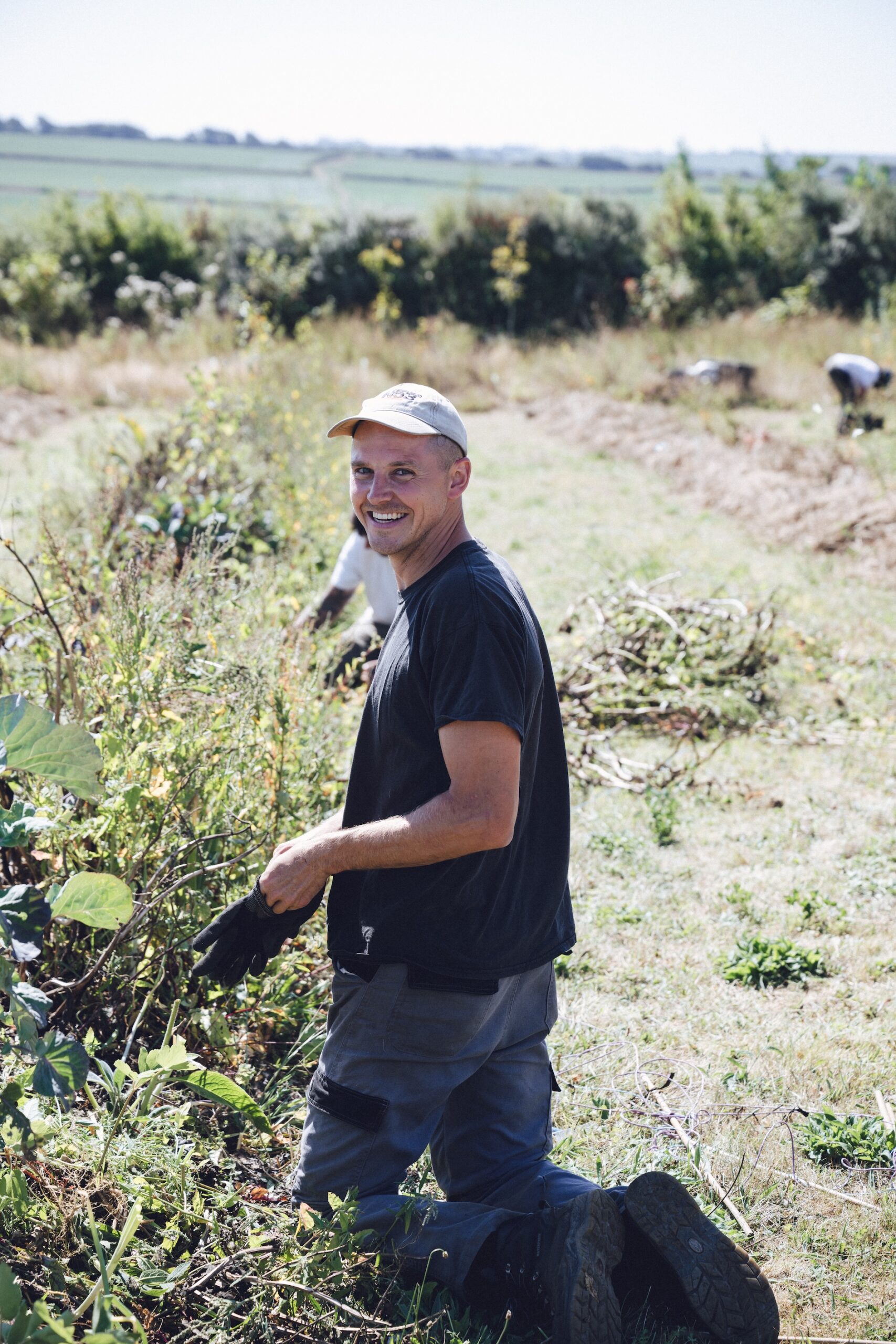
Market gardener Tom O’Connor, running his Green Man Growing business in Portlemouth South Devon, just 10 miles down the road at Kingsbridge Farmers’ Market, told me how people’s perspectives are beginning to change. “They treat the market less as a novelty or holiday sideshow and more as a place that you’re committed to going to because you want to get your produce that way. We like the idea of everyone coming here because it’s ritualistic.”
Farmers’ markets in particular are a real success story, and they have actually increased by around 400% since the late 90s – with 650 openair farmers markets in the UK today, according to Speciality Food Magazine.
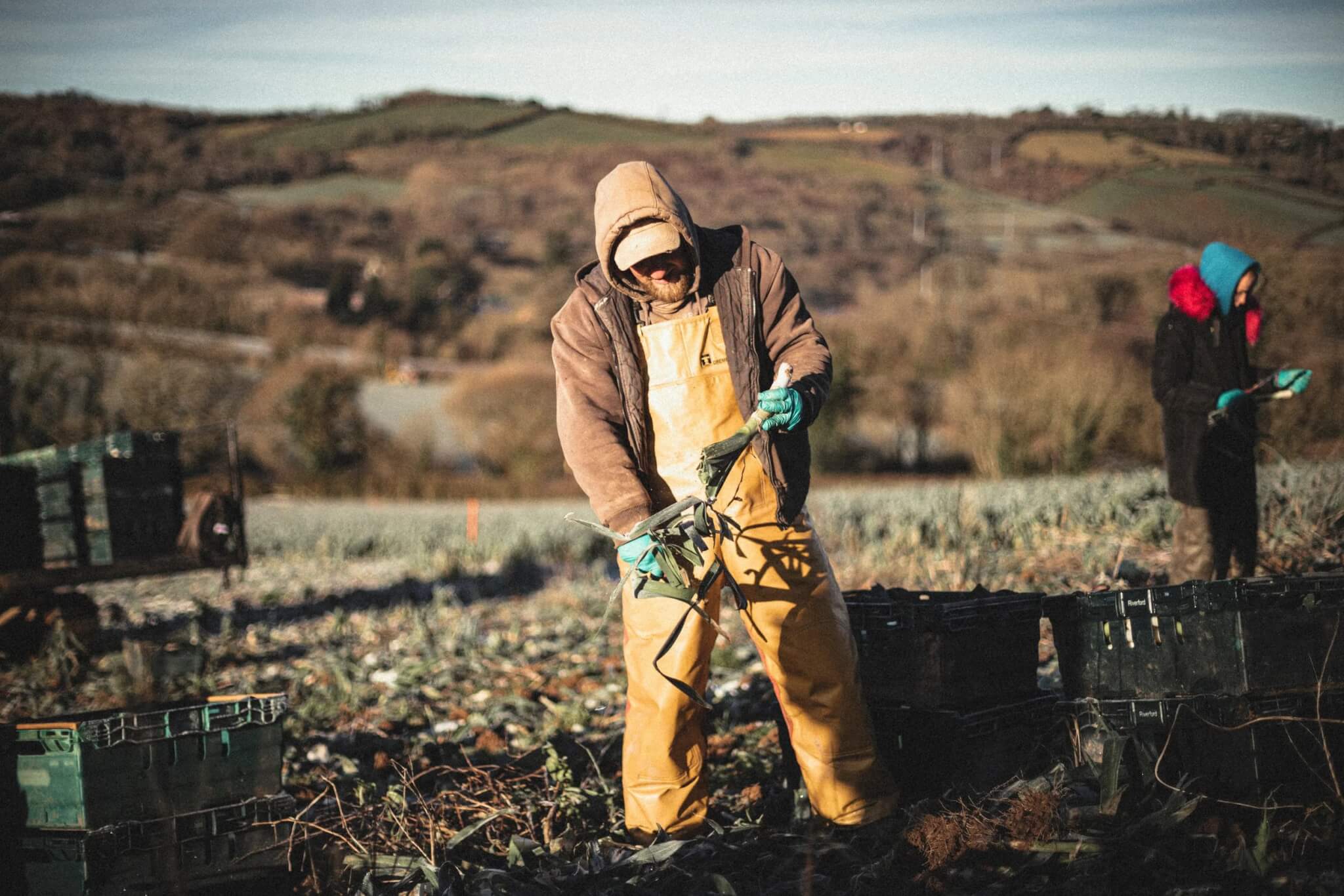
“For people growing food on our scale it’s really important because you get the retail market of what you’re selling – it’s not just disappearing at the farmgate and trickling through a long chain where people are essentially taking money off your work,” O’Connor said.
When I asked him about the common criticism of farmers’ markets being expensive, he said: “Local food is usually really good value for money – because they’re not just doing it for money, they’re doing it because they want to serve their communities.”
He explained that the “freshness” and “quality” of local produce also gives huge added value, explaining how his salad may last a week longer than a wholesaler’s.
Of course, money is also poured back into the local economy.
Covid-19 caused the temporary closure of many markets, which many criticised, arguing they should be seen as essential food infrastructure just like the supermarkets that received government support on all levels. This was despite the fact that many markets are outside, which, in theory, made them even safer than supermarkets.
Challenging markets
There are also new challenges, as the squeeze of fuel prices and the cost-of-living crisis are stopping people coming into towns – particularly in more rural areas.
The National Association for British Market Authorities (NABMA) reported that outside of London fewer than half of the UK’s markets recorded a surplus of vendors in 2024. Markets need to be seen not as a “problem to fix” but as one of the “most effective tools” in high street revival, NABMA told me, with markets estimated to increase footfall in places by an average of between 15% to 27% on an average shopping day compared to places that do not have markets.
In particular, getting young traders and buyers through the door is hard, and it’s estimated that only 8% of UK market traders are under the age of 40. Tavistock now hosts the Young Traders’ Market ran by National Market Traders Federation (NMFT) as part of initiatives to get entrepreneurs aged 16-30 through the door.
Markets are in fact the birthplace for lots of well-known brands, such as M&S whose founder Michael Marks set out at Kirgate market in Leeds and Poundland’s creator Steve Smith who began in Bilston Market, Wolverhampton.
NABMA are calling for the formal recognition of markets within national economic policy, although they did commend the growing acknowledgment of markets within devolved economic strategy linked to items like transport and regeneration.
Meanwhile maintaining markets as “bottom-up” and “community centred” is essential, explained Tom O’Connor, and strategies like discounted fees for traders who can prove their produce is very local should be considered.
So, where is your nearest market, when is it on and what does it sell?
You can find out here:
Find your local farmers’ market
Find your local market with the Love Your Local Market Map by NAPMA


The local veg grower here says the issue with markets is time spent prepping, selling, unpacking isn’t worth the take at the local markets. Also moving all the veg damages it and then what you don’t sell is unsellable after being moved 4 times and sometimes sat in the sun for a day…. It takes time to establish a market and growers don’t have the time or spare cash to build their audience at a new market.