
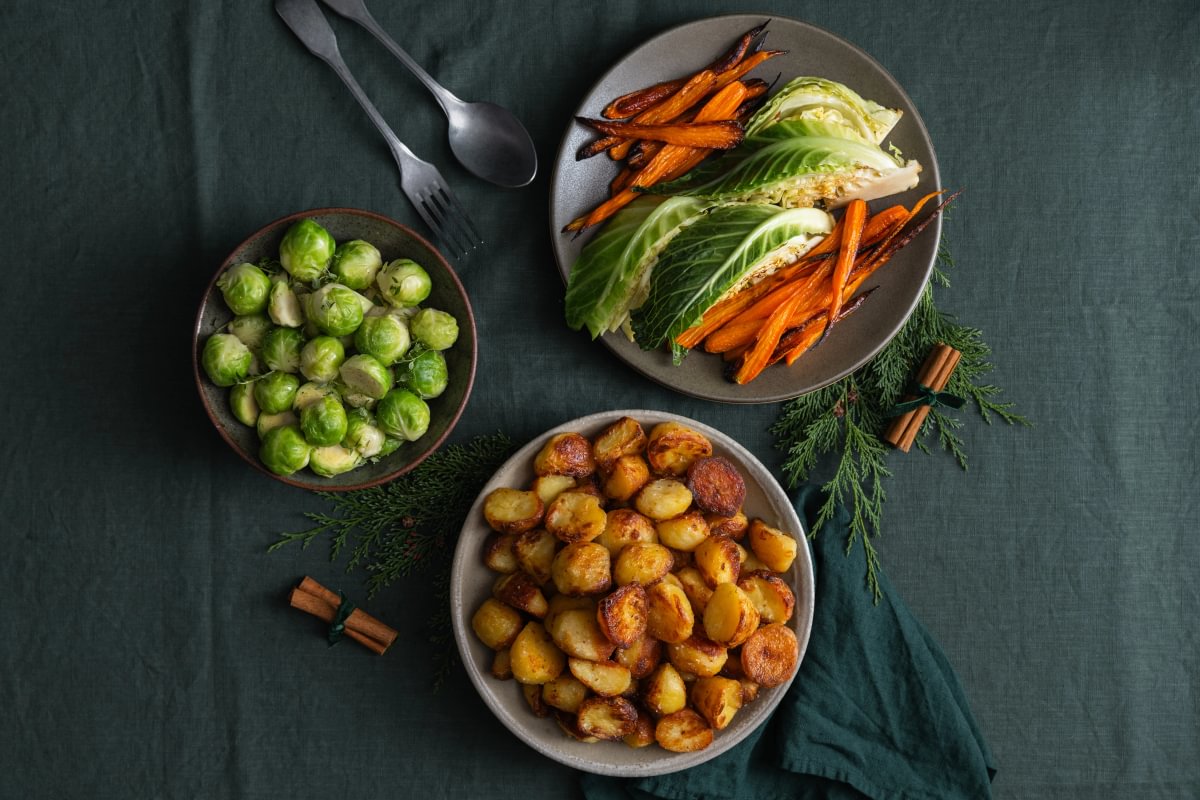
It may seem a little early to be writing about Christmas, but as our thoughts begin to turn to the holiday season ahead, Riverford chef, Bob, shares some good-natured & common sense advice for those who want a decidedly unpressurised but wholly delicious “Big Day”.
Let’s start with an indisputable statement: if you’re wearing the apron, you’re in charge of Christmas Day.
A single meal rarely has to do so much heavy lifting (nor receives so much forethought and fanfare), but don’t let it daunt you. Christmas dinner is, at its heart, an unfussy winter feast: red cabbage, parsnips, swedes, spuds, and sprouts – a Who’s Who of the winter larder. The veg is as much the star as whatever meat or veggie centrepiece you choose to cook on the day.
It isn’t MasterChef. Although we all want to impress our guests, the kind of relentless, combative cooking seen in most cookery shows is best left alone. Avoid the foams, towers, and squiggles, and concentrate on freshness, flavour, and seasonality as your foundations. Let some dishes dazzle and others fill the gaps (you couldn’t have a band of lead guitarists; you need your bass and drums).
The less formal, the better. I love to serve Christmas dinner family-style – with each element piled into large serving dishes to be passed around and shared. It relieves the pressure of plating and presentation and allows people to decide what they want and how much. In terms of quantity, use a Sunday roast as your benchmark and add a third again for good measure (and to avoid anxiety at
the table). Think cosy conviviality… though I’d be chided by my primary school teachers, I think it’s a good thing if guests feel free to put their elbows on the table, lean in, and tuck in with gusto. Feeling at ease is the key, for both host and guests.
Eat your greens? Even if you’ve had a lifelong aversion to sprouts, eating even a couple on Christmas Day is as much of an achievement as piling them high with glee. Pan-frying or roasting works well and might just spark a new, healthy habit.
Less can be more. With spuds, the amount should be dictated by the practicalities of cooking them to perfection. If you’re low on oven space, don’t pile them into roasting trays – they need space and surface contact with the tray to brown and crisp. Better to have fewer, perfectly crisp roasties than piles of claggy ones.
A golden rule. I invite my guests to leave all discussion of house prices and politics at the door (it isn’t just the food and drink that can turn sour). Boo to those who disobey! But, most importantly, lead by example: switch phones off, savour, celebrate, and always go back for second helpings (it’d be rude not to).
Image by Riverford.
Our News from the Farm posts come from Riverford. They are the digital versions of the printed letters which go out to customers, every week via Riverford’s veg boxes. Guy Singh-Watson’s weekly newsletters connect people to the farm with refreshingly honest accounts of the trials and tribulations of producing organic food, and the occasional rant about farming, ethical and business issues he feels strongly about. Riverford’s monthly Farm Kitchen letter is written by Riverford’s team of chefs, recipe and content creators: Emily, Bob, Hannah & Lewis.


0 Comments