

Only one of nine of the UK’s largest supermarket chains has managed to hit a target for 30% of all its fresh produce sales to be sold loose i.e. without packaging, by 2025.
The commitment – made as part of the 2018-2025 UK Plastics Pact – was signed by Aldi, Asda, Co-op, Lidl, M&S, Morrisons, Sainsbury’s, Tesco, and Waitrose. Iceland did not sign the pact.
As of today, only Morrisons has kept its promise, according to an analysis by the Environmental Investigation Agency (EIA).
“While many grocery retailers have signed up to the UK’s Plastic Pact commitment [on loose produce…] most do not publish company-level quantitative data to demonstrate whether this target has been met,” explained EIA in a new briefing paper, seen by Wicked Leeks, and due to be published next week.
Most of the food retailers, in fact, “do not publish figures on unpackaged produce at all”. And neither does Wrap, the charity which leads the high-profile pact, and which is currently attracting signatories for the next stage running from 2025 to 2030.
Transparency on loose produce sales has “worsened” since EIA last analysed this in 2021, said Lauren Weir, a senior campaigner with the agency who has tracked supermarket packaging policies and progress for a number of years now.
A study this year estimated that 13 billion pieces of fruit and vegetables packaging are thrown away by UK households every year, 63% of which is made from soft plastic, a material that has proved almost impossible to recycle at scale.
Many large supermarket chains have installed collection points for the plastics at the front of stores, but information on where this all ends up remains scant. An investigation by Wicked Leeks and ENDS Report in 2022 found that only a tiny fraction of what people are returning is being recycled and there is a lack of transparency over where the rest of it ends up.
Since then, some supermarkets have stopped collections. The UK Government also recently announced that plans to include these soft plastics – used for fresh produce, crisp packets, biscuit wrappers and myriad other goods – in kerbside recycling collections from next year will be delayed until 2030. Most of the packaging will therefore continue to be burned in incinerators or buried in landfill.
“UK supermarkets were dragged kicking and screaming into plastics reduction,” explained Paul Foulkes-Arellano, a materials expert and environmental consultant. “They countered the demands of campaigners by saying they were focused on recycling. Yet they take on new suppliers every week who are recycling nightmares. Buyers only care about the contents and the margin. Nothing has changed in a decade,” he added.
Hard times for soft plastics
Back in 2020, the hope was that various pieces of plastic and single-use packaging could be quickly removed without too much fuss. Wrap formed an initial ‘elimination list’, which included plastic straws and cutlery. Plastic packaging used for specific fresh, uncut produce, was one of six items added to the list in 2022.
The last report on progress towards the target of 30% of sales to come from fresh produce sold loose, published in November last year, provided very little information, noting only that: “The removal of plastic packaging from uncut fresh fruit and vegetables continues to present a challenge.”
Wrap was approached for further comment on the EIA’s findings and the chance to provide more details on progress towards the target, but declined.
Part of the agreement made with signatories to the UK’s pact is not to offer information on progress made against targets by individuals. Critics say this allows the laggards to sign up, enjoy the positive publicity, and then do nothing – free to hide behind aggregated data. In contrast, the global plastics commitment, run by the Ellen MacArthur Foundation, publishes annual, detailed progress reports for individual companies. Which option delivers more progress towards reducing single-use packaging is moot.
The EIA pulls no punches in its new briefing when it comes to the effectiveness of voluntary agreements on plastic packaging which have been running for several years now. “[Our] findings show that voluntary commitments have not delivered meaningful or accountable reductions in produce packaging, despite the same evidence clearly proving that selling produce solely loose is feasible,” the briefing reads.
In 2024 and 2025, Wrap produced lengthy research in support of removing plastic packaging from fresh produce.
The more recent one was the “financial case” for removing the packaging from carrots, potatoes, apples etc, which showed consumers could save £136m every year “by being able to buy closer to the quantity that they need”. Supermarkets and suppliers of fresh produce would save £112m from using less material and £16.8m from fewer compliance fees, reducing both their plastics tax and extended producer responsibility costs.
“The UK sells uniquely high volumes of plastic packaged fruit and vegetables – around 81%, compared with [the] European Union where it is generally around 50%,” notes Wrap. “With growing global regulation to restrict uncut fresh produce packaging, in particular EU’s packaging and packaging waste regulation, the time is now for action in the UK.”
The 2024 report was the more controversial, though. After countless workshops with industry, Wrap recommended that the government should ban primary packaging on 21 products, including aubergines, broccoli, ginger, mangos, onions and salad tomatoes sold in amounts of less than 1.5kg. The restrictions should be phased in by 2030, in line with the EU packaging and packaging waste regulations, the charity said.
Selling fresh produce loose is not a silver bullet. As Sarah Greenwood, from the University of Sheffield, noted in a paper she co-authored for the journal Environmental Research: Food Systems in 2024, there has long been a “tension” between food waste and efforts to reduce plastic packaging.
“Selling fruit and vegetables loose will not solve the problem of plastic packaging waste from fresh produce alone, but it will be part of an integrated solution alongside other strategies including the increased recyclability of the packaging components,” the academics wrote. “Retailers have largely harmonised their plastics packaging and food waste policies with the UK Plastics Pact and Courtauld 2030 best practice, but there are still differences in adoption between retailers.”
To date, supermarkets and the large fresh produce suppliers have not entirely bought into the idea of loose onions and oranges. “We understand the spirit of the challenge, but appropriate packaging is used for several important reasons. Long term ambition is important, but let’s not ignore practical reality and consumer preference,” said Nigel Jenney, CEO at the Fresh Produce Consortium, following the publication of Wrap’s 2024 report.
Andrew Opie, Director of Food & Sustainability at the British Retail Consortium told Fresh Produce Journal at the time: “Retailers have been working with Wrap to reduce packaging on a variety of products, and we can all see the increase in loose fruit and veg in our local supermarkets.”
Cutting data rather than plastic
In November 2023, Wrap reported progress on the pact, citing that 19.4% of fresh produce was sold loose in 2022, with “the proportion by retailer varying significantly from 2% to 30%. Consumers are therefore currently buying some fresh produce loose, but there is scope for this to increase considerably.” In the most recent progress report, any quantitative results against that target had vanished.
Following its investigation the EIA said: “With the exception of Morrisons, which repeatedly states that approximately 30% of its fresh produce is sold loose, retailers do not disclose sufficient, standardised information to confirm whether targets have been met, exceeded or missed.”
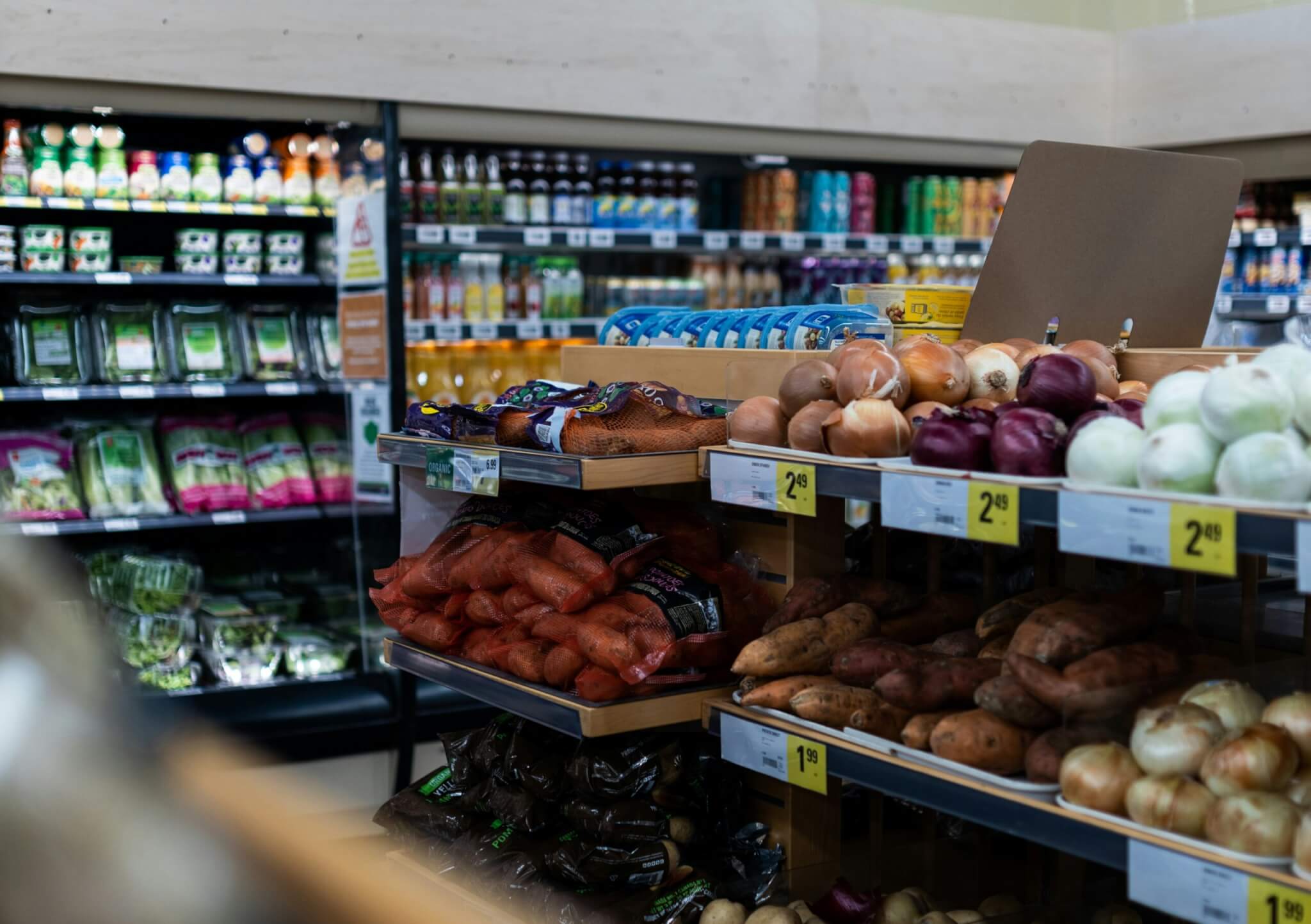
Spot checks carried out in nine stores in London suggested that efforts to meet the target had waned, with Aldi selling various tomato varieties “all packaged in plastic”, Co-op with only one type of potato sold loose, Tesco boasting numerous crates of broccoli in plastic films and packets but only one crate of loose, and Iceland (the one time darling of the anti-plastic movement) not even selling bananas loose.
The EIA’s team found loose produce options “remain limited, inconsistently displayed and routinely overshadowed by packaged formats, with many items sold both loose and packaged and the packaged options more prominent”.
The placement, pricing and promotions on fresh produce sold loose and packaged needs to be looked at, said Weir, with supermarkets seemingly reverting to “hard-to-recycle” plastic packaging. “Where changes have occurred, they have largely centred on packaging substitution and lightweighting rather than a shift towards primarily selling produce loose,” the EIA’s briefing reads.
This is not what shoppers are demanding, according to research by Wrap and others over the years. Indeed, 60% would prefer to buy their fresh fruit and veg loose and 55% would buy more if it was available in their supermarket. Wrap said if all apples, bananas and potatoes were sold loose, it would save 60,000 tonnes of food waste, 8,800 tonnes of plastic packaging, and 80,000 tonnes of greenhouse gas emissions.
The UK fresh produce sector (fruit and vegetables) is estimated to use 38,000 tonnes of plastic consumer packaging per year and is the fifth largest product category for the creation of plastic waste in the UK. Some believe these kinds of plastics can be collected and recycled effectively.
The Flexible Packaging Fund’s FlexCollect project, developed in partnership with government, local authorities, waste management companies and the recycling industry, collected over 400 tonnes of flexible plastic packaging from 160,000 households between 2022 to 2025. The findings “conclusively demonstrated that kerbside collection of flexible plastics is practical, cost-effective and strongly supported by resident households”, FPF noted in a strongly-worded statement in July following the “deeply concerning” decision by the government in July to delay kerbside collections of flexible plastics in England.
Weir said she was confused as to why supermarkets remain so committed to selling fresh produce in plastic packaging given that it costs them more and goes against consumer sentiment. “The supermarkets have done the hard work,” she explained, “they have found the suppliers and are already selling fresh produce loose”.
All supermarkets were contacted by the EIA and provided with an embargoed version of the briefing, which includes their statements, and details of the spot checks and their shortcomings. None challenged the findings, according to Weir.
The EIA’s briefing will put pressure on the government to regulate, including the introduction of the restrictions proposed by Wrap in 2024.
In July, responding to a written question asking for data on the volume of plastic packaging produced for uncut (a) fruit and (b) vegetables, Mary Creagh – at the time, Resource Minister at the Department for Environment, Food and Rural Affairs (Defra), said: “The department does not hold data on, nor has it made an estimate of, the volume of plastic packaging used specifically for uncut fruit and uncut vegetables in the last year. Packaging data reported under the UK’s producer responsibility system is collected by packaging category and material type, rather than by individual food products, and is therefore not available at this level of detail.”
Wicked Leeks will continue to follow this story and we’ll report again as we approach the 2030 deadline.




Riverford already shows how home compostable packaging can provide part of the path ahead. Has this opportunity been overlooked?
Prior to covid, things seemed to be improving, but then everyone became paranoid about infection and didn’t want anyone else to have been near their food (not sure how they thought it arrived at the store)so the stores sold absolutely everything wrapped in plastic, and they haven’t modified their system since.
It will only change if consumers force the issue! Take bags/boxes whatever from home and when you get to the till tear off all the plastic and leave it at the till – whilst announcing it is unwanted, unnecessary and is a blight on the planet!!
How difficult is it for supermarkets to hang up wads of brown paper bags by their fruits and vegetables, like they do at a local market? Customers can then pick the amount they need and not end up with left overs which they then throw away, especially if they live on their own.
I am lucky to have an excellent market which is open three days per week. Riverford is my main source of fruit and veg but if I need anything else, I use the market and buy local or European only produce. It is more expensive than a supermarket, but it shouldn’t be all about cheap!
It’s all about the money isn’t it. Having a cashier scan a wrapped bag takes no time at all whereas weighing fruit and veg does. And as for self-service tills, not sure how they would cope. The easy option is not to use supermarkets, as some of us haven’t done for over 10 years. Mind you. living in Totnes we are spoilt for choice…….
I lived in Germany for some time and couldn’t help compare the amazing domestic waste system there with the hopelessly inefficient system we have in the UK.
Legally every seller of any product from sweet wrappers upwards has a legal duty to take back that piece of packaging and dispose of it responsibly i.e. recycling
A simple one line law, based on the principal that the producers of packaging should pay for its disposal. They and only they have control over what packaging and how much is used. Traditionally local authorities paid for all waste disposal and have NO control over the amounts and type of waste that they must dispose off.
However imagine the chaos at shops when hard core environmentalists took back all their packaging to the shops that they bought it from. The shops in turn would have to send Heinz baked bean cans back to Heinz and every product back to the manufacturer.
The German Government didn’t waiver in their resolve.
To avoid chaos, German industry got together and formed a company which provided a free, packaging waste collection from every household in the country, The Yellow Bin/Sack so every house has a free collection paid for, not by the local authority, but by the collection/recycling company.
This company charges every producer/importer a fee on every piece of packaging from sweet papers up, which pays for collection/recycling. The size of the fee depends on type and quantity of packaging used so there is an incentive to minimise packaging. A good example is the large yoghurt pot. A large flimsy plastic pot which is costly in packaging terms surrounded by a stiff cardboard wrapper which brings strength but is much cheaper in terms of ease of recycling.
30 years later the UK is grappling with the same sort of issues but instead of a clean separation of packaging waste it clings to the past by retaining responsibility for local authorities but introducing packaging fees but loads of exceptions , having committees deciding on what the fees should be. In Germany the fees are set by the costs required to collect/recycle by the company. If it can’t be recycled it cant be used. In the UK dont worry the local authorities will cover you but these fees we are collecting sort of go to the local authorities to help with expenses.
I understand that there was a bit of a kerfuffle over the summer when UK companies were required to pay some sort of disposal fee for direct exports, i.e. small companies using ebay.
And there is returnable drinks containers. Glass can be reused 13 times before being recycled as we know from memories of milkmen. In Germany they have standard milk, beer, juice yoghurt etc jars all with deposits and you can take the bottle back anywhere.
in the UK when deposits are introduced delayed and delayed and delayed of course glass WILL NOT have deposits. I assume its because of inconvenienvce to the glass industry who prefer to manufacture 13 single bottles when Germany needs only one.
. ee levied on the manufacturers, the fee depends on the quantity of packaging