
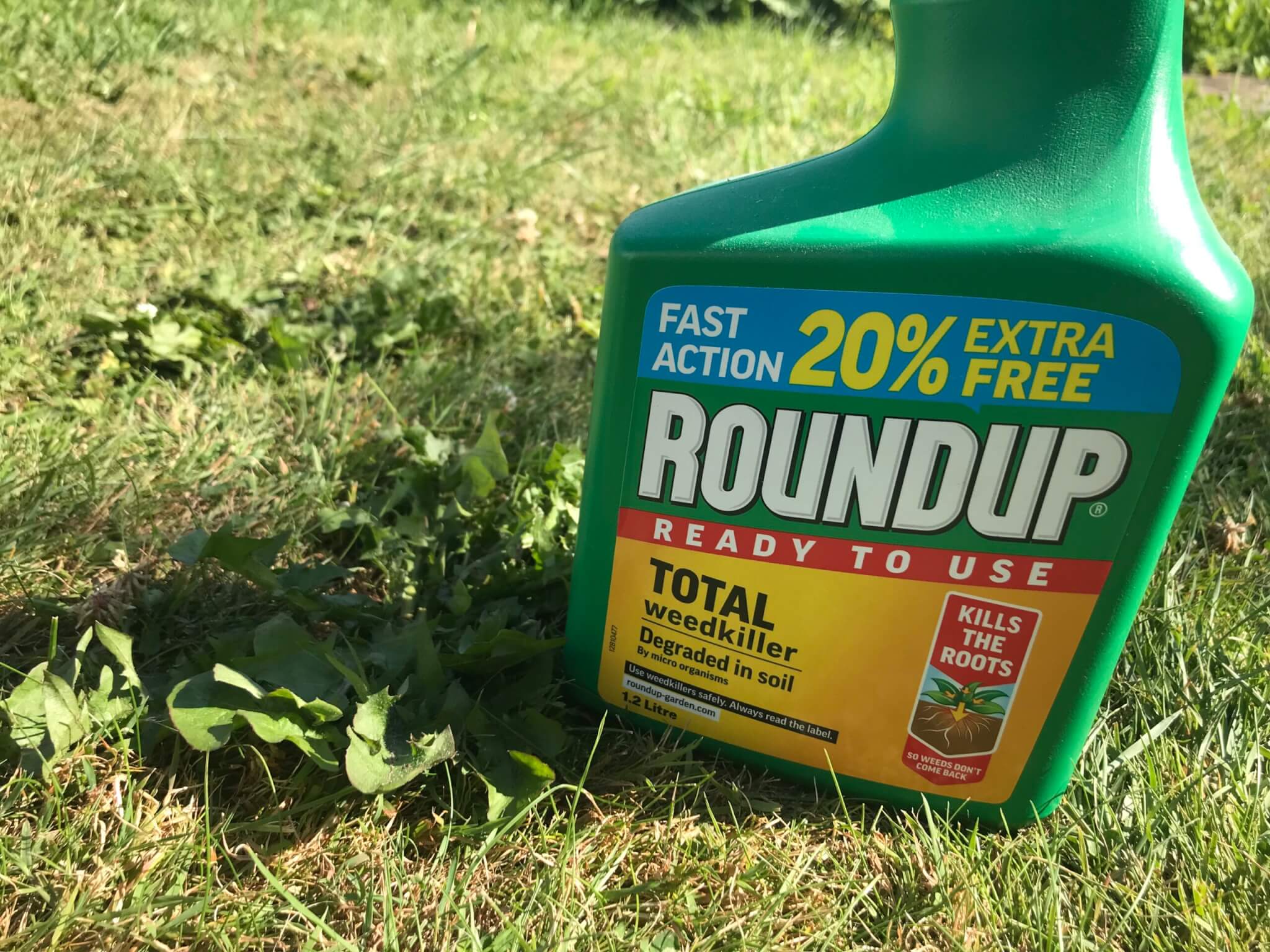
Glyphosate, also known as Roundup, is the world’s most popular herbicide. Globally its use continues to rise because glyphosate is so good at what it does – a broad spectrum weedkiller – but it’s also highly controversial. The chemical maker Bayer, formerly Monsanto, has shelled out billions of pounds to settle cancer claims linked to its use. By its own admission over 100,000 lawsuits have been brought against them, thousands still remain.
It’s so widely applied that since 1991 there’s been a 1,500% rise in use on British veg crops, according to government stats. For arable, there’s been a 914% rise, with two million kilos used on over two million hectares. Worryingly, and by the state’s own admission, three quarters of all UK farmland is at risk of some form of pesticide pollution. It’s no wonder that glyphosate now turns up in much of our food.
Nor is it surprising that scientists have discovered glyphosate resistance in one particular weed, Italian ryegrass, due to its widespread use. This affects wheat fields in particular and is the first confirmed case in the UK. Much like antibiotic resistance which can develop when medication is too freely prescribed, crop resistance is a warning sign for farmers to reduce their reliance on this herbicide.
Where things get complicated involves the intersection between regenerative agriculture – which champions soil health – and the regen movement’s widespread use of glyphosate.
You might be surprised to learn that glyphosate plays a major role in regenerative agriculture – it does so because it allows farmers to kill off weeds and unwanted invasives while minimising ploughing and soil disturbance. On the one hand, this is a good thing, since it leaves carbon in the ground rather than releasing it back into the atmosphere, and preserves the soil biome. So called no-till or min-till can be achieved by applying the herbicide; it’s also used as a desiccant to dry out crops before harvest. This is why the discussion on glyphosate and regenerative agriculture is a hot topic. It also puts the regen movement in the hot-seat – because unlike organic agriculture, which must adhere to rigorous standards and meet testing criteria – regenerative farming has no set legal definitions or regulations, certifying body, or standardising authority.
Awash with glyphosate
In the US, most no-till systems are now so heavily dependent on herbicides to manage weeds that a staggering one-third of America’s total pesticide use can be attributed to no- and minimum-till corn and soy production, according to a recent report by Friends of the Earth. Alarmingly, global agrochemical companies are now touting no-till alongside regen-ag programmes.
“This looks like a way for global agribusinesses to sell their products again, just in a different way. We’re not on the same scale as the US where glyphosate use is linked to planting genetically modified soy and corn, which is herbicide resistant. However, most conventional regenerative systems here in the UK will certainly be using glyphosate to control weeds or as a pre-harvest desiccant,” explains Gareth Morgan, Head of Farming Policy at the Soil Association.
“It’s a difficult line to tread, because the regenerative movement has brought a lot of incredible energy and engagement, especially around soil health. The problem has been the corporate appropriation of what’s going on here.”
And in the same way that there’s no nationwide set of standards or labelling for regenerative agriculture that’s widely adopted either by the sector or consumers at large, there’s also no formalised way of monitoring, recognising and rewarding regenerative farmers who wish to reduce their dependence on herbicides such as glyphosate. For instance, Regen Agri talks about “minimising” or “reducing” pesticide use, but nothing definitive. It’s an issue that needs addressing.
“If you want your produce to be free of pesticides, right now you have to buy organic; there isn’t an alternative. Regen on the packet won’t specify this. Organic systems are quite close to regenerative. There will likely be livestock. You’ll have constant cover crops. You’ll have soil-centred agriculture. It won’t be no till, but it’ll be very soil focused, that’s the essence of organic,” details Morgan.
Time to reduce its use
The National Farmers’ Union argue that glyphosate use is vital to British farming and its ban would see lower crop yields and increased production costs. At the same time, the Pesticide Action Network (PAN) is campaigning for a phase-out and a reduction of applications.
“Its use is being legitimised by the ever powerful pesticide lobby and I include in that the National Farmers Union, and this is really undermining things and it’s a big problem. I don’t think you can call any agriculture that uses glyphosate widely, truly regenerative,” points out Nick Mole, policy officer at the Pesticide Action Network.
“The message that’s been rammed home for decades is that glyphosate is harmless and it isn’t. We need to challenge the idea that glyphosate use is offset by the benefits that no till brings. The issue is that there are ALSO no drivers for change right now. Its use is divisive and there is a rainbow of opinions on its use. What’s frightening is we’re starting to see the corporate capture of the term ‘regenerative’. It’s being used to greenwash.”
Another big issue is that there is a lack of granular data on glyphosate use at the farm level in the UK, which makes it difficult to monitor or legislate on. There are no figures on how much is being used on regenerative farms in the country either. Certainly, progressive regenerative farmers are aware that glyphosate use is an issue and they are on a journey to reduce applications.
“Glyphosate is just one tool in the farmer’s toolbox, along with ploughing. It doesn’t have to be used every year. We could use it once every ten years to get the weed population under control. I think it’s about finding that balance going forward, and really not trying to make it a polarising debate where farmers either use herbicide or use a plough, but I think that’s really difficult,” states Helen Metcalfe, research scientist at Rothamsted Research.
Don’t demonise the issue
Many regenerative farmers are now using integrated methods of weed management including mechanical weeding, diversifying crop rotation, and introducing grass lays into rotations to make weeds less competitive with their crops so they can reduce herbicide use.
“Regenerative farmers don’t particularly want to use glyphosate. We need to be building on this and not demonise the topic. By opening this up for discussion we can have clarity especially around corporate appropriation – what’s the agenda of agrochemical companies who are pushing this stuff? Are they genuinely committed to a journey of sustainability, or are they looking for a way to market their products – are they honest brokers in this process?” asks the Soil Association’s Head of Farming policy.
The only weapon that consumers have is their wallet and to start asking questions about where their groceries come from and whether glyphosate is used, especially with supermarkets such as Waitrose who are promoting regenerative farming, even though it has banned glyphosate from its shelves and Tesco’s adopting regenerative bread from Wildfarmed – education and awareness is key, so is government policy change over time.
For instance, in the EU, farms can no longer use glyphosate as a pre-harvest desiccant, whereas it is still used to dry out crops here in the UK – we are lagging behind Europe. “A ban on pre-harvest desiccation in Britain would be a start. This would be a big change for some British farmers, but it’s already happening in Europe,” says Mole.
He adds: “There’s many regen farmers doing an awful lot of good. However, this particular issue opens them up to criticism, which is justified. The starting point is for the powers that be within the regen movement to admit that there is a glyphosate problem and say they want address it. This would show good will,” concludes Mole.



There seems to be no healthy and environmentally friendly ways to farm in the traditional way if you need to feed large populations. I am currently buying organic wherever possible. Would it be possible to completely change the way food is grown using the many new technologies available such vertical greenhouses ? Would it be easier to keep weeds down and soil healthier and provide food that is organic for all?
Disagree. There are ways to do it and companies like Riverford show that it can be done. What we do have to get used to is the idea that we need to pay more for good food. Historically buying food took a much bigger chunk of our incomes. Now that income is redirected towards housing and is sucked up by landlords and banks, increasing wealth inequality. They need to be made to pay their way and we literally need to plough that money back in to steer farming and the environment towards a sustainable future.
So-called regenerative farming has absolutely no credibility and this article consolidates that view. On the one hand we know we are facing a staggering loss of biodiversity on this fragile planet, and from the other we pour chemicals on the land. Please stop! Organics may seem a little dated or maybe too hard to achieve, but there is certification from a credible national body and the organic farmers out there are still showing the way. Glyphosate in the soil and in my food? No thanks!
One is advised not to ape your language in an effort to persuade.
Regen farming does have credibility. I suggest ‘6 inches of soil’, ‘Landhealer’, ‘Rooted’ and ‘Land Smart’.
I agree that it is currently a loose title. But there is a way around all this. One thing Regen farmers want is more contact with customers. So do that. Buy direct. And ask them about their practices – not the practices of others you’re not buying from. And once you find those you trust, support them. And encourage others to do so.
The last is not easy, unfortunately. I tried taking ‘6 inches” advice and bought an extra copy to pass around. I got a disappointing response, even from mothers, who I rather assumed would want to feed their kids well.
And as for seeing intensively-reared chicken and farmed salmon still being sold – ugh! Regen doesn’t do either of those.
Just last month, this study was published proving conclusively that glyphosate causes cancer. The study was carried out on rats and they were developing all kinds of cancers when their drinking water was laced with glyphosate, and this was at doses lower than widely accepted “safe” levels. Unsurprisingly, this hasn’t appeared in the media. And we wonder why there are so many families going through unimaginable pain and suffering because cancer has become an accepted part of modern life. Meanwhile, Bayer and Monsanto are making huge amounts of money.
https://glyphosatestudy.org/uncategorized/international-study-reveals-glyphosate-weed-killers-cause-multiple-types-of-cancer/
I cannot understand why we are still using this toxic weedkiller. Everybody interested should read ‘Toxix Legacy’, where it is confirmed by a rigorous scientific 5 year study.