

One young farmer was only 24 years-old when he was found dead in a wooded area of Lincolnshire. He had taken his own life. His father told an inquest that there had been no warning that he was struggling. Such stories are devastating for family, friends, and communities up and down the country.
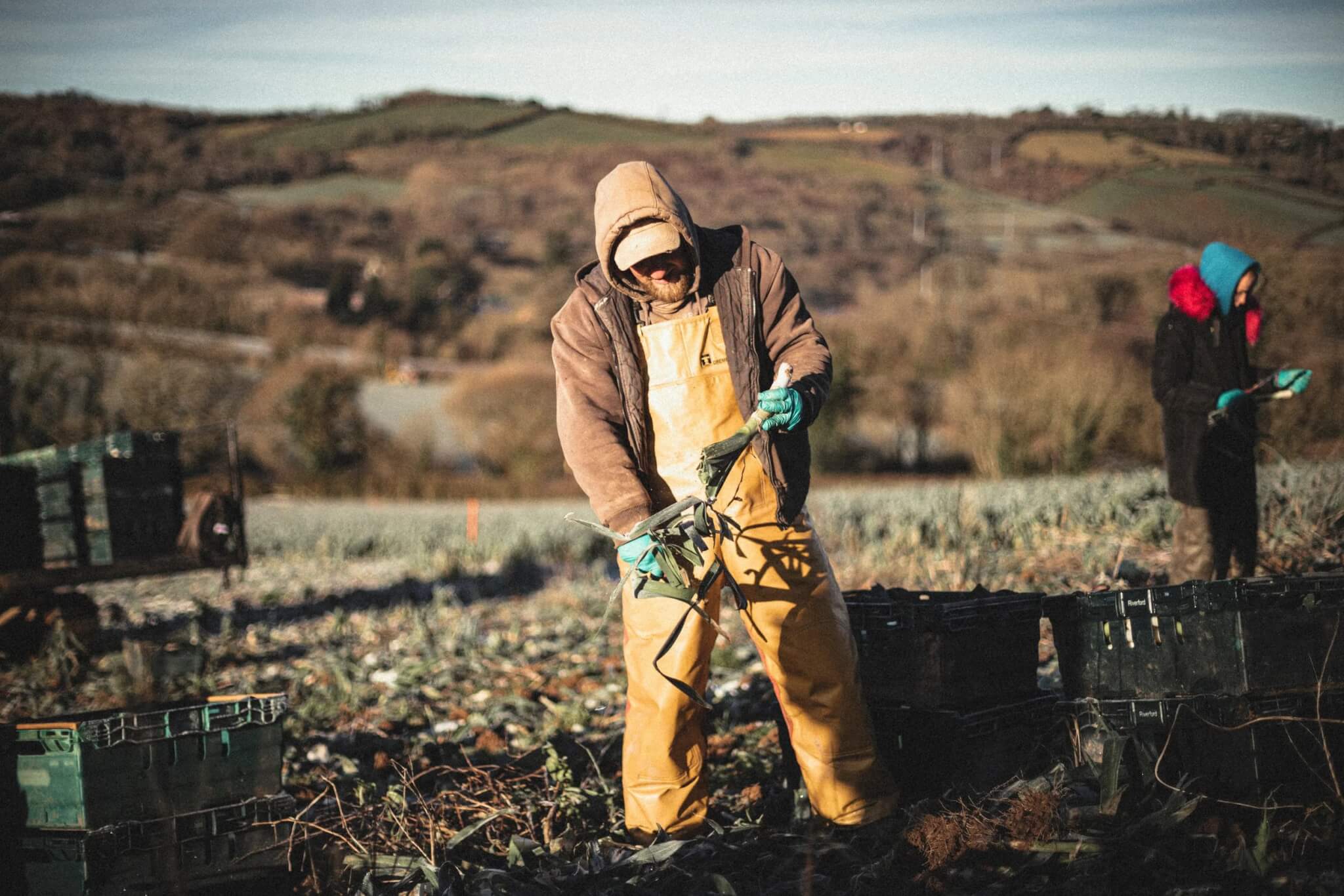
Right now, mental wellbeing is one of the biggest problems among farmers, since it has just hit a four-year low, and continues to fall below that of the general population. In fact, poor mental health in farming is 46% higher than in other professions, driven mainly by depression and anxiety, often exacerbated by rural isolation.
It has affected Sam, a vegetable grower from Selby, Yorkshire: “I was making myself worse and worse through drinking and not talking to people. I was in a self-destructive pattern of behaviour. To anyone that’s struggling with their mental health, I’d say it’s never too late to talk.”
Luckily Sam got help with his mental health through the Samaritans, unfortunately many others have not. The latest figures show 47 suicides in England and Wales for 2024 – a 7% increase from two years’ previous.
It doesn’t help that there is now a perfect storm of challenges hitting the sector, including sky-high prices for agricultural inputs and fuel, and driven-down farm-gate prices, especially for dairy. Then there’s the cost of living, labour shortage, and inflation, not to mention climate issues – with both flood and drought increasingly common, and weather patterns less predictable overall.
There are also the perennial problems to do with long working hours, financial uncertainty, especially for tenant farmers, and then there are the physical risks of working on the land. This means that farmers are shouldering an enormous amount, resulting in male farm workers being three times more likely to die by suicide than the male national average.
“It’s OK not to feel alright. I’ve been there and it’s incredibly difficult. Mental health in agriculture is a very important thing. A farmer takes their own life every week in this country. It is incredibly sad,” states Sam Stables. The farmer tried to take his own life over a decade ago now. He survived with support and has gone on to co-found a charity, We Are Farming Minds, which supports the wellbeing of Herefordshire farmers, especially younger workers.
More than nine in ten British farmers aged under 40, said poor mental health was one of the sector’s biggest hidden problems. It’s not just an issue for men, but female agricultural workers as well. Research by the Farming Community Network found that women also had lower mental wellbeing scores than the national population. A survey found that 36% female farmers reported low wellbeing, while only 4% reported high wellbeing.
“Farmers will look after their animals, their machinery, or their soil far better than they will look after themselves. They often don’t address issues of mental health until it becomes a crisis. The good thing is that younger farmers are now more open to talking about their mental wellbeing,” explains Stephanie Berkeley, manager of the Farm Safety Foundation, a charity, also known as Yellow Wellies.
She continues: “However, it’s still a very difficult topic, especially suicide. This needs to be handled with a great deal of sensitivity. Farmers can work a 14-hour day without speaking to a single soul. A small issue can start in someone’s head. Yet, with no one to talk to, these small things can become huge problems. There are also a lot of issues that are beyond the farmer’s control, from the weather to government policy. There are so many factors that affect mental and physical wellbeing.”
A sharp decline in wellbeing
The latest survey of 765 farmers by Yellow Wellies this February found that the sharpest decline in mental wellbeing was among those aged 61 and above, historically the most resilient group. It doesn’t help that the sheer labour and dedication expected of farmers, in order to put food on plates across the country, is hugely undervalued.
“When you go into a supermarket and you see potatoes or carrots for six pence a bag at Christmas and Easter, farmers realise they aren’t valued one bit. If consumers are looking for cheap food, somebody’s got to suffer; at the same time margins are being squeezed at the farm gate. They’re probably some of the only business people in the UK who are told what they’re going to sell and the prices they’ll receive,” points out Berkeley.
She adds: “If you’ve got all that uncertainty and it’s affecting your mental health, you’re not sleeping well, you‘re also likely to be disorientated and get brain fog. This can affect how you operate behind the wheel of a tractor. It means you are more likely to have an accident. Our research shows that farmers that have lower levels of mental wellbeing are less likely to keep themselves safe.”
Multiple challenges with mental health
Unfortunately, there are also challenges with access to rural health and social care, since there is a geographical bias towards urban, more populated areas in the UK, rather than the sparsely inhabited countryside.
This means that there is less support and resources from the NHS, charities, and non-governmental organisations for rural workers around mental health. Farmers today also have even less human contact than before since so much is done online, whether it’s rural banking, registering livestock, or government compliance.
It therefore falls on the farming community to support each other on these issues, which includes the work of RABI, the farmers’ charity or FCN, the Farming Community Network, among other charities.
Climate change is also having an affect on the mental wellbeing of farmers. Extreme weather in recent years has been understandably destabilising for those in agriculture. Almost all of those surveyed mid last year (92%) said they felt anxious during periods of extreme weather, with a third (34%) saying they felt very anxious, while nearly two thirds said they felt depressed, according to research commissioned by the Energy & Climate Intelligence Unit.
“Farmers are fearful for the future as climate change is predicted to drive ever more extreme weather. In the immediate term, support for farmers struggling with their mental health is essential,” concludes the report.
Removing stigma
We Are Farming Minds runs mental health awareness workshops, while the Yellow Wellies runs a ‘Mind Your Head’ week, which brings people together at agricultural colleges and young farmers clubs, as well as in rural communities, to address the stresses that people face collectively.
The aim is also to start life-saving conversations and dialogue on wellbeing and improve suicide awareness. This year’s week in February was focused on suicide prevention.
Unfortunately, there is still a very strong stigma among farmers and agricultural workers around seeking help. This means that many suffer in silence. There is an adage that farmers are more comfortable talking about their problems with their vet than they are with their GP.
There is also a perception that those who work in mental health and social care don’t comprehend the unique challenges faced by the farming community. The Farm Safety Foundation has now started a new suicide prevention training programme, the first of its kind in the UK, in order to break down barriers and address some of these issues head-on.
“This is such an emotive topic. When we do training in person I ask groups if they know somebody who has had poor mental health issues, who has had depression, or lost a loved one or a person that they care about to suicide – everyone puts their hand up,” says Berkeley, from the Farm Safety Foundation.
She’s quick to note the stigma around mental health too and says: “We don’t frame our training around mental health otherwise we would not get farmers turning up. We frame it around helping other people. Farmers are resilient, they’ve got true grit, they don’t often want to talk about the state of their mind. However, when they do get up and talk, other farmers listen and take note. It’s about making it real and deploying gentle nudge behaviour.”
The good thing is that younger farmers are more aware of these issues, they are more connected via online communities and social media, and they are also more willing to share their stories and experiences, as well as talk about difficult topics such as mental health and suicide. Hopefully, the future of farmers’ mental health will be much brighter.
To talk to a sympathetic person who understands farmers and rural life, you can call the Farming Community Network on 03000 111 999. Calls will be answered in person from 7am-11pm every day of the year. Picking up the phone and calling can be difficult. The FCN has written a helpful article about what to expect when you call their FCN Helpline that we hope will encourage you and put your mind at ease. Click here to access this article.


This is a timely article, three farmers committed suicide in Devon last week! what is the figure nationally?
I am a volunteer with FCN and as a charity we are hugely aware of the issues farmers face. RABI produced a very good report ‘Fit for Farming’ and the combination of low incomes financial pressures and loneliness are well documented.
The main problem is awareness and getting people to talk about their worries, most are too private to do so. If you have concerns about someone there is help available the FCN Helpline 03000111999 7am -11 pm daily.
The other issue is accidents on farms where deaths and injuries are far too high!
Thanks so much for your comment, Chris. It is an ongoing tragedy and you’re right – it is lack of awareness that boxes people into corners, believing there is no other way out. I will share the FCN helpline number at the end of the feature. We also recently ran a story on farm safety and the number of preventable deaths and injuries.