
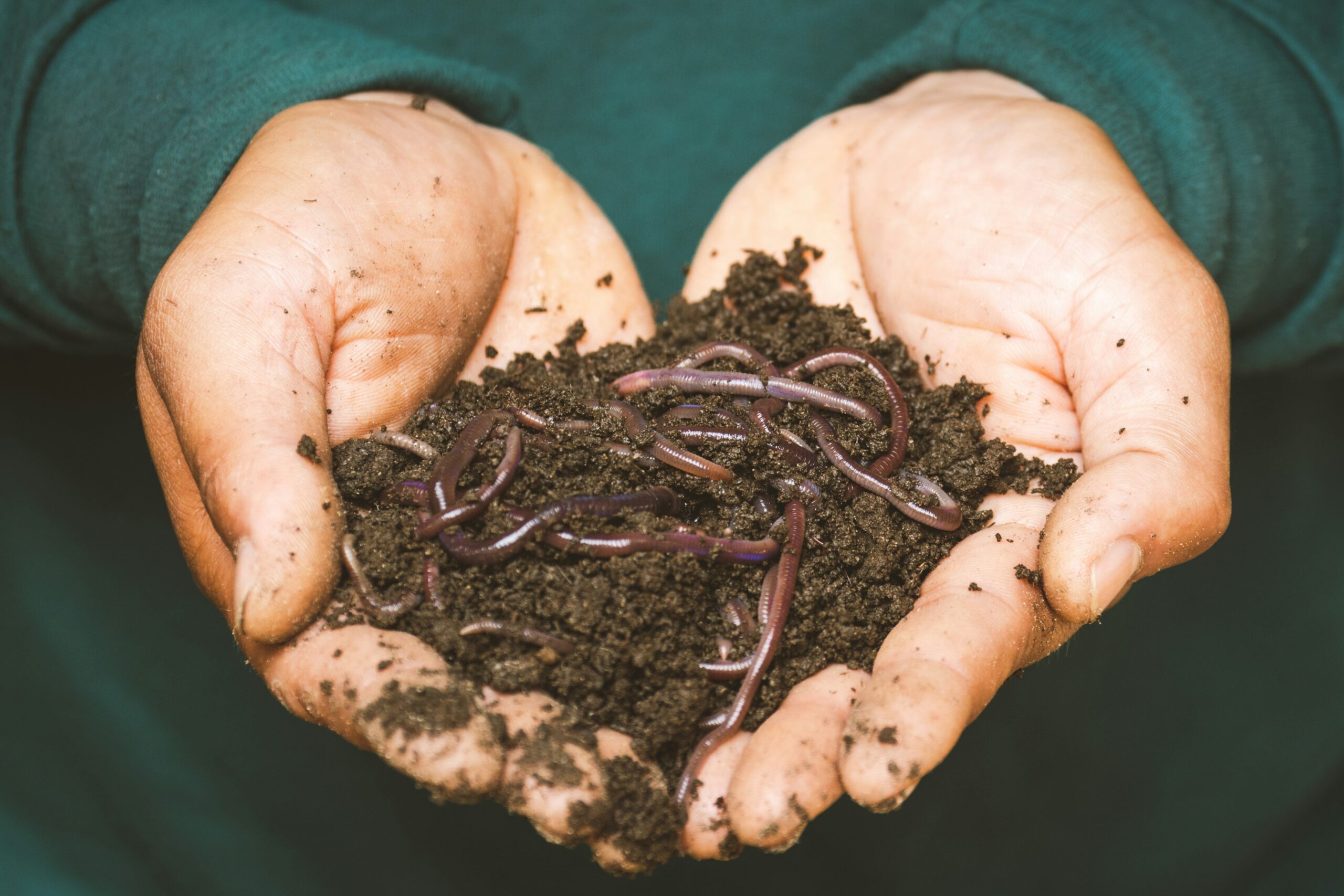
The real workhorses of a thriving soil are worms. As they turn over the earth, digesting organic matter, they not only provide water soluble nutrients and beneficial micro-organisms through their worm casts (small mounds, coils, or pellets of soil and organic matter pushed up to the ground surface after passing through an earthworm’s digestive tract), they also influence carbon cycling, water infiltration, greenhouse gas emissions and plant productivity. Yet they are hugely undervalued.
This comes at a time when modern farming has decimated earthworms. According to the Earthworm Society of Britain, populations have plummeted by up to 41 per cent over the last 25 years. Worms are now rare or absent in two out of five farm fields, according to Rothamsted Research. In the same study, 42 per cent of fields had poor worm biodiversity.
“Tillage is a primary driver of earthworm population changes,” explains Dr Jackie Stroud, Assistant Professor of Soil Science at the University of Warwick. Another significant cause of the earthworm’s demise is the persistent use of pesticides and inorganic fertilisers, which can accumulate in farm soils.
“Applying various salts, which is how a lot of these chemicals are applied, decimates worms since they have porous and permeable skins. There are healthier populations of earthworms in many urban gardens, especially where people encourage them as they compost, than there are in many conventional farms in the UK,” states Anna de la Vega, founder of The Urban Worm, a social enterprise focused on worm farming.
Insecticides are highly toxic, reducing earthworm survival rates, growth, and reproduction. Even herbicides and fungicides can damage their health, disrupting feeding and upsetting their gut biomes. For instance, neonicotinoids and organophosphates are extremely toxic to earthworms.
Leaving bare soil exposed is also problematic. “Wherever you see exposed earth this is often a desert for earthworms with little food for them to consume in terms of roots or organic matter. The good thing is that there is now increased awareness around earthworms and their potential. Very few people know that a tablespoon of wormcasts can feed a plant for three months. So called vermi-compost is rich in 14 nutrients that plants need to thrive,” details de la Vega.
It’s not just industrial farming that’s killing off earthworm populations – climate change is also playing a role. Unlike humans or livestock, which can be moved quickly in times of flooding and intense rain, drought or intense heat, earthworms cannot shift so speedily. They can drown or be baked alive depending on the type of extreme weather.
The unsung heroes of the soil
If we are to prevent the loss of over two million tonnes of top soil a year by erosion, we need to get more serious about earthworms here in the UK. At present, earthworms’ “ecosystem services” aren’t taken seriously enough. For instance, 100 worms can process up to 840 kg of surface litter per hectare a year: they are key to the soil’s circular economy.
Earthworms can completely turn over the upper 15 cm of soil every 10 to 20 years. If worms are present in farm ecosystems they can lead to a 25 per cent increase in crop yield and a similar per cent increase in leafy biomass. Worms stimulate plant growth by improving soil structure, spreading nutrients around and boosting their release from organic matter.
So are certain farming systems better for earthworms? Vicki Hird, strategic lead for agriculture at The Wildlife Trusts thinks so: “Regenerative agriculture can be good for worms but only if wider, low input practices are used beyond no-tillage. Organic farming is even better,” she states.
The use of farmyard manure as an organic fertiliser is the soil management practice which has the greatest positive impact on earthworms. Keeping cover crops on the soil with herbal lays for as long as possible, also gives earthworms more organic material to feed on.
There is also a growing interest in the application of earthworms in the remediation of contaminated farmland. Bacteria found in the guts of earthworms can detoxify pollutants, while secreted fluids can destroy pathogens. The process is called vermi-remediation and has successfully been shown to reduce soil pollution.
Considering the amount of sewage sludge that is applied to British soils from the water industry this is of real interest – 87% of the UK’s 3.6 million tonnes of sewage sludge is applied to farmland each year, with significant concerns over its toxicity.
The potential of worm farming
Aside from more agroecological and worm-friendly farming, what is going to help the humble earthworm in our fields and paddocks across the UK? Vermiculture or worm farming could be one answer. Yet there are only a small number of people doing this in Britain.
This is less about repopulating fields with worms and more to do with applying worm manure or worm casts to enrich the soil. Vermi-compost is a potent source of minerals, nutrients and beneficial microorganisms. When applied to fields it creates a hospitable environment leading to the proliferation of worms that already exist in-situ.
“Most organic or regenerative farmers don’t even know about vermiculture. We are so behind here in the UK. If you are registered as an organic farm in the Philippines you have to have vermiculture and vermi-composting as part of your strategy. There are over 200,000 worm farmers in India. It’s also big in Cuba where there was an embargo on imported fertilisers, so they turned to vermiculture,” details de la Vega.
“Not even Rothamsted – one of the world’s premier agricultural research stations – is doing research into worms. This is a travesty. It may be a low-tech, low-cost approach but worm farming can make a real difference. For instance, a kilo of worm manure contains enough biology to feed an acre of land. We need a worm farming revolution in in the UK!” urged de la Vega.




Great evidence and opportunities all explained. What are the barriers towards the greater adoption of vermiculite? How could food waste processing be used to generate more low hydrocarbon fertilisers?