
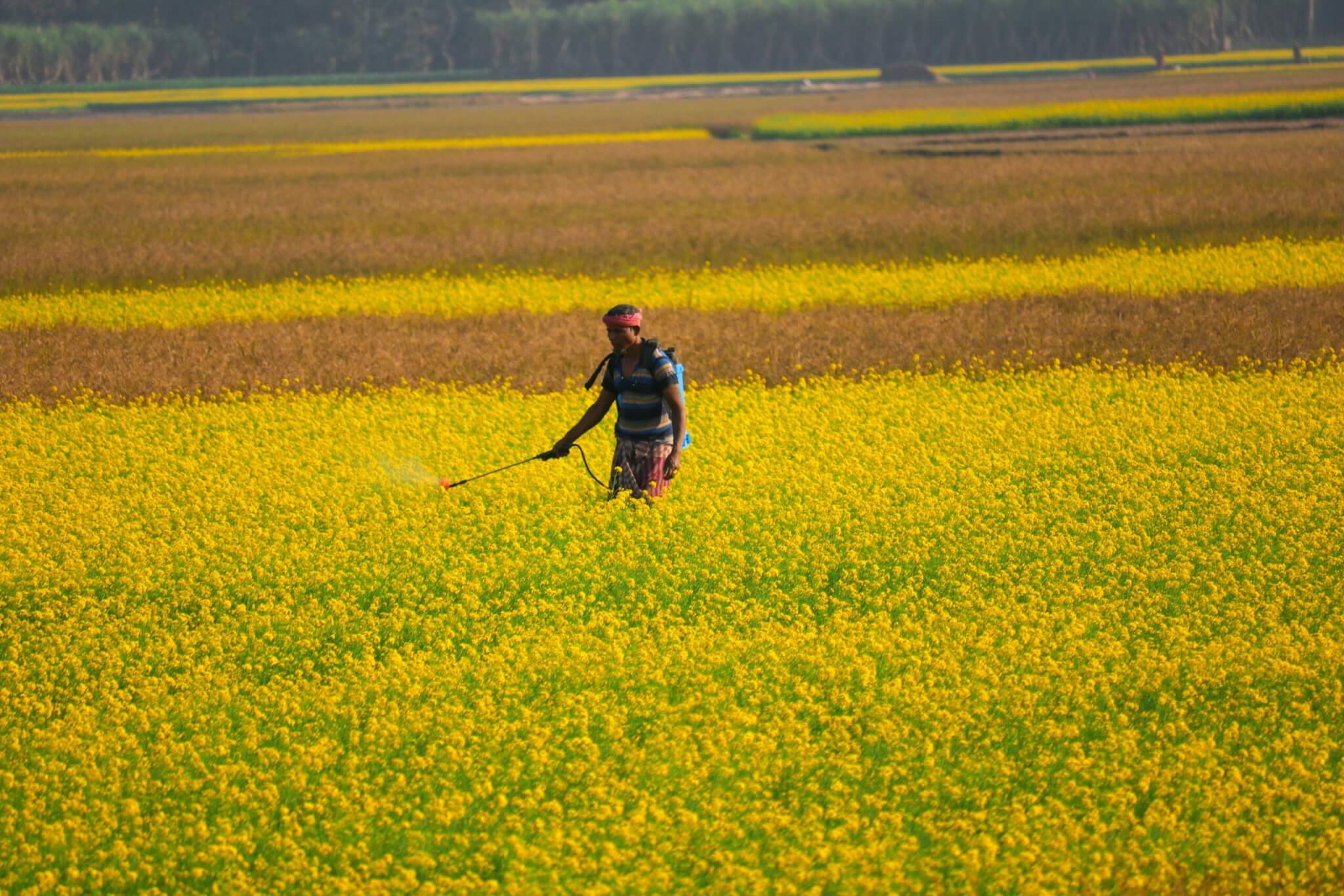
“You mix the chemicals and see what happens. You spray and then you trust in god.”
The words of a Kenyan farm worker in an interview with Swedwatch, a not-for-profit organisation, which has further unearthed the extent of our double standards when it comes to protections from the most harmful pesticides.
“EU companies are exporting tens of thousands of tonnes of hazardous pesticides to countries outside of Europe,” explained programme officer Olof Björnsson. “These pesticides are banned for use within the EU because of their adverse impacts on human health and the environment but still widely used in other countries,” he added.
Poison for Profit – The Cost of EU Double Standards on Biodiversity, Human Health and Livelihoods documents the direct experiences of farm workers who have found themselves at the sharpest end of this chemical crisis. They report a wide range of symptoms, from eye and skin irritation to breathing problems and even fatal poisonings. Health professionals also report increasing cancer rates in agricultural regions, while farmers note devastating impacts on biodiversity, including the disappearance of bees and other pollinators. Other environmental impacts, such as contaminated water sources, are also being reported.
The chemical cocktail the Kenyan worker is concocting is made from products that cannot be used in Europe yet continue to be exported overseas – largely to middle and lower-income countries – and in vast quantities. Some of these chemicals have been banned here for decades.
In 2024, for example, the EU exported nearly 122,000 tonnes of banned pesticides. The figures are from the most recent investigation by Public Eye and Unearthed, which also revealed that 44 Highly Hazardous Pesticides (HHPs) banned in the EU are still being shipped for use on the African continent. In 2024 alone, the EU planned to export nearly 9,000 tonnes of these toxic pesticides to Africa.
According to documents obtained under freedom of information laws, these banned pesticides are being sent to countries including South Africa, Kenya, Ivory Coast, Sudan, Morocco, and Tunisia – coming from several European countries, the top five being Germany, Spain, Italy, Belgium, and the Netherlands.
In 2023, the UK exported 8,500 tonnes of pesticides that are banned on British farms because of the dangers they pose to human health and nature, according to another investigation by Unearthed and Public Eye. They also included enough of the notorious banned bee-killing insecticide thiamethoxam to spray an area bigger than England.
Politicians have remarked that it is “beyond belief” that this trade continues to happen lawfully. But will they do anything about it?
Indeed, it was back in 2020 when NGOs first revealed the extent of this toxic trade, which is led by the likes of agrochemical giants Syngenta, Bayer, and BASF. Their public response is often coordinated by Croplife International, the organisation representing agrochemical companies, and which has long suggested there is nothing to worry about.
“Some pesticides are not authorised for use in the EU but have important uses elsewhere in the world,” read a statement in September 2020. “One size does not fit all – agriculture, pest, and diseases are different across regions and countries. Pesticides are not automatically ‘more hazardous’ or ‘less necessary’ because they are not authorised in Europe.”
In June 2025, the Kenyan government took bold action by banning 77 highly hazardous pesticides and restricting more than 200 others – a significant milestone in protecting people and ecosystems. However, Swedwatch warned that responsibility must not fall solely on importing countries.
The European Commission has, to date at least, held this corporate line: a commitment to put an end to the practice of exporting banned pesticides overseas was killed off by corporate lobbying, according to Corporate Europe Observatory, whose work is focused on the “corporate capture” of EU decision-making, and how this leads to policies that exacerbate social injustice, economic inequality, climate change and environmental destruction.
What is more, they end up back on our plates: crops grown for export back to Europe contain residues of these toxic substances. Campaigners have been ringing the alarm bells over this so-called “boomerang effect” for years, but lawmakers have ignored them, with large agri-food companies continuing to profit from the market.
The billions made from this trade will make it hard to bring in such export bans but this issue is a “huge deal” at the moment, a fellow journalist who has been following this closely told me, just before Christmas. “The Commission had promised to come forward with legislation in the last mandate to ban hazardous pesticide exports, and countries including Denmark have made a big push for it. But that seems highly unlikely to happen now as the Commission is almost totally in line with the chemical industry’s demands to boost EU ‘competitiveness’ and pesticide exports are still a nice little earner for them.”
Indeed, new data released by the European Chemicals Agency in December showed active substances – including some bee-killing neonicotinoids – were among those due to be exported from the EU in larger quantities in 2024.
“Exports of chemicals restricted under the pesticides category increased by 34 per cent compared to 2023, after two years of consecutive decline.” A major contributor to this growth was chlorate, which was banned for use in pesticides since 2010, and accounted for 24 per cent of the overall rise.
Campaigners and civil rights groups will keep pushing. Also last month, in a symbolic action in front of the European Commission in Brussels, 75 boxes were returned – one for each pesticide active substance banned for use in the EU but still exported abroad in huge tonnages. The action was organised by the End Toxic Pesticide Trade Coalition, which represents over 600 organisations calling for an end to this toxic trade. “If these pesticides are too dangerous for Europeans, they are too dangerous for everyone,” the coalition said. “The EU cannot continue to profit from poisoning communities and ecosystems elsewhere.”
While some farm workers in countries such as Kenya continue to put their faith in god to keep them safe from our harmful pesticides, we must also ask whether “made in Europe” becomes a mockery, when applied to the banned chemicals earmarked solely for export.
Photograph by Shad Arefin Sanchoy; farmer sprays pesticide over mustard fields in Bangladesh.





This is despicable!! How can the politicians allow this trade to continue knowing that these toxic substances are going to cause huge damage to the environment and human health. The absolute hypocrisy and total indifference beggars belief! Profit before people and the planet yet again!!