“Our trees are under threat”, writes Mark Seddon, journalist and former foreign correspondent — and perhaps none more so than the English elm. Plagued by Dutch elm disease since the 1920s, this book is the tale of the elm’s fight for survival, and the folk battling to save it.
The story of the British elm is entangled with the story of our countryside and countless creatives, craftspeople, and conservationists inspired by its beauty, water-resistant properties, and importance to biodiversity.
This book blends lush photographic storytelling, documenting the elm in all its glory — from its bark, samaras, buds, leaves, and flowers, to the elms still standing — alongside writing that explores the elm’s impact on our heritage and the science behind the trees’ struggle.
Elms have inspired artists and artisans, from ‘Monet of the Cotswolds’, Sir Alfred East to botanist and furniture designer-maker, Matthew Burt who captures the elm’s “magic for future generations, until others…use their skills to bring this most delightful tree back.” At its heart, this is a book about the elm’s revival.
The origins of Dutch elm disease began in 1927 when Scolytus bark beetles hitched a lift to our shores on American imported timber, carrying a fungus fatal to elms. In the ‘60s and ‘70s, a deadlier version erupted. Although the disease has claimed the lives of 100 million British elms, the elm is a survivor.
From the Ulmaceae family, dating back 100 million years, elms are vital for biodiversity. Birds nest in its branches, and insects — elm-currant aphids, dock bugs, and comma caterpillars — make their home in the tree. The fate of white-letter hairstreak butterflies, which consume elm flowers, is interwoven with that of the elm.
With a history as ancient as this, and other species relying on its survival, the elm deserves our attention — and many environmentalists are on a quest to re-elm the British Isles.
Highlighting the need to protect trees from threats caused by globalisation with stringent biosecurity policies, we also read about disease control methods, such as sanitation felling, pruning out disease, and fungicide injections — but it is the search for disease resistant and genetically diverse elms that is key.
Offering hope are East Anglian and Spanish field elms, alongside Sapporo Autumn Gold — a disease-resistant hybrid developed by the University of Wisconsin, planted around the UK by The Conservation Foundation (co-founded by David Shreeve MBE) .
Projects led by Forest Research and Royal Botanic Gardens, Kew (funded by DEFRAs Centre for Forest Protection),mapping the distribution, diversity, and disease-resistance of UK elms, alongside perspectives on restoration and how tree loss affects us are exciting. There is optimism that, as elm researcher Dr. Joan Webber OBE says, “The elm hasn’t had it.”
Great British Elms is a must-read for tree lovers, woodworkers, foresters, arboriculturists, conservation horticulturists, and environmental policy-makers. Despite the decimation of elms for almost 10 decades, this forward-looking book, packed with knowledge and vivid photographs, encourages us to look to a resilient future where elms once again thrive in this green and pleasant land.
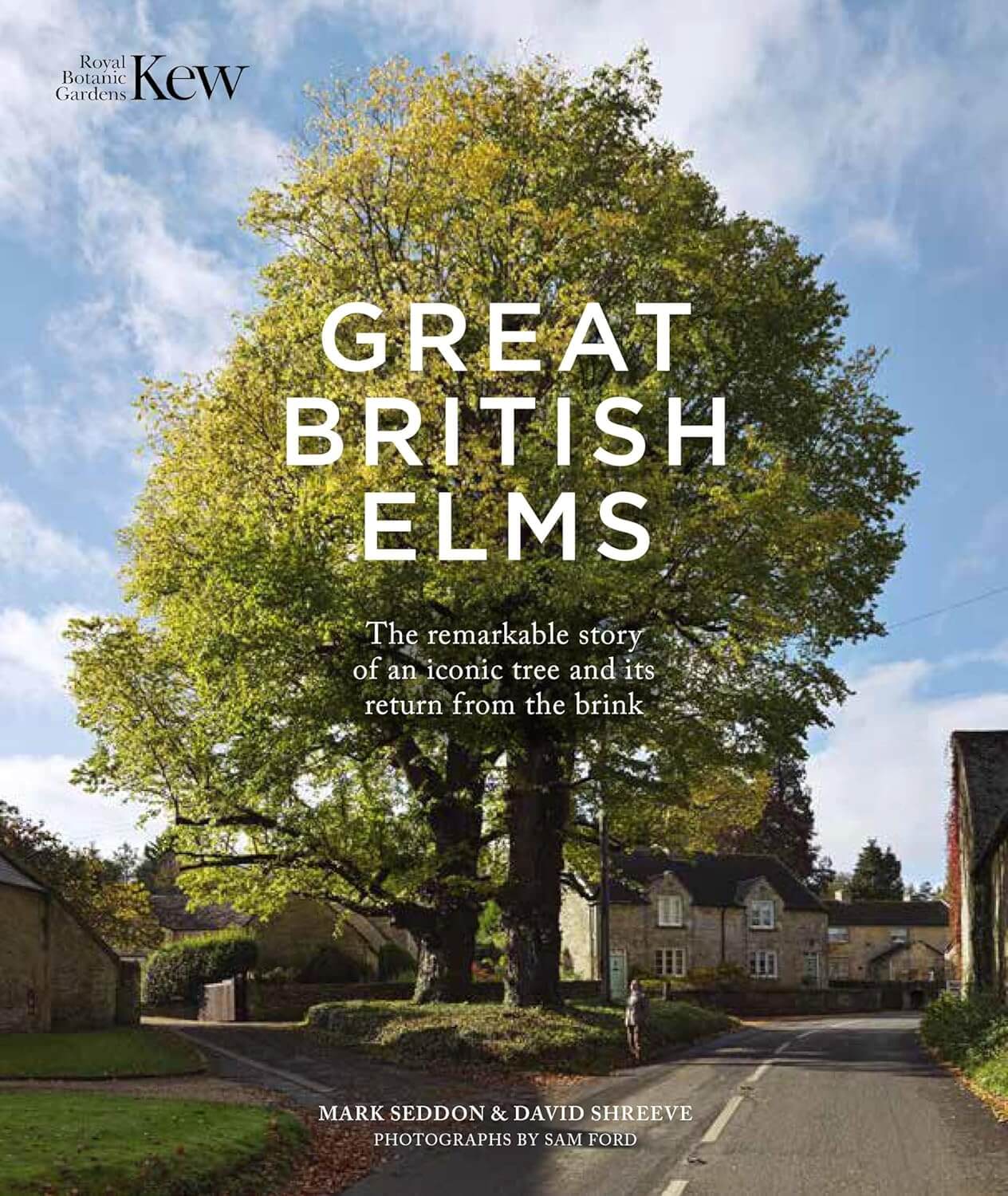
Great British Elms: The remarkable story of an iconic tree and its return from the brink (Kew Publishing, 2024) by Mark Seddon & David Shreeve. Photography by Sam Ford. Reviewed by R. B. L. Robinson.