GET THE DIGITAL DIGEST

Sign up to receive the key stories in food, farming + fairness, direct to your inbox, every Friday.

Wicked Leeks logo

Food, Farming, Fairness.
  • News
  • Opinion
  • Features
  • Resources
  • Riverford
  • About Wicked Leeks

Hot topics

  • Farming
  • Animal welfare
  • Politics
  • Regenerative farming

All topics

  • Activism
  • Agroecology
  • Agroforestry
  • Biodiversity
  • Brexit
  • Business
  • Cartoon
  • Christmas
  • Cities
  • Climate change
  • Community
  • COP26
  • Cost-of-living
  • Culture
  • Dairy
  • Diets
  • Diversity
  • Eating and drinking
  • Eating out
  • Education
  • Employee ownership
  • Energy
  • Environment and ethics
  • Ethical business
  • Events
  • Fairtrade
  • Fashion and beauty
  • Fish
  • Flexitarianism
  • Flowers
  • Food waste
  • Foraging
  • Grow your own
  • Growers and suppliers
  • Guy Singh-Watson
  • Health
  • Inequality
  • Land ownership
  • Local sourcing
  • Meat
  • Mental health
  • Nature
  • Net zero
  • News from the farm
  • Organics
  • Packaging
  • People
  • Pesticides
  • Plant-based
  • Plastic
  • Podcast
  • Price
  • Recipes
  • Recycling
  • Renewable energy
  • Rewilding
  • Seasonality
  • Seeds
  • Shopping
  • Social justice
  • Soil
  • Summer
  • Supermarkets
  • Sustainable Food Series
  • Technology
  • The big interview
  • Travel
  • UK Gov
  • Veg hacks
  • Veganism
  • Water
slider image
News

Campaign for better school food gains momentum 

The Food Foundation renews the call for better standards and monitoring in schools as the government rolls out more free meals for children across the country

Activism Cost-of-living Health Inequality
slider image
Opinion

News from the Farm – Grievous Biological Harm & banning glyphosate

In the run-up to the UK Gov's glyphosate reapproval, Guy Singh-Watson argues the case against

Pesticides Environment and ethics Guy Singh-Watson
slider image
News

Poison for profit – EU exports 122,000 tonnes of banned pesticides

44 Highly Hazardous Pesticides, banned for EU use, are still being shipped to the African continent

Pesticides Environment and ethics
slider image
WL Meets

WL Meets: Dee Woods, the educator campaigning for everyone’s ‘right to food’

Nick Easen meets the food justice policy coordinator for Landworkers' Alliance and gleans hopeful ideas for a fairer food future

Activism Agroecology
News

Campaign for better school food gains momentum 

Activism Cost-of-living Health Inequality
The AGtivist

The AGtivist investigates the march of the megafarms

Activism Animal welfare Farming
Features

News from the farm: Returning to our roots, tubers & brassicas

Eating and drinking News from the farm Seasonality
STORY OF THE WEEK

Glyphosate contamination in children’s playgrounds is likely to be fairly common. Many kids could be literally playing with poison. Nick Mole, Policy Manager, PAN UK

WL Meets

WL Meets: Stephanie Slater, chief executive of School Food Matters

Activism Community Inequality
Features

The weakening link between our local abattoirs, organic meat and high animal welfare

Animal welfare Community
Opinion

News from the Farm – Grievous Biological Harm & banning glyphosate

Pesticides Environment and ethics Guy Singh-Watson
News

Herbicide linked to cancer used in children’s playgrounds across UK

Pesticides Environment and ethics
News

Poison for profit – EU exports 122,000 tonnes of banned pesticides

Pesticides Environment and ethics
Opinion

News from the farm: A lot to learn before dusk descends

Agroforestry Farming Guy Singh-Watson
Features

Meet the farming matchmakers, bringing landowners and tenants together

Land ownership Community Farming
Opinion

News from the farm: Furrows, fairness & 40 years of Riverford

Farming Guy Singh-Watson News from the farm
About us

Find out more about Wicked Leeks and our publisher, organic veg box company Riverford.

Get in touch

Are you farmer, producer or journalist with a story to share? Drop us a line here.
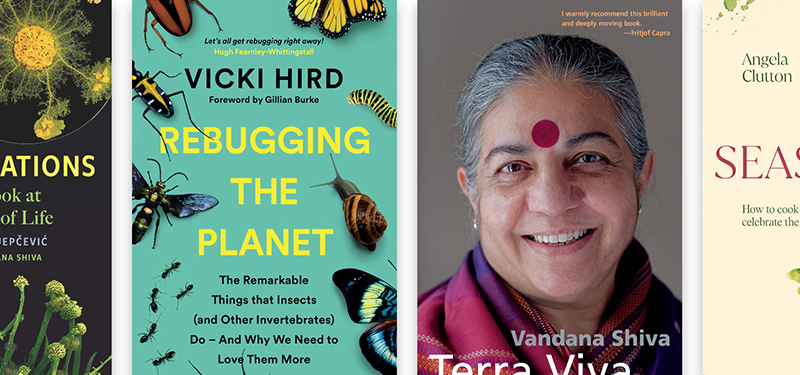
Resources

New + Noteworthy books, blogs, podcasts + more that are making waves in the worlds of food, farming + fairness.

wickedleeksmag

FOOD, FARMING, FAIRNESS. Wicked Leeks is a digital news channel joining the dots between food, farming & people, published by @riverford ⬇️SUBSCRIBE

The loss of the UK's smaller, local abattoirs woul The loss of the UK's smaller, local abattoirs would have devastating effects on the food system, finds Anna Zuurmond

The number of abattoirs in the UK has diminished from 2,500 in the 1970s to just 203 today, meaning animals are travelling further and longer to slaughter and fewer farmers are able to sell quality meat direct to consumers.

A recent survey of over 850 farmers by the Sustainable Food Trust (SFT) found that many small farmers would struggle to sell direct to consumers if their local abattoir were to close – smaller abattoirs offer services like private kill, where farmers’ own meat is returned to them by the abattoir for them to sell. 

In the absence of this service, many farmers would be forced to sell their meat directly into wholesale markets, which over 58 per cent of farmers in SFT’s survey deemed to be unprofitable for their business; the knock-on effect then being that consumers have less access to quality local meat. 

The survey found that, as a direct result of small abattoir closure forcing them to use larger facilities, 18 per cent of farmers have already been forced to sell off their livestock, and almost a fifth of organically certified respondents (19%) said they have had to stop selling their meat as organic due to lack of access to organic abattoir services.

Read the full feature on Wicked Leeks, via the link in our bio.
New research (from @pesticideactionnetworkuk ): Ov New research (from @pesticideactionnetworkuk ): Over half of children’s playgrounds tested in England were found to be contaminated with glyphosate, leading to fresh calls to ban the use of herbicides and pesticides in public spaces.

Most children are curious; many are grubby. They put dirt in their mouths and get up close to soil, sandpits and weeds with their hands and faces, especially in playgrounds and parks across the country. They touch and brush against slides, swings and play equipment as they enjoy time outdoors — and then put their fingers into their mouths without a second thought. But there is a silent, odourless and unseen toxin potentially lurking on all these surfaces: glyphosate and glyphosate-based herbicides (GBHs).

The world’s most widely used herbicide has contaminated environments that are meant to be among the safest — the places where children play. Glyphosate residues and its toxic breakdown product, AMPA (aminomethylphosphonic acid), were found in eight of the 13 playgrounds tested, from Cambridgeshire to London and from Kent to Buckinghamshire, according to new research by the Pesticide Action Network (PAN).

None of the playgrounds were located close to farmers’ fields, indicating that the contamination came from herbicide use by councils or local authorities to control weeds in public playgrounds for cosmetic purposes. Hackney was the only location where glyphosate was not detected. This London borough went pesticide-free in all its parks more than four years ago.

“These are places where children should be having a healthy time. There is absolutely no need for them to be exposed to this harmful chemical,” says Nick Mole, policy officer at PAN UK. “This study is indicative of a wider problem across the UK. Glyphosate contamination in children’s playgrounds is likely to be fairly common. Many kids could be literally playing with poison.”

For the full story, head to Wicked Leeks via the link in our bio.
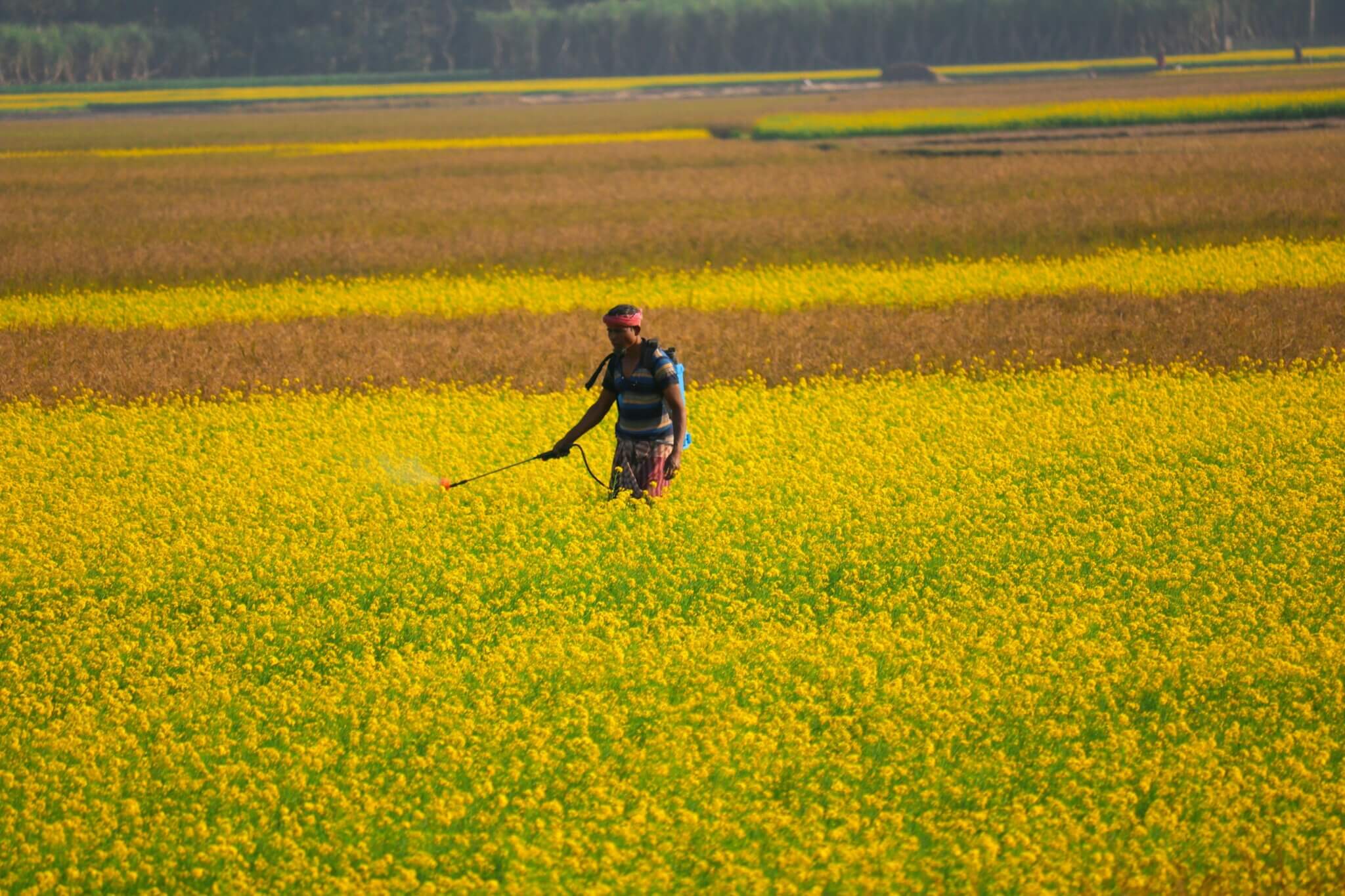
"You mix the chemicals and see what happens. You s "You mix the chemicals and see what happens. You spray and then you trust in god.”

The words of a Kenyan farm worker in an interview with @Swedwatch - a not-for-profit organisation, which has further unearthed the extent of our double standards when it comes to protections from the most harmful pesticides.

“EU companies are exporting tens of thousands of tonnes of hazardous pesticides to countries outside of Europe,” explained programme officer Olof Björnsson. “These pesticides are banned for use within the EU because of their adverse impacts on human health and the environment but still widely used in other countries,” he added.

Poison for Profit – The Cost of EU Double Standards on Biodiversity, Human Health and Livelihoods documents the direct experiences of farm workers who have found themselves at the sharpest end of this chemical crisis. They report a wide range of symptoms, from eye and skin irritation to breathing problems and even fatal poisonings. Health professionals also report increasing cancer rates in agricultural regions, while farmers note devastating impacts on biodiversity, including the disappearance of bees and other pollinators. Other environmental impacts, such as contaminated water sources, are also being reported.

The chemical cocktail the Kenyan worker is concocting is made from products that cannot be used in Europe yet continue to be exported overseas – largely to middle and lower-income countries – and in vast quantities. Some of these chemicals have been banned here for decades.

In 2024, for example, the EU exported nearly 122,000 tonnes of banned pesticides. The figures are from the most recent investigation by Public Eye and Unearthed, which also revealed that 44 Highly Hazardous Pesticides (HHPs) banned in the EU are still being shipped for use on the African continent. In 2024 alone, the EU planned to export nearly 9,000 tonnes of these toxic pesticides to Africa. 

Read David Burrows' full report on Wicked Leeks, via the link in our bio.
Millions of migrant workers face exploitation in E Millions of migrant workers face exploitation in Europe’s fields, harvesting the fruit and vegetables that many of us purchase, writes the AGtivist for Wicked Leeks. This was the stark finding of a disturbing investigation published last year by the charity, Oxfam. Their researchers found that in many European countries, workers were being paid less than the minimum wage, and that incidents “of abuse, including sexual abuse, intimidation, and violence in response to strikes, were commonplace.” 

The investigation also discovered that workers’ accommodation was “frequently overcrowded, expensive, and isolated” and that some women workers had reported instances of being sexually blackmailed by accommodation supervisors. “Some workers were found to live in makeshift slums, which can lack running water, heating, and waste collection and where there is a risk of disease and fire – either accidental or arson attacks,” the researchers said.

In its report, Oxfam also revealed that accidents and injuries were “frequent occurrences”, with cases of employers failing to give adequate training and protective equipment to workers. There were instances of workers being poisoned, researchers found, and one man died after apparently not receiving any water during a full day’s work in 44-degree heat. 

This month, a powerful new film building on these findings will be screened in the UK by the @landworkersalliance as a fundraiser for Justice is Not Seasonal, an collective working to bring an end to exploitation on farms. The film, simply titled The Pickers, takes viewers on a journey across southern Europe as workers harvest oranges, strawberries, olives, and blueberries. 

The filmmakers behind the documentary and its associated campaign give a rare voice to some of those toiling in Europe’s fields, polytunnels, and packing stations and a much needed opportunity to life the lid on the horrifying conditions faced by those who are, by any standard, at the bottom of our modern day supply chains. 

Read the full feature on Wicked Leeks, via the link in our bio.

About us

Wicked Leeks is published by Riverford Organic Farmers.

Riverford organic farmers

Riverford grows and sells organic food through its award-winning veg boxes, delivering across the country to a loyal band of customers who share a passion for good food, good farming and good business.

learn more

Get the Digital Digest

Sign up to receive the key stories in food, farming + fairness, direct to your inbox, every Friday.

Instagram icon Facebook icon Youtube icon Email icon

Navigate

  • News
  • Opinion
  • Features
  • Films

Most read

  • Farming
  • News from the farm
  • Environment and ethics
  • Eating and drinking
  • Climate change
  • Ethical business
Wicked Leeks

© Riverford Organic Farmers Ltd

Contact Us Cookie Policy Website by Plinth

Stuck for ideas? Try these hot topics!

Farming Animal welfare Politics Regenerative farming