
Guests at Wimbledon this month might have been surprised to be served something quite different to the usual sports catering fare. In the retail and hospitality sections of the tournament, venison burgers and wellingtons were on offer – part of the All England Club’s drive to meet net zero by 2030.
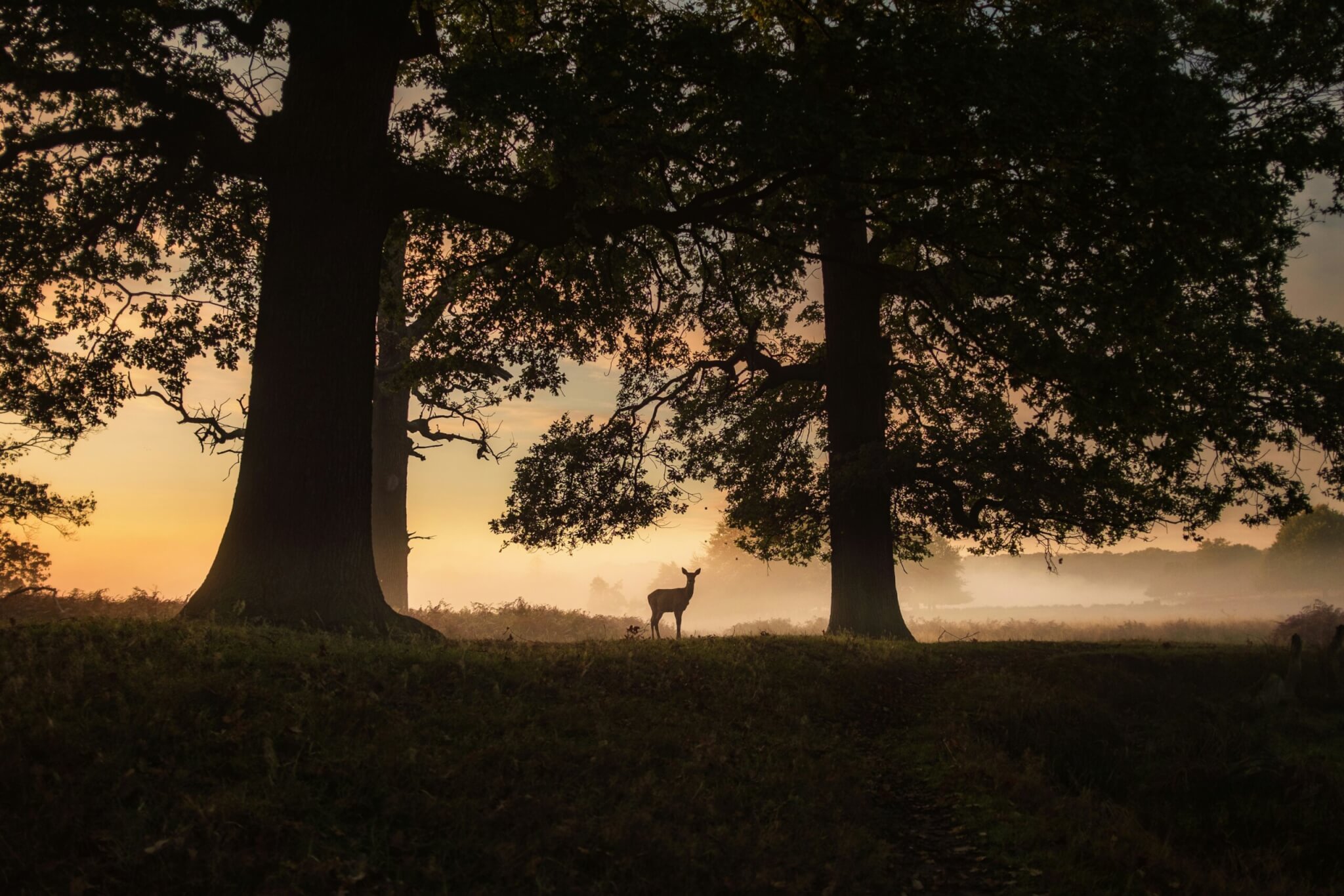
It is part of a transformation gradually taking place across Britain, where the ecological impact of an outsized wild deer population is becoming increasingly evident. There are no wholly precise figures, but estimates suggest up to 2.5 million animals, the highest in a millennium. With six species, just two of which – red and roe – are native, reproducing almost like rabbits and with no natural predators, experts say numbers are too high. Over the past 15 years, sightings of muntjac and fallow deer reported to the British Trust for Ornithology have more than doubled. The Ashdown Forest population of fallow deer is three times higher than it should be for a healthy woodland. Deer destroy crops and prevent forests from regenerating by eating saplings, and cause around 74,000 road accidents a year.
A multi-pronged effort to get the country eating more venison is underway, involving governments, public institutions and private caterers. Restaurant chefs are increasingly using it. At the Oval, Twickenham and various Premier League grounds, venison burgers are on the menu. Hospitals, universities, schools and potentially prisons are getting in on the act. Earlier this year, the Scottish government reinstated tax breaks for estates – provided their culled deer is made available for consumption.
In 2023, the NHS in England served four tonnes of wild venison; by 2025, it had jumped to 23 tonnes, driven by the meat’s low carbon footprint in comparison to other red meats, and nutritional credentials – low in saturated fat, high in many vitamins. In 2021, the East Lancashire Hospital Trust began serving local culled venison, and two years ago, the Guy’s & St Thomas’ NHS Foundation Trust, which operates four major hospitals across London, followed suit, albeit largely sourced from Scotland.
Nedko Rusev, Guy’s & St Thomas’s catering chef manager, learned of the possibility of using wild venison in 2022, after entering a competition for NHS chefs and reaching the final. Growing up in Bulgaria to a family who hunted deer – his father was part of a national government organisation for controlling the population of wild animals – he was familiar with the benefits of the meat. He worked with NHS England to introduce it in the Trust’s four London hospitals, sourcing it cheaper than beef or lamb. It is often served in a 50-50 mix with lentils in dishes such as moussaka, chili, cottage pie and casseroles, and has replaced red meat in retail, although in patient feeding there is some way to go, as changing menus requires approval from a hefty team of dietitians and nutritionists. “Some patients need more red meat so we cannot remove everything,” says Rusev, “but for customers and staff, it’s much easier.”
The feedback has been “very positive”. Some have asked why hospitals are serving “food for rich people”, he quips, adding that more than 50 hospitals in the same association of trusts now serve some venison.
Further south, Sussex Grazed is using wild venison as a way to connect people to local food, primarily through meat boxes. Part of the Brighton & Hove Food Partnership, which promotes nature recovery through food, two years ago Sussex Grazed received funding to incorporate venison into its offering. “We work specifically with deer managers culling for habitat recovery, we do not use farmed or parked deer,” says Sophie Robinson, project manager for the Food Partnership’s Land Use Plus project.
The project hopes to combat myths surrounding venison – overly gamey, expensive, a rich man’s dinner. In fact, after beef’s recent price surge, venison has become competitive. The funky flavour? That comes from eating stags killed during the rut, when their bodies are bursting with testosterone, or animals hung for weeks. “I do not recommend it – super gamey, spongey, disgusting,” says Robinson.
“We have a number of veggies, or former veggies, who will buy our venison, because they understand the system, or if they have a health issue, or just want to eat a little bit of meat, which I think is fascinating,” says Robinson. Sussex Grazed has also worked alongside catering companies to get wild venison on menus at local universities and even a group of nurseries, which has put it on its bi-weekly rotation. “A lot of the fears people may have had about not wanting to eat it because it’s “Bambi” or because it’s for “posh” people, actually haven’t come to fruition.”
Catering company, Levy, provides food for a large number of sports and entertainment venues in Britain, including Wimbledon. Last season, it replaced beef burgers and pies with venison at Brentford’s Gtech Community Stadium. It is now serving wild venison at around 80 venues across the country. “We have a responsibility and the opportunity to make a change,” says Kevin Watson, Levy’s Sustainability Director. He cites the environment, nature, and health as three main factors in introducing venison, adding that they produce 85% fewer carbon emissions than beef.
Venison, sourced from the Lake District, Scotland and the Midlands, is sold primarily in burgers in retail and steaks in hospitality. At Brentford, burger sales rose by 19% compared with the previous year. At this year’s Cheltenham Festival, 7,000 portions of wild venison were sold in the hospitality section. “It’s not about removing meat altogether, we’re not asking anybody to become vegetarian or vegan,” says Watson. “It’s about understanding where our food comes from and fits into our ecosystem.” In certain areas, often for cultural reasons, beef remains, including at Burnley FC, where beef pies are traditional. Levy is looking at switching to one beef and one venison pie next season, says Watson.
The Countryside Alliance’s Roger Seddon supports the rise in wild venison consumption. Much of our venison, he says, is exported to Europe. “We’re not familiar with eating venison, and actually finding wild venison has until quite recently been a real challenge,” says Seddon.
Supermarkets mostly sell farmed versions, often imported from New Zealand, enticed by the lower prices and product reliability – wild venison, for several reasons, is inherently less consistent. Some supermarkets have stocked wild venison, but the numbers are infinitesimal. “I want people to eat more venison, to be more familiar with the meat,” says Seddon. “In the short term, I’m happy for there to be farmed venison. But it’s such a wasted opportunity, when you could have wild venison on the shelves. But supermarkets have certain demands which are a real struggle for deer stalkers to meet.”
Despite a growing appetite for wild venison, Seddon says a key obstacle to tackling the booming deer population is cost – for stalkers. “We’ve got a lot of work to do in creating more interest in wild venison in Britain, and it’s the big catering companies that are really the focus of the momentum in this.” He says we’re currently culling around 300,000 a year, but must increase that to 500,000 for a more stable deer population.
Robinson says venison was historically “a peasant’s food. Then there was a big change in medieval times, where deer were put in deer parks to be hunted by the great and good.” Slowly but surely, and through a variety of routes, it is becoming available to all again.
It’s important to note that not everyone is in support of mass culling and the move to embrace venison – as wildlife advocate, Patrick Edwards, famously put it: “We take habitat away from wild animals and then kill them for invading ‘our’ space.”
Many animal rights organisations and conservation critics argue that killing deer to supply a venison market is both cruel and ecologically counterproductive and advocate for non-lethal population management, such as habitat modification, immuno-contraception, and exclusion fencing, rather than culling and commodifying wildlife.
Talking to the BBC, a spokeswoman for the animal rights campaign group People for the Ethical Treatment of Animals (PETA) said that “removing deer from the landscape doesn’t stop their numbers from rebounding, and, in many cases, a temporary reduction in population leaves more food available per animal, which can increase breeding rates in the survivors.”

The butchers on my area do not stock venison yet there would be plentiful supplies (Derbyshire Dales, Cannock Chase etc). I put this down to the fact that customers aren’t asking for it so they don’t want to get stuck with a carcass they can’t sell.
Once more, it seems education would be the way to go. How do we get the message across to customers? Is there any kind of umbrella body which could organise tastings etc? Costly perhaps but it might help.
I can buy pre-packed venison burgers (wild Scottish) and very occasionally venison steaks from Morrison supermarket once, memorably with a reduced sticker, from the Co-op—clearly it wasn’t a goer in Barton-under-Needwood! But I want to buy my meat unpackaged from a butcher, not pre-packed from a supermarket.