
As Head of Sustainability at Riverford, Zac knows more than a thing or two about the simple choices we can all make, that go on to have cumulative, measurable, positive impacts on the planet. He’s also used to making tough, imperfect, but ultimately necessary choices – both at work and at home, as a dad with a young family.
That’s the thing with sustainability – there’s no such thing as “perfect”, but being curious, asking the right questions, and trying to do things just a little better than before, is where it’s at. In this new series, we’ll explore how to take a sustainable-ish approach to everything from our homes & gardens to our shopping, food, tech & energy usage.
There are a thousand deep and philosophical quotes about the importance of water; “Water is life”; “When the well’s dry, we know the worth of water”; “The water cycle and the life cycle are one”. And they are spot on. We can muddle through a power-cut, a boiler breakdown, and (hopefully) through an oil crisis, but our world will very quickly come crumbling down without a plentiful supply of clean water.
This is what makes the state of the UK’s waterways, and increasingly, the availability of water in the UK, of crucial importance to how we can all try to live a little more sustainably.
The UK water system
The landmark report ‘The State of Our Rivers’ in 2024 highlighted that 0% of our rivers in the UK have good overall ecological health status. This is driven by two major impacts: sewage and agricultural practices. Sewage is easier to point the finger at – outflow pipes regularly dump raw sewage into our rivers, lakes and along our coastline. Agriculture is harder to determine as it is a diffuse form of pollution.
Water Supply and Sewerage
Whilst we can feel powerless – particularly when we have little choice but to pay the corrupt water companies that serve 99% of the population – there are ways we can make some sustainable choices about how we use and interact with water at home.
99% of the UK population is on mains water from water companies. 1% use springs boreholes, rainwater harvesting, or other non-mains supplies. It is possible to purchase you own rainwater harvesting set-up but it can get expensive to get a system that will meet all your household water needs (up to £10,000).
Sewerage is similar in that 96% of the country is on mains drainage and the remaining 4% is on private supplies like septic tanks. However, septic tank collections are mostly aggregated in facilities handled by regional water companies – leading to the same outcomes as household sewage on mains sewerage.
Limiting negative impacts on water coming out of your house include:
- Only flush human waste and toilet paper – never wet wipes or anything else!
- Use cleaning chemicals and laundry detergents that use plant-based surfactants (often derived from coconut) rather than petroleum-based ones.
- Look for formulas that are fully biodegradable and break down safely with zero harm to aquatic life.
- Avoid detergents containing phosphates, chlorine, artificial fragrances, dyes, parabens, and EDTA.
Microplastics
It’s been evidenced for some time that we are putting a lot of microplastics into waterways from our laundry – synthetic fibres shed microplastics in every wash, and these pass through the waterways and ultimately out into the ocean. Some estimates predict 35% of microplastics in the ocean are from laundry. A great way to tackle this is by using microfibre filters for your washing machine like Guppyfriend or Cora Ball.
Tap Water
Tap water in the UK also exposes us to microplastics. Studies show how microplastics can be present at a rate of between 6 and 100 particles per litre of water across UK tap water. One way to tackle this is with a water filter integrated into your kitchen sink, either at the tap end, or under the sink.
While it can be difficult to find wholly unbiased, independently and rigorously tested reviews for water filters, we have found this review by the Environmental Working Group helpful, as it tests across a range of transparent parameters and provides a clear breakdown of the filters that performed best at PFAS reduction. EWG is, however, an American organisation, so while many of the models are available in the UK and Europe, prices on the website are in American dollars.
Here are some top tips for how to reduce water usage in the home
In the Kitchen
- Aerated faucets can cut water use by 50%, and cost as little as £5
- If you have a dishwasher, don’t do half loads. Dishwashers typically use less water than washing by hand in the sink but this only applies if you’re doing a full load.
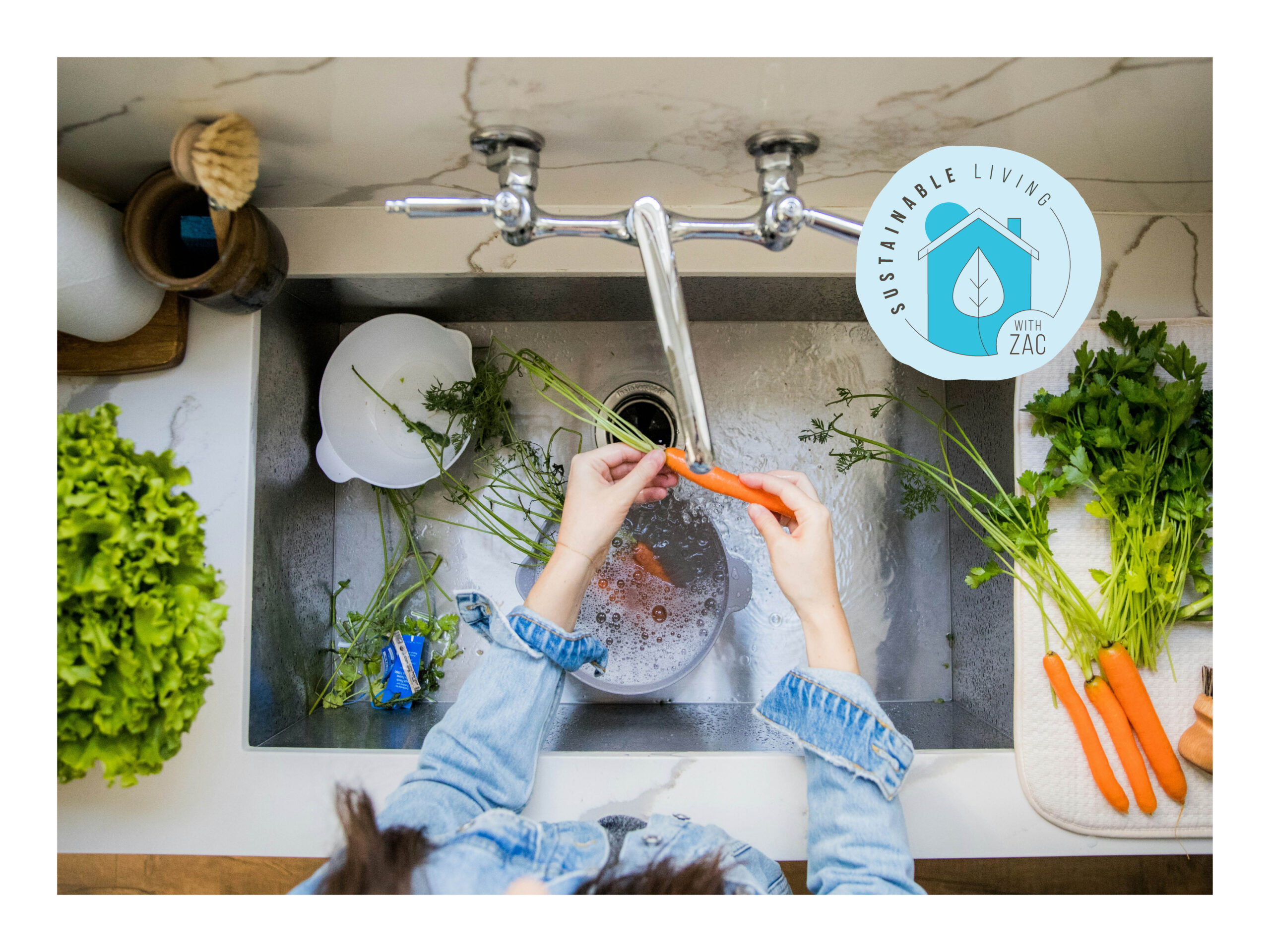
- Use a washing up bowl or put the plug in when washing up, or when washing fruit and veg, rather than just running the tap. You can then use the water for the garden (interested in a Greener Garden – read our feature with Zac, here).
- Steam your veg. It uses less water than boiling a big pan and retains more of the vitamins and minerals.
In the Bathroom
A few common-sense tips that are nevertheless effective:
- Switch to aerated faucets
- Screw-on, low flow showerheads are easy to install – saving up to 50% of water from as little as £10
- Take short showers (2-3 minutes) rather than baths
- Turn the tap off while brushing your teeth
- Repair leaking toilets (this can save between 200 and 400 litres a day!)
Zac has an MSc in Food Security and Sustainable Agriculture and in his spare time he is a director at The Living Projects CIC, a community- and education-focused regenerative land management project. His new sustainability series for Wicked Leeks will cover home, energy, travel, water and more – you can also follow along via Instagram @Riverford.





0 Comments