
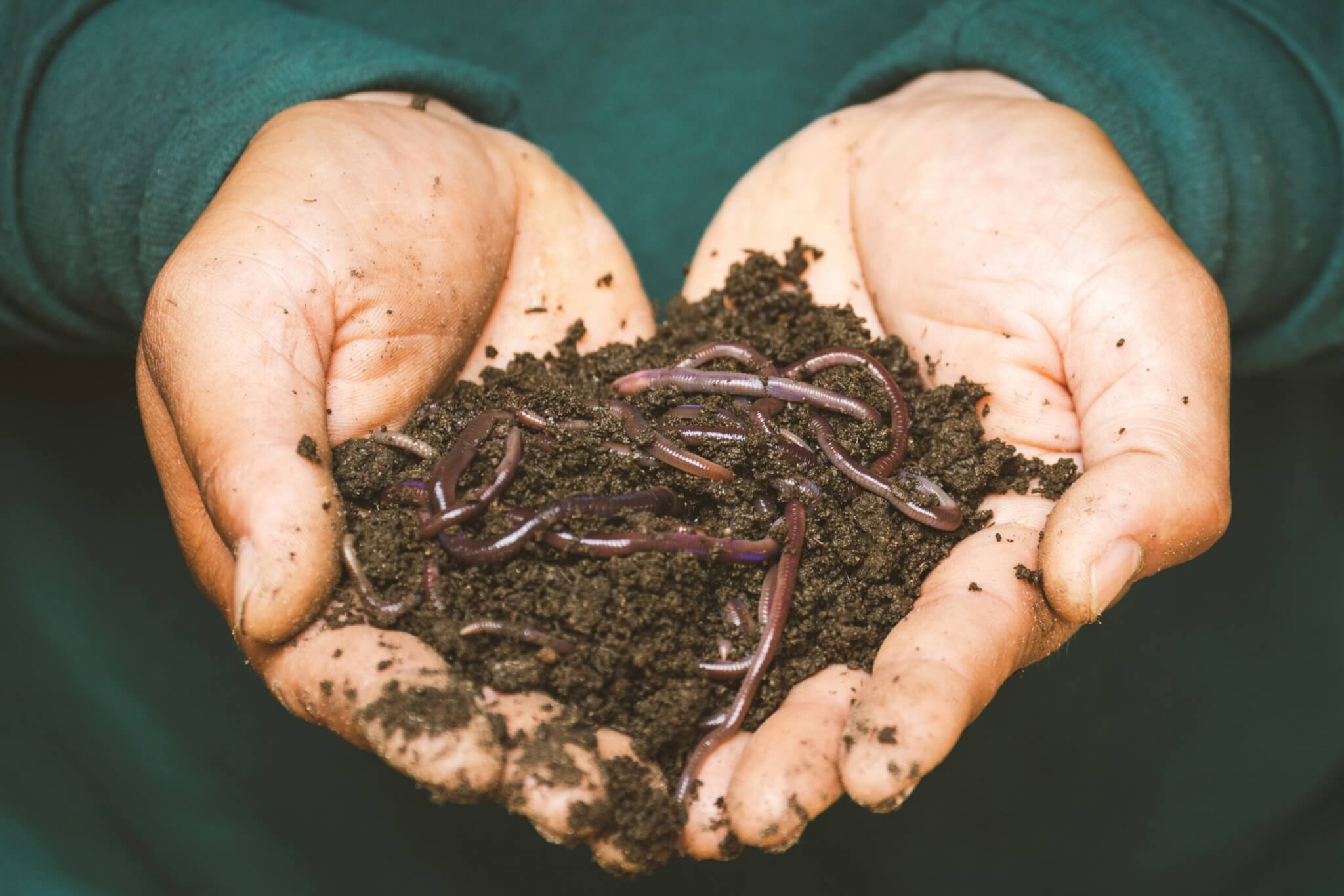
“To be a successful farmer one must first know the nature of the soil.” Xenophon, Oeconomicus, 400 B.C.
As consumers, we have become a lot more aware of the food we buy — where it’s grown, whether it’s organic, even how nutritious it is — but we may not extend that to thinking about the way the soil itself has been treated and cared for.
Yet taking care of the soil and preserving its health and fertility without resorting to pesticides, synthetic fertilisers or other practices used in conventional (non-organic) farming remains one of the biggest challenges facing organic farming today.
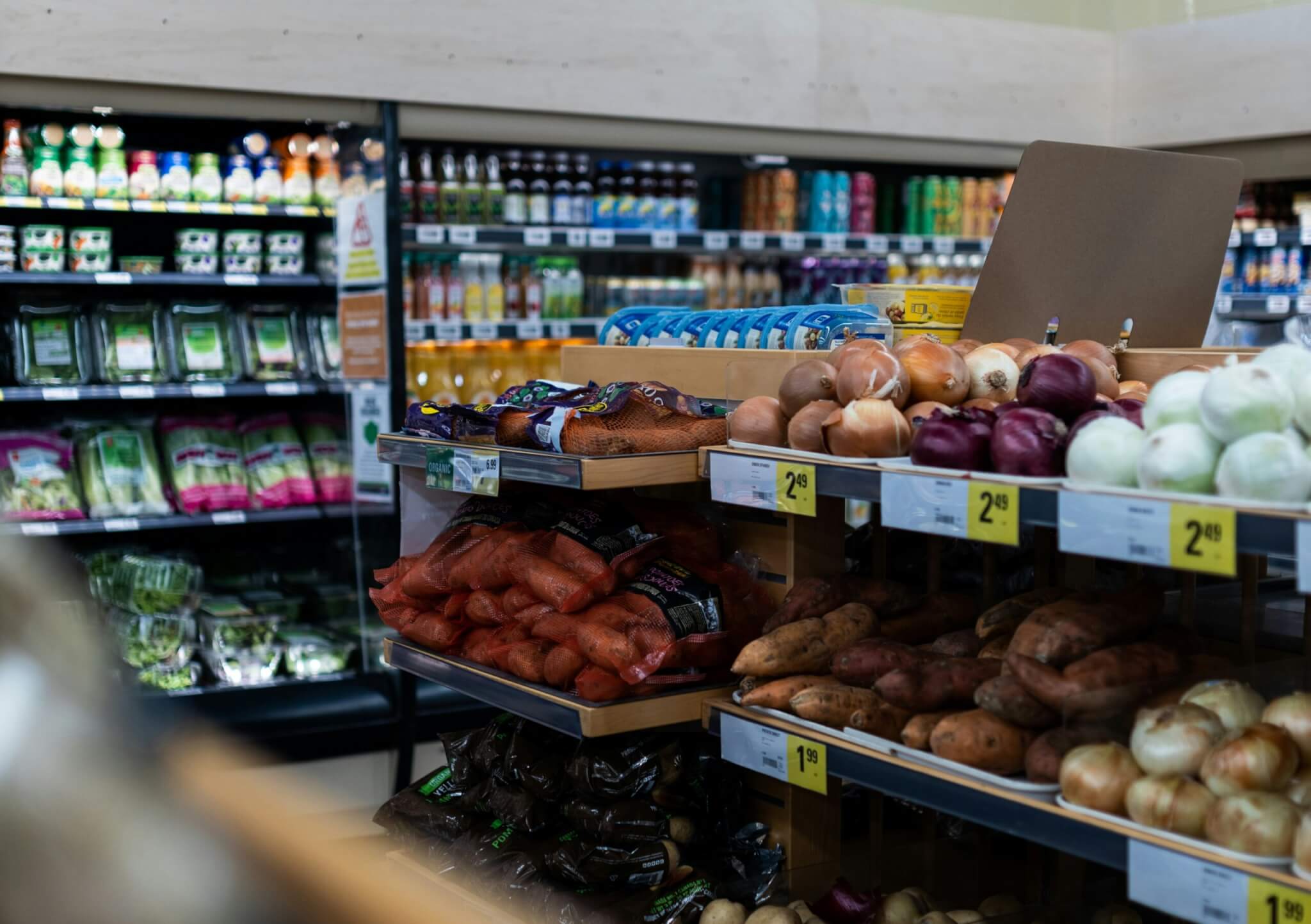
Growing external pressures from retailers to produce quick, high yields along with stringent requirements for visually appealing produce tends to favour more intense, high-input, high-output farming methods over organic ones, where more can be artificially controlled.
That’s why funding is so crucial to organic farmers. In fact when the Sustainable Farming Incentive was paused in March of this year, a poll conducted by the Country Land and Business Association (CLA) showed that 88% of farmers would revert to intensive farming methods if funding for the Sustainable Farming Incentive (SFI) and Countryside Stewardship schemes were withdrawn. DEFRA clarified funding in June, but this level of uncertainty around subsidies can certainly make organic practices feel riskier and less viable.
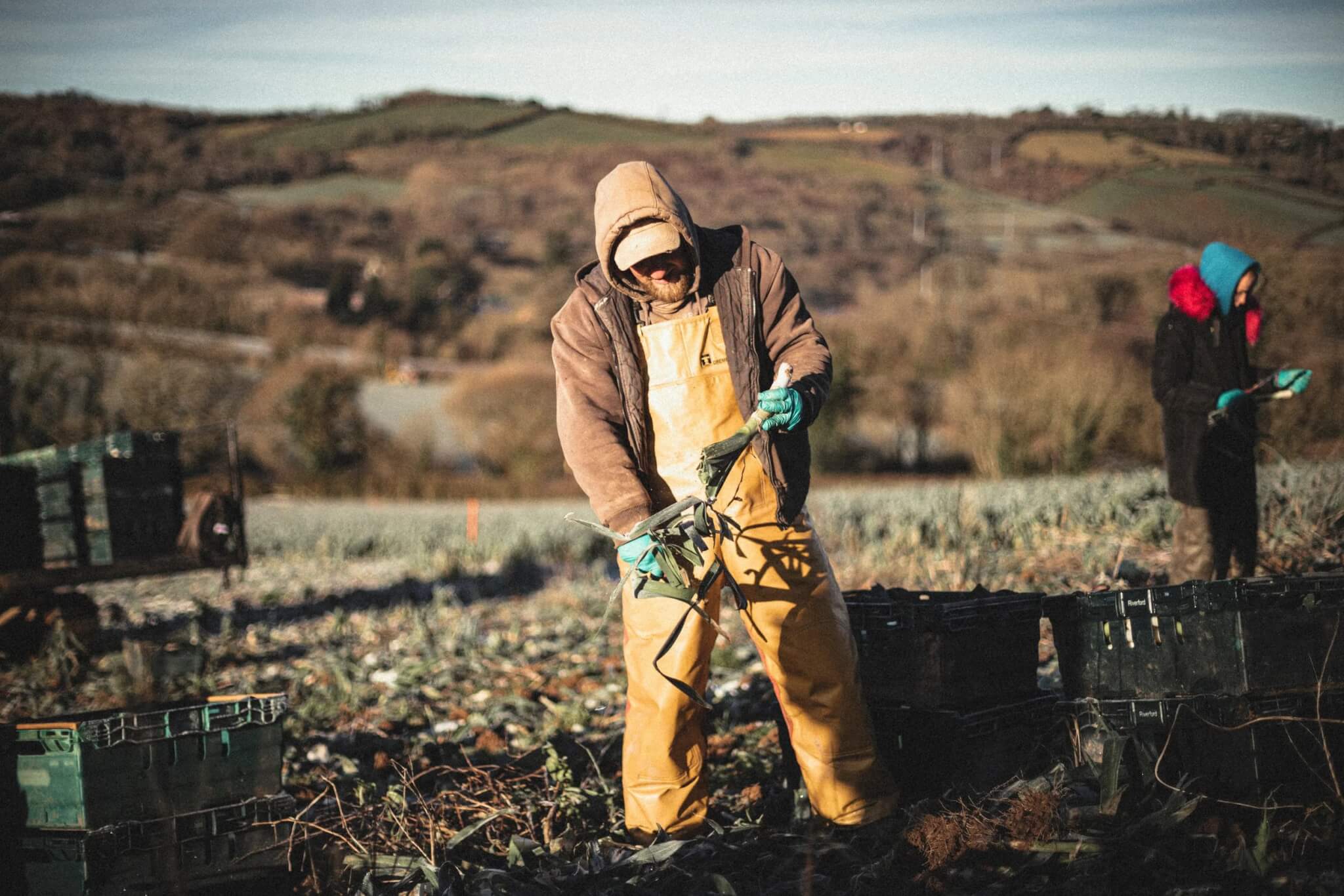
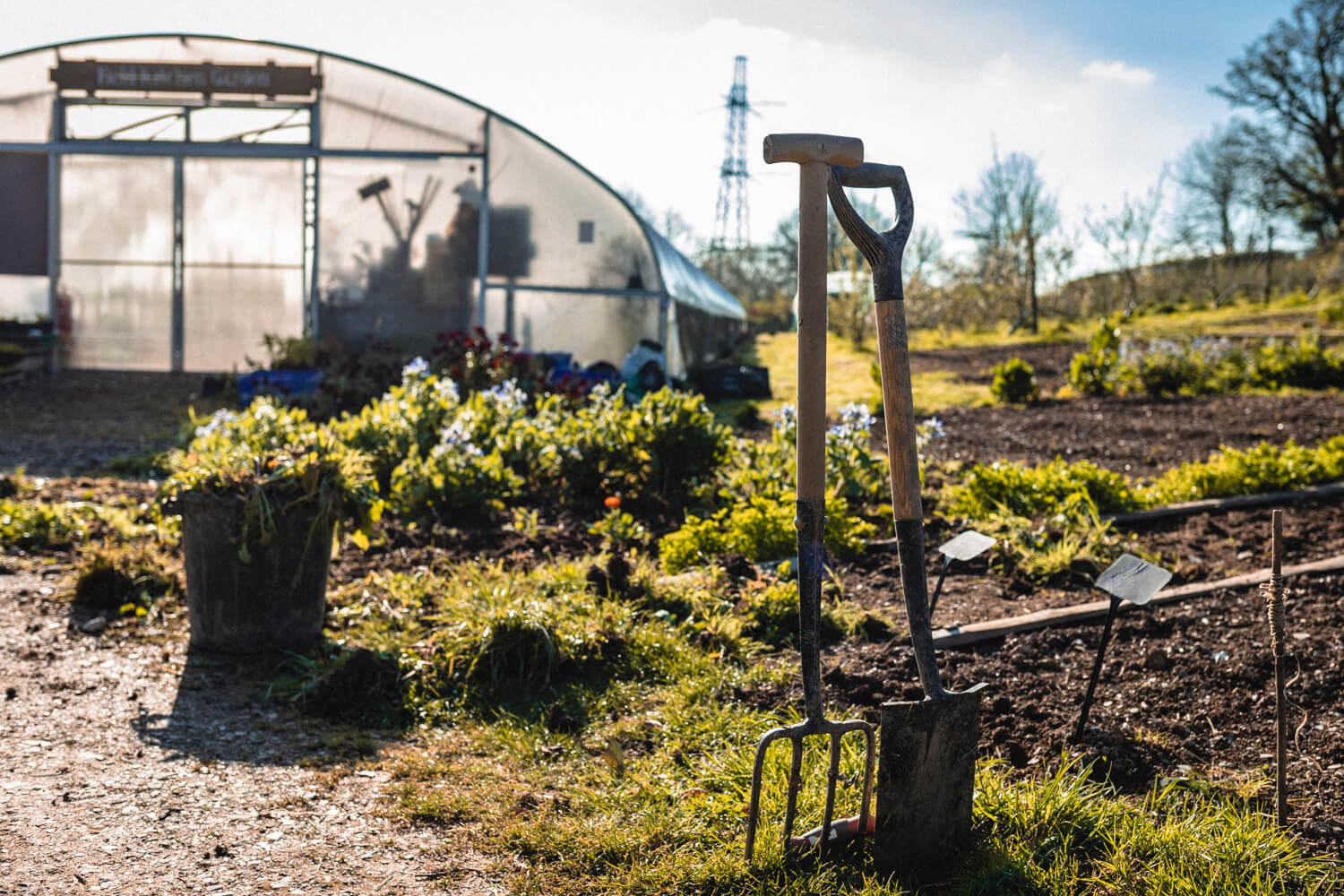
In spite of this, many organic and regenerative farmers persist in treating the land with natural methods and in accordance with its natural living cycles to keep it fertile and healthy. Among these are crop rotation, cover cropping — planting crops like clover and rye while fields aren’t producing food, and compost — piling up food scraps, manure and plant residues, and letting them decompose. These practices keep pests and weeds controlled and ensure the different layers of the soil don’t get depleted and maintain their structure and water-retention ability.
Despite once being thought of as dead matter, soil is very much alive – home to abundant life. Just one handful contains billions of microorganisms, which varying crops help sustain, working together to break down organic matter, cycle nutrients and even communicate with plant roots through chemical signals.
We have only been able to culture 1% of these microorganisms, so there is a lot that remains to be understood about soil’s inner life and role in supporting plants. Yet what we do know is that everything we grow is dependent on it. As American soil scientist Charles E. Kellogg observed in USDA Yearbook of Agriculture, 1938: ‘Essentially, all life depends upon the soil … There can be no life without soil and no soil without life; they have evolved together.’ And Patrick Holden, UK organic farmer and co-founder of the Sustainable Food Trust, states that ‘Soil isn’t just the ground beneath our feet — it’s more like the earth’s stomach’ and calls the topsoil ‘a vast digestive system … the collective stomach of all plants.’
Like any living system, soil needs space to breathe, and that’s what organic and regenerative farming provide. Doing so brings us our own health benefits by enhancing soil and microbiome biodiversity, which may in turn enrich the antioxidant, mineral, and vitamin content of the fruits and vegetables we eat, as microbes make minerals more bioavailable. Even smelling soil can have a surprising benefit, as a certain bacteria contained within it, Mycobacterium vaccae, which thrives in undisturbed, microbially active environments, has been shown to boost serotonin just from breathing it in. Well cared for soil also contributes to the wellbeing of the planet, slowing climate change by sequestering carbon and reducing fast-release nitrogen pollution which can leach into the air and rivers.
Then from a purely production perspective, long-term research carried out by the Soil Association and the Rodale Institute, a US-based regenerative agriculture nonprofit organisation, has consistently shown that it can become more productive over time due to its increased resilience against disease, weather extremes, and improved moisture and nutrient retention, as well as being better for wildlife.
The long-term benefits of letting soil regenerate and follow its natural cycles are really too important to ignore, and not doing so leads to degraded soils. The Save Soil initiative reports that around 40% of British farmland soils are now degraded, weakening their structure, reducing their ability to hold water, and making land and crops more vulnerable to droughts and floods.
“Being organic is something that we are fundamentally committed to whether there’s funding or not. It’s organic by name and it’s organic in complete essence,” says Amy Kelso from Fen End Farm in Cambridgeshire, where her family has been for the last 22 years, having converted the 117-acre space to an organic farm in 2003.
“We believe in treating the land and animals well.” They manage their soil by using grazing and a rotational system, where any poisonous weeds are hand-dug. “We are lucky that the soil is very fertile. We used to dig in the ground without finding a single worm; now we can’t dig without finding hundreds of worms.” And how do they manage pests when it comes to their apple trees? “We don’t use any pest control. Whether it’s the symbiosis of everything that lives here, diseases on trees don’t seem to spread.”
It appears that for them being organic is much more a way of life than a label. Just as well, because achieving organic status on the final produce is mired with complications of extra paperwork for dual-accreditation status, legal loopholes, time, and cost constraints, as well as the lack of support facing organic farming generally.
“One thing we found very frustrating is that we have an apple orchard where we produce organic apples. To sell it organically we have to pay to get it bottled four hours away, as unless people that bottle them have organic accreditation, it loses its organic status.” They face the same problem with their beef herd, where the butcher too needs organic accreditation. As she puts it, “Everything is organic until the last hurdle.”
So how do they make it commercially viable? “We are lucky to have other income streams so we don’t face the same commercial pressures. If that was our only income stream, we would feel intense pressure.” And she knows other farms facing this exact predicament.
So, what are the rewards of treating the land organically? “The massive increase in wildlife we’ve seen on the farm since we’ve been here. More birds, more insects. We’ve planted lots of trees. We think that the land is not just for us; it’s for all the animals as well and the wildlife.”
How many more farmers would, if conditions allowed, live more symbiotically with the land they cultivate and enjoy experiencing these same rewards of bringing life to land as Amy and her family have done?
The question becomes: can the institutions that support farmers embrace the benefits of working with the earth and soil, rather than against it?
“We spend our lives hurrying away from the real… It must be somewhere up there on the horizon, we think. And all the time it is in the soil, right beneath our feet.” Dirt: The Ecstatic Skin of the Earth


0 Comments