

Each May, after their long journey back from Sub-Saharan Africa, swifts return to British skies ready to nest and take advantage of the long summer days. This year, in the small Devon town of Buckfastleigh, their arrival carries an extra layer of anticipation, following a project by local residents to protect and increase their numbers.
These remarkable birds are among the most aerial creatures on Earth. Swifts spend almost their entire lives in flight – eating, drinking, even sleeping in the air. They only land to nest. Once young swifts leave the nest, they may not touch land again for several years.
Over a lifetime, a swift can travel an estimated four million miles, roughly the equivalent of flying to the Moon and back eight times. They have been an incredibly successful species, estimated to have changed very little in over 47 million years.
Yet despite their incredible resilience, swifts are now in serious trouble. In the UK, numbers have fallen by around 66% since the 1990s, and the species is now on the country’s Red List of Birds of Conservation Concern. The main reason is surprisingly simple: a lack of places to nest.
Swifts depend almost entirely on our buildings for nesting sites – nesting in small gaps in eaves or soffits. As older buildings are renovated and sealed, and modern homes are built with smooth, wildlife-proof finishes, these small spaces disappear, leaving returning birds with nowhere to raise their young.
In 2025, Riverford Organic Farmers donated some of the money from their small in-house ‘Giving Back Fund’ to the Devon Swift Project, a community-based swift project in the local town of Buckfastleigh, in South Devon.
The Devon Swift Project was founded in 2023 by Jerry Horn, Devon Birds, and Will Watson (who now runs Riverford Dairy with his dad, Oliver) and has a workshop based at Riverford Dairy. They have already installed 2382 swift box chambers in over 60 churches across Devon. This was their first community project, successfully inspiring local people to install boxes on their buildings throughout a town.

The project began with a talk at Buckfastleigh’s community centre in July, led by swift expert Jerry Horn from the Devon Swift Project. Almost 40 residents attended, curious to learn more about the birds that swoop through the town’s evening skies each summer. Some residents had already been watching the swifts for decades, including Virginia, who recalled how over the last 40 years, the swift numbers have reduced by around 70% in the town – falling from an estimated 100 in the 1980s to around approximately 30 now.
During the talk, homeowners and local business owners signed up to have their properties assessed for suitability for swift nest boxes. In total, around 20 houses and the local primary school were identified as suitable locations.
Before long, the project became more than just a conservation effort, it turned into a social one too. Jerry began building bespoke nest boxes, and residents gathered for an evening workshop to help assemble them in late summer. Hammers, drills, and enthusiastic conversation filled the room as neighbours worked side-by-side to construct their boxes.

By the end of the project in autumn 2025, nearly 40 new nesting boxes had been installed around the town. It is hoped that after the initial funding from Riverford, the town can bring in extra funding from elsewhere to install further boxes and involve more residents. Many residents were disappointed to have missed out in 2025, and so fingers are crossed that 2026 will see more boxes installed (the local nature group are busy applying for funds to make this happen!).
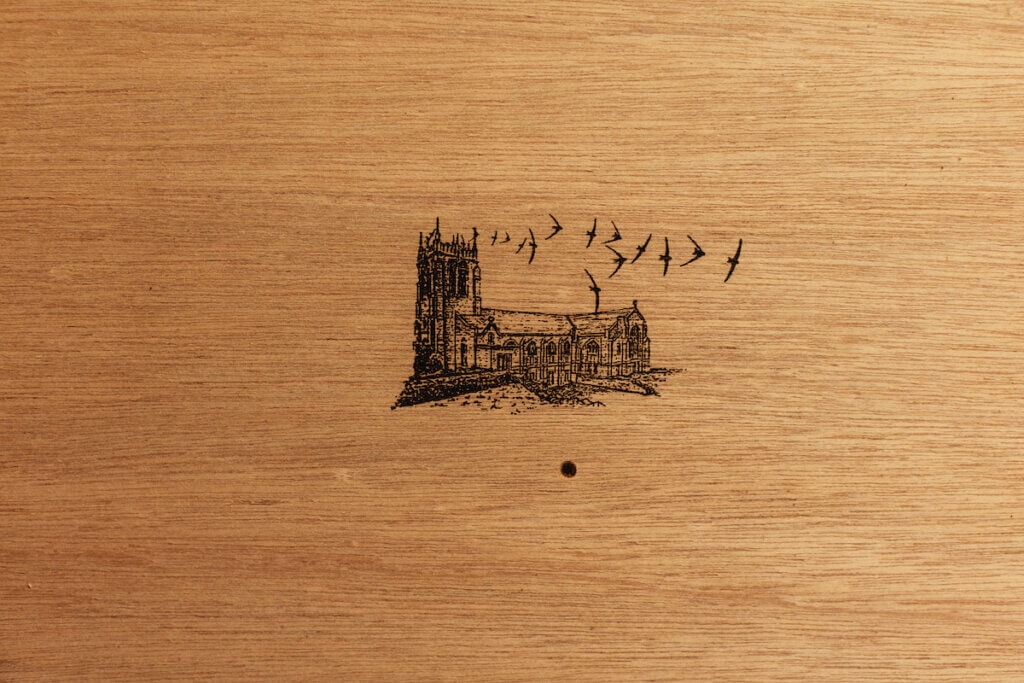
Those involved so far have stayed connected through a shared WhatsApp group, swapping news and swift-related facts. Notably, the Scottish government’s decision to ensure swift boxes are included in all new build houses, contrasted with England’s failed attempt to do the same.
As spring approached, the sense of anticipation was palpable. It can take two or three years for swifts to adopt new nest boxes, but occasionally they move in immediately. For the people of Buckfastleigh, the wait has become part of the excitement, and a shared sense of collective hope is helping to bring people closer.

There’s also an element of friendly competition too – who will be first to have a swift turn up and prospect their nest? Who will see the first successful fledglings?
Charlie, one of the residents involved, says the experience has been eye-opening. “It has been so great to be a part of this project already and we have only just begun. Jerry has an infectious enthusiasm for swifts that has made a lot of people in the community excited about their future in our town. In just a few chats with Jerry, I’ve learned so many amazing new things about these unique, super-sensory animals.”

For Charlie, nesting boxes offer a rare chance to connect with wildlife in a respectful way. “People love to have close interactions with wildlife, but often direct interaction is invasive and takes something away from the animal. Putting up a nesting box is such a brilliant way to connect directly with the life of a swift, and to share in that bird’s day-to-day life and the future generations that might follow.”
“Swifts make these extreme journeys,” Charlie adds. “They need to be able to find suitable nesting sites when they arrive in the British Isles. The shortage of these sites is helping to drive them towards extinction. One town choosing to become a Swift Town could literally be the difference between this endangered species making it into the future or going extinct.”
Charlie is unabashed when asked what success would look like. “I will probably weep with joy when I first hear the chirping of baby swifts from our nestbox.”
For another resident, Virginia, who now has a further three nest boxes thanks to the project, swifts have been part of life in Buckfastleigh for decades. Despite growing up in the countryside, she says she barely noticed the birds until she moved to the town 38 years ago.
“I arrived in May 1988 just as the swifts were returning from Africa,” she recalls. “Gangs of 50 to 100 would swoop and shriek down Market Street, flying just above the cars and clattering into their nest sites under the eaves.”

Fascinated, she began learning more about them, and soon began to notice their decline – worrying about the gradual loss of nesting spaces as older buildings were renovated. Around 15 years ago, she decided to take matters into her own hands, installing six nest boxes on her own house.
Although swifts usually take a year or more to move into new boxes, one pair wasted no time.
“I had swifts nesting in one box within a couple of weeks of installing it. Rarely in my life have I felt so happy. Unlike many birds, swifts cannot easily just find somewhere else to nest,” Virginia explains. “If they return and their nest site has been sealed up, it can be catastrophic.”
Each summer, she spends evenings watching the skies from May to August, tracking the comings and goings of the birds that nest nearby.
“There is little more joyful than spending a summer evening watching the swifts prospecting, flying, and screaming before disappearing into the clouds or into their boxes.”
“We are very pleased to have four new swift boxes installed from the Devon Swift Project,” says another resident, Katheryn. With a “swift caller” – a small speaker that plays recorded swift calls to attract passing birds – the family hopes their home may soon host breeding pairs.
“It gives us the wonderful opportunity to share the exterior walls of our home with potentially four breeding pairs and hopefully the next generation of swifts to be raised in this area for many years to come.”
But for Katheryn, the benefits go beyond wildlife conservation. “I feel this project has brought the community together,” she says. “It’s created a sense of shared anticipation, a new optimism, and the desire to work together for the better good – not just for the swifts and other species, but for the community and the individuals themselves.”

The town’s new network of nest boxes may not be filled immediately (patience is a crucial part of swift conservation) but every box represents a chance: a safe place for a returning pair to raise their young after their long journey, and a chance to compensate for the loss of nesting spaces over the last few decades as homes have become modernised.
And if even a few of those boxes welcome winged inhabitants, the people of Buckfastleigh will know their efforts were worth it.
In an age of rapid biodiversity loss and climate crises, doing something practical and close to home can feel so rewarding, and help ease the sense of helplessness we can all feel. And if we can make connections with other likeminded people in our community at the same time, then even better.
Words by Devon Swift Project volunteer and Riverford Sustainability Researcher, Anna David. All photographs by Emma Stoner.

0 Comments