
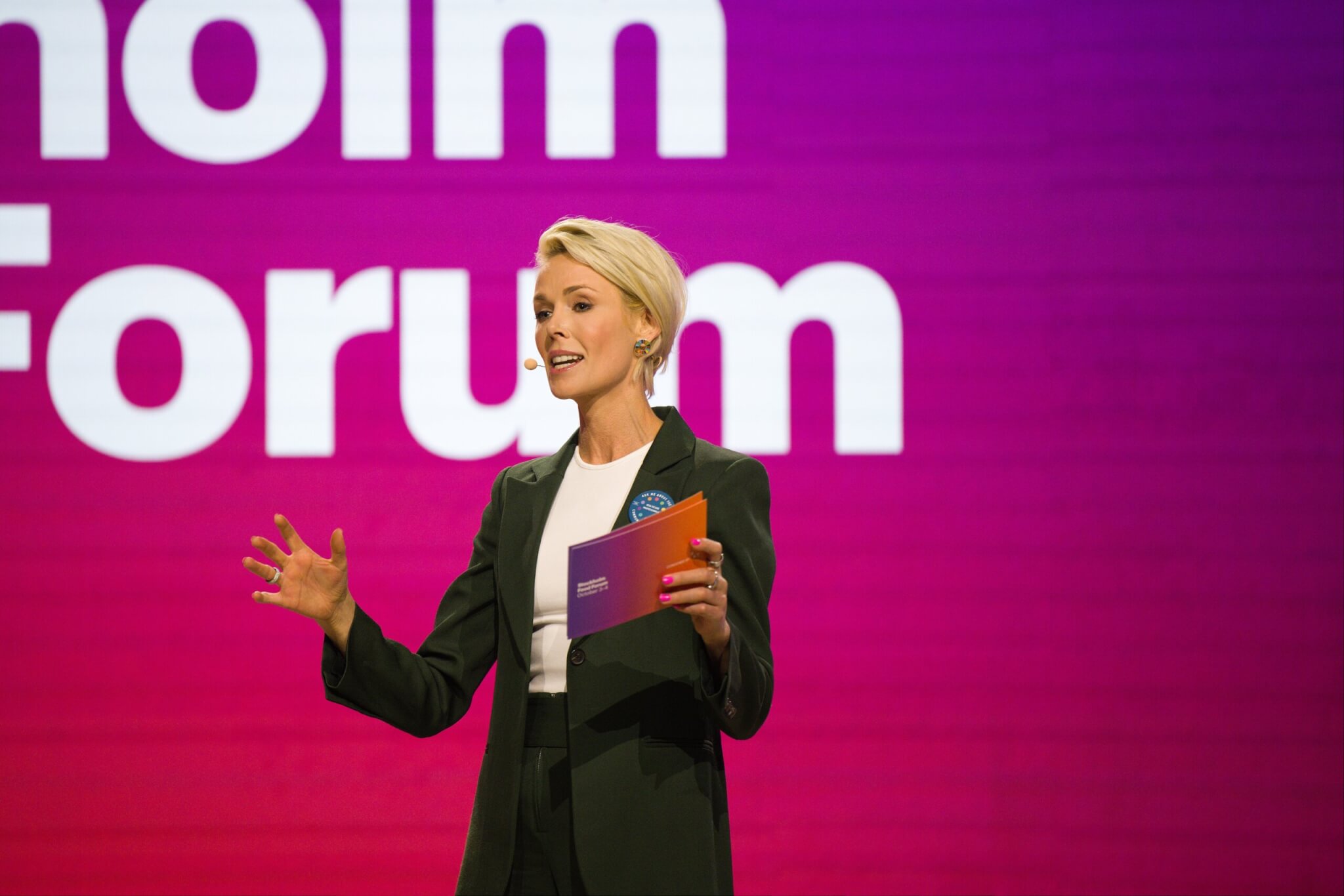
Can we feed close to ten billion people in a way that keeps humanity and the planet healthy? It’s a question that Gunhild Stordalen who heads up the team at EAT, an organisation focused on shaking up food and farming, have been asking for over a decade. It’s possible, but action is needed now.
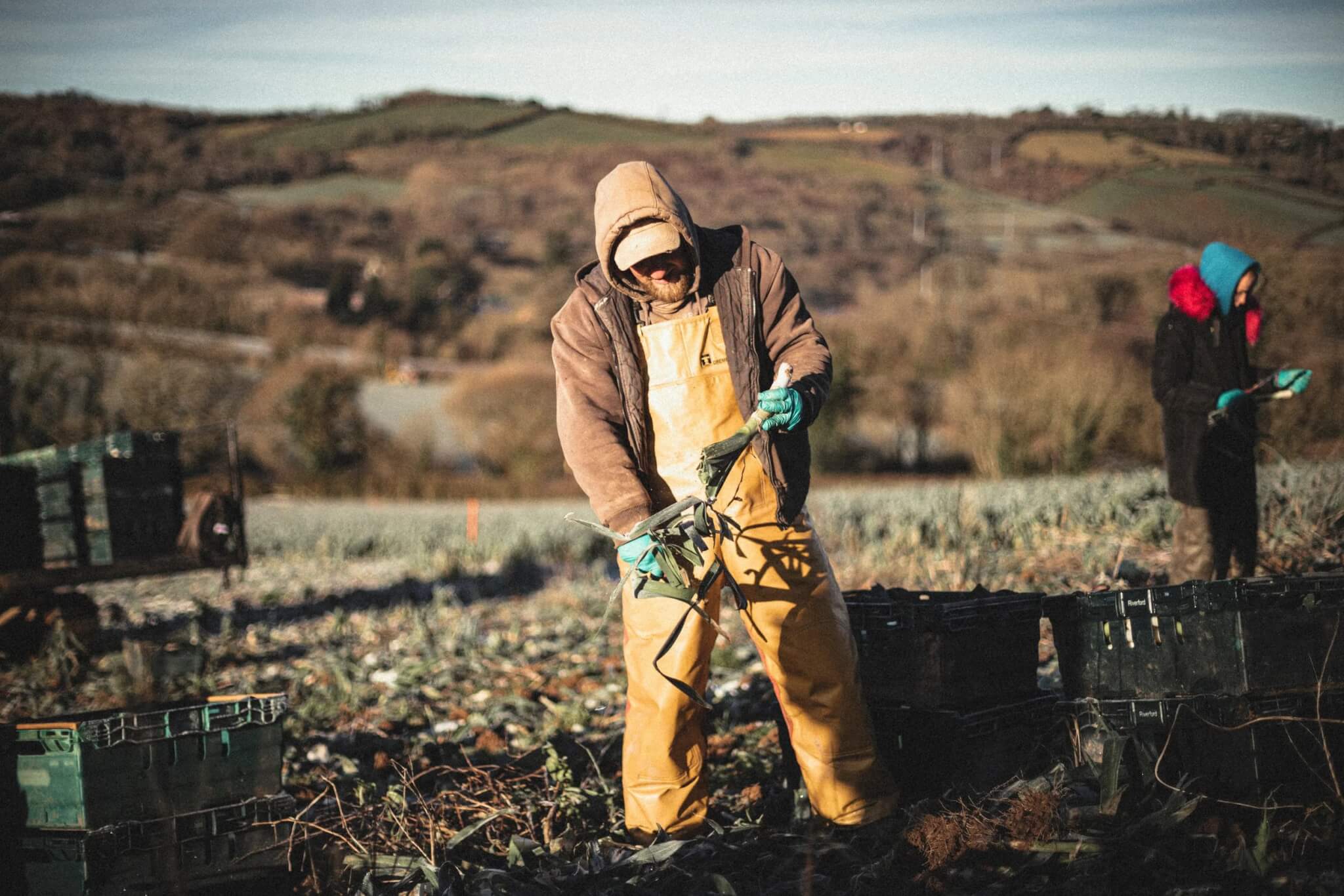
If there is one activity on earth that has a profound effect on planet warming gases, it is how we feed ourselves. A third of all global greenhouse gas emissions are produced from field to fork. At the same time, agriculture is decimating biodiversity and polluting waterways, while great swathes of the food and farming system aren’t delivering what humanity needs.
“A third of people globally cannot afford or get access to a healthy diet, and over 50 percent of some populations are living with at least one diet-related disease, while a third of farm workers are earning below a living wage – this all needs to change,” explains Gunhild Stordalen, the founder and executive chair of EAT.
“And even if we completely phase out fossil fuel use tomorrow, business as usual for food and farming will still push us above the 1.5 degrees Celsius threshold that everyone is talking about. The only way forward is a transformation of our food system. It’s already happening, but it’s not fast enough. The next decade will be decisive. What keeps me up at night is the urgency of this task.”
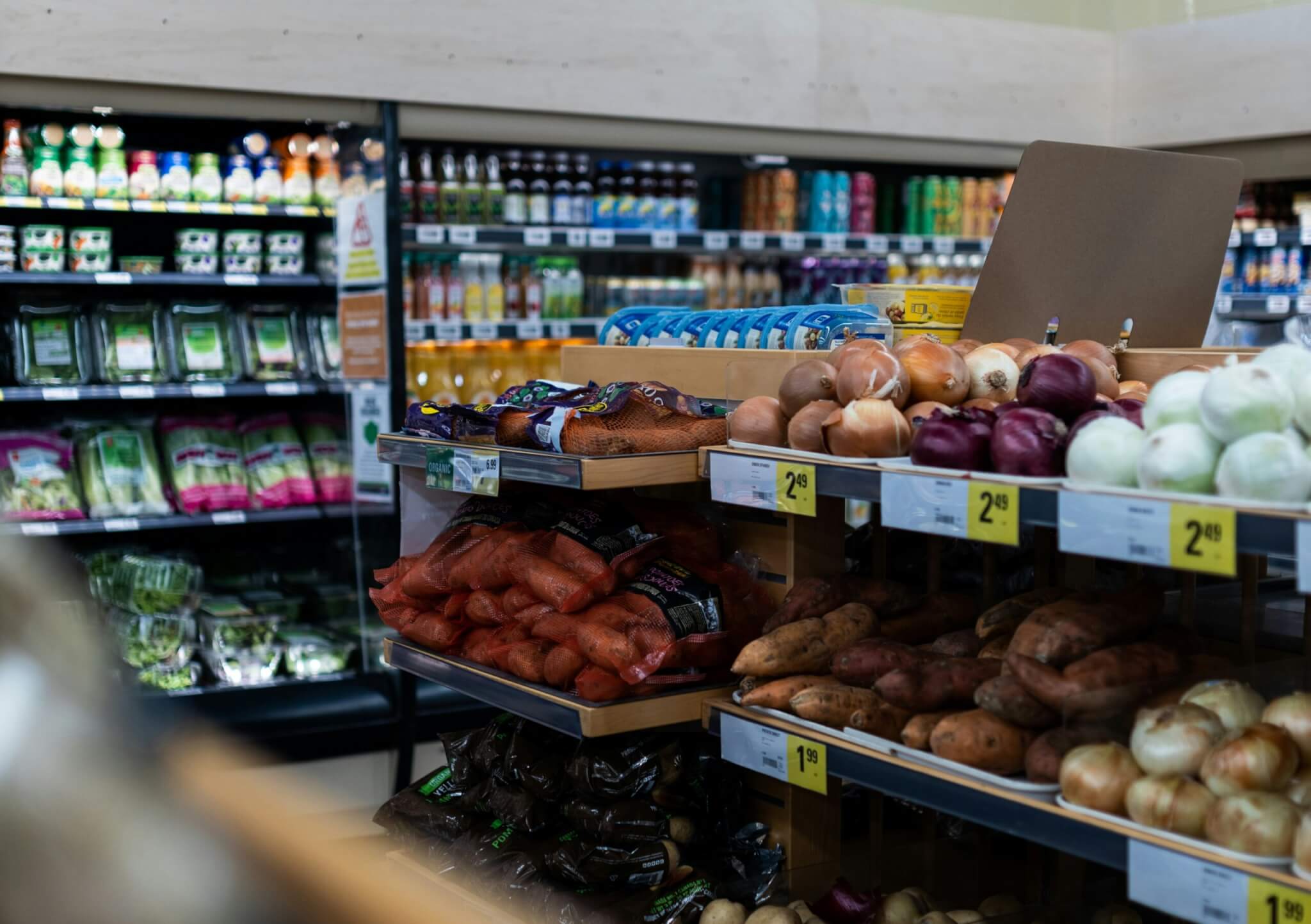
Gunhild has been a driving force behind getting the recent 2025 EAT-Lancet Report set up. A respected scientific research paper involving experts from 35 countries which shines a light on the global challenge and solution: the wholescale adoption of a plant-rich, planetary health diet, produced in a sustainable way. This involves doubling the worldwide consumption of fruits, vegetables, nuts and legumes.
The report states that such a diet could prevent 15 million premature deaths a year. Today, in most regions, consumption of many healthy foods is low, including vegetables, fruits, legumes, nuts and seeds, as well as wholegrains. Increasing consumption of these foods is crucial.
“The most challenging issue is dietary shift, especially in high consuming countries, which includes the UK. We need to change the entire system, value chains, and support farmers. Shifting consumption patterns is also essential. This is not about dictating what’s on peoples’ plate. But we need to produce more healthy and sustainable foodstuffs, that are more affordable, aspirational, and at the same time attractive and delicious. This is where we have work to do,” details Stordalen.
EAT says double global veg production
The latest EAT-Lancet report shows that our current global food system may be worth US$10 trillion a year, but it actually leads to roughly US$15 trillion in hidden costs either due to healthcare burdens or environmental degradation.
However, if we transform what we eat and grow, the food system could deliver more than US$5 trillion a year in health, productivity, and environmental benefits. But it comes at a price – US$200 billion and $500 billion investment a year, which is potentially a small price to pay.
“The biggest takeaway is that this is doable. A planetary health diet is within reach, and many traditional diets around the world fit within this eating pattern. We have the knowledge and the solutions, we just need to choose to unite and make it a reality. Whether this involves agricultural subsidies, public procurements or changing dietary guidelines all these elements have to start working together in order to attract investment, research and development,” states Stordalen, who co-founded EAT, 12 years ago.
The Norwegian adds: “We also need to start rewarding more of what we value, shifting us away from just producing more calories to producing better, more sustainable food stuffs, which are diverse and healthy for human consumption. The science is clear. The economics of this are a no brainer. We can’t afford to continue with business as usual.”
Gunhild talks about food as if it is one of those truly ‘wicked problems’ – difficult to solve because of its complex, interconnected, and constantly changing nature. You’ve also got multiple people, governments, organisations, and private interests involved, conflicting values and no single solution. Whereas most people see challenges, Stordalen is not afraid to tackle the big picture, at scale, head on.
“By 2035 I hope we will be out of business at EAT, but I’m worried that we might not. It depends on how fast we’re able to accelerate change. Humanity is running out of time. There are challenges with vested interests that have powerful lobbyists. Then there’s the short termism and policy silos. Governments still tend to do one thing in the ministry of agriculture, which is contradictory to what happens in the ministry for the environment or in health or finance,” details Stordalen.
She continues: “Misinformation is also now a real serious issue and a difficult challenge to navigate. The debate has become increasingly polarised in the past few years. That’s why we double down on action-focused dialogue and focus squarely on what the science is telling us. We certainly need more brave conversations, better understanding, more innovation and to build trust across sectors. There is also no one single policy or action that will do the trick. There is not one silver bullet.”
Can we feed the planet sustainably?
It was answers to scientific questions that drove Dr Stordalen to set up the EAT Initiative in 2013 with Professor Johan Rockstrom, now director of the Potsdam Institute for Climate Impact Research and the Stockholm Resilience Centre. The aim was to connect the dots between food, health, sustainability and climate. The first EAT-Lancet report back in 2019 was one of the most cited scientific papers on food systems change and also one of the most hotly debated.
She explains: “When we started there were very few people asking the question ‘is it even possible to feed a growing population, with enough healthy food, without wrecking the planet?’ No one had the answers. So that became the guiding question for our work going forwards. Over the years, EAT has really helped ignite what is now a growing global food systems movement. It’s not just about health, sustainability and justice. It’s also about building economic resilience and a productive workforce.”
In the last year, in order to tackle the issue at scale, Gunhild and the global team at EAT have created “Communities for action” engaging more than 700 representatives from 350 organisations across the globe, encompassing all walks of life from farmers to chefs, indigenous communities to those in finance and trade.
“We need to address the deadlocks in the system. But that requires much more collaboration and coalitions. The challenge is about bringing this to scale. We see a lot of promising signs of progress, from cities committing to implement targets. Also Generation-Z are creating a lot more demand for more healthy, sustainably and more fairly produced food,” points out Stordalen.
She cites Denmark as a shining example of a country that is now thinking across the value chain and demanding outcomes from food and farming. “They’ve updated dietary guidelines and they are one of the first nations to scale up a plant-based action plan, with a bill in the Danish parliament to fund and support actors in the transition. There is also the first carbon tax on agriculture,” states Gunhild.
The issue now is whether other countries such as the UK can deliver. “It certainly requires a cohesive response all the way from farm subsidies to public procurement, fiscal policies and a realignment of incentives, as well as support for farmers to become stewards of the land so they can produce a broader diversity of healthy foods,” explains Stordalen.
“The question is whether there is a business case for a planetary health diet. This is pretty encouraging as well. Making food much cheaper is not the way. Then food waste will go up. It’s about making healthy food more available and affordable relative to unhealthy, unsustainable products. We also need to increase the purchasing power of vulnerable populations so they can afford healthy foods. Social safety nets are a key part of this solution,” she concludes.




Thank you for this most interesting article. I remember lecturing about this subject, specifically, ‘EAT’, during a nutrition/diet and health module a few years ago. It surprised me how many students still thought it was essential to eat animal produce every day, even with each meal, and considered the protein from plant sources ‘second class’ and lacking essential amino acids. I suppose they are products of their upbringing, and even in this day and age, some where going to medical school convinced of their parents opinions on diets based almost completely on animal products. I hope EAT succeeds in its impressive aims, we desperately need them to do so.