
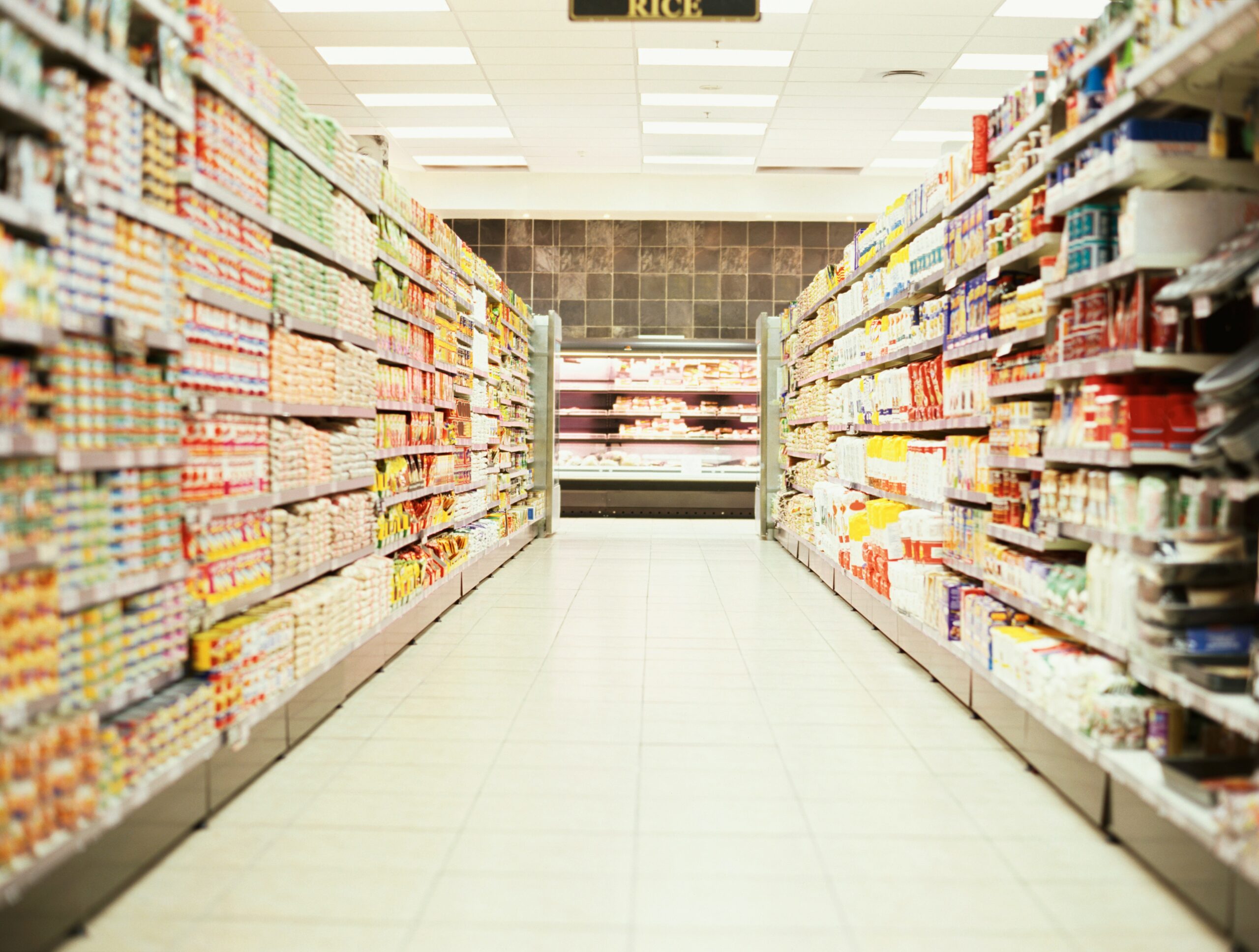
Food campaigners and policy experts reacted with alarm last week as reports suggested that large supermarkets and food manufacturers were now leading the UK Government’s food strategy for England.
“The IGD [the institute for the food and drink industry] revealed today it has been asked by Defra to oversee the rollout of the new strategy,” reported The Grocer on September 23rd.
Cue concern and confusion. And silence from Defra, the Department for Environment, Food and Rural Affairs.
“Surely Defra is not just handing over management of a cross-departmental Food Strategy to an industry body as it suggests?” Barbara Crowther, from the Children’s Food Campaign at Sustain, wrote on social media. “There doesn’t appear to be any official communication yet either. Whatever is going on, in food terms, this definitely seems fishy,” she added.
The IGD (formerly the Institute of Grocery Distribution) has close ties with the country’s largest retailers and manufacturers and – as a worrying side note – is currently pushing for England’s poultry strategy to focus on expanding production without the constraint of commitments to ‘better chicken’.
I spent Thursday trying to unpick what was going on, and eventually came to the conclusion that The Grocer’s story was a little wide of the mark. A spokeswoman for Defra told me that the department continues to lead the food strategy. IGD meanwhile offered very little in the way of clarifying remarks.
This week, in a follow up email, the government’s spokeswoman said: “Defra continues to lead on the food strategy and, in parallel to engagement with IGD on this work, is also engaging civil society partners on priority actions to deliver the ambitious change that the Good Food Cycle sets out.”
She added: “The IGD has started valuable work to hold sector-wide conversations and develop a prioritised framework of action. This will focus on where action can have maximum impact. Success will depend on collaboration and action from all across the whole food system.”
Flurry of worry
This ‘valuable work’ is being branded Food Nation 2040 – “a proposed set of prioritised actions to turn existing ambition for the food system into a practical framework for delivery and implementation”, wrote IGD chief executive Sarah Bradbury in an op-ed for The Grocer, which sparked last week’s flurry of worried posts across social media.
The plan is to “set out how industry, government and wider stakeholders can work together towards creating meaningful change towards a food system that is healthier, more affordable, more resilient, more sustainable and investable for the long term. [Food Nation 2040] is the next stage in a journey that began with the independent National Food Strategy led by Henry Dimbleby, which set out the connections between food, health, poverty, the environment, land use and resilient supply, and demonstrated the need to address them as parts of a single system. It continued through the Food Strategy Advisory Board’s listening workshops, supported by IGD and the publication of the Government’s Good Food Cycle.”
The Good Food Cycle, published in July 2025 under the Starmer government, forms the bones of the government’s planned new food strategy. The direction it set was welcomed by many, though the devil as always will be in the detail. Who drives this seems as important now as who delivers it.
Bradbury explained that Food Nation 2040 is organised around four interconnected missions from the cycle: healthier and more affordable food; resilient and sustainable supply; good growth; and thriving food communities. IGD will “act as convenor” for the work, which will also “involve businesses from across farming, manufacturing, retail, wholesale and foodservice and hospitality, alongside policymakers, investors, trade associations, academics, civil society organisations, local and regional partners and community voices”.
Bradbury presented a draft of her plan to the Environment Secretary, Angela Eagle, and Farming Minister, Stephen Morgan, at a meeting of the Food Strategy Advisory Board on September 14th. The FSAB is weighted towards representatives of big food companies, like Sainsbury’s, Cranswick, Greggs and Sofina. The one farmer involved is Peter Kendall, former President of the NFU.
“Food Nation 2040 would aim to advance delivery of the outcomes in the Good Food Cycle,” reads the summary of the meeting. “The Board made specific suggestions about priority areas and advised strongly on the need to prioritise areas where action could be taken quickly, to maximise impact. Effective engagement across government, the food sector, and civil society would be key.”
Whether this is industry seizing the initiative on the food strategy is moot. Reacting to The Grocer’s story on social media last week, Dolly van Tulleken, the health policy consultant and campaigner, and associate fellow at the Food, Farming and Countryside Commission, said: “Sorry to sound pessimistic, but with this level of big food and drink industry involvement and control this strategy is doomed to fail. Effective and fair government food and health policies are made when industry is not involved in designing solutions and setting the ambition level,” she added.
Responding to her comments, Robert Fraser, Executive Director at the Real Farming Trust, said: “For me, power is the Gordian knot in all of this. We won’t fundamentally change the food system while its existing power dynamics remain baked in.”
Chris Hilson, Professor of Environmental Law at the University of Reading, and an expert in sustainable food policy, said that it clearly makes sense to develop the food strategy ‘with’ industry; however, it is something else altogether for such policies to be designed ‘by’ industry.
“If the IGD was fed up with nothing concrete coming out of Defra and have just got on with something themselves then one might understand that. But in that case one might expect Defra to tell us when their own concrete government food strategy will appear,” he told me during the confusion last week.
For Hilson, like others, the fear is that industry lobbying has squashed the prospects for proper food system reform by making overwhelming noise about the cost of living crisis and regulatory expense. The government may also be worried about anything too interventionist because they know Reform and the Conservatives are likely to “lay into it”, he said. Reform and the Conservatives will not argue with a business-based or profit-based approach, of course.
More troubling however is the prospect that the IGD mandate for this has come from Defra, which would amount to “delegating public policy to an unelected private body. I would expect a judicial review to test whether they can lawfully use their powers to delegate in this way,” Hilson explained.
For now, it seems IGD is not overseeing the roll-out of the new strategy and that Defra remains in charge. Fraser said: “Industry absolutely needs to be consulted, but there is a real difference between consultation and giving powerful commercial interests a role in setting the ambition and designing the solutions.”
Publication of IGD’s Food Nation 2040 paper later this autumn should tell us more.



Why don’t they use the mountains of chicken poo as the US does? They clean out the chicken coops (everythug), chicken poo, hay, and dead carcasses and sell it to the beef industry; it’s processed for feed for cattle. It’s the cheapest form of cattle feed. Problem solved.
Cattle eat plants, not poo, let alone dead carcasses! You have heard of mad cow desease I presume.
If we want better health, mitigation of climate change, and less water and air pollution, we should be eliminating factory farming of animals, also stopping the cruelty done to them, while freeing up huge amounts of land to grow healthy sustainable fruit vegetables and pulses, thereby also benefiting wildlife and biodiversity.
Pliny the Elder: Latifundia perdidere Italiam, iam vero et provincias.
My translation: “Great estates have ruined Italy, and now the provinces too.” He immediately claims that six owners possessed half of Roman Africa before Nero killed them. This is evidence that a Roman author identified concentrated landownership as destructive. It is neither a modern statistical survey nor proof that every province underwent the same process.
“Industry absolutely needs to be consulted, but there is a real difference between consultation and giving powerful commercial interests a role in setting the ambition and designing the solutions.” Not sure that DEFRA read Pliny