
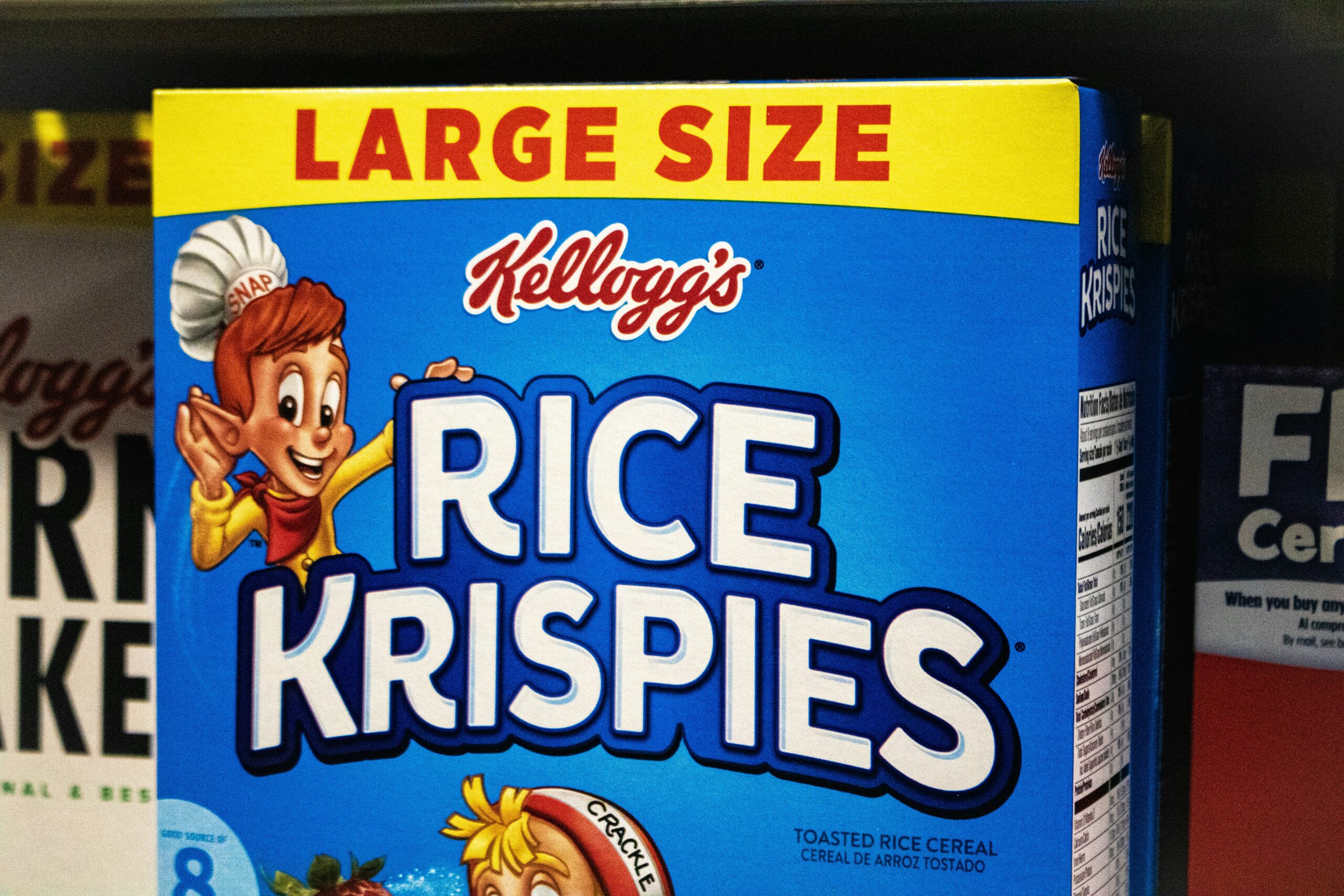
Rice Krispies are no longer made with rice. Instead, the maker of the iconic breakfast cereal, famed for its ‘snap, crackle and pop’, is now using a mix of rice flour and corn flour.
The change has been hard for fans to stomach. The BBC reported how the new cereal is “grim”, according to some reports on social media feeds, while others noted the ‘pop’ has now gone, or is far less pronounced.
The noise around this recipe change is unlikely to die anytime soon, though.
“I’m surprised that the formula was changed so dramatically. It’s a different product,” Sarah Blanchard, Associate Head of ESG at food and grocery consultancy Prof. Consulting Group, told me this week. “[T]he way Kellogg’s have handled it means that customers feel cheated,” she added.
Skimp or shrink?
Rice flour is a finely milled powder made from rice grains, and commonly used in things like soups, cookies, and veggie burgers to improve palatability. It also helps bind things together and is gluten-free, which helps food brands looking to have ‘clean labels’ with no allergens, for example.
What Kellogg’s has done is what some will refer to as ‘skimpflation’ — which means reducing the quality of a product while keeping prices and product size the same. This is different to ‘shrinkflation’, which relates to reducing the quantity or size of the product while keeping prices the same.
Examples of ‘skimpflation’ would be a pasta sauce manufacturer that swaps out tomatoes for water. Or a pesto that comes with less virgin olive oil. Sometimes the food companies are caught out – consider the tinned mackerel make-under going on across our supermarkets as global brand, Princes, swaps out mackerel for jack mackerel which is an entirely different species, or the controversy over Reese’s chocolate and peanut butter cups – but not always.
This is the “biggest grift” going on, reported Bloomberg recently, and yet companies are not doing anything wrong, at least legally. “There isn’t any obligation for Kellogg’s or any other food business to notify a consumer of a change of ingredients,” explained Dominic Watkins, partner at law firm DWF and an expert in food regulations. “The obligation is to provide an accurate ingredients list and it would also comply with the naming provisions – it looks like Kellogg’s has done that.”
There is a ‘call out’ on the front of the Rice Krispies packs for an “allergen change”, relating to the use of the corn flour and the presence of wheat. Shoppers can also feed back on the new recipes via a QR code on the side of boxes (see below).
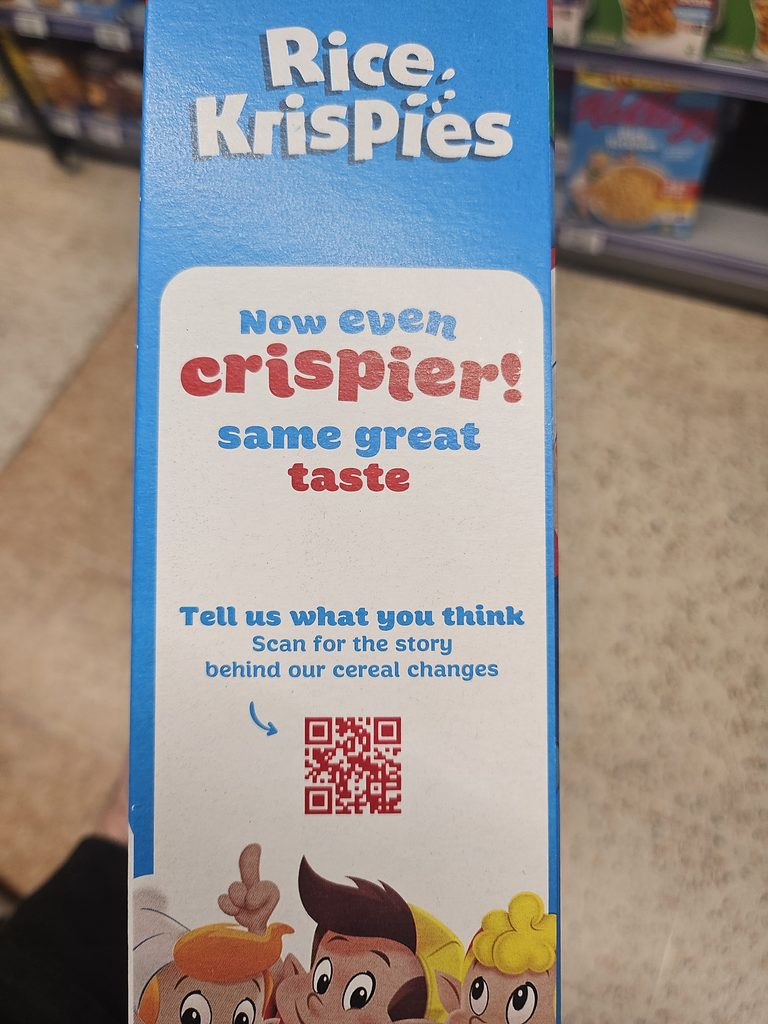
However, the fact there was not more prominent press around the change — until the social media surge last week — could well leave a bad taste in the mouth for many (the additional processing required is unlikely to go down well with parents, either).
“Kellogg’s removing rice from Rice Krispies may raise a smirk, but it also follows a pattern,” explains Jim Mellon, Executive Chairman and investor at clean food tech firm, Agronomics. Indeed, last year Penguin and Club bars could no longer be called chocolate after cocoa prices soared. “Now a breakfast staple has been reformulated because a changing landscape is affecting the quality and availability of its rice and grains,” Mellon adds.
This year, in particular, has shown us that climate shocks, conflict, and the return of El Niño are converging to make food production less stable and more expensive. Kellogg’s blamed the rice flour switch on “changing weather conditions”, with a spokesperson telling the BBC that the new recipe would help “maintain consistent quality” as extreme weather takes a toll on crops and pushes up ingredient prices.
Extreme weather in Spain in 2022 and 2023 had for example reduced availability of the types of rice the company used for its breakfast cereals. Erik Murchie, a professor of plant science at the University of Nottingham, told me the impacts of climate on rice vary depending on a number of factors, including the production process as well as the types or varieties used.
However, rice production is “very sensitive to the effects of climate change and global heating, creating uncertainties in terms of both production and quality”, he explained. “We are in a particularly vulnerable year due to the effects of El Niño. Rice is traded less internationally than wheat or maize which might make rice the first to be exposed as being vulnerable to supply chain uncertainties,” he added.
No more rice, baby
Others acknowledged how difficult ingredient sourcing has become but wondered whether the weather is really to blame in this case. Other manufacturers, including supermarket own-label alternatives to Rice Krispies, have not changed their recipes for example.
Companies do often switch sourcing if plan A is not working out, and keep hopping about (with little thought for the farmers they leave behind) until there are no more options left. For some commodities that is (still) relatively easy, but in others, the options are fast thinning out (think about hazelnuts, cocoa and coffee, for example). This is the ‘adaptation’ the current system rewards, explains Ivo Degn, founder of regenerative agriculture experts Re:Source, and the reason why it needs to change.
Degn is surprised to hear that Kellogg’s “could not adapt”. In a recent meeting with food industry insiders, the only cases they found where companies will actually invest in the sourcing region is if they can’t substitute for practical, economic or legal reasons, or their brand story is tied up with [the ingredient]. Mutti’s entire brand is Italian tomato paste, and so when their farmers’ harvest failed [the company] paid them more to recover. We don’t see that reaction with buyers who have the ability to switch either origins or ingredients,” he adds.
Chris Hilson, Professor of Environmental Law at the University of Reading, suggests the Rice Krispies case is an example of a new form of ‘climate washing’ or as we’ve covered before, ‘green-wishing‘. That term usually applies to companies that exaggerate the climate ‘friendliness’ of their products, thereby misleading consumers and investors. Carbon neutrality claims for products have, for example, been a major source of wider greenwashing complaints. Ultimately, these claims are about climate mitigation – how much companies have really done to cut their greenhouse gas emissions.
But what we have with Rice Krispies and Coco Pops is a climate adaptation claim about a food product which some have argued is exaggerated. Hilson explains: “Kellogg’s has stated that one of the reasons behind the reformulation away from rice grains to rice flour and corn flour, is that climate change has led to shortages of rice. They have adapted accordingly. And yet not all manufacturers have followed suit, suggesting that it may be more of a price-led commercial decision,” he adds.
Does this matter? “We rightly worry if companies claim to be cutting emissions but are not really doing their bit. Should we be bothered if companies claim that climate harms are behind product changes when in fact they may not be the real driver of those changes?” Hilson wonders.
The answer, he says, is that “it still matters from a consumer point of view: [they] shouldn’t be misled if climate is just a convenient excuse for changes to products they value in their original formulation. That may or may not be the case here – without the hearing of an official complaint and access to more information, it’s hard to tell. It will be interesting to see if such a complaint is made,” he adds.
Cereal offenders
The law might not say that consumers are being misled but that is how many will feel, and it could be Kellogg’s paying the price. “I found strong and highly replicable evidence that consumers generally judge quality reductions as more unfair than either size reductions or price increases,” explains Ioannis Evangelidis, Associate Professor of Marketing at ESADE Business School, Ramon Llull University in Barcelona, Spain.
His comments are in a soon-to-be published piece for Harvard Business Review, a draft of which he shared with me following my interest in a study he published in the summer looking at how people feel about the different tactics companies are using as climate change, geopolitics and regulations impact their products. “Consumers were less willing to buy products whose quality had been reduced than products whose size had been reduced or whose price had increased. I refer to this pattern as the ‘skimpflation penalty’,” he adds.
Evangelidis ran 25 experiments with over 30,000 people from the US and Europe. They read about firms facing increased costs across a number of products and services, including chocolate bars, orange juice, olive spread, toilet paper, laundry detergent, and streaming services.
In a nutshell, he found people were less likely to notice changes in key ingredients (27.2%) than reductions in product size (37.9%) and price increases (49.8%). His data suggests that skimpflation may seem an effective cost-cutting strategy for firms, as consumers are less likely to detect changes in product ingredients than changes in price or size when perusing products.
But there is a catch. ”I found that once consumers become aware of reductions in quality, they judge skimpflation as especially unfair, much more than shrinkflation and price increases,” he explains.
In fact, the vast majority of consumers involved in Evangelidis’s study said it’s fair for a firm to raise prices in response to cost increases. When habits are built around products and brands – from pasta sauce and coffee to yoghurt and chocolate bars – people consume these with certain expectations, he explains. Quietly changing the quality of the ingredients can “violate” what consumers see as this “implicit agreement”. This can lead to negative stories circulating on social media, pressure from retailers and even reputational damage.
Future skimpflationists, be warned.
Kellanova, the owner of the Kellogg’s brand under which Rice Krispies is sold in the UK and Europe, was approached for comment. We asked about its sourcing of rice and rice flour, and for more details on the specific problems that related to the production of rice it was buying. We did not receive a response.


0 Comments