
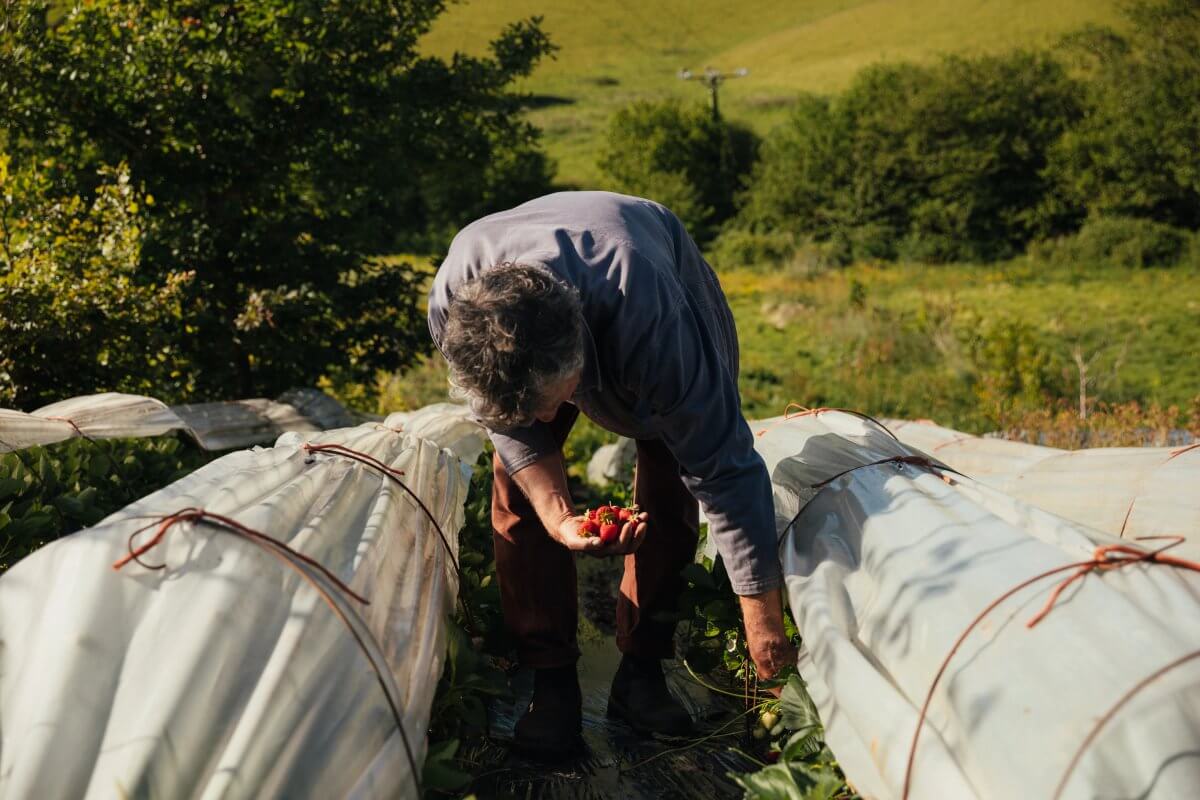
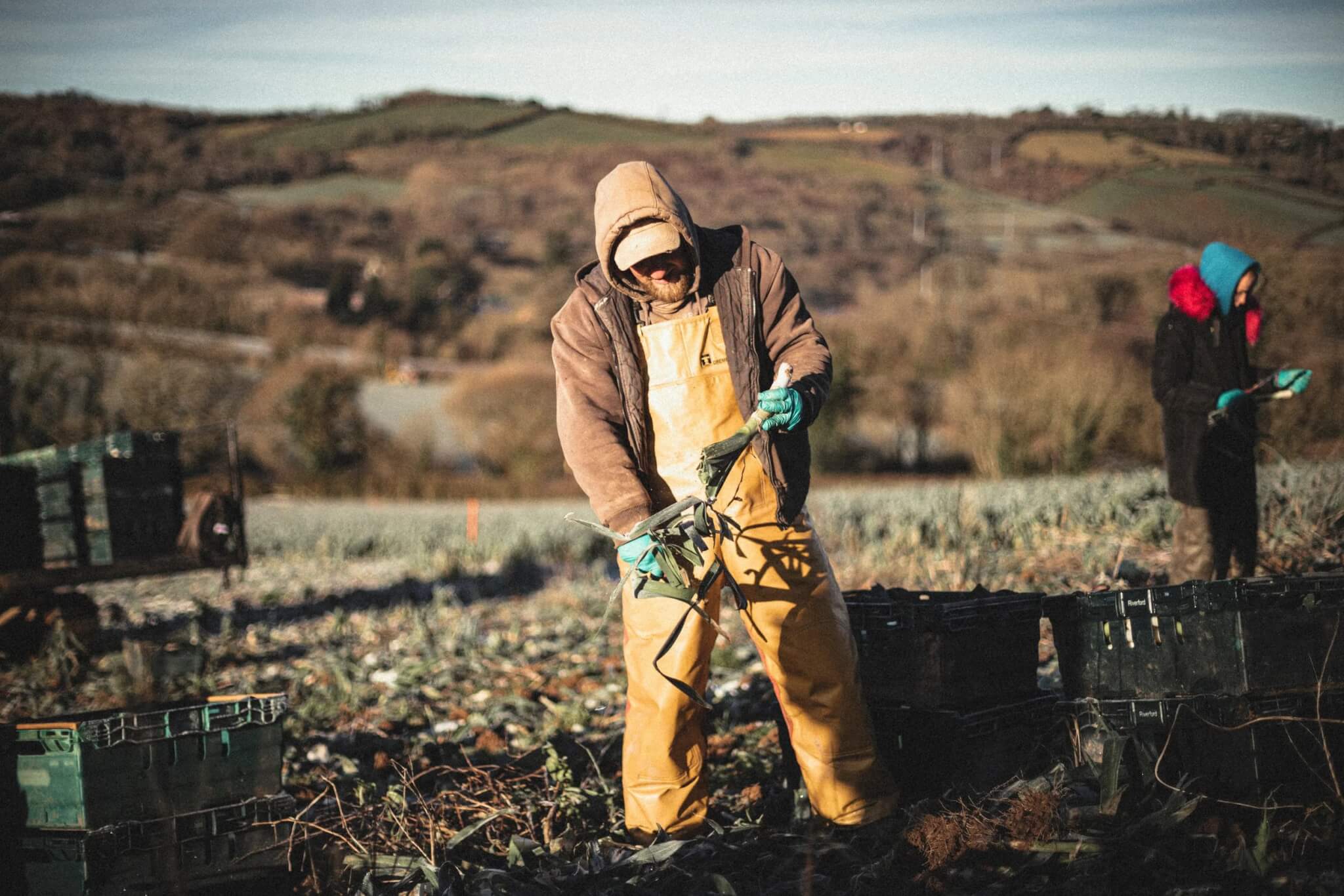
Last week’s heatwave rapidly ripened our strawberries, with pickers starting at 5am before being driven from the fields by the heat. By contrast, the first three weeks of June were damp and cool, with berries slow to ripen and picking repeatedly disrupted by the light rain, which can compromise shelf life and flavour. At least the wet days gave us time to weed the trees we planted last winter – something I never expected in the midst of a manic summer. In addition to the two hectares planted with native oak, hornbeam, lime, and hazel – complete with tree guards, stakes, ties, and weed mulches – we left one hectare to “rewild”; we simply shut the gate last autumn and waited to see what would happen.
Previous generations (and a younger me) would have considered this neglect and a disgrace to our trade. As the cows started to graze the short grass next door, I felt a strong temptation to reopen the gate and allow the field to be productive for one more year, but an evening walk revealed numerous young oak trees emerging from the grass with extraordinary vigour. A bit of scratching revealed an acorn nestled in moss amongst the grass roots, sending a root down and stem upwards; even in mid-June the acorn still seemed to be nourishing the young tree, perhaps explaining its ability to push above the tight sward to unfold its leaves into the light. The life force of the acorn, nestled in moss, protected by grass, reminded me of the ultrasound scans of my children lying in a nourishing womb, and recalled a powerful urge to protect and nurture.
The gate will stay shut and I have spent many happy hours on my hands and knees, pulling up grass to make a mulch nest around each tree and hopefully ensure enough grows to create a forest… perhaps for future grandchildren to one day wander through. We got lucky too – last year was a “mast” year for acorns with oaks bearing extraordinary amounts. I had expected to find a few trees around the edge of the field under the hedgerows and the overhanging oaks but in fact they were spread across the whole field.
How did they get there? The most commonly held belief is that they are spread by the loudmouth, acorn-loving jays, who also feast on the emerging cotyledons (first leaves) of the oak. Did they just randomly drop them in flight, perhaps, as they let out their brutish squawk? Some ecologists believe they actually plant them on purpose in order to be able to return and eat the young leaves, or perhaps this is co-evolution with the jays relying on oaks for food, and oaks on jays for seed distribution; one might even say the jays were farming the oaks to feed future generations.
For me “farming” less and observing more on this small unproductive part of the farm has been spiritually enriching and another step in my 60-year learning and evolution as a custodian of this land. Farming is about more than food; finding locally appropriate compromises that balance our many demands on land is as complex as it is controversial.
Photograph of Guy, picking strawberries at Baddaford, taken by Emma Stoner
Our News from the Farm posts come from Riverford. They are the digital versions of the printed letters which go out to customers, every week via Riverford’s veg boxes. Guy Singh-Watson’s weekly newsletters connect people to the farm with refreshingly honest accounts of the trials and tribulations of producing organic food, and the occasional rant about farming, ethical, and business issues he feels strongly about.


I too am growing an oak tree. I was fascinated to see the way it was attached and using the acorn to grow. I found it in my garden. I’ve potted it as it would ultimately take over everyone elses garden. It’s a really strong beautiful tree.