
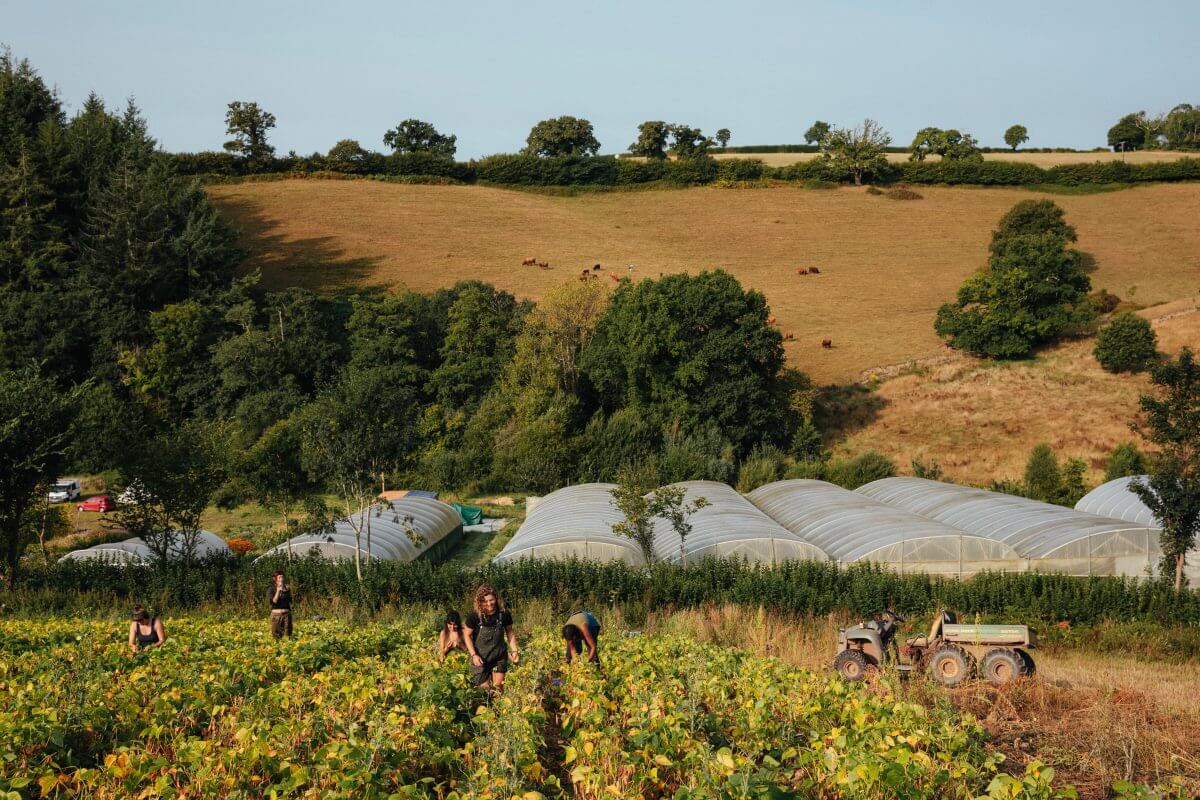
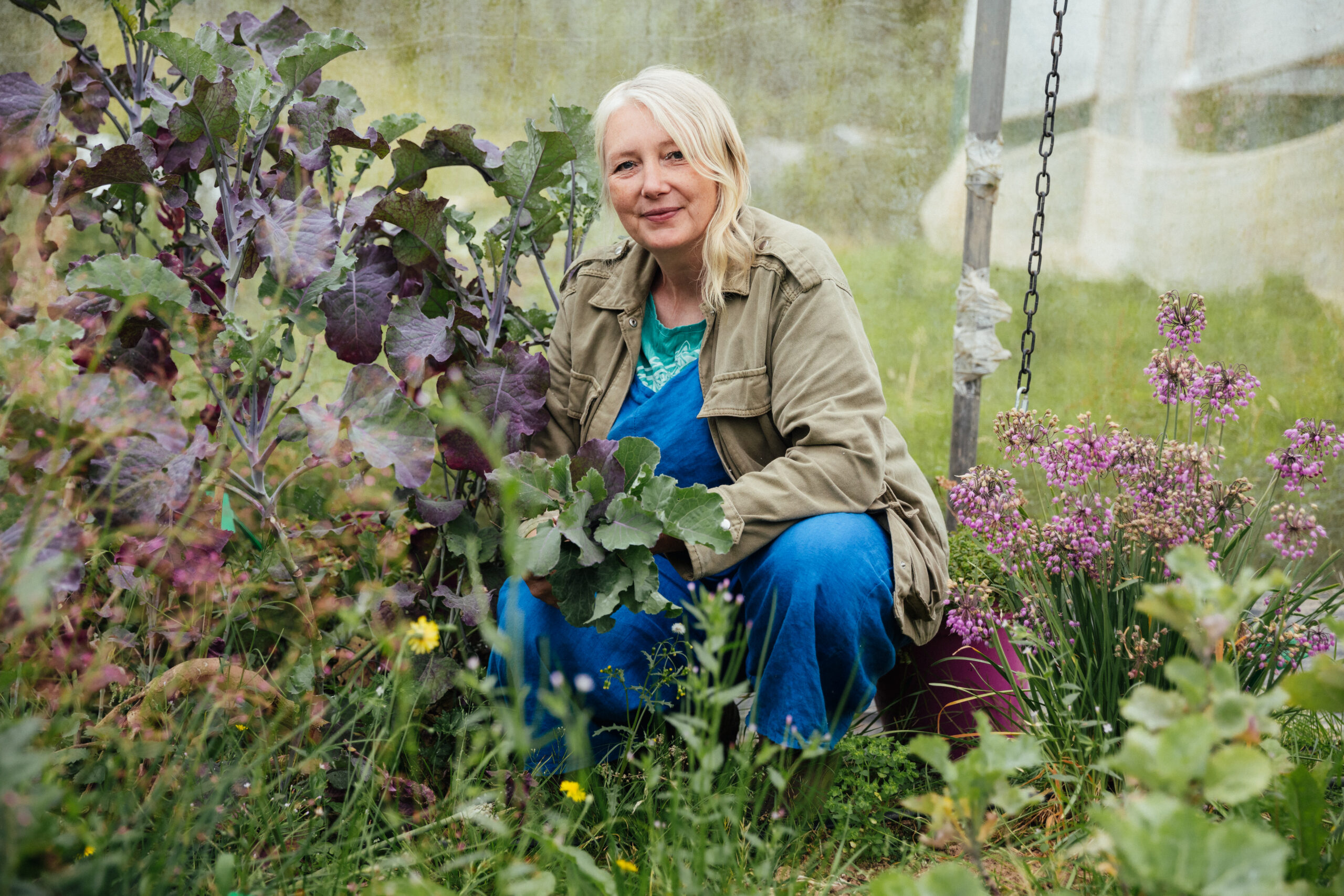
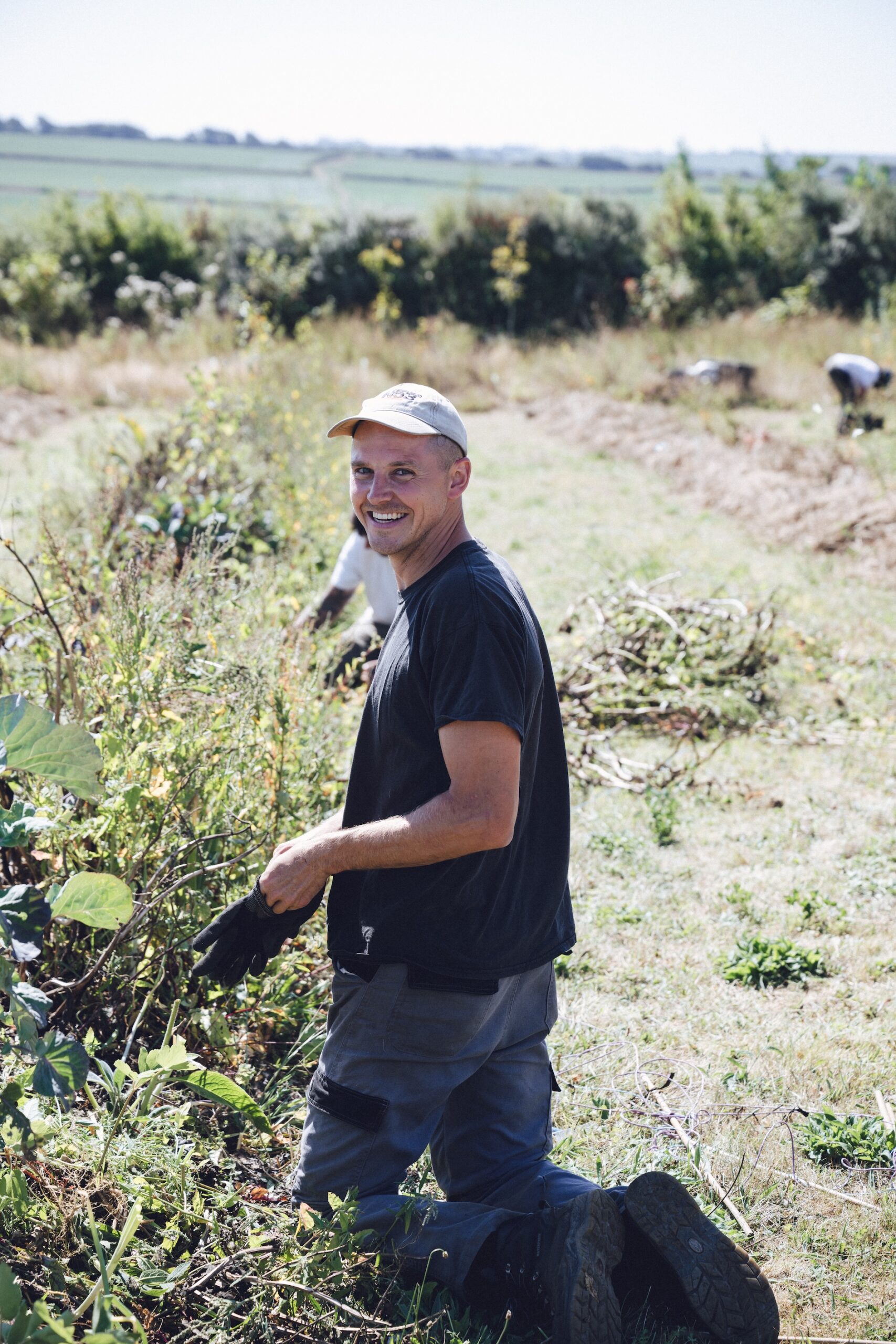
Happy voices can be heard across the valley over the tick of the slowly moving planter edging up the hill. Picking is in full swing and the weeds are threatening to overwhelm those who succumbed to expansionist, seed-catalogue-inspired veg dreams formed in the calm of shorter days. The planting of autumn, winter, and early spring crops is at its peak – leeks, sprouts, hardy cabbages, and cauliflower are in the ground, establishing well with about two weeks left to plant purple sprouting broccoli, savoy and January cabbages, and the last of the later-cropping kales.
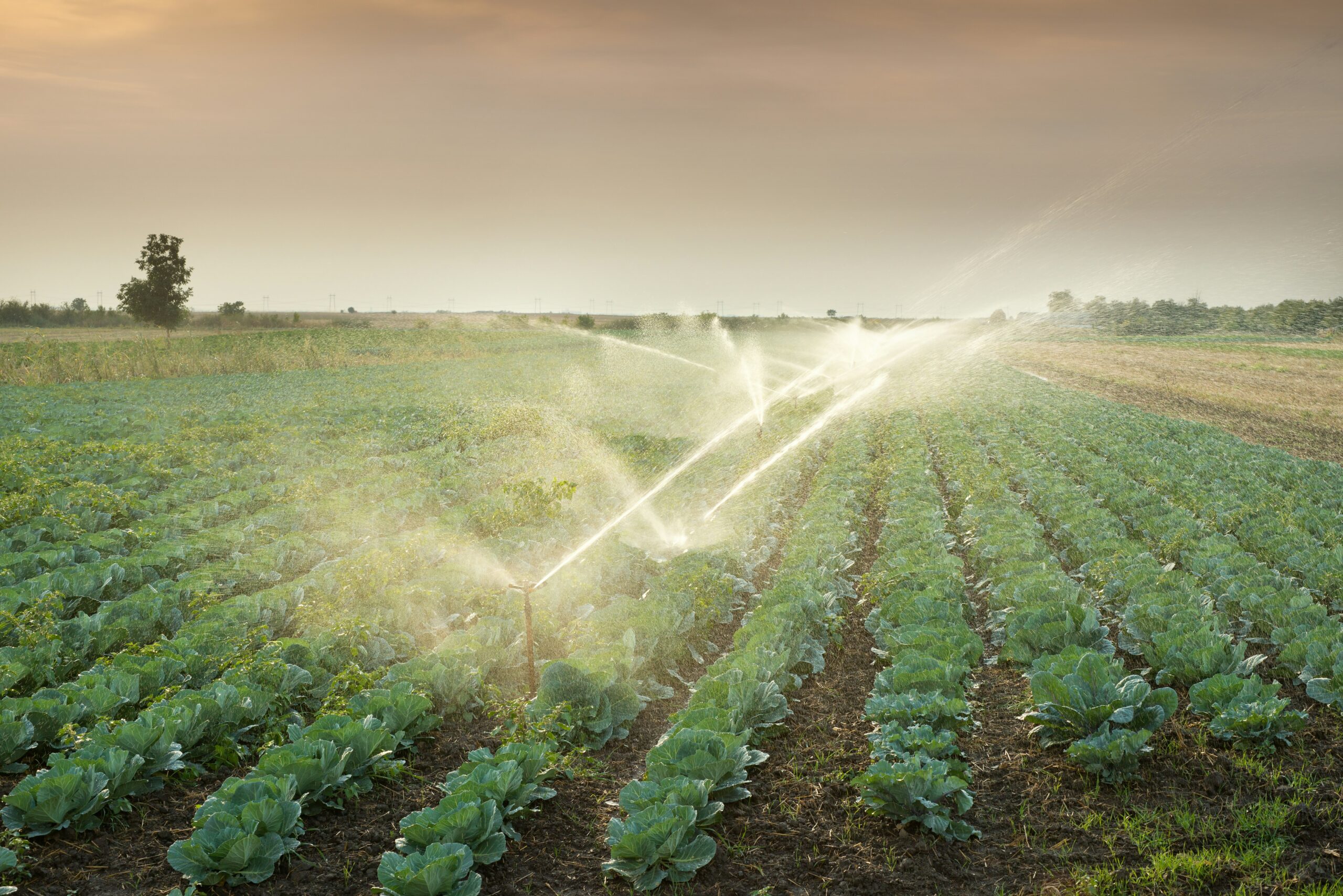
Most of the land used to grow winter crops is beyond the reach or capacity of our limited irrigation system – even in the damper west, most experienced growers spread their muck or compost, plough, and prepare a fine, firm “stale” seedbed 8 to 12 weeks ahead of planting to seal in moisture. Provided the surface is kept loose, any rain will soak in and accumulate. Most years, on all but the thinnest and lightest sandy soils this will provide enough moisture to carry the caulies, cabbages, and kale through to the autumn rains. After each rain, a shallow cultivation kills germinating weeds so that for these later-planted crops, the need for weed control is much reduced. Scuffling between the rows severs the weeds while throwing up enough soil to smother the rest.
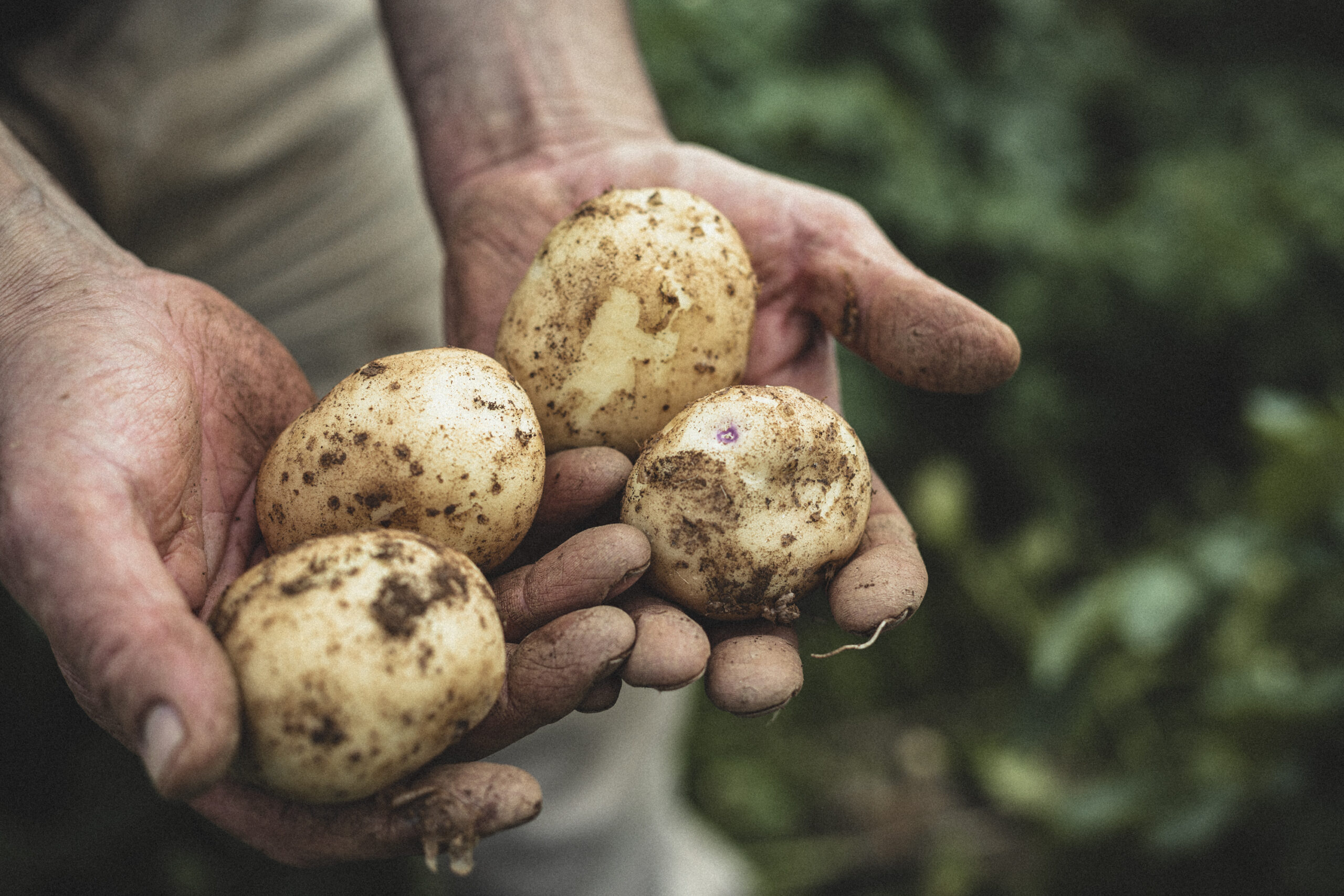
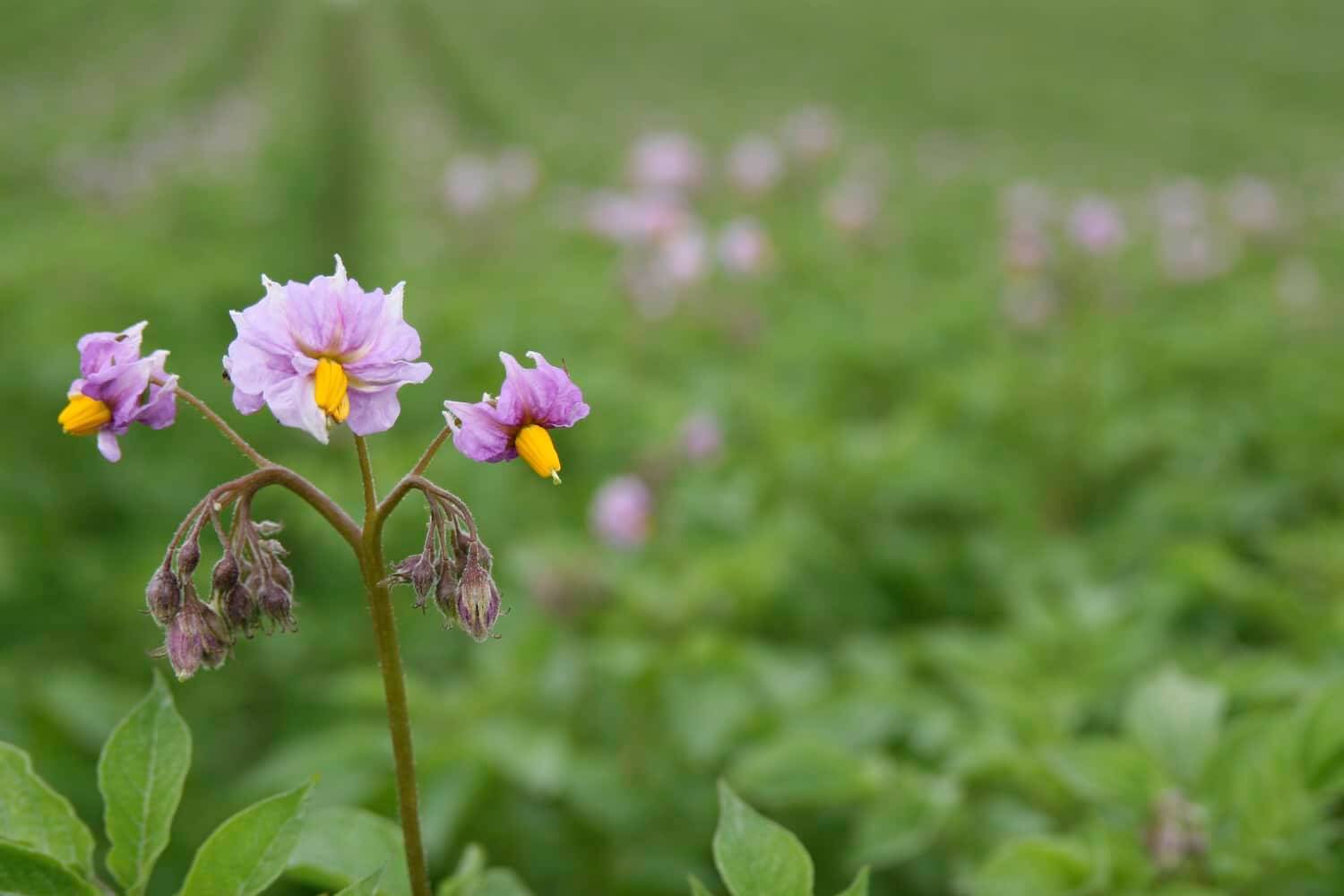
In many ways it has been an easy year with enough dry weather to keep on top of the work. But over the last three months, the combination of below-average rainfall and higher-than-average winds – increasing transpiration and evaporation rates – has also reduced growth. After a cold start and wind damage followed by not enough rain, our early potatoes, grown near the coast, are producing half the usual yield. By contrast we have a bumper crop of plump and delicious raspberries – turns out they just needed more compost and irrigation.
Fatigue is setting in but the end is in sight; August tends to be more relaxed as planting ends, weeding pressure subsides, and sales dip as many of you head off on your summer holidays. As a grower, a rest will have to wait, but if you get to early July with your head above water and marriage intact, you are probably going to make it to the refuge of winter – buoyed by thoughts of seed catalogues and laying plans for next year’s harvest.
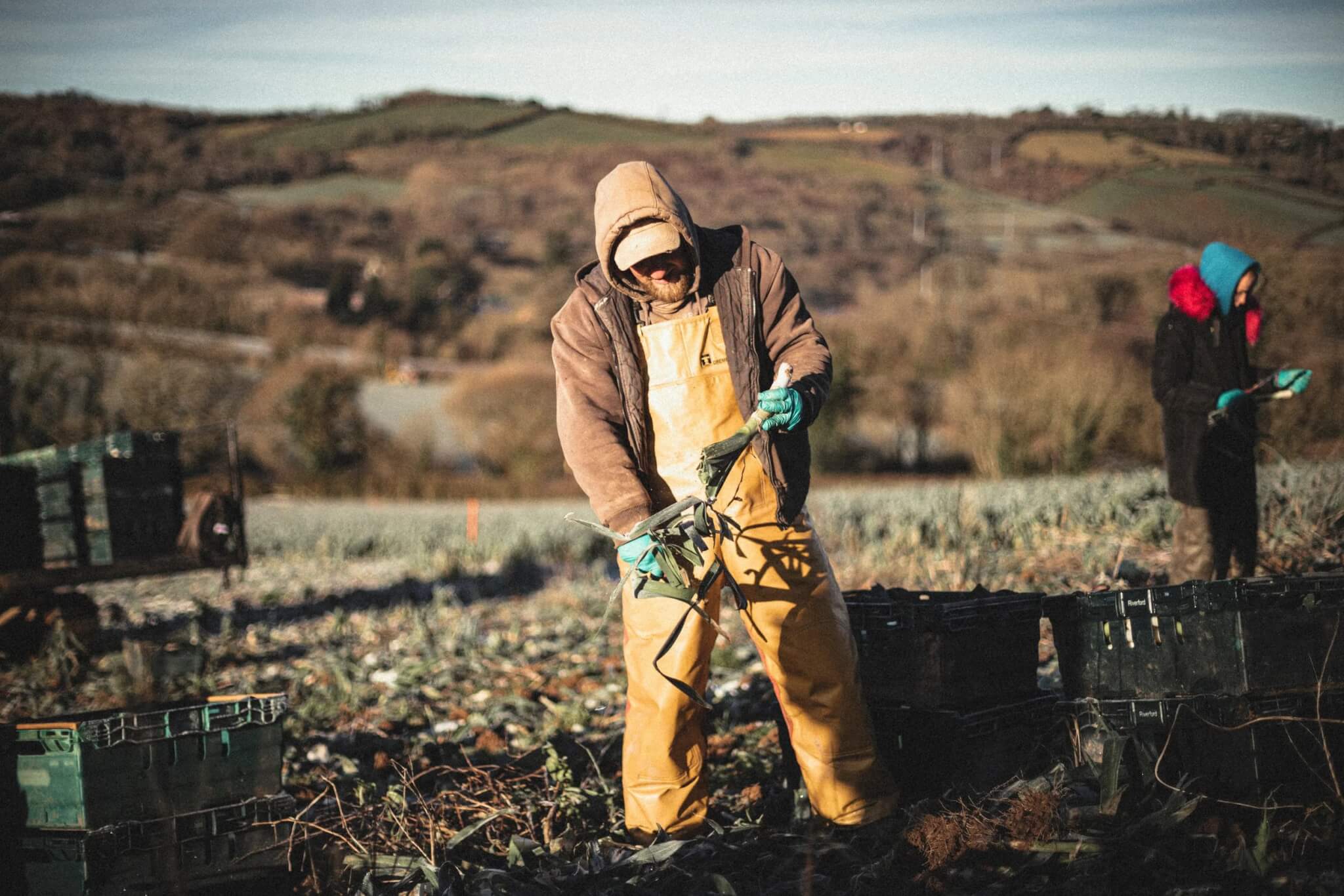
Summer picking at Baddaford; photo by Emma Stoner
Our News from the Farm posts come from Riverford. They are the digital versions of the printed letters which go out to customers, every week via Riverford’s veg boxes. Guy Singh-Watson’s weekly newsletters connect people to the farm with refreshingly honest accounts of the trials and tribulations of producing organic food, and the occasional rant about farming, ethical, and business issues he feels strongly about.

0 Comments