
For decades I have been infuriated by articles in The Economist, The Telegraph et al. suggesting that higher CO2 levels and rising temperatures would be a good thing for Europe’s farmers, increasing the rate of photosynthesis and hence yields. A few people further south might suffer (they don’t have much money anyway) but at least we would be OK. What are these pillars of rationality writing now as Europe burns? Perhaps that it is too late to fight climate change so we had better adapt and go with it, or, if we reduce our use of fossil fuels at all, it must be a “gentle transition”?
It is both tragic and laughable that we seem intent on spending our last dollar of discretionary capital, not on transition, but on AI and vast data centres whose purpose will be to persuade us to buy more of the crap that has got us into this mess. The reality, which has evaded these economists but which any gardener and farmer knows, is that yield and quality are more often determined by the extremes than the averages, and the frequency of extreme weather events falling outside crop tolerance is increasing faster than averages are moving.
On our farm in the French Vendée, temperatures above 32°C have caused aubergines to abort their fruit due to stress; runner beans in the UK have done the same. We would have been able to top up from Spain but our growers there are suffering similarly, if not worse. Our UK tomato, pepper, and cucumber season is barely three months but is, so far, faring better with the growth potential boosted by high temperatures and sunlight, balanced out by losses due to stress.
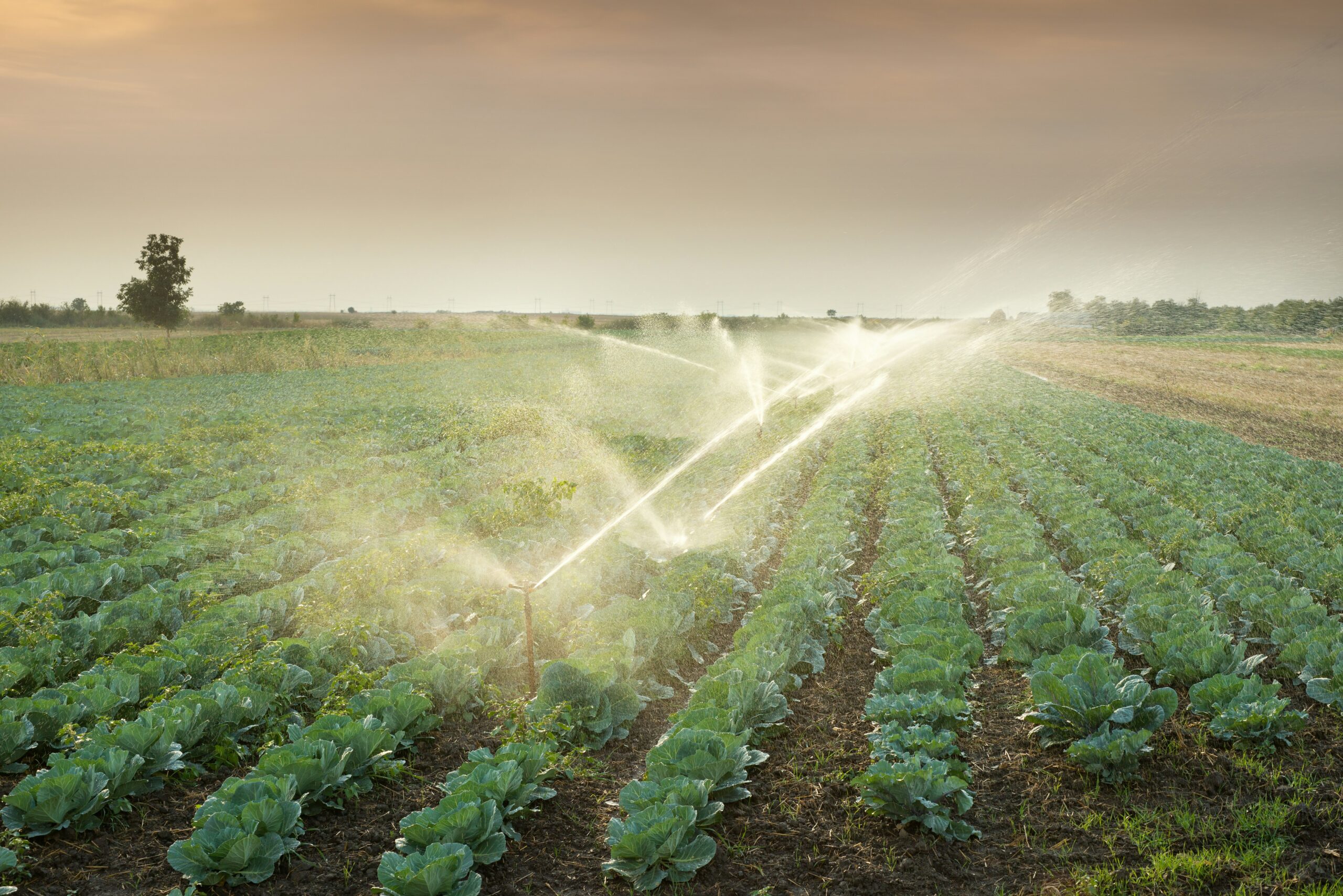
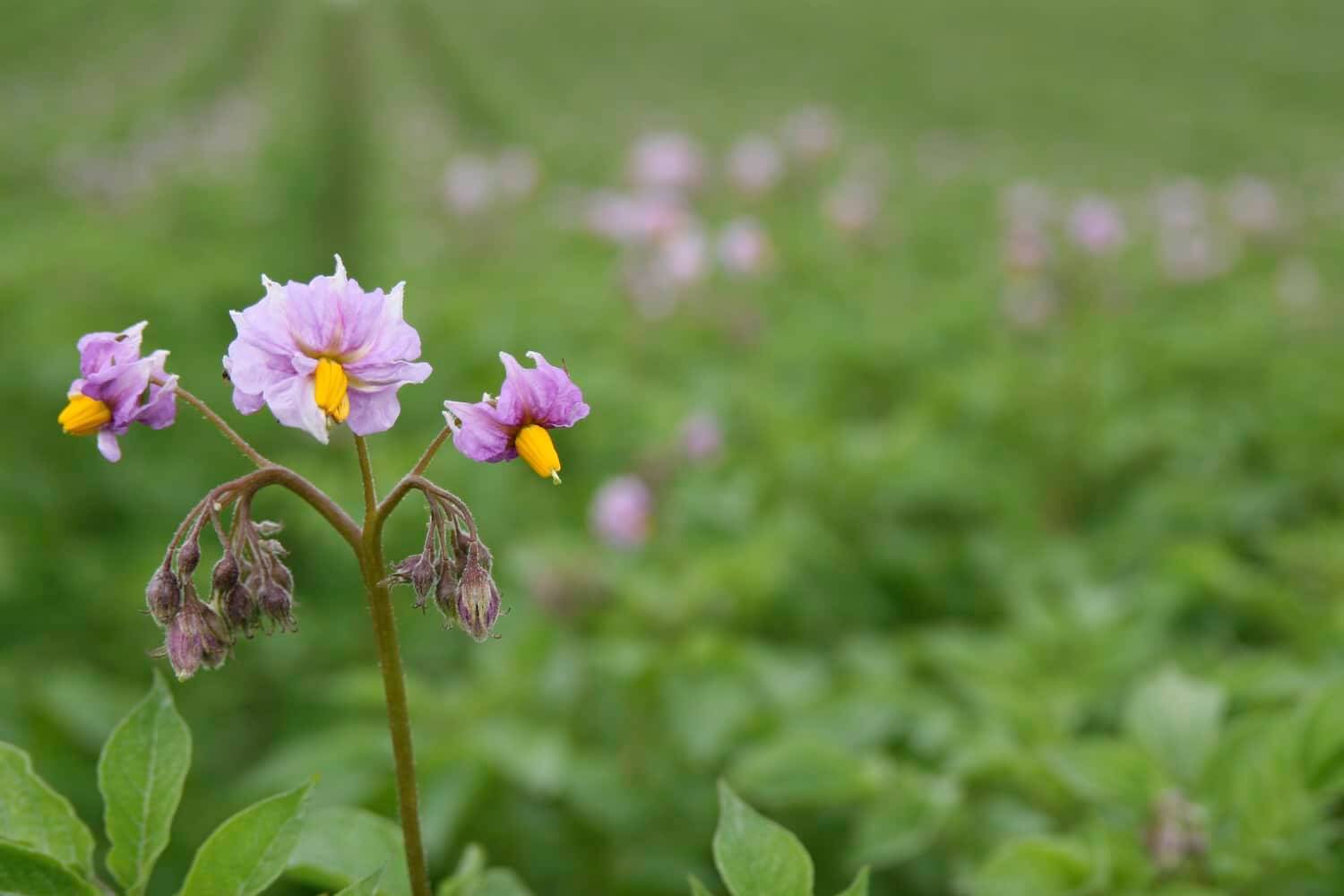
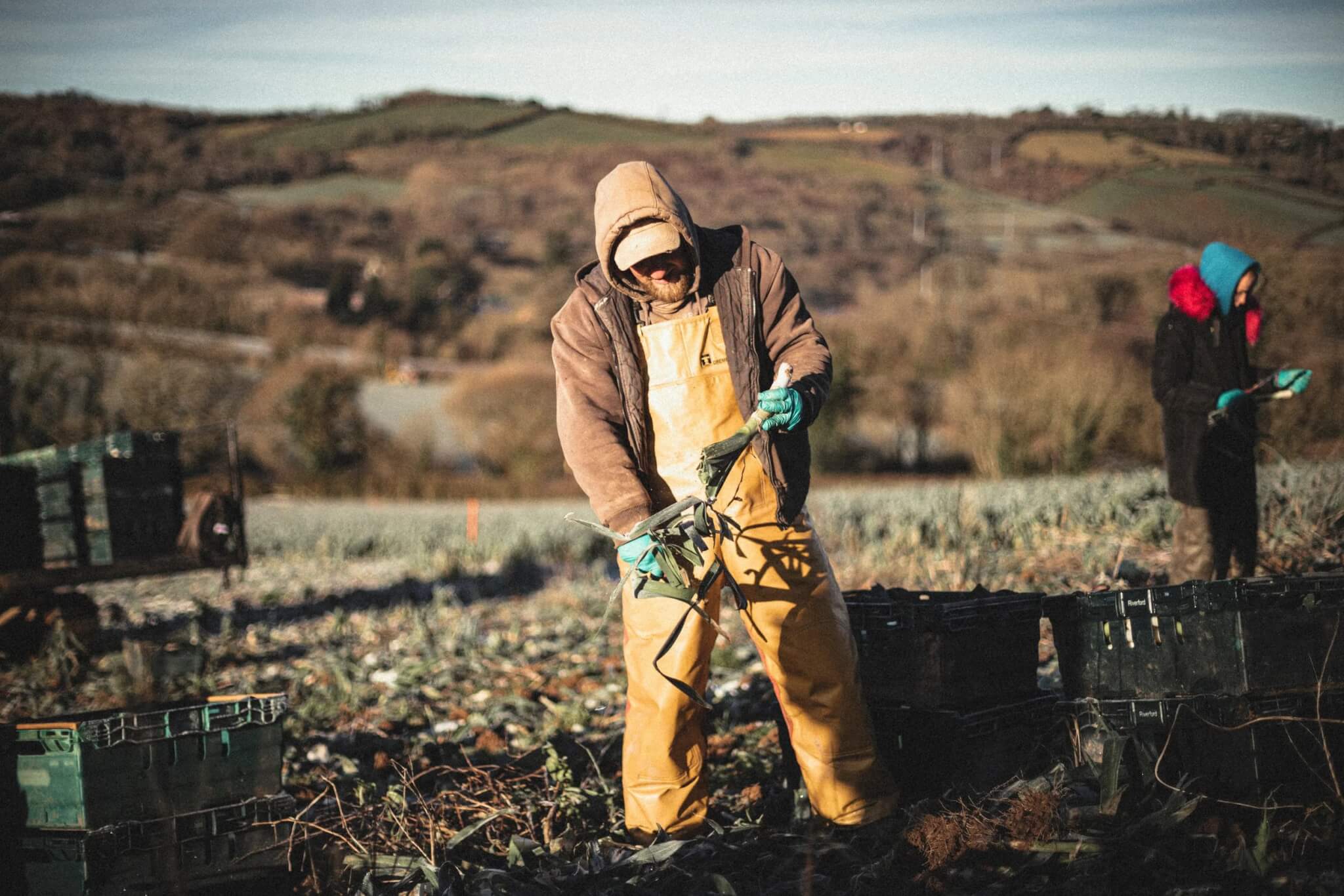
Those with irrigation have now, pretty much, run out of water and are keeping what is left for the high value crops. Half the carrots have failed and potato yields will be down 25%. In the south-west, much of our summer broccoli, Tenderstem, cauliflower, and Romanesco has traditionally been grown on unirrigated ground. Many will now fail, with the remaining crops having drastically reduced yield and compromised quality. As our reservoirs run dry and our crops die, data centres will have plenty of water and energy and leapfrog the planning process. It seems they are needed for the only sort of growth that matters. You can’t eat it and it’s killing our planet but who dares impede a tech bro?
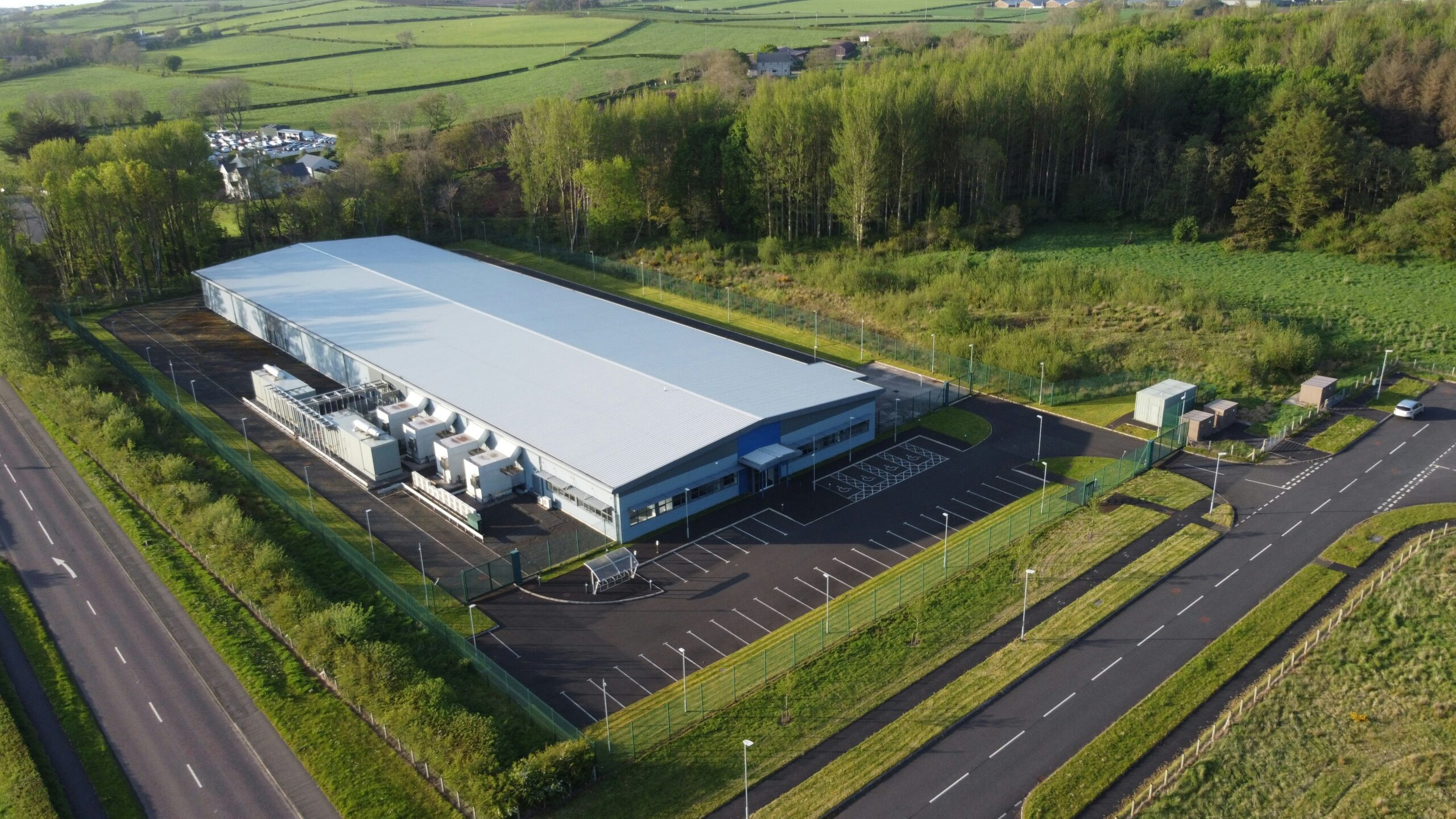
Image by Geoffrey Moffett via Unsplash; a data centre in Coleraine, Northern Ireland
Our News from the Farm posts come from Riverford. They are the digital versions of the printed letters which go out to customers, every week via Riverford’s veg boxes. Guy Singh-Watson’s weekly newsletters connect people to the farm with refreshingly honest accounts of the trials and tribulations of producing organic food, and the occasional rant about farming, ethical, and business issues he feels strongly about.


Yes.
The latest is that stinkbomb in the Torygraph who reckons we should just adapt to a Mediterranean climate.
What, pray, do those who live around the Med do then? Adapt to the Sahara? After all, it once bloomed.
I know.
They can move north.
They they’ll become migrants to northern European nations, like … guess where ….
And the Torygraph will have even more people to vent its spleen at.
Perhaps Guy and I can one day have a jam rant … after all, I’m so rubbish at guitar that I can’t jam with anyone on that.
Excellent points, and a data centre is planned for North Devon at this very moment. Farce? Yes, absolutely. Perhaps this current drought will have a use after all, i.e. to bring people’s attention to the issue of water, and the fact that our water companies have not built a reservoir since 1992 despite making millions in profits. All hail Feargal Sharkey! Four former water company (Southern Water) directors are currently facing prosecution for an alleged conspiracy to defraud regulators by manipulating wastewater tests between 2012 and 2017. Perhaps this will scare other directors into acting in the public’s interest. One can but hope……
One of the issues that we have here (I mean “we” as in everyone who wants a livable future) that impacts the reach and influence of messages like this is the algorithmically driven newsfeeds where a majority of people get their information and which simultaneously make these tech bros billionaires. We don’t just have climate collapse, ecosystem collapse, agricultural collapse, we also have what is termed reality collapse. Guy, your message is drowning in a sea of lies, conspiracy theories and AI slop. We need to start promoting alternative, safe, non-billionaire platforms, and spreading out from Instagram and Facebook. Pixelfed for instance, or Diaspora. And at the very least, Signal instead of WhatsApp.
It is increasingly worrying and infuriating.
I loathe it all.
And as for the idiot who recently said we should embrace this scorching weather and enjoy it, I despair.
I really do wonder if others of his ilk; the climate deniers, actually have any semblance of intelligence.
As David Attenborough said during the making of one of his documentaries, “the planet will recover, but humans won’t and we need to take action now. “
I don’t disagree with your main point about the increasingly difficult conditions farmers are facing. The examples you give sound awful, and I have a lot of sympathy for growers dealing with crop failures, water shortages and increasingly unpredictable weather. I also agree that there was something complacent about arguments that a warmer climate might benefit European agriculture because higher CO2 would increase photosynthesis.
I’m less convinced by the conclusion about AI and data centres, though.
The current explosion in AI and hyperscale data centres is very recent. It seems a little unfair to attribute today’s drought and crop failures to it, when the climate change driving those conditions has been developing for decades. The data-centre boom is something we now need to decide how to manage, but it isn’t what caused us to arrive at this point.
More importantly, AI may actually become an increasingly important tool for dealing with the problems you describe. The Met Office is already using AI alongside conventional climate models to improve our understanding of extreme weather and developing AI weather-forecasting models. AI is also being used to improve irrigation, analyse crop stress, develop more drought-resistant crops and make better use of satellite and weather data. So the irony is that some of the computing capacity being built today could help farmers adapt to exactly these conditions.
I also think your claim that “data centres will have plenty of water and energy and leapfrog the planning process” goes a little too far. The government is certainly encouraging their development and trying to speed up planning, which is a legitimate cause for concern. But data centres aren’t simply exempt from planning, nor are they guaranteed unlimited water. The government’s AI Growth Zone criteria require proposed sites to demonstrate sufficient water availability and address planning and wastewater requirements.
That doesn’t mean I think the expansion should go unchecked. Given the water situation, I think we should be asking where data centres are built, how much water their cooling systems consume, where their electricity comes from, and what we’re actually using all this additional computing capacity for.
I suppose my objection is to framing this as farmers vs. “tech bros”. AI is simultaneously creating new demands for energy and water and potentially giving us powerful new tools for understanding climate change and adapting to it. The more interesting question to me, is how we make sure the resources being devoted to AI actually produce benefits that justify their environmental cost.
There are data centres are applying for permission to have their own, exclusive, gas-fired plants because there isn’t grid capacity. How’s that for a CO2 double-whammy?
UK peak demand is about 45GW. The data centres in the pipeline would require 73GW – all to themselves.
Our grid isn’t currently configured to handle the renewable energy we generate (eg paying Shetland wind farms not to turn) let alone even more demand from data centres.
Every time someone uses their free GPT40 they use energy – and plenty of it, much more than a conventional search. When in a ‘debate’ (rant) I always ask people who have GPT40 (or whatever) how much they’d pay to have it. Rarely are any of them keen to do so; it’s just not that valuable. If we could make the US Bros charge an economic price for these products they’d be stumped. But we all pay our power bills and train fares. That investment didn’t get an artificial ‘free lunch’.
What business plan invests $bns and gives away the product for free? Is that ‘sustainable’. And if/when it comes crashing down it’ll be the mother of all financial crises.
If data centres powered AI to do useful things only (like medical research and patient care and your other examples) I could see to supporting making energy available to it.
But as we all know that’s just not how it works.
It is a question of balance. And atm I’d say that the beneficial effects are swamped by harmful and unpredictable- and scary.
(We should also note that nuclear power stations are having problems cooling in the drought … )
Three possible ideas/questions for the long term and wide scope (not just Riverford):
1) solar-powered desalination, as in Australian trials https://climatecoalition.org/future-food-security-must-focus-on-supplies/
2) Can’t data centres’ cooling systems use sea water, not fresh water? Or grey water?
3) Solar panels on stilts above crops – agrivoltaics or dual-use solar –
https://www.statkraft.com/energy-insights/articles/agrivoltaics-combining-solar-panels-and-agriculture-into-a-win-win-result/
https://www.rwe.com/en/research-and-development/solar-energy-projects/agri-pv/
https://elementsgreen.com/industry/what-is-agrivoltaics/
and then sell the solar electricity back to the data centres… so organic farming can make money out of data centres?